Have you felt stretched too thin lately? Worn out or burnt out? You are not alone. Our culture fights against limits and pushes against the boundaries that frame our lives. We don’t want to miss out. “More is better”, we believe, so we try harder to experience more to get more. Yet, there is always more. This leaves us unsatisfied, angry and exhausted.
Our marketing memes show our belief that “more is better.” Just add the word “unlimited,” and customers will buy whatever you sell. Because we believe the good life is found beyond our boundaries, we always strive for more. We war against the boundaries of our lives but end up fatigued, frustrated, fearful, and flat—in a word, lifeless. How is it that “more” leaves me feeling “empty”?
In a world where limitless is life, we fantasise about superheroes. Yet we are creatures, not gods. We are limited beings, blessed to thrive within our boundaries. Pete Scazzero lists some limits that we all can relate to. My life on this earth is a blessing, but it is brief; I can’t escape death. My mind has its limits, regardless of my learning. My personality or temperament has its strengths and weaknesses in every situation. My gifts are great, but it has their limits. My family or origin gifts me within a particular cultural, financial and social context; this is a blessing, but it holds its limits. Whether I am rich or poor, black or white, male or female – each attribute empowers and impedes me in life. Likewise, my own past (actions and experiences) holds great treasures, but with its limiting consequences. Each season of life has its gifts and limitations; we can’t change that – only embrace the season with its invitation and limitation.
The Apostle Paul also wrestled with his human limitations. In 2 Corinthians 12:7-10, he recounts a life-altering meeting with Jesus that changed his perspective on limits. “…I have received such wonderful revelations from God. So, to keep me from becoming proud, I was given a thorn in my flesh, a messenger from Satan to torment me and keep me from becoming proud. 8 Three different times I begged the Lord to take it away. 9 Each time he said, “My grace is all you need. My power works best in weakness.” So now I am glad to boast about my weaknesses so that the power of Christ can work through me. 10 That’s why I take pleasure in my weaknesses, and in the insults, hardships, persecutions, and troubles that I suffer for Christ. For when I am weak, then I am strong.”
Paul’s reference to “a thorn in the flesh” is often misunderstood as a slight pinch in the foot. But, Pete Scazzero explains that the original language referred to a pike-like military defensive barrier (see image below). Today, Paul might have used “a sharp palisade fences or barb-wire in my flesh.” Pressing against this barrier caused him anguishing pain and left him feeling frustrated (angry and powerless).
Many have speculated about this “thorn in the flesh” in Paul’s letter. Some read Paul’s “thorn in the flesh” as a painful or shameful bodily obstacle that inhibited his life or mission. It might have been a speech impediment, like Peter’s lisp (Matthew 26:72-73) or Moses’ stuttor (Exodus 4:10). Others think Paul lived with a painful and debilitating eye infection (see Galatians 4:13-15, 6:11). Some sceptics believed Paul suffered from episodes of epilepsy (because of his disabling visions, as in Acts 9:3-9 and 2 Corinthians 12:7. Yet, others argue that Paul used the phrase “thorn in flesh” metaphorically to refer to emotional pain caused by his loneliness or the ongoing opposition by the Judaizers who constantly discredited his message and character. A last group believed that Paul’s torment was only spiritual, caused by some demonic “messenger from Satan”.
Whatever it was, we know that this “thorn in the flesh” was painful and limiting. Paul suffered from it and could not fix the problem himself. His prayers were not answered either – the Lord did not relieve him of this burden either.
Our culture does not readily accept the limits of “no.” Our culture believes you can do anything and everything if you put your mind to it. Not accepting limits or “no” leaves us exhausted, angry, and inhibited. What can we learn from Paul’s message?
Flourishing within limits
The Bible includes examples of people who served God with tremendous freedom despite their limitations. These limits did not hamper the ministry or legacy of these faith heroes; instead, these faith heroes flourished within these limits, often because of these limits. Jesus taught that “blessed are the meek, for theirs is the kingdom of heaven.” Meekness means submission to restraints as a horse submits to the saddle and bridle of a rider. We are blessed (better off) when we learn to rest within our constraints and trust that God can and will give us goodness here where we find ourselves.
Moses’ life-long speech impediment did not prevent him from fulfilling his call. It seems ironic that, despite all the miracles performed through Moses, the Almighty did not heal him of his stutter. God chose to appoint a man with a speech impediment as his spokesman. In his weakness, God’s power was made known.
David was small, the youngest and most neglected member of his family. Yet God chose this insignificant shepherd boy to deliver his people from the Philistine giant and unite them in one glorious kingdom.
Daniel and his friends were enslaved, yet his God’s sovereignty was made known through these young Hebrews as they faithfully served their captors in the palace.
John the Apostle was a political prisoner on the Island of Patmos, far removed from the oppressed churches under his care. Yet here, God revealed powerful visions with messages of hope that have served the church for millennia.
Likewise, Paul’s most potent and lasting ministry was from within a Roman prison, as he learned to rely on God’s grace. He discovered that these impediments taught him not to become proud (happy, independent, or self-reliant) but rather to rely on God’s grace. “My grace is all you need. My power works best in weakness.”
Jesus Christ is God in the flesh, living as a poor Jewish boy raised in an insignificant rural village while the mighty Roman Empire ruled his people. This God suffered hunger, ridicule, shame, betrayal, torture and violent death. Through this, God restored his kingdom and delivered all who trusted in him from death.
My limitations as gifts
Paul discovered that the “thorn in his flesh” did not diminish his life; his life and legacy expanded as he embraced his limitations.
Paul’s limitation taught him humility – a life that relies on God’s grace, not his own strength and wisdom.
Resting in his limitation gives him a revelation of God’s nearness and grace.
His limits were the means to intimacy, the reason to draw near to God and trust him more.
Paul’s limiting imprisonment was the door to his most significant legacy — the letters that became the blueprint for every Christian church in history.
Paul’s message to the Corinthians invites me to see my limitations as gifts from God to keep me humble and dependent on Christ. It reminds me that these impediments drive me to draw daily strength from Christ. These limitations are the windows that witness the power of Christ in a world filled with weakness. Paul invites me to see my impediments not as limitations to my life, but as a door to my most significant legacy.
We are limited beings invited to live flourishing lives under the care of our compassionate creator. We will do well to learn the secret of being content in every situation (Phil. 4:11-13). Then, our weakness will become our strength.
This 17th study through Revelation focuses on the age-old war between the dragon, the Woman, and her offspring. We will stop at chapter 12 today. A recording will be uploaded to Shofar’s YouTube channel.
If Jesus is victorious, and Satan is defeated, why are things in such a wrong way? This question rang in the minds of the oppressed believers in John’s day – the question that gets answered clearly in chapter 12. The first half of the Revelation focused on the reality of the church (ch 1-3), God’s throne room and Christ’s unfolding reign played out on earth (ch 6-11). Chapter 12 reveals the cosmic battle in heaven, which results in chaos on earth and persecution of the saints.
Revelation 12 depicts an epic war between a woman with a male child and a great red dragon. This scene from the middle of the book is the first of seven “signs” or symbols that explore the depth of the scroll’s message. These seven “signs” depict greater mysteries that govern our world’s realities and are rich in theological substance, helping the church make sense of its struggles on earth. (See 12:1-7; 13:1-10; 13:11-18; 14:1-5; 14:6-13; 14:14-20; and 15:2-4).
You will note again in this chapter that Revelation is not a chronological roll-out of God’s redemptive plan but, in various ways, depicts the church’s struggle with evil throughout history. Although chapter 11 concludes with a picture of the 7th trumpet as God’s Final judgment and victory in the end, chapter 12 revisits the origin of this battle, starting in Eden, in Bethlehem and Jesus’ ministry. But this time, the struggle is shown from heaven’s perspective.
This sign introduces three characters: the Woman, the great red dragon, and the male child. Who are they
By Ted Larson (2004)
The Woman is said to be clothed in the sun, the moon at her feet, having twelve stars around her head – an allusion to Israel in Joseph’s dream (12:1; Genesis 37:9). But there is more: this woman “gave birth to a male child, one who is to rule all the nations with a rod of iron” (12:5; compare Psalm 2:9) – representing Mary, the mother of Jesus. Furthermore the dragon wages war with the Woman and her offspring – an allusion to the curse on the serpent in the garden of Eden and Eve (12:17; compare Genesis 3:15). And lastly, we read that this Woman’s offspring are “those who keep the commandments of God and hold to the testimony of Jesus” (12:17)– meaning that the Woman also represents the church.
The Woman in Revelation 12’s first sign simultaneously represents Israel, Mary, Eve, and the church—God’s redeemed Kingdom people throughout the ages. This is another depiction of the Lamb’s army, or 144’000 from every tribe, tongue, people, and nation depicted in Revelation 7.
The Red Dragon is “great”, with seven heads, seven horns, seven diadems and a large sweeping tail – a picture of full strength and reign. This dragon is “the ancient serpent” of Eden, named “the devil and Satan, the deceiver of the whole world” (12:9). In the chapters to follow, we will see that the Dragon is the source of power behind the beasts (all that is oppressive and intimidating), Babylon the great prostitute (all that is sensual and seductive), and the False Prophet (all that is deceptive). The Red Dragon symbolises all that is oppressing, seducing and deceiving God’s people.
The Male Child is the man Jesus, the Son of God, “one who is to rule all the nations with a rod of iron… [and] was caught up to God and to his throne” (12:5, compare with Psalm 2:9 and Acts 1:9). This is not meant to be read that Jesus was taken away as a child. Still, these things are said so we may know his and the Woman’s identities. This drama focuses on the battle between the Dragon and the Woman.
This, our 16th post in our journey through Revelation, explores chapter 11, devoted to the Two Witnesses. A video recording of this will be available on the Shofar Durbanville Youtube channel.
In chapter 10, John is invited to take and eat the scroll containing God’s redemptive purpose, to embody God’s redemptive plan on earth. The chapter concludes with John’s commission to prophesy – to participate in the Lamb’s redemption of creation by witnessing God’s renewal of all things. Chapter 11 continues with a vision of two witnesses, depicting the identity, purpose and destiny of the church in the Lamb’s renewal of all things.
This is a complex chapter, rich in symbolism from the Old Testament, but very helpful in understanding the role of the church in a wicked world. To simplify the reading of the chapter, we will focus on three questions this chapter answers about the church:
who are we? (identity)
why are we here? (purpose)
where is this all leading? (destiny)
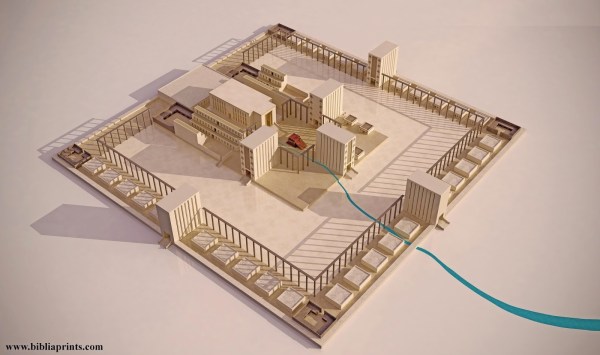
A living temple.“After this” John was sent to “measure the temple, the altar and those who worship there” (11:1). By the time of John’s writing, the temple in Jerusalem had been destroyed for more than 20 years – so the temple refers to the church (1 Corinthians 3:16; 6:19; 1 Peter 2:5 etc.). This “man measuring the temple with a rod” clearly alludes to Zechariah’s vision (Zechariah 2:1 – 5). Here, in John’s vision, no measurements are given; what matters is that measures are taken. The temple, altar and worshipers are “measured” or counted because they matter to God. The promise of peace and protection in Zechariah 2:5 is the intended message to John’s readers: “I will be to her a wall of fire all around, declares the Lord, and I will be the glory in her midst.” God has measured his people, and not a single one will be lost (compare chapter 7, where God’s servants are “sealed” for protection).
Vulnerable yet Invincible. However, “the outer court” should not be measured, for it would be “trampled upon for 42 months” (11:2), “1,260 days” (11:3) –or 3½ years (“time, times and half a time”). 42 is significant in the apocalyptic genre because it is an important number in Israel’s history. For example, 42 is the number of stages in Israel’s journey through the wilderness toward the Promised Land (Numbers 33). 42 months is the period that Elijah had stopped the heavens from raining to bring the nations to repentance (1 Kings 17; James 5:17). Matthew’s genealogy is portrayed in three sets of 14, amounting to 42 generations, showing that the birth of Jesus marks the end of waiting for Israel’s Messiah (Matthew 1). Therefore, 42 represents the fullness of time in any stage of redemptive history. For the readers of Revelation, 42 represents the period we live in – the time allowed for the nations to come to repentance, between the cross and Christ’s return. Darrel Johnson writes:
“42 months represents the period of time from the day Jesus Christ constituted the new temple by the shedding of his blood, until the day when the new city without a temple, the city which is a temple, comes down out of heaven” (Discipleship of the Edge: An expository journey through the Book of Revelation; Regent Publishing: 2004)
In putting verses 1-2 together, we see that the church is measured and protected by God’s seal until the Day of Judgment but will be resisted and persecuted by secular nations until that time. We are simultaneously invincible and very vulnerable in this age – “like lambs in the midst of wolves” (Matthew 10:16). Why, then, are we here?
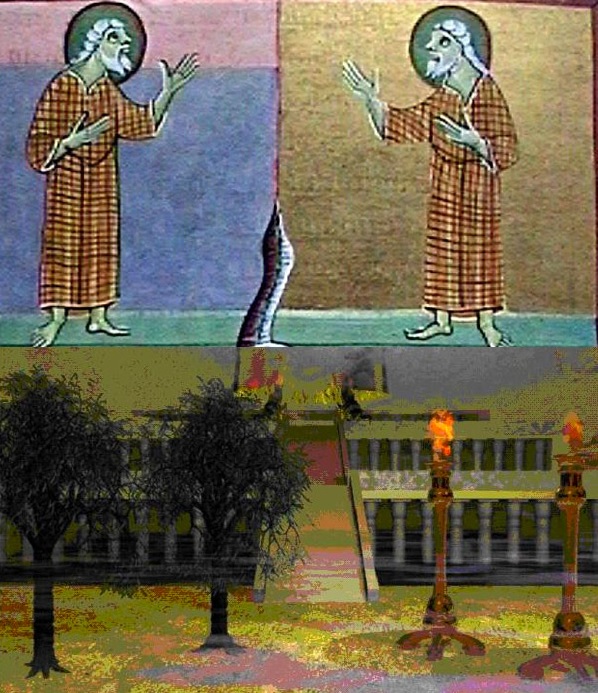
Two Witnesses. John sees two witnesses like olive trees and lamp stands. Olive trees represent God’s covenant people… [Read the full commentary of Revelation in Faithful to the End]
Faithful to the Endis a simple commentary that helps make sense of the encouraging message of Revelation.
Quick links to full THE END Revelation Series posts
Our journey through Revelation in this is the 15th post brings us to chapter 10. A recording of this will be available on the Shofar Durbanville Youtube channel.
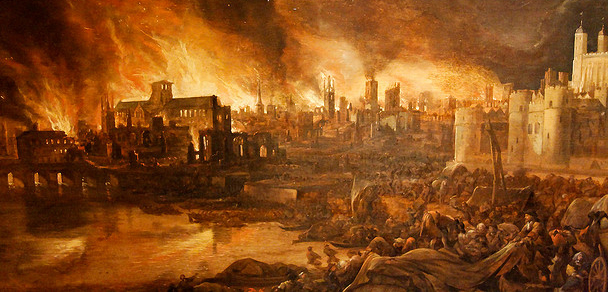
Let’s first catch up where we are in our journey through this apocalypse. In that glorious scene of God’s throne room (ch 4), the Lamb received the Scroll containing God’s redemptive plans to renew all of fallen creation (Ch 5). As the Lamb opened the seven seals of the scroll, terrible judgments were released on earth (ch 6). These judgments were paused to mark God’s servants with a seal of protection from the final judgment (ch 7). With the opening of the 7th seal, heaven became quiet as God focused his attention on the prayers of his saints, which were mixed with the fire from his altar and poured out as six more severe judgments on the earth (ch 8-9).
In chapter 10, the scene continues, but the judgments are interrupted again (as in chapter 7). This time, the focus is on John, who is invited to move from spectator of the vision to participator in Christ’s Revelation.
In John’s vision, a mighty angel comes down from heaven, standing with one foot on the earth and one on the seas (sovereign over land and sea, refer 8:7-8). He was clothed in white, his face shone as the sun, and he had a rainbow around his head, his feet were like fire, and his voice like a lion. John describes the Angel as Jesus himself (compare 10:1-3 with 1:15-18; 4:3).
The Angel had a little scroll in his right hand (compare 10:2 with 5:7), and when he spoke, there were seven thunders. But when John wanted to record these seven thunders, like the previous seven seals and seven trumpets, the Angel prevented him and then raised his hand and vowed to God “that there should be delay no longer” (10:6). This scene is a powerful allusion to Daniel 12 – a vision about the end, where the wicked will grow more wicked and the righteous will grow more righteous.
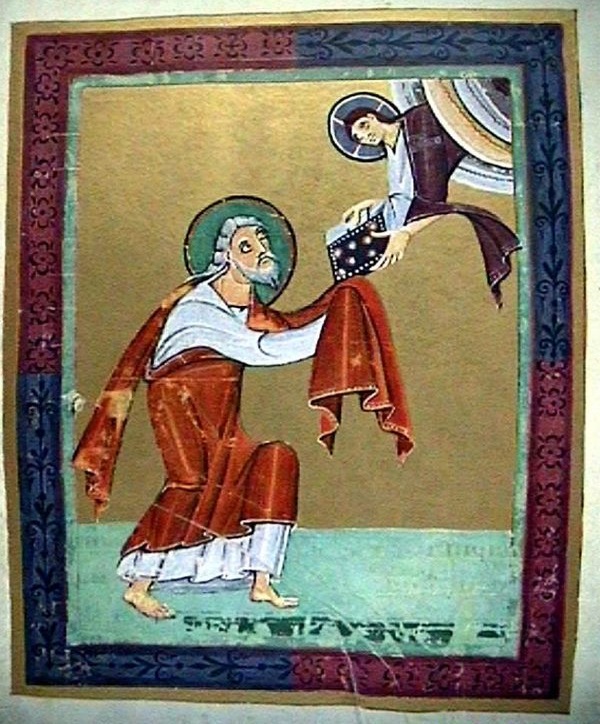
John was commanded to take this scroll and to eat it – compare this to a similar command given to the prophet Ezekiel, with the following charge: “All My words that I shall speak to you receive in your heart, and hear with your ears.” (Ezekiel 2:10-3:2, 10). As John ate, it tasted “sweet as honey”, but his “stomach became bitter” (10:9-10; compare Jeremiah 15:16 and Ezekiel 3:3). Then John is sent to “prophesy about many peoples and nations and languages and kings” similar to the commission given to God’s prophets and apostles (compare 10:11 with Isaiah 6; Jeremiah 1; Ezekiel 3; Acts 1:8; 9:15).
From spectator to participator. This pause after the six trumpet judgments, which still left the nations unrepentant of their wickedness and rebellion (9:20-21), shows the mystery of God’s redemptive plan. Here, we see that John was invited to discern and understand God’s redemptive acts and participate in his plan. The scroll – which no one could receive and open – was now handed to John. The scroll that unleashed God’s redemption of creation through terrible judgments was given for John to take and digest. John, as with everyone who reads his words and “beholds” this Revelation, is invited to embody God’s plan – the renewal of all things…
This post is the fifth post in a series through the book of Revelation. Follow this link to a video recording of this post.
The Revelation John received was sent as a circular letter along a logical postal route through Asia Minor which started at the bustling city of Ephesus, moving north to ancient Pergamum, inland through Thyatira, and southeast to the wealthy city of Laodicea. This letter contained a prophecy from Christ to these seven churches to comfort them during the tyrannical reign of emperor Domitian (AD 90-92), to correct their perspective in their fight against evil, and to charge them to remain faithful to Christ. There is a reward for those who remain loyal to the end!
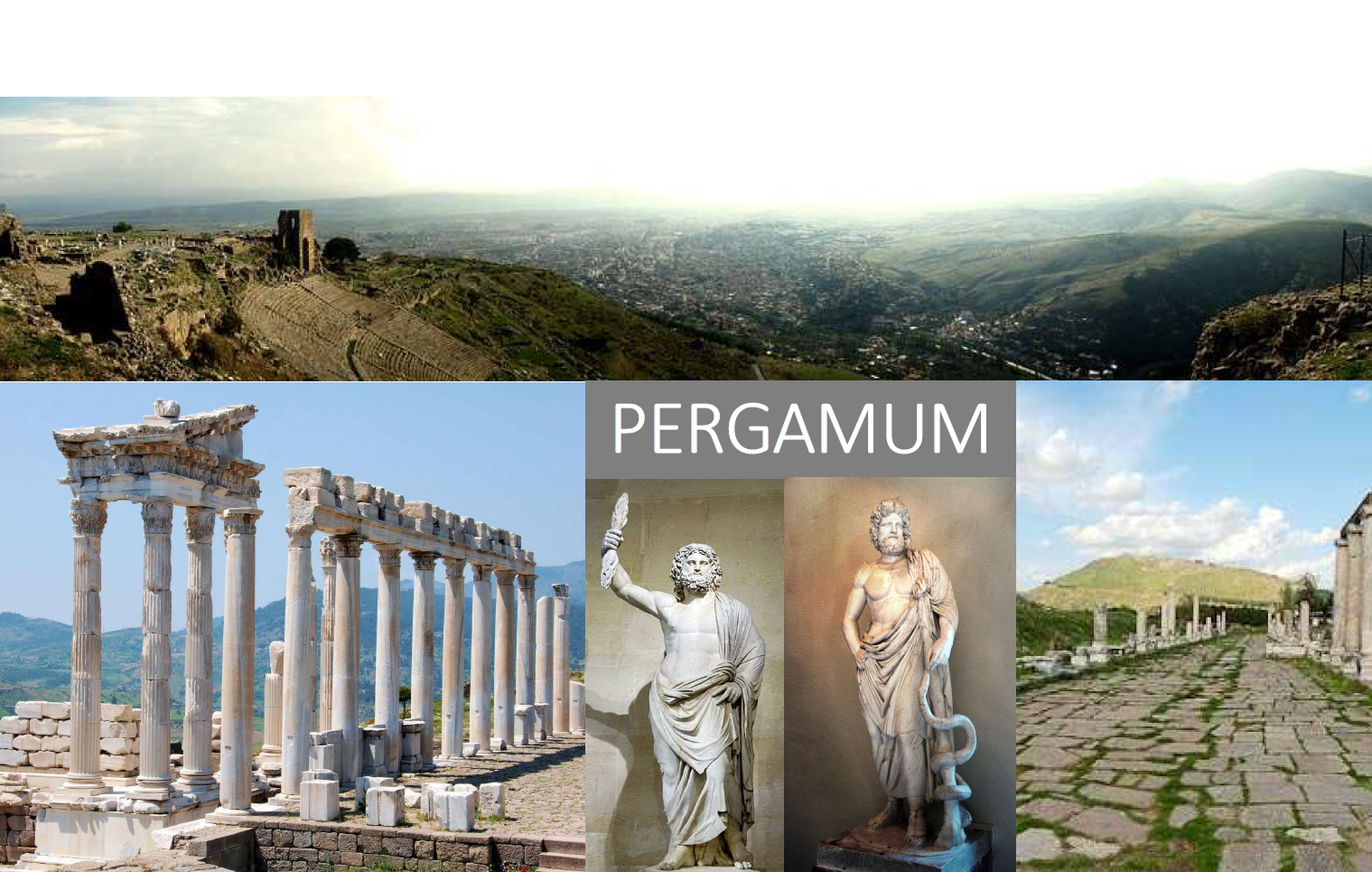
Pergamum, set on a hilltop overlooking the Caicus plain below, was a magnificent ancient city which exited from the springs of civilization in Asia (around 500 BC). Pergamum (modern-day Bergama) lay about 55 miles north of Smyrna, inland from the Aegean coast. The archaeological findings in this great city are rich in religious artefacts, including statues and temples of Zeus, Athena, Dionysos (Baccus in Roman mythology), and especially Asklepios, the god of medicine, whose cult was strong and accounted for the prestigious school of medicine in Pergamum. Asklepios’ serpent was a prominent brand in the city, displayed on many of the coins pressed there.
Apart from the medical school, the city was famous for its vast library, university, big parchment industry and the large amphitheatre overlooking the valley. It was also a strategic Roman stronghold and inlandregional administration, boasting the first Asian temple of the Imperial Cult in honour of Augustus (AD 29).
Within this ancient citadel which worshipped Domitian as king and lord, valued entertainment, education and science, was a vulnerable church who received this letter of comfort and correction, a charge to not compromise their devotion to Christ in word or in deed (Revelation 2:12-18).
The Revelation of Jesus Christ (2:12). Christ is revealed as… [Read the full commentary of Revelation in Faithful to the End]
Faithful to the Endis a simple commentary that helps make sense of the encouraging message of Revelation.
Quick links to full THE END Revelation Series posts
This post is the fourth in a series on the book of Revelation. The link below takes you to a video recording of this blog post.
How does one endure hardship, and why? Why does God allow his people to undergo seasons of suffering? And where is God when it hurts? These are some of the questions that Jesus answers in the Revelation, a circular letter written by the apostle John to seven congregations in Asia Minor during the tyrannical reign of Emperor Domitian (AD 90-92).
Polycarp, Pastor at Smyrna (69 – 155 AD)
“Eighty-six years I have served Him, and He never did me any injury: how then can I blaspheme my King and my Saviour? …You threaten me with fire that burns only for an hour… but you are ignorant of the coming judgment and of eternal punishment reserved for the ungodly. What are you waiting for? Bring on what you will!”
These were the last words St Polycarp, a famous martyr during another wave of heightened Roman persecution, revealing the church’s grit and attitude in Smyrna. Polycarp was a pupil of the Apostle John and probably the “angel of the church” (messenger or leader) in Smyrna whom Jesus was addressing in Revelation 2:8-11.
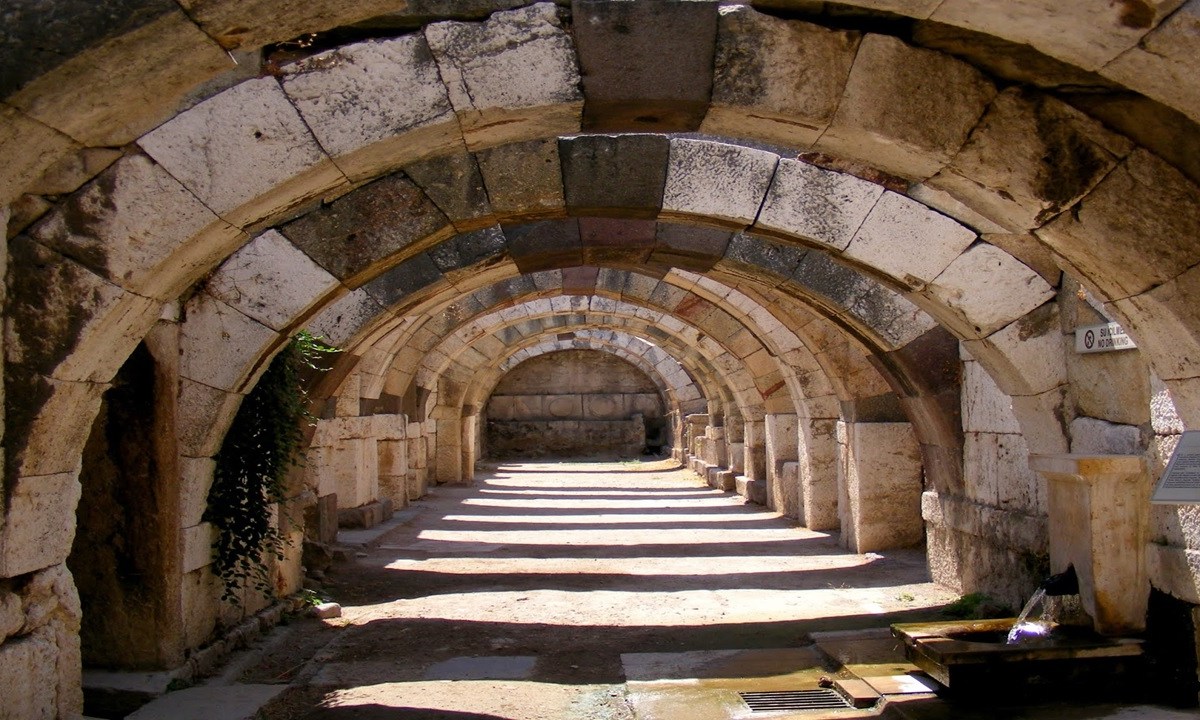
Smyrna, present-day Izmir in Turkey, printed coins which claimed it was “the biggest and most beautiful city in Asia.” This coastal city was prosperous because of the trade routes and its natural beauty. The town was filled with magnificent temples and statues – some of these are well preserved today. The figure of Bacchus (Roman) or Dionysus (Greek), god of wine and immoral revelling tells us much about the day’s culture. So also, the statue Cybele, mother of the gods, reveals that in this city, women were honoured or even venerated within certain people groups. The citizens of this Greek city were loyal to Rome, dedicating a temple to the goddess Roma around 195 BC. It also had a temple preserved for the Imperial Cult, devoted to worshipping the emperor.
Persecuted by the Jews. At the end of the first century (AD), Smyrna boasted a large community of Jews, bolstered by the migration of Judeans after the destruction of Jerusalem during The Jewish War (a significant rebellion against the Roman Empire, 66 AD – 73 AD). These Jews were especially hostile to Christians – in part because during the siege of Jerusalem (70 AD) Christian Jews fled the city (prompted by a prophetic Word from the Lord), just before the total destruction of the city and its temple. Also, the Jews viewed the worship of Jesus as an abomination. These Jews were often the first to hand known Christians over to the Roman authorities for punishment.
Poor Christians. In this city, as in the broader community, Christians were often excluded from the formal employment sector because of the refusal to partake in the worship of the gods of the guilds (first-century trade unions). In this pagan society, each guild had its god(s) who demanded tribute in exchange for prosperity. Since Christians refused to worship any other gods, conversion implied the end of their careers. The only jobs they could take were for the “cursed” in society: garbage removal, sewerage cleaning, the burial of the dead, etc. Therefore, being Christian was synonymous with being poor in the early Church.
The letter to Smyrna follows the same structure as the other letters: opening with a unique and personal Revelation of Christ to them, it complies with a commendation, a charge, then a warning and finally a promise of reward. However… [Read the full commentary of Revelation in Faithful to the End]
Faithful to the Endis a simple commentary that helps make sense of the encouraging message of Revelation.
Quick links to full THE END Revelation Series posts
Our world is scared, and increasingly so. Anxiety disorders are the most common mental illness in the US today according to the National Institute of Mental Health affecting one third of the North American population, with a staggering 37% and 50% increase in occurrence among children (ages 4-10 and 11—19) over the last decade. It is estimated that anxiety disorders cost the U.S. more than $42 billion a year, nearly one third of the country’s total mental health bill.
Our world is a scary place. Our society is characterized by a sense of anxiety and vulnerability, daily fueled by images of terror and rumors of impending disaster. But we are not the first generation passing through these shadows of uncertainty, uproars and unrests. Like the generations before us we need to overcome the urge to panic.
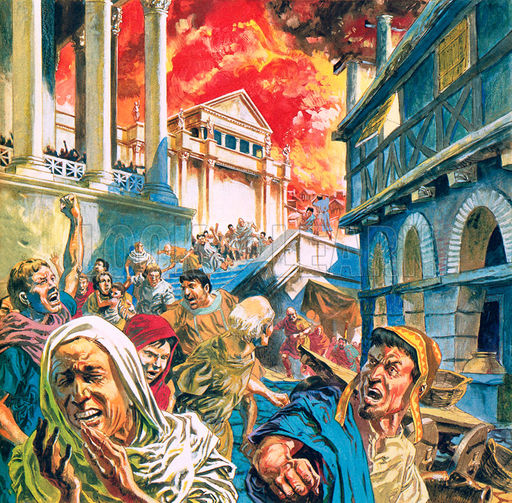
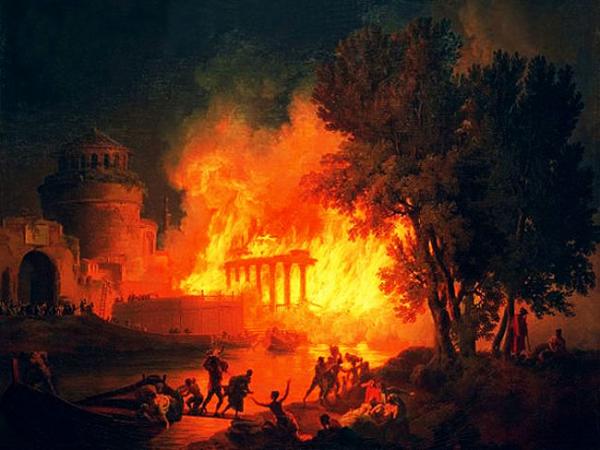
This is a call to courage. It’s not the time to be anxious, to be intimidated, to succumb to terror. As we see the climate is changing, the shadows drawing longer, we need to look back and find courage from the accounts of others that have navigated similar moments in history. During Nero’s reign Paul urged the anxious, persecuted believers to look into the the Scriptures for “learning… encouragement… comfort… [and] hope” (Romans 15:4). And what examples of courage does the Scripture not have!
Abraham left all he knew for promise from God in his spirit. Later he pursued five kings with their armies to save his nephew Lot from slavery. Noah, a preacher of righteousness had courage to confront a perverse generation and build the ark amidst their mockery for 120 years. Young David stood up to Goliath the giant. JoshuaandCaleb were not intimidated by the giants in walled cities and trained armies that occupied their Promised Land, patiently waited forty years and in their old age lead the nation to possess this land. Daniel walked into a den of lions, and his three friends into the fiery oven because they would refused to bow to another god. He did falter to fear but told Darius straight-up “God found you too light!”Moses confronted the terrifying Pharaoh demanding release of all his slaves, and then led the entire nation into. Queen Ester risked her life when she approached the Persian king to save her generation from annihilation. Nehemiah did the same to rebuild the holy city. Gideon and his small army walked unarmed into a Midianite camp with 15’000 soldiers. Samson single-handedly took on 1’000 Philistine warriors. Jehoshaphat led the whole nation into the dessert against three massive armies. Elisha was besieged by the entire Syrian army but walked right up to them and led them into siege. Elijah challenged all the Baal prophets to a public showdown asking “Who is the real God?!” Jonah walked into the most violent city of his day as a foreigner, demanding repentance and submission to his God. Prophets like Isaiah,Jeremiah, Malachi, Amos, Hosea, Nathan and John the Baptist willingly chose a life of mockery, poverty and pain as they confronted kings, rebuked hypocrisy, and exposed the injustice of the day.
Jesus, son of God, left the comfort of heaven, the honor of the throne, the worship of the angels and the power of divinity to enter a life of pain, poverty and persecution – ultimately to suffer brutally and die shamefully. All because “God so loved the world.” And his courage set the pattern for his followers, as we see in the first beatings of Peter and John, the first martyr Stephen, the hardships of the Apostle Paul history of the church throughout the ages.
How do we grow in courage?
In Joshua 1:1-9 we see the Lord giving a pep-talk to the new leader called to lead the Hebrews to occupy their land inhabited by Giants in secure cities. We learn much from this instruction about how to “take heart” when times are tough.[i]
Courage must rise in the face of fear.There is no need for courage when everything is plain sailing, when all is as it should be. But in the threat of pain of discomfort, loss or death, when the natural inclination is to hide or run away, that’s the que to take heart! The Lord told Joshua to be courageous because the situation was terrifying. A sense of fear must trigger the response to courage.
Courage has a cause. When there is no need, no urgency, no mandate, there is no need for courage. When one puts his hand into a lit furnace for no reason he is rightly labelled a fool. But a woman who runs into a burning house to save her daughter is a hero. Joshua had to be courageous to fulfill his mandate. Bravery is called upon when the fight is worth it. Courage is needed to uphold the righteous purposes of God.
Courage is gained in the knowledge of God. Joshua was told to not forget “The Book of the Law” which Moses left Israel. Today we have it as the first five books in our Bible. Why would that help Joshua to grow in courage? Because it records – from Creation to Exodus – the accounts of God’s wisdom, power and loving faithfulness with his people. Joshua would be “encouraged” every time he reads how faithfully and powerfully God had preserved and delivered his people in desperate times past. Thus courage is gained as we become convinced and get reminded of God’s power and might – that truly “nothing is impossible with God” (Luke 1:37). Courage grows as we learn from these accounts who God is: that God is good, righteous, faithful and merciful. This revelation of God’s power and character is preserved in Scripture as records of his interaction and decrees, so we get to know God and are encouraged as we read these accounts of divine intervention (Romans 15:4). Indeed, “but the people who know their God shall be strong, and carry out great exploits.” (Daniel 11:32)
Courage is gained in the assurance of God’s presence. The Lord encouraged Joshua with the promises of his personal presence. More specifically “as I was with Moses” – thus Joshua was promised the same intimacy with the Lord, the same faithfulness in preservation and the same powerful interventions which Moses experienced as he lead these people. What an encouraging promise! The Lord made that same promise of companionship his ascension (Matthew 28:20), and that companionship we experience in the empowering presence of His indwelling Spirit (Romans 8:11). We grow in courage as we grow in revelation of the Lord’s personal presence, declaring with David “The LORD is on my side; I will not fear. What can man do to me?” (Psalm 118:6)
Courage is infectious. The Lord encouraged Joshua. Before these words of encouragement Joshua was intimidated and anxious. But the words of encouragement put the necessary strength into his heart to go on and fulfill his mission. That’s why we are repeatedly called to “encourage one another” (1 Thessalonians 5:11) – literally “put courage and strength into the heart of another”. We get encouraged through deliberate effort to be built up, but also indirectly as we see others or hear their stories as they continue courageously amidst hardship, thinking “If another can do it, so can I.” Courage is infectious, as we can see in this video
Courage is a choice. The Lord’s repeated commands of courage implies a choice to succumb to fear and intimidation or to take heart and continue with his commission. We either choose to allow fear to dictate our actions, or we choose to allow courage to reign in our hearts. So Jesus told his disciples – as he is saying to us today “Let not your heart be troubled…believe in me” because “In the world you will have trouble. But TAKE HEART; I have overcome the world.” (John 14:1; 16:33) These exhortations from the Lord demand a response, a resolve to not allow fearful situations to “trouble your heart” and dictate your actions. So when there’s a choice to fight or flight, choose to fight and persevere.
Add courage to your faith
Life in the kingdom of God is not for the faint-hearted – it never was, it never will be. The kingdom suffers violence” said Jesus (Matthew 11:12). Our world is unfriendly and uncertain. But so it was in the days of Jesus and the Apostles. Their society was oppressed by the Roman army and heavily taxed by Caesar, plagued by perpetual civil unrest and terrorism, divided by extreme classism. For that reason Peter exhorted the church to “add to your faith COURAGE“ (2 Peter 1:5). Mere saving faith does not make you fit or fruitful to fulfill your mandate. Our mandate is clear: peacemakers, Kingdom-bringers, heralds of the Good News.
So “don’t be anxious about tomorrow…” (Matt 6:34), don’t live a life pacified by fear or paralyzed by what can go wrong. Fear steals your joy and taps your strength. Reflect on this truth: if God is for us, who can be against us!? Then look up, shape up, sign up and step up. TAKE HEART, finish the job, then we can go Home.
[i]Note the incredible similarity in form of the appeals to courage to complete the divine mandate with assurance of the Lord’s power and presence in the following texts: Solomon’s charge to build the temple (1 Chronicles 28:20), Joshua’s command for conquest (Joshua 1:1-9), the disciple’s commission (Matthew 28:18-20), the angel’s warning about Paul’s shipwreck and appointment with Cesar (Acts 27:24-26) and the Corinthian’s church charge to not fear death but continue in their faith (1 Corinthians 15:57-8).
Writing to a congregation of predominantly Jewish Christians in Rome during Nero’s reign, the author of Hebrews repeatedly exhorted believers to not renounce Christ in fear of the mounting persecution. And that is necessary, because suffering moves one to re-evaluate what you believe. At some point in life we all walk through the fire – but how do you remain faithful to God amidst suffering? How do you endure the fires of life.
Brief background to and outline of Hebrews
The letter to the Hebrews was written to Jewish believers (1:1 “spoken to our fathers”) probably in Rome (13:24 “those from Italy greet you”). After hearing the gospel confirmed with signs and miracles (2:4), they were converted (3:16), were baptized and had partaken of the Holy Spirit (6:1-5). This was a long-established church (5:12) whose members have lived exemplary lives of faith and good works (6:10), and have experienced persecution, imprisonment (13:3) and the loss of property (10:32-33), but have not yet suffered martyrdom (12:4). The congregation were capable of charity and hospitality (13:2,16), and previously had great teachers and leaders (13:7) who grounded them in foundational Christian teaching in the Jewish Scriptures (6:1-2).
But their faith had been outlawed and these ostracized believers became discontent and discouraged and longed for earthly property and a sense of belonging in their society (13:5, 14). So they started questioning their beliefs, considering other avenues to God so they could be reintegrated into society; they were on the verge of walking away from their Christian convictions. In response the author of Hebrews wrote this “word of exhortation” (13:22) to bolster the faith and perseverance of this wavering Christian community, reminding them how to correctly “draw near…” (10:23) to God.
The recipients seems to have been influenced by the first-century philosopher Philo of Alexandria who mixed Judaism with Greek philosophy and wrote that there were several ways for sinful man to approach God. He mentioned the Logos (elsewhere “the word or reason of God”), Sophia (elsewhere “the wisdom of God”), the angels, Moses, Melchizedek the high priest and the Jewish sacramental system were all avenues (or mediators) to bridge the divide between man and God. Reading Hebrews, it appears that the first recipients of this letter were considering these alternative avenues to avoid persecution, yet still worship God.[1] In response to their searching the author writes how Jesus Christ is better than Philo’s Logos and Sophia (1:1-3), better than the angels (1:4-2:18) and Moses (3:1-6), and better than the Aaronic priesthood (7:1-24), presenting a better offering (9:14) in better place (8:2). Jesus has also secured a better, eternal covenant by his sacrifice “once for all” (10:14) that he can guarantee fulfillment on behalf of both man and God (7:22). Our author shows this superiority to deter readers from turning to these “alternative mediators” to escape the pressures of persecution and to exhort readers to hold fast to their confession if faith in him amidst difficult times.
Faithful in the fire
How does this 2000 year old letter to Jewish believers suffering under Nero’s persecution help us today to “hold fast to your confession” (Hebrews 4:14; 10:23) in the midst of our own hardship and suffering? How can we be prepared to remain faithful in the fire and joyfully endure the suffering as these early believers who remained true to Christ through Nero’s fires?
The answer lies in the pivotal point of this letter, Hebrews 10:19, where the author moves from orthodoxy (or correct thinking) to orthopraxy (or correct living). Here the epistle shifts from theory to practice, with the transition “Therefore” meaning “based on our argument up to here” and then follows with three powerful exhortations that appeal to the required response of the hearers. These three exhortations contain the keys that will help the readers through the mounting persecution they feared. The author encourages readers to “draw near… in faith” (v22), “hold fast to … hope” (v23) and “to stir one another in love” (v24-25). Then he unpacks real faith in chapter 11, hope for endurance in chapter 12 and lovein practice in chapter 13. Like so many times in the letter he again reminds them that they need to remain faithful to Jesus, because of the coming judgment of Christ (v25-31).
These three exhortations to continue in faith, hope and love apply as much to us during times of hardships today.
Draw near in faith
These wavering believers were graciously encouraged to “draw near in full assurance of faith” (v22). Even although they considered renouncing Christ they were encouraged to “have confidence to draw near to the throne of grace through the blood” (4:16; cf 10:19). God has not written them off! Amidst their suffering and wavering they can be assured that their confidence before God was not based on their track record, but based on Jesus’ shed blood (v19). This also implies that their suffering was also not due to their failures. Rather they were encouraged that Jesus, their perfect High Priest has also “suffered when tempted, [and is therefore] able to help those who are being tempted” (2:18). He “is able to sympathize with our weaknesses” (4:15-16) – so draw near to get help!
Hold on to hope
Poor and pushed aside, mocked and outlawed, their current circumstances were very uncomfortable. And their immediate future looked even bleaker as the Roman persecution was escalating. Therefore the author encouraged these fragile believers to hold onto their Lord who promises their share in his eternal inheritance! He is their “forerunner” (6:20) who went to announce their coming and the High Priest who secured their confidence before God (6:20). There is no room for doubt: Jesus secured their access and inheritance in Jesus’ eternal kingdom. And “this hope is the anchor of the soul” (6:19) – it settles the emotions and keeps the believer on course to, not swept away by the circumstance. So the believer is encouraged to endure suffering the way their Lord did – joyfully anticipating his reward (12:1-2). This hope is the reason to remain faithful amidst the fire; their endurance will be rewarded!
Assemble to grow in love
Thirdly the author exhorts this congregation, fearful of being hurt or ostracized, to not neglect their assemblies (10:25). In effect he tells this fragile congregation “I know that you are afraid of being identified as a Christian, and I know that you will suffer and might even die when you are seen to gather with other believers – but do it!” Why the urgency? Why should they assemble? Could they not practice their faith in private?
The author motivates that their primary purpose of assembly is to “stir one another to love and good works” – to grow in godly character and excel in good works (10:24). More specifically, each congregant should make it their goal to think about how to help another excel in character and good works. As he did earlier in the letter he encourages them to continue love and service for the saints (6:10-12).
Enduring the fire today
How do we endure suffering? What was true for the Hebrew congregation in Rome suffering under Nero’s reign is true for me and you. First, hold on to your faith: you are loved by God, approved by God, sanctified by God and preserved by God ford God. Not the suffering nor your doubts or fears can separate you from God’s love in Christ Jesus (Romans 8:35-39). So boldly approach of throne of grace to receive help in time of need! (Hebrews 4:16).
Second, let hope stir your joy and calm your fears, motivate you to continue in faith, work for your reward and find purpose in all you do. God rewards faithfulness!
Thirdly, “never walk alone!”Join in the assembly to grow others “in love and good works” (Hebrews 10:24), and see how you are strengthen and encouraged yourself. Indeed, “it is more blessed to give than to receive!” (Acts 10:35)
References for understanding the letter to the Hebrews
Nash R.H., The Notion of Mediator in Alexandrian Judaism and the Epistle to the Hebrews, Westminster Theological Journal, Vol 40 (1977), p89-115.
Barclay W., The Daily Study Bible, The Letter to the Hebrews (Edinburgh: The Saint Andrews Press, 1998).
Gutrie D., Tyndale New Testament Commentaries Hebrews (Leicester: Inter-Varsity Press, 1993).
Schenck K., Understanding The Book Of Hebrews (Louisville, Kentucky: Westminister John Knox Press, 2003)
It’s the beginning of a new year, and we are reminded often of the good plans God has for us – “plans to prosper and not to harm us, to give you a future and hope.” (Jeremiah 29:11). But what do we do when God’s plans include walking through the fire?
“I believe in God, the Father Almighty.” This first line of the Apostolic Creed is fundamental to the Christian faith (Hebrews 11:6): the belief in a God for whom nothing is impossible, and God who is a loving Father who has our best interests in heart. In this God we trust.
Yet this great truth is the problem for many devout believers who sincerely trust in God for something – healing, provision, breakthrough at work, peace in a relationship – but God does not come through. Over and over we affirm that God is almighty and good, and that he hears our cries and answers our prayers – but then a loved one dies, your company folds and finances dwindle or marriage ends in divorce court. Or your desires are unmet in spite of all the promises you received, and you start another year lonely, or childless, or frustrated at work. What do we make of these situations? How do we relate to a loving, Almighty Father that allows for the suffering of his children?
The cause of suffering
As mentioned in a previous post Suffer Well, suffering has two basic behavioral consequences in a believer.
“Introspection” – bronze statue by Frank Somma (2004)
Firstly, he/she may gravitate towards doubt of self, leading to unhealthy introspection, believing that the suffering is either a result of God’s punishment for sin or some “open door” through which Satan has access to hurt us. Job’s friends believed this and accused him of secret sin. (Yes, “sin leads to death” (James 1:15) and yes, our God “disciplines those he loves” (Proverbs 3:11-12; Hebrews 12:5-6), but like a good father he warns beforehand and makes it clear what you are being corrected of – his aim is correction)).
Accusing God.
Secondly, the one suffering may doubt God’s character or ability, leading to accusation, that either God is unjust (as Job did) or unable to save. This can escalate to agnosticism or even atheism.
However, the Bible contains a myriad of godly characters who has undergone suffering – neither because of their sin or God’s unfaithfulness. These accounts were recorded during times of hardship “for our learning… encouragement… [and] hope” (Romans 15:4) during similar circumstances. One such helpful recording is of Daniel’s three friends who refused to bow down and worship a statue which emperor Nebuchadnezzar erected (see Daniel 3:14-30). By their own declaration these godly men believed “our God is able to deliver us from the burning fiery furnace, and he will deliver us out of your hand…” (v17). Yet they ended up in the fire; God did not prevent them from suffering. What can we learn from this account of the three Jews in Babylonian exile 530BC? How does it encourage us or give us hope in our own suffering?
“The Three Men in the Fiery Furnace” – 3rd Century wall painting discovered in the Priscilla Catacomb, Rome
God is not the author of suffering and death
In Genesis and Revelation we see the nature of God in creation: no suffering, no death, no sickness, no enmity.
As illustrated in this account, God is not the one who initiates suffering and death – the pagan king was. God’s character and desire for his creation is clear in the Genesis creation account (Genesis 1 and 2) – there was no death, sickness or suffering until the fall. We see this also in the promised re-creation of the New Heaven and New Earth (Revelation 20 and 21) where again “death shall be no more, neither shall there be mourning, nor crying, nor pain anymore, for the former things have passed away.” (Revelations 21:4). God is the author of life; Satan is the author of death and destruction (John 10:10). Since the fall of creation sin in our hearts and our world will result in pain, suffering, sickness, and death. This is exactly why Jesus came – “to destroy the works of the devil” (1 John 3:8) so that mankind may again “have life more abundantly” (John 10:10). God is not the author of suffering, but he is drawn to our suffering to redeem mankind from it.
A good life does not save usfrom suffering.
As seen in our text, a good moral life does not prevent us from suffering. In fact, even a devout godly life does not protect us from all harm as we see in this account of Shadrach, Meshach, and Abednego who refused to worship idols, and yet were thrown in the fire. A casual glance at Biblical and church history will assure you that good people suffer – in spite of their godliness and often because of their devotion to God.
Consequently, suffering is not always the result of our sinfulness or imperfection. Our suffering many times is the result of other people’s cooperation with evil (as in this case – the idolatry and oppression of Nebuchadnezzar), or simply the result of the fallen world infested with genetic imperfections, diseases and natural disasters. Our righteousness does not always exclude us from these hardships.
God enters into our fire.
God enters our suffering. (Shadrach, Meshach, and Abednego in the Fiery Furnace by William Maughan, 1985)
Suffering believers often feel abandoned by God. The question asked many times “Where is God when it hurts?” is clearly answered in this account of Daniel’s friends: God enters the fire to be with his people in their suffering and strengthen them. This is clearly demonstrated by Christ’s incarnation: Jesus became man to identify with us in our suffering (Mark 8:31; Luke 9:22; Hebrews 4:15) and to ultimately bring an end to the suffering brought about by sin and Satan (Revelations 21:2-5).
And still today Jesus is “Emmanuel – God with us” (Isaiah 7:14) who will “never leave us or forsake us” (Hebrews 13:5). Especially during hardship the Psalmists sings “The Lord is near to the broken-hearted” (Psalm 34:18). No amount of suffering, pain, death or loss – “Nothing can separate us from the love of God in Christ” (Romans 8:38). God enters our fire – we never suffer alone.
Our suffering has purpose
Why does a loving God then allow suffering? If he is with us in our suffering, why does he not simply save us from it? The mocking Jewish elite asked this same question to Jesus hanging on the cross 2000 years ago (Matthew 27:41-44), but Jesus endured it because he knew there was purpose to his suffering (Hebrews 12:2) – the salvation of the world!
Our text shows us that the suffering of the three righteous men at the hands of Nebuchadnezzar also had purpose, and we find hope that our suffering has the same three benefits.
Firstly, we note that their suffering lead to their immediate promotion (Daniel 3:v30). This is a pattern in the Bible – the one who suffers well is promoted directly after his/her suffering. Think of Job who was double as wealthy after his loss (Job 42:10), Joseph who became ruler over Egypt after his imprisonment (Genesis 41:41-44), David who was crowned king after his persecution (2 Samuel 5:3), Peter who became leader of the early church after his “shaking” (Luke 22:31-32 and Acts 2:14), and Jesus who earned the title “King of kings, Lord of lords” through his obedient suffering (Philippians 2:8-11 and Revelations 19:6).
As mentioned in a previous post Suffering your good tutor we can rest in the truth that “Nothing irredeemable can happen to a Christian” – or as Paul said it “all things work together for the good…” (Romans 8:28). For the Christian who hold onto God in Christ, regardless of what you are going through, you are better off afterwards – both in this life and the life to come. Suffering well always lead to promotion. Nothing we encounter can put you back – God can turn every situation around for your good and his good.
Secondly, the suffering of the three friends of Daniel functions as an amplifier of their witness of and faith in God, so that everyone knew them and was attracted to them after the suffering to hear and investigate their story (Daniel 3:27; refer Philippians 1:13). Their faith in God and faithfulness to him drew the attention of the king and his governors. Furthermore, because of God’s preservation and presence in the fire, the king issued a decree that no one may “speak anything against the God of Shadrach, Meshach, and Abednego” (Daniel 3:29) for fear of their life. Effectively, their faithful, hopeful suffering lead to the honoring of Israel’s God throughout the vast Babylonian Empire, by the King’s decree. Because they suffered well, the name of God was known and held in honour throughout the fast Babylonian empire; in other words, their suffering was part of God’s plan of salvation of the world. Joseph discovered the same after his imprisonment and promotion – what his brothers intended for evil, God intended for the preservation of millions of souls from widespread famine (Genesis 45:5-8).
Throughout the ages, the blood of the saints has been the seed of the church. In other words, the faithful, hopeful suffering of God’s people has lead to the salvation of millions of souls throughout the ages. Likewise your suffering amplifies the witness of your faith in God and lends credence to your message of hope in God – if you suffer while trusting God and remaining faithful to him.
Thirdly, as in the case of the godly martyrs who endured Nebuchadnezzar’s fiery furnace, suffering helps one grow in the knowledge of both yourself and God. Trying times helps one discover the end of yourself and you realize how much you need the Lord’s grace to survive the fiery ordeal, as Paul realized (2 Corinthians 12:9). This produces a beautiful humility.
But suffering also helps one grow in intimacy with God like never before, as we see in this rich example of the three Jewish martyrs who experienced Jesus “walking in the midst of their fire” with them (Daniel 3:25). Suffering forces one to draw near to God with no pretense, and the result is an honest perception of who God is, as Job discovered (Job 42:5). This intimacy with God leads to uncharacterized confidence to pursue the impossible, because you have come to know the power and faithfulness of God through your hardships.
Taking it home
In closing, there are three take-home messages from this story in Daniel 3.
We find comfort in the truth that God will never forsake us – especially not during hardship! “I am with you when you go through the fire… you shall not be burned, the flame shall not consume you…” says the Lord (Isaiah 43:1-2). But don’t isolate yourself, don’t walk through the fire alone – “God is among His people” (Revelation 21:3).
We find hope that our suffering has meaning, it has purpose – God makes “all things work together for good, for those who are called according to his purpose.” (Romans 8:28) You will be better off after this suffering than you were before it!
Lastly, this story makes us consider and prepare our hearts: can we say with these three godly men “our God whom we serve is able to deliver us from the burning fiery furnace … but even if not… we will not serve your gods…” (Daniel 3:17-18). They knew God could save them, but God said no. Jesus pleaded his Father to make a way around the cross, but God said no (Matthew 26:39, 42). Paul pleaded the Lord to save him from his torment, but the Lord said no (2 Corinthians 12:8-10). David trusted his Shepherd to lead him “through the valley of the shadow of death” (Psalm 23:4) – will you? Will you serve God when the he says no and you must walk through the fire?
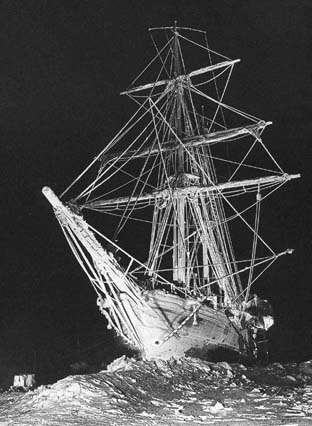
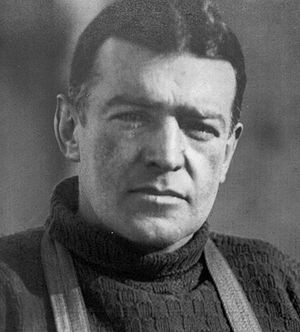
“Men wanted: for hazardous journey. Small wages, bitter cold, long months of complete darkness, constant danger. Safe return doubtful. Honour and recognition in case of success. Sir Ernest Shackleton.” 5000 men responded to this blunt advertisement posted in London newspapers January 13 1914, applying for the Imperial Trans- Antarctic Expedition. Shackleton selected a crew of 28 who proved to be optimistic, patient and courageous – the minimum requirements he sought for in a man who boarded a ship with him. They set sail from London in the ship aptly named “Endurance” on the first day of August 1914 and stopped over at the whaling station on South Georgia for fresh supplies. After a month they departed for the Antarctic on December the 5th for one of the most grueling adventures undertaken by man, unaware that they would not touch land again for another 497 days. On return to England three years later Shackleton published the account in his book South in 1919, documenting the journey, events and experiences of their expedition, including the following five legendary survival accounts.
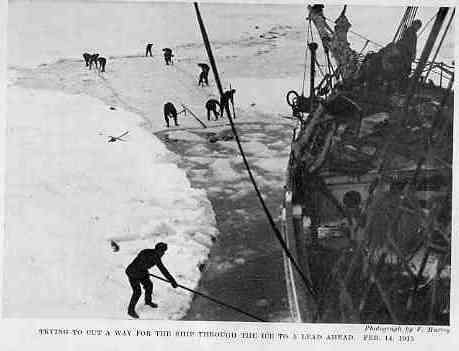
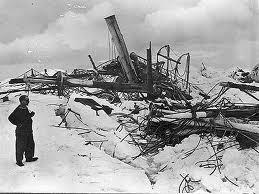
Due to an unusually cold winter the ship entered pack ice much sooner than expected. Just one day’s journey from the Antarctic the Endurance got stuck in pack-ice on 18 January 1915, drifting gradually away from the South Pole for ten months with the ice until the ship tipped and was crushed to pieces on October 27, 1915.
Endurance slowly breaking through pack iceEndurance stuck in polar iceEndurance crushed by pack ice
The men saved what they could and drifted for another five months on the ice until the ice started melting and the food became scarce. On 31 March 2016 Shackleton woke up from a soft crackling sound to find that the ice beneath him split in two; he instinctively reached his hand to grab the sleeping bag of the man sharing his tent just as he was slipping into that icy, black water. During the ice-splitting they were also separated from their life rafts for some time but they managed to retrieve it again. The next day he gave the command to board the three life boats.
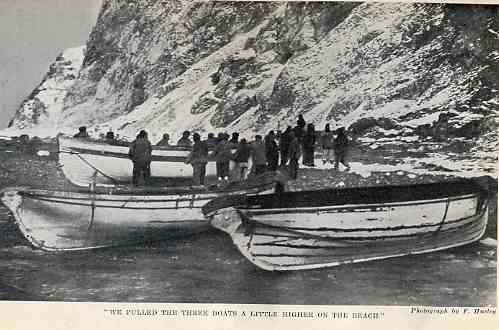
The life-saving achievement was the harrowing journey through the Weddell sea to a rock called Elephant Island, 100 miles in the three small life boats, navigating one of the roughest seas with 60 foot waves blown by gale-force winds. The three boats had to be dragged on top ice floes at night to rest. They managed to reach Elephant Island, and eventually found a suitable camping terrain.
Boats on Elephant Island
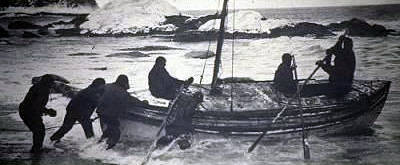
Their third legendary survival story started on 24 August when Shackleton and five others boarded the small 22ft life boat called the James Caird and made way for South George, from where they departed about 500 days earlier 800 miles away. (That is the distance between Cape Town and Johannesburg!) After a grueling 17 day journey in the stormiest sea, navigating by dead reckoning with a compass and sextant only with merely four sightings of the sun, the six men reached the island exhausted. This is still considered one of the greatest boating achievements ever.
Crew boards James Caird for South GeorgiaLanding on South Georgia
The next survival feat was equally impressive, born from necessity as the men landed on the wrong side of the island. To get to the whaling station for help and rescue of their friends Shackleton, captain Frank Worsley and second officer Tom Crean began to cross the ice-bound mountain tops of South Georgia – never before attempted, including the 9000ft Mount Paget. During their 36 hour ordeal without any rest they travelled across two snowfields, four glaciers and three mountain ranges: all of these unmapped and life threatening. The last bit of their journey, being severely fatigued, dehydrated and shivering, Shackleton lowered his two friends down a partially frozen waterfall before abseiling down himself and waking the harbor master at Stormness whaling station, asking for help.
Panoramic view of South Georgia
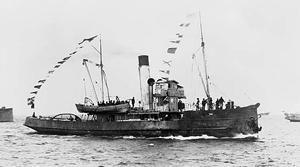
Lastly, the survival and rescue of the 22 men marooned on Elephant Island for more than 137 days is commendably in itself. They used the two life boats to construct a hut of sorts to stay warm. Due to the roughness of the sea it took four attempts by Shackleton and his men to rescue them, only managing to reach them with the steam boat Yelcho on 30 August 1917, two years and one month after their departure from England.
The Chillean steamer Yelcho
This story of endurance and courage is inspirational – in spite of the failure to cross the Antarctic – because Sir Earnest Shackleton succeed to bring all 28 the men home safely; they endured and survived the impossible together. Part of their survival had to do with what Shackleton took with them as their ship Endurance was crushed by the pack ice: in spite of the lack of space in the three life rafts he instructed that they take a rugby ball, the gramophone as well as the big Bible. He insisted that they daily laughed together, told stories and read the Bible together as encouragement in hope, daily played sports together, and daily sang together. For him, humour, story, song, playing and prayer was keys to endurance – and it proved true.
Football on iceGramophone for the penguins
Shackleton was a God-fearing man who lived and lead though this ordeal with Godly courage and persistence. Looking at his example of endurance, and comparing it with examples and teachings from the Bible, what can we apply to navigate through our own hardships with “Endurance”?
(1) Comfort of Scripture
As mentioned above, Shackleton ordered his men to rescue the ships’ big Bible and take it with them on their journey to safety, knowing that the Scriptures are in part a compilation of God’s miraculous deliverance and preservation of people in desperate circumstances, as were they. Their faith in God’s salvation from this seemingly hopeless situation would be stirred as they read they reflect on the accounts of God’s awesome deliverance of individuals and communities as recorded in the Bible.
New Testament Authors encouraged their suffering communities to look at Old Testament characters (as well as their leader’s examples of steadfastness) to find strength to press on in faithfulness to God. Paul reminded the persecuted church in Rome that “whatever things were written before were written for our learning, that we through the patience and comfort of the Scriptures might have hope” (Romans 15:4). James encouraged the poor, persecuted church in Jerusalem to “consider the blessed who remained steadfast” with special reference to Job and the Old Testament prophets (James 5:10-11). The author of Hebrews encouraged his suffering readers to “consider [Jesus] who endured such hostility from sinners against Himself, lest you become weary and discouraged in your souls” (Hebrews 12:3). Thus they all pointed to the exemplary lives recorded in Scriptures for encouragement during difficulty.
The history of God’s faithfulness in Scripture comforts us during hardships because we see that we are not alone in hardship – many have been there; and the Biblical accounts testify to us that God is present during suffering to strengthen and preserve, and that he is willing and able to save. Thus the Scriptures comfort us and stirs our hope and faith in God.
(2) Companionship in community
Shackleton knew that for the 28 men to survive this ordeal, they should not just live in community, but also practice community. That’s why he commanded that every one participate in four group activities daily: they eat together, play sports together, pray and reflect on Scripture together, as well as sing, tell stories and laugh together. These moments of togetherness brought great encouragement and camaraderie amidst the protracted stressful times. He understood and articulated that for the group to survive, each individual needed to survive. If no-one gives up, the group endures.
In relation to their survival and community, I find C.S. Lewis’ quote on friendship quite fitting: “Friendship is unnecessary, like philosophy, like art… It has no survival value; rather it is one of those things that gives value to survival.” For the crew stranded in Antarctic, their community was a reason to endure in itself; their companionship gave both motive for and meaning to their survival.
(3) Celebration of life
Shackleton wrote in his journal during their long winter drifting on the pack-ice “As we clustered round the blubber stove, with the acrid smoke blowing in our faces, we were quite a cheerful company…Life was not so bad. We ate our evening meal while the snow drifted down from the surface of the glacier and our chilled bodies grew warm.” They were thankful for what they had; their companionship, warm food and their survival was reason to laugh.
Going through life with the optimistic perception of “glass half full” makes endurance possible, and life so much more pleasant. Jesus put it this way (referring to money in the context of a financially oppressed Judea) “The eye is the lamp of the body. So, if your eye is healthy, your whole body will be full of light, but if your eye is bad, your whole body will be full of darkness. If then the light in you is darkness, how great is the darkness!” (Matthew 6:22-23). Shackleton lead his men on in “light-filled eyes”, celebrating what they had amidst a cold, seemingly hopeless situation.
Paul encouraged the persecuted church in Philippi to do the same, to emulate his discipline of focusing on the good and praiseworthy, so that “the peace of God will guard your hearts and minds” (Philippians 4:6-8). Instead of becoming anxious about trying circumstances he instructed them to pray about their situation, but “with thanksgiving”, helping them recognize and celebrate the goodness of God amidst difficult circumstances. This is a worthy lesson to learn for anyone, anywhere.
Thanksgiving and celebration makes hardship tolerable and gives one strength to carry on. These disciplines gives strength in trying times by focusing attention on that which causes joy and gladness – truly, “the joy of the Lord is your strength!” (Nehemiah 8:10). By focusing attention of the good it trains one’s perception to see what God is doing, recognizing that God is near, and “He will never is leave you, nor forsake you” (Hebrews 13:5).
(4) Continuing in hope
Shackleton never allowed his crew to give up. They were always moving forward, always planning and preparing for tomorrow. In his mind, and from his mouth, it was clear that they were going to get home to England. He never gave up on hope, and never allowed the crew to slide into hopelessness, because he knew that hope is necessary for endurance. If a person believes that nothing is going to change for the good, that person sinks in the mud of depression and hopelessness, and finds no reason to fight and or live on. But if one believes that pushing forward today will be rewarded in the end, it is worth it.
The author of Hebrews frequently motivate endurance with the promise of reward (hope), for example “you have need of endurance, so that after you have done the will of God, you may receive the promise” (Hebrews 10:36) and later encouraging the readers to “run the race with endurance, looking to Jesus… who for the joy that was set before Him endured the cross, despising the shame, and has sat down at the right hand of the throne of God.” (Hebrews 12:1-2, compare with 1 Thessalonians 1:3). Jesus found strength to continue through tremendous suffering, his eyes fixed on the joyfilled reward at the end.
Paul imitated Jesus’ example, as he was a man who experienced great difficulty, including “afflictions, hardships, calamities, beatings, imprisonments, riots, labors, sleepless nights, hunger, …slander, …being poor” (2 Corinthians 6:4-10). In another place he records “imprisonments, with countless beatings, and often near death. Five times I received at the hands of the Jews the forty lashes less one. Three times I was beaten with rods. Once I was stoned. Three times I was shipwrecked; a night and a day I was adrift at sea; on frequent journeys, in danger from rivers, danger from robbers, danger from my own people, danger from Gentiles, danger in the city, danger in the wilderness, danger at sea, danger from false brothers; in toil and hardship, through many a sleepless night, in hunger and thirst, often without food, in cold and exposure. And, apart from other things, there is the daily pressure on me of my anxiety for all the churches.” (2 Corinthians 11:23-28). How did he endure these hardships? He kept his eye on the reward, a “crown of righteousness” (2 Timothy 4:8) saying “I consider that the sufferings of this present time are not worth comparing with the glory that is to be revealed to us.” (Romans 8:18; see also 1 Corinthians 3:14, Colossians 3:23-24). Paul joyfully pushed one through suffering in hope of eternal rewards in the Lord. He reckoned that suffering briefly for eternal rewards was worth it, making these moments of pain bearable.
(5) Courage from God
Finally, God gives strength to press on in difficult times – to those who “wait on the Lord” (Isaiah 40:30-31). I have over the years learnt from David, who knew the Lord as “my strength” (Psalm 18:1, 118:14, 140:7), to “seek the Lord and his strength” (Psalm 105:4) when my I feel weak or ready to give up. I have learnt to “wait on the Lord [to] strengthen [my] heart” (Psalm 27:14), and also to “strengthen [myself] in the Lord [my] God” (1 Samuel 30:6) as David did in hopeless situations. With the Shepherd-king I can witness that “the Lord gives strength to his people” (Psalm 29:11) when I set time aside to pray to God for courage, strength and hope to continue doing what he calls met to do, although everything in me wants to walk an easier road.
Paul also testified that Christ Jesus has given him strength in trying times (1 Timothy 1:12), and could therefore pray for the Ephesian church that God would strengthen their hearts (Ephesians 3:14-16) amidst the persecution, encouraging them to “be strong in the Lord and in the strength of his might” (Ephesians 6:10). Thus we learn from Paul that one should find strength in God, but also that through encouragement and prayer from others one is strengthened by God. From his example we learn that we should encourage one another joyfully and hopefully press on, to “strengthen the weak hands and make firm the feeble knees” (Isaiah 35:3) of those facing hardship around us. Strength is found in God’s community.
Making it personal
If you are reading this as someone going through hardships now, I want to re-tweet the thrust of John’s message to the persecuted churches in Ephesus: “Here is a call for the endurance and faith of the saints.” (Revelations 13:10, 14:12). Although your suffering might not be religious oppression, you must know that your endurance is noticed and commended by Christ himself (Revelations 2:2, 19). He will put and end to your suffering One Day (Revelations 21:3-5) and if you endure in faith to the end, he will give you your reward from him (Revelations 22:12).
And in the words of Paul: “Run the race in such a way that you may revive the prize” (1 Corinthians 9:24). “Rejoice in hope, be patient in tribulation, be constant in prayer” (Romans 12:12), and may “the God of endurance and encouragement” (Romans 15:5) “strengthen you with all power, according to his glorious might, for all endurance and patience with joy” (Colossians 1:11). “Press on, that [you] may lay hold of that for which Christ Jesus has also laid hold of [you]” (Philippians 3:2).
It is appropriate to close this lesson on endurance from the exemplary life of Sir Ernest Shackleton with the words from Winston Churchill, since he was the man who sent the last telegram to the Endurance crew as they left the London harbor for their trans-Atlantic expedition on August the 1st, 1914. Later that day the war with Germany broke out, leaving the whole of Europe in turmoil for the next forty years. On October 29, 1941, Churchill then Prime Minister visited Harrow School to hear some of the traditional songs he grew up with and address the learners. Standing in the podium he stared at the youngsters long and hard, and then uttered the following short and urgent admonition: “Never give in – never, never, never, never, in nothing great or small, large or petty, never give in except to convictions of honor and good sense. Never yield to force; never yield to the apparently overwhelming might of the enemy.” [audio recording] During tough times let this phrase ring in your ears, as you remembering the enduring examples of Jesus, Shackleton, Paul, the prophets and the saints through the ages. Never give in!








 A living temple. “After this”
















 walklikejesus

