The End? Can’t keep silent

This, our 16th post in our journey through Revelation, explores chapter 11, devoted to the Two Witnesses. A video recording of this will be available on the Shofar Durbanville Youtube channel.

In chapter 10, John is invited to take and eat the scroll containing God’s redemptive purpose, to embody God’s redemptive plan on earth.  The chapter concludes with John’s commission to prophesy – to participate in the Lamb’s redemption of creation by witnessing God’s renewal of all things.  Chapter 11 continues with a vision of two witnesses, depicting the identity, purpose and destiny of the church in the Lamb’s renewal of all things.

This is a complex chapter, rich in symbolism from the Old Testament, but very helpful in understanding the role of the church in a wicked world.  To simplify the reading of the chapter, we will focus on three questions this chapter answers about the church:

  • who are we?  (identity)

  • why are we here?  (purpose)
  • where is this all leading? (destiny)

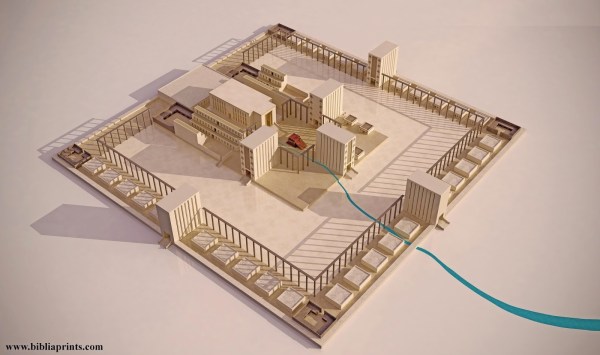
Measure_temple_EzekielA living temple. “After this” John was sent to “measure the temple, the altar and those who worship there” (11:1). By the time of John’s writing, the temple in Jerusalem had been destroyed for more than 20 years – so the temple refers to the church (1 Corinthians 3:16; 6:19; 1 Peter 2:5 etc.). This “man measuring the temple with a rod” clearly alludes to Zechariah’s vision (Zechariah 2:1 – 5).  Here, in John’s vision, no measurements are given; what matters is that measures are taken. The temple, altar and worshipers are “measured” or counted because they matter to God.  The promise of peace and protection in Zechariah 2:5 is the intended message to John’s readers: “I will be to her a wall of fire all around, declares the Lord, and I will be the glory in her midst.”  God has measured his people, and not a single one will be lost (compare chapter 7, where God’s servants are “sealed” for protection).

number_42

Vulnerable yet Invincible.  However, “the outer court” should not be measured, for it would be “trampled upon for 42 months” (11:2), “1,260 days” (11:3) or 3½ years (“time, times and half a time”). 42 is significant in the apocalyptic genre because it is an important number in Israel’s history.  For example, 42 is the number of stages in Israel’s journey through the wilderness toward the Promised Land (Numbers 33).  42 months is the period that Elijah had stopped the heavens from raining to bring the nations to repentance (1 Kings 17; James 5:17). Matthew’s genealogy is portrayed in three sets of 14, amounting to 42 generations, showing that the birth of Jesus marks the end of waiting for Israel’s Messiah (Matthew 1).  Therefore, 42 represents the fullness of time in any stage of redemptive history.  For the readers of Revelation, 42 represents the period we live in – the time allowed for the nations to come to repentance, between the cross and Christ’s return.  Darrel Johnson writes:

“42 months represents the period of time from the day Jesus Christ constituted the new temple by the shedding of his blood, until the day when the new city without a temple, the city which is a temple, comes down out of heaven” (Discipleship of the Edge: An expository journey through the Book of Revelation; Regent Publishing: 2004)

In putting verses 1-2 together, we see that the church is measured and protected by God’s seal until the Day of Judgment but will be resisted and persecuted by secular nations until that time. We are simultaneously invincible and very vulnerable in this age – “like lambs in the midst of wolves” (Matthew 10:16).  Why, then, are we here?

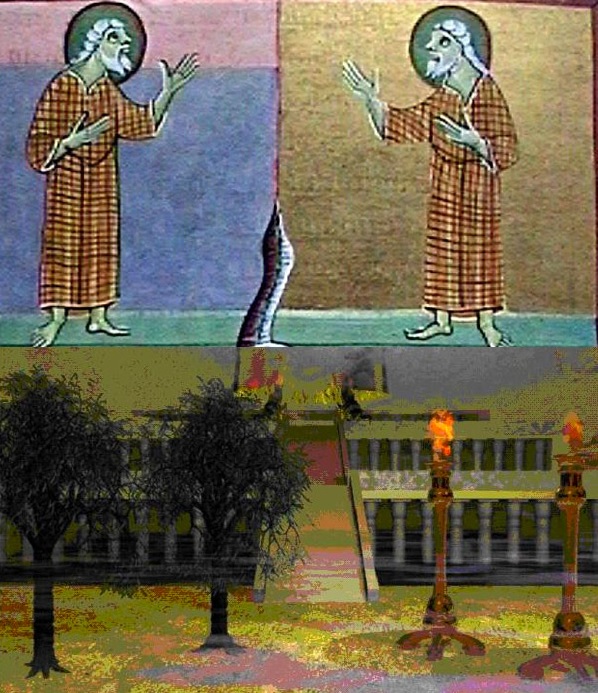
Two Witnesses. John sees two witnesses like olive trees and lamp stands.  Olive trees represent God’s covenant people[Read the full commentary of Revelation in Faithful to the End]

Faithful to the End is a simple commentary that helps make sense of the encouraging message of Revelation.

Quick links to full THE END Revelation Series posts

1  2  3  4  5  6  7  8  9  10  11  12  13  14  15  16  17  18  19  20  21  22  23  24  25  26

The End? From spectator to partaker

Our journey through Revelation in this is the 15th post brings us to chapter 10. A recording of this will be available on the Shofar Durbanville Youtube channel.

Let’s first catch up where we are in our journey through this apocalypse.  In that glorious scene of God’s throne room (ch 4), the Lamb received the Scroll containing God’s redemptive plans to renew all of fallen creation (Ch 5).  As the Lamb opened the seven seals of the scroll, terrible judgments were released on earth (ch 6).  These judgments were paused to mark God’s servants with a seal of protection from the final judgment (ch 7). With the opening of the 7th seal, heaven became quiet as God focused his attention on the prayers of his saints, which were mixed with the fire from his altar and poured out as six more severe judgments on the earth (ch 8-9).

In chapter 10, the scene continues, but the judgments are interrupted again (as in chapter 7). This time, the focus is on John, who is invited to move from spectator of the vision to participator in Christ’s Revelation.

Angel_scroll_rev10_3

In John’s vision, a mighty angel comes down from heaven, standing with one foot on the earth and one on the seas (sovereign over land and sea, refer 8:7-8).  He was clothed in white, his face shone as the sun, and he had a rainbow around his head, his feet were like fire, and his voice like a lion.  John describes the Angel as Jesus himself (compare 10:1-3 with 1:15-18; 4:3).

The Angel had a little scroll in his right hand (compare 10:2 with 5:7), and when he spoke, there were seven thunders. But when John wanted to record these seven thunders, like the previous seven seals and seven trumpets, the Angel prevented him and then raised his hand and vowed to God “that there should be delay no longer” (10:6).  This scene is a powerful allusion to Daniel 12 – a vision about the end, where the wicked will grow more wicked and the righteous will grow more righteous.


John was commanded to take this scroll and to eat it – compare this to a similar command given to the prophet Ezekiel, with the following charge: “All My words that I shall speak to you receive in your heart, and hear with your ears.” (Ezekiel 2:10-3:2, 10).  As John ate, it tasted “sweet as honey”, but his “stomach became bitter” (10:9-10; compare Jeremiah 15:16 and Ezekiel 3:3).  Then John is sent to “prophesy about many peoples and nations and languages and kings” similar to the commission given to God’s prophets and apostles  (compare 10:11 with Isaiah 6; Jeremiah 1; Ezekiel 3; Acts 1:8; 9:15).

From spectator to participator.  This pause after the six trumpet judgments, which still left the nations unrepentant of their wickedness and rebellion (9:20-21), shows the mystery of God’s redemptive plan.  Here, we see that John was invited to discern and understand God’s redemptive acts and participate in his plan.  The scroll – which no one could receive and open – was now handed to John.  The scroll that unleashed God’s redemption of creation through terrible judgments was given for John to take and digest.  John, as with everyone who reads his words and “beholds” this Revelation, is invited to embody God’s plan – the renewal of all things…

[Read the full commentary of Revelation in Faithful to the End]

Faithful to the End is a simple commentary that helps make sense of the encouraging message of Revelation.

Quick links to full THE END Revelation Series posts

1  2  3  4  5  6  7  8  9  10  11  12  13  14  15  16  17  18  19  20  21  22  23  24  25  26

The End? Release of the Four Horsemen

This 12th reflection in our journey through Revelation displays the vibrant apocalyptic genre of this prophetic letter.  A recording of this post is available on Shofar Durbanville Youtube channel, as part of the Revelation Series. Follow the link below.

The middle section of Revelation we now enter (chapters 6-16) contains three sets of seven judgments each:

Scroll_Seven_Seals

  • the opening of the seven seals (chapters 6-8a),
    • interluded with a roll call of the Lamb’s Army (chapter 7)
  • the blowing of the seven trumpets (chapters 8b-11),
    • interluded with a description of the Lamb’s temple and two witnesses (chapter 10)
    • and the seven signs of warning (chapters 12-14)
  • the pouring out of the seven bowls (chapters 15-16).

These judgments that proceed from the throne room of God, as the Lamb opens his scroll, are acts of God’s redemption of creation, “reconciling all things to himself… by the blood of his cross.” (Colossians 1:20)

How do you read it?

There are various interpretations of Revelation, especially of this middle section.

interpretations_revelationThese judgments are generally interpreted in four ways: Preterists see all fulfilled before the 1st or 4th centuries.  Historicists believe these have been performed throughout history.  Idealists do not read Revelation literally but see all as symbolic of the struggle between good and evil.  Futurists await the chronological fulfilment of these events (Ch 4-22), which they believe will result in a crisis period leading up to Christ’s second coming.

I believe that these three sets are not limited to events of the past or events in the future but are indicative of crises that occur in every generation.  I believe these three sets of seven are not to be read as a chronological prediction but rather as three different perspectives on the many crises the world and the church have faced throughout history (from there, the many repetitions in these chapters).  Remember, this prophecy was written as encouragement and exhortation to seven real congregations who experienced much of these crises in their own time.

The four horsemen of the apocalypse

seven_seals

In keeping with the nature of the apocalyptic genre, all three sets of judgments draw richly from Old Testament literature.  The opening of the seven seals starts with the unleashing of the Four Horsemen of Zechariah (1:7-14; 6:1-7), who would unleash “four disastrous acts of judgment, sword, famine, wild beasts, and pestilence, to cut off from it man and beast!” (Ezekiel 14:21; compare Deuteronomy 32:23-25).

It is important to note that these acts of judgment proceed from the decrees of the scroll, as the Lamb unrolls God’s redemptive plans for the creation, bringing all other kingdoms into subjection to his reign (compare Colossians 1:15-20).  The judgments are initiated by Christ; the horsemen are… [Read the full commentary of Revelation in Faithful to the End]


Faithful to the End is a simple commentary that helps make sense of the encouraging message of Revelation.

Quick links to full THE END Revelation Series posts

1  2  3  4  5  6  7  8  9  10  11  12  13  14  15  16  17  18  19  20  21  22  23  24  25  26
Your work and God’s Kingdom

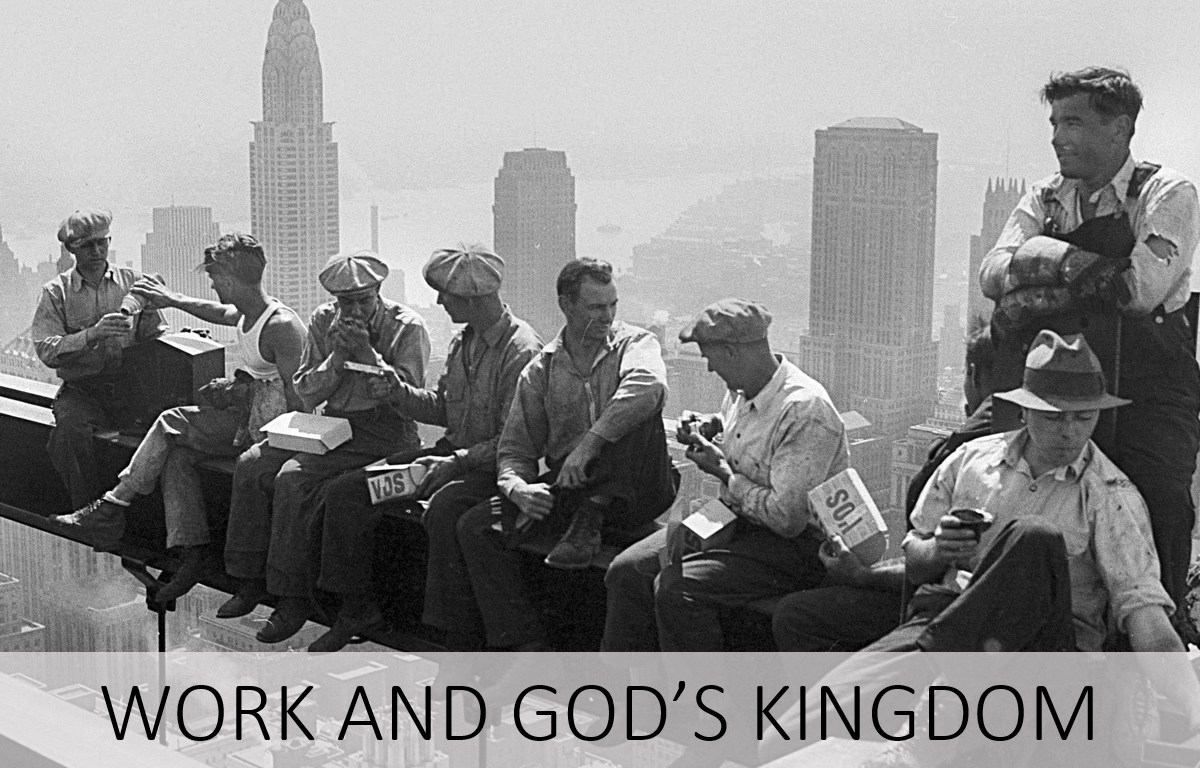
What does your work have to do with the Kingdom of God?

You can expect to spend more than 100’000 hours at work during your lifetime; that is close to 60% of your awake life.  Sadly, 80% of people in our generation are dissatisfied within their current working environments.  For many, Christians and non-Christians alike, work is meaningless, mundane, merely a means to make money; a necessary evil to pay the bills.

Some passionate believers see their sole purpose at work to extend their church services into the workplaces, in order to get their co-workers to church on Sundays, in preparation for the eternal church service in the sky.  Church is important, work is not.  After all, the worship leader did say to them that nothing is as important as worship (he meant “singing”) because that is what we will do for all eternity.  Really?  If singing is our highest and only enduring purpose why then does that not excite us? And why did God not make us all to be singers in the beginning?

Work and Gods Kingdom2

God created co-workers

The first thing we learn about the Triune God in the opening page of the Bible is that God is a relational being and a powerful creator.  The first thing we learn about mankind is that we are made in God’s very image: highly relational men and women who would oversee his created order.

Genesis 1:27-28, 2:15

God created man in his own image… male and female… to have dominion …to keep and cultivate the earth.


This stewardship involves both preservation (to keep) and wealth creation (to cultivate).  It is easy to see that every meaningful job description on earth can be traced back to this mandate: keep what is good, and increase it.  Think how farmers keep and cultivate the ground; how teacher keep and cultivate human potential; law enforcement officers keep and cultivate society; investment bankers keep and cultivate money; lawyers keep and cultivate human relationships and interests; businessmen keep and cultivate the economy; musicians and artists keep and cultivate culture; and so forth.

We see that God’s original intent with mankind was to be co-workers with Him, as both the crown and stewards of his glorious creation. As sin entered, it marred our identity, fractured our relationships, and distorted our holy vocation.  In societies like ancient Egypt, the work place elevated some people to a god-like status while others became worthless subjects.  This is still true all around the world today. Work no longer is a delightful partnership of love; it became a means of oppression and greed, a dreaded duty filled with anxiety and strife.

After delivering the slaves from Egypt God reorder this new nation, rightly orienting this emancipated people’s relation to work by commanding both work and rest days (holy days); both laziness and over-work are evil.[i]  So is unemployment!  Therefore, God instituted social welfare that goes beyond charity to empowerment that prevents and redeems unemployed people from poverty.  Access to work is a holy right that must be preserved and cultivated.

Leviticus 25:35-36

“If a member of your community becomes poor in that their power slips with you, you shall make them strong… that they may live with you.”

Jesus also came, revealing God as a worker.[ii]  The Christ came to redeem and reconcile all things to Himself,[iii] to end the destruction and restore all things – as it was in the beginning.[iv]  Our desire and capacity to work will also be renewed. In His Coming Kingdom, in the renewed earth, mankind will again reign and rule with God over His creation.  We will still work and plant, produce and trade and build, [v]   as this is the eternal nature and purpose of man: stewards who rule over, keep and cultivate God’s creation.

But even now we are the first-fruits of God’s New Kingdom, invited and empowered to witness and serve Christ and his Kingdom here on earth.


How do I redeem my work in this fallen world?

Work and Gods Kingdom3

Daniel and his friends’ engagement in secular work is very helpful in demonstrating how we can serve God’s Kingdom in our places of work.

These young exiles were in a hostile, foreign kingdom where the ruler deemed himself an enemy of God and oppressor of God’s people.  In their refugee camp Daniel and his friends heard the prophesy of Jeremiah that they would be in exile for 70 years,[vi] but that they should not merely survive in Babylon.  Rather, the exiles were sent there by God to thrive in there for God’s sake: to witness and establish His Shalom reign in this pagan nation to benefit all.[vii]  Jeremiah said that even in this ungodly environment God’s people ought to live out their original intent: dwell in the land, have dominion, increase and witness God’s nature and reign. [viii]

Jeremiah 29:5-7

Thus says the LORD of hosts, the God of Israel, to all the exiles whom I have sent into exile from Jerusalem to Babylon:

“Build houses and settle down; plant gardens and eat what they produce. Marry and have sons and daughters; find wives for your sons and give your daughters in marriage, so that they too may have sons and daughters. Increase in number there; do not decrease.”

And seek the peace of the city where I have caused you to be carried away captive, and pray to the LORD for it; for in its peace you will have peace.”

Daniel’s response to this instruction was significant: when the King sought for bright Jewish youths to be trained as officials in his palace, Daniel and his friends made themselves available to “seek the Shalom of the city where [they] have been taken captive.”   Working in this secular environment presented a great opportunity to witness and establish the peaceful reign of God from within this civic center.  It was the invitation to facilitate political conversion, where the oppressor becomes servant of God, his people and his purpose.

But Daniel was aware that this opportunity also presented the great challenge of cultural assimilation: that through the education and engagements these young God-fearing believers might grow to be indistinguishable from the pagan Chaldeans.  Therefore, Daniel establish a practical rhythm in his daily routine as a reminder that he is indeed set aside for God, and although he serves this ruler in his palace, he is indeed first a servant of Yahweh.   Although they willingly endured the (very pagan) Chaldean education, culture and even new identities (pagan names), Daniel and his friends resolved to not defile himself with the king’s food…” (1:8).  Their diet and devotional prayer discipline “three times a day, since his youth” (6:10) inoculated him against cultural assimilation.  These habits also identified these men “servants of the Living God”[ix] – labels by which Daniel and his friends were known in their places of work.

God’s response to Daniel’s vow of sanctity and service is very encouraging (1:9, 17, 20).  God bestowed on these young witnesses favor and compassion in the sight of their overseers; they were treated with kindness and respect – more than their peers.   God blessed these young men with the ability to acquire learning and skill so that they proved to be ten times better that their peers.  What is more, God gave Daniel a particular ability to interpret dreams and visions that set him apart and made him sought after in his workplace.  Because Daniel and his friends resolved to serve God in the palace, God empowered them to serve Him there.

The overarching message form the book of Daniel is how God’s Kingdom toppled a pagan empire, and how His reign permeated the entire Babylonian realm, because four young believers resolved to serve God within that hostile, secular environment.  Their example is our invitation and inspiration today.

Lessons learnt from Daniel at work

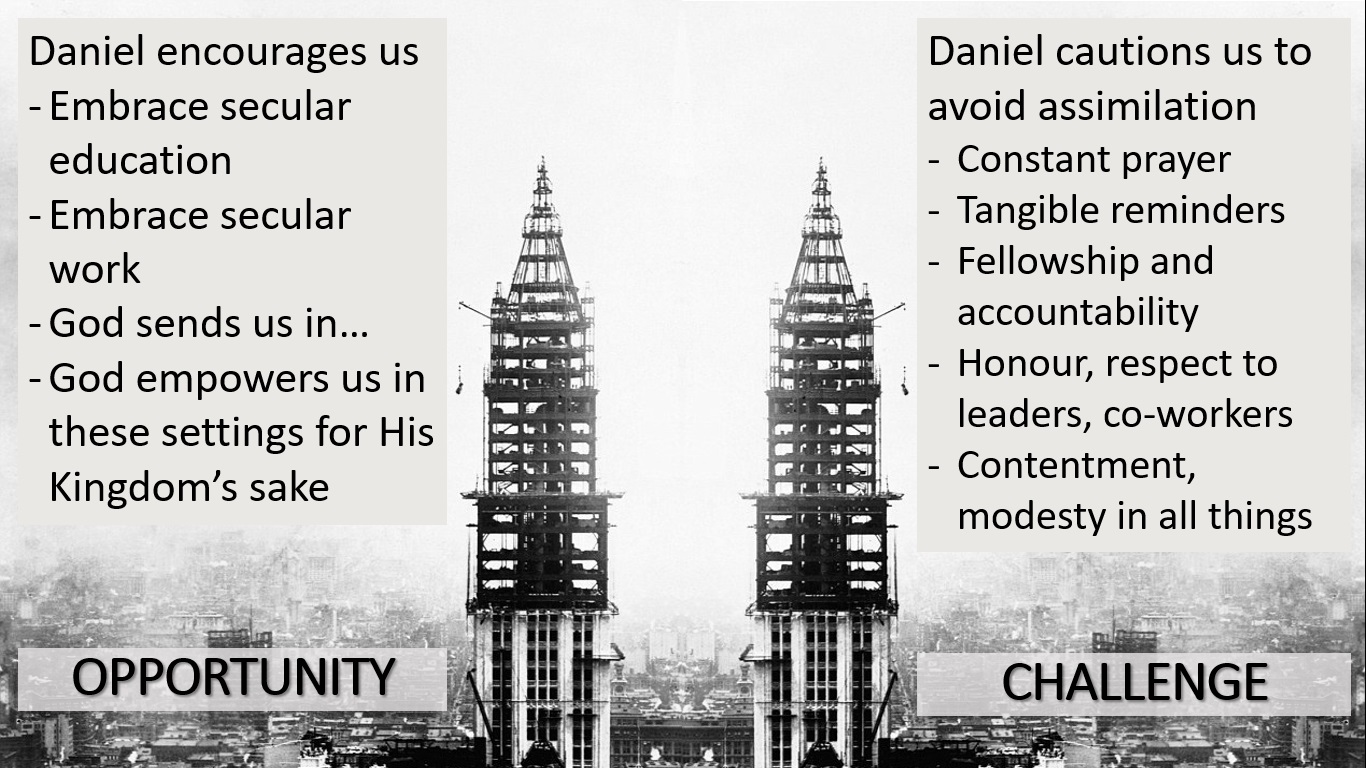
Daniel and his friends encourage us to embrace secular education and secular work environments for God’s sake; to understand that we have been commissioned and empowered by God and to engage these secular environments in service of His reign.  But Daniel and his friends also caution us to avoid cultural assimilation by instilling tangible reminders and a lifestyle of prayer, fellowship and accountability with like-minded believers.

Daniel and his friends show us how to work for God in a in a secular society:

Firstly, resolve to serve God first in all things (1:8), regardless of the cost; how I endure the fire is my greatest witness to my faith in God’s reign.   This calls for a life of integrity (6:4) and spirit of excellence (6:6; 5:12) – meaning live beyond reproach and do all to the best of my ability – “as unto the Lord”. [x]

Secondly, seek favor and grace from God that I may be empowered to serve him well at work (1:9, 17, 20).  For Daniel it meant he had the ear of his leaders, and he could recall and apply his learning in wise was.  Also, his unique gifting brought him before the emperor, presenting opportunities to witness God and His Kingdom effectively.  Seek these gifts from God, and yield it confidently, for God’s sake.

Thirdly, Daniel demonstrated servant leadership, showing me that my position and power is not meant for personal privilege, but as empowerment to serve those entrusted to me (3:26, 6:20).  This concept of servant leadership is foreign to our world. Trust God that your faithfulness will lead to promotion, to wield greater influence of righteousness, peace and joy where you live and work. [xi]

How do you think about your work?  Into which domain did the Lord call you to serve his creation and witnessing his peaceful reign?  I urge you: seek His favor and ask for grace to serve him well that you may see the transformation as His Kingdom comes through your witness and work.  You will have your reward when He returns.

Work and Gods Kingdom4

[i] Exodus 20:6; Leviticus 23:3-4.

[ii] John 5:17.

[iii] Colossians 1:16-21.

[iv] Matthew 18:19; Revelation 20:5.

[v] Revelation 5:10; 21:24-26; Isaiah 65:17, 21.

[vi] Jeremiah 29:10

[vii] Jeremiah 29:5-7.

[viii] cf. Genesis 1:27-28.

[ix] Eg. Daniel 6:10 and 3:28.

[x] Colossians 3:17.

[xi] Psalm 75:6-7.

Kindness leads to life

Have you heard of the BELLS challenge?  Michael Frost, Australian missiologist, wrote a simple book entitled “The Five Habits of Highly Missional People” (a free copy here) to help followers of Jesus grow in habits, simple everyday activities, to grow more proficient in witnessing God’s Kingdom to the people we interact with.  The habits are:

  • Blessing others – showing acts of kindness, to cultivate a heart of generosity.
  • Eating together – sharing meals with those I interact with, to grow in hospitality.
  • Learning Christ – intentional study of Jesus’s works, words and person, to grow Christlike.
  • Listening to the Spirit – intentional waiting on God, to grow in discernment of God.
  • (Being) Sent – daily reflecting how I recognize my participation in God’s mission.

The reality that each of us have to face is this: if I live like I lived yesterday, I will have the same witnessing power that I had yesterday.  And for me – I assume for many of us – this is a sobering thought.

Our habits reveal our faith, but conversely, our faith is also shaped by our habits.  That’s why Frost identified these simple, everyday, easily doable habits which increases our witness of Christ and His Kingdom.

People long for Kindness

kindness_relationships

Our world is a harsh place, and humanity is a vulnerable condition. Because of our imperfections we lack, we suffer, we cause harm.  We are in need of care, of help; we are in need of kindness.

Sadly, modern man strives for independence; especially Western society aspires to not elf-sufficiency, to be strong and not need anything or anyone.  But humans are flawed, and when we fail, we have lack, we hurt or cause harm.   We rely on the kindness of others: to receive what is undeserved.

Relationships flourish in kindness

What makes human relationships flourish?  This was what Drs. John Gottman and Robert Levenson have studied in their “Love Lab” for the past four decades.  In the process of observing how newlyweds interact with one another, and again recalling them six years later, they grouped these couples into two groups based on their interaction

The disasters showed patterns of aggression and criticism in their relational dynamics. Their relationships deteriorated quickly over time and was characterized by contempt, criticism, and hostility.  In contrast, the mastersdemeanor towards one another was characteristically warm and inviting – even during conflict.  The masters learned to create an atmosphere of trust and intimacy that made the relationship safer and more comfortable.

Based on these findings and follow-up studies Gottman deduced that the key indicators in marital success (with about 94% certainty!) come down to two characteristics: kindness and generosity.  Indeed, “love is kind” (1 Corinthians 13:4), and “love is the bond of perfection” (Colossians 3:17).

In an environment of kindness people thrive, because in the care and compassion cultivates true connection and cooperation in trust.  In contrast, the absence of kindness breeds distrust, fear and shame, causing the other to withdraw and withhold him-/herself – the very opposite of thriving.

Our God is kind-hearted

Humankind is like the rebellious son who foolishly packs his bag and walks out the door, believing he can enjoy living life all on his own.  Our sin-infested world is harsh, and we were never meant to be independent – we will lack, we will fail.  But, as the tale of prodigal son so beautifully illustrates, it is the knowledge of “the kindness of God that leads us to repentance” (Romans 2:4).

We are – and will always be – in need of God’s kindness, as the Psalmist rightly sings:

Psalm 145:8-9, 14-16 (CEV)

You are merciful, Lord!
You are kind and patient
and always loving.
You are good to everyone,
and you take care
of all your creation…

When someone stumbles or falls,
you give a helping hand.
Everyone depends on you…

Jesus also taught us to rely on God’s kindness, to freely and shamelessly be dependent on Him: “Give us this day our daily bread, and forgive us our debts, as we also have forgiven our debtors. And lead us not into temptation but deliver us from evil.” (Matthew 6:11-13)

Our God is kind, moved with compassion, to console and care for his creatures.

Jesus is kindness personified

The greatest sign of God’s kindness is the sending of His son Jesus.  Paul refers to the incarnation of Christ as the time “when the goodness and loving kindness of God our Saviour appeared” (Titus 3:4).  Indeed, Jesus embodies and personifies the kindness of God!  He “went about doing good, healing all who were oppressed” (Luke 10:38).  Like his Father, Jesus healed “the ungrateful and the wicked” (Luke 6:36), without expecting anything in return as we see in his healing of the 10 lepers (Luke 17:11-19).

kindness_man_gives_sandals2

But the apex of God’s kindness is the substitutionary suffering and death of Christ on the cross, who although “He was despised and rejected by men… He has borne our griefs And carried our sorrows… He was wounded for our transgressions, He was bruised for our iniquities; The punishment for our peace was upon Him, And by His stripes we are healed…” (Isaiah 53:3-5).  Indeed, God so loved the world: He had compassion on us, His enemies, and showed kindness in the sending His only Son to forgive our debts and deliver us of oppression!

Marked by kindness

The kindness which Jesus Himself modelled to us, He also commanded us to do emulate.  And in showing kindness to all – even our enemies! – we will be identified as “Sons of the Most High, who is kind to the ungrateful and the wicked” (Luke 6:35).  Like our Master, our kindness is a mark of the Father.  Our acts of kindness therefore are a witness to our God, and a witness to our allegiance to Him.

source_goal_love

You might ask “Almost every religion inspires kindness to others.  How does a Christian’s good deeds point to God?”  This is a thoughtful question one should consider.

Firstly, we recognize that the source of our loving-kindness is not of ourselves. As Christians we recognize that we are fallen, that our capacity to care and show love is limited.  That is why Jesus taught his disciples to “abide in Me, for apart from Me you can do nothing” (John 15:5).  In Paul’s words, kindness is a fruit of Christ’s Spirit (Galatians 5:22) – we become kind persons who naturally do kind deeds through intentional fellowship with our kind Saviour.  “As we behold him, we become like him” (2 Corinthians 3:18).

Secondly, the goal of our kindness is to point to God’s kindness.  Jesus taught his followers to “not sound the trumpet in the street” when showing kindness (Matthew 6:2); the goal of giving is not to receive praise, not to make us feel good, but to point to God.  Likewise, the motive for forgiveness is “as God in Christ forgave” (Ephesians 4:32) – again pointing to God’s kindness in Christ.  As we give and forgive, we look for opportunities and ways to point to God, “that men may see your good deeds and glorify your Father in Heaven” (Matthew 5:16).

Kindness brings us home

Our world is a harsh place, at times even hostile.  The lie of self-sufficiency causes isolation, the reality of insufficiency causes fear and shame.  But God is kind, who generously gives to those in need, eager to guide the lost and restore the fallen, graciously forgiving the sinner.  To this end Jesus invites us to show the same kindness to even our enemies, that we may be known as children of God. That even our enemies may come to know the kindness of God which leads us to repentance (Romans 2:4)