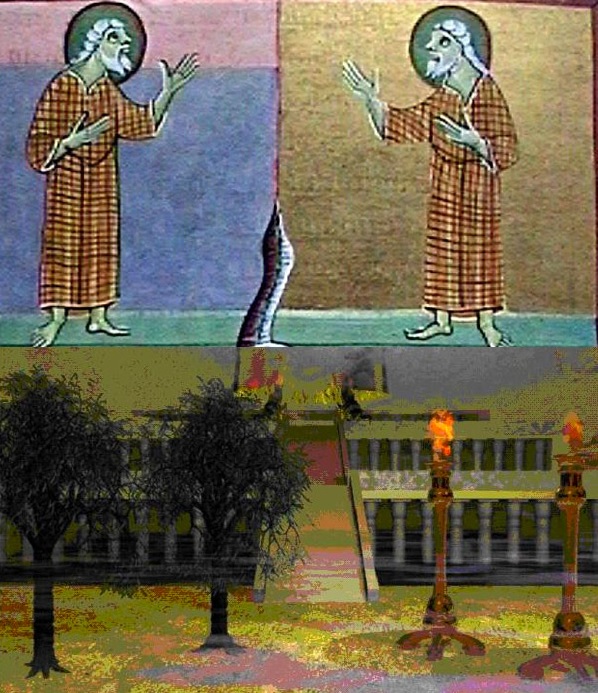
This, our 16th post in our journey through Revelation, explores chapter 11, devoted to the Two Witnesses. A video recording of this will be available on the Shofar Durbanville Youtube channel.
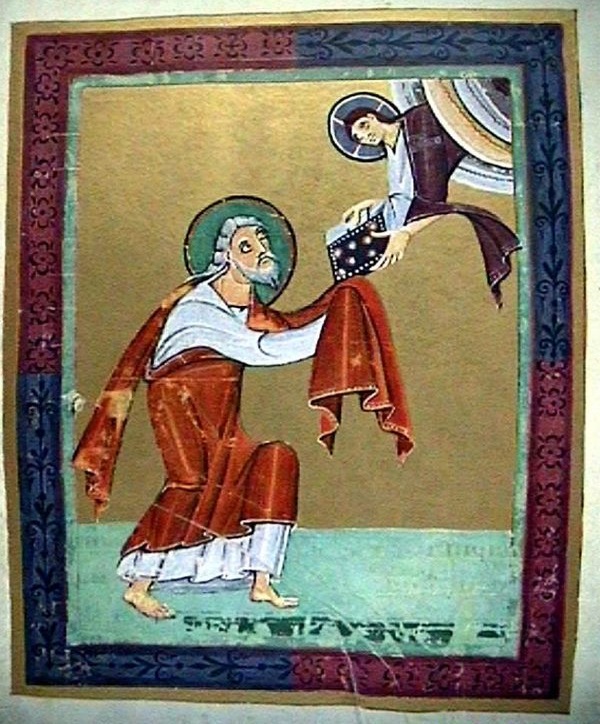
In chapter 10, John is invited to take and eat the scroll containing God’s redemptive purpose, to embody God’s redemptive plan on earth. The chapter concludes with John’s commission to prophesy – to participate in the Lamb’s redemption of creation by witnessing God’s renewal of all things. Chapter 11 continues with a vision of two witnesses, depicting the identity, purpose and destiny of the church in the Lamb’s renewal of all things.
This is a complex chapter, rich in symbolism from the Old Testament, but very helpful in understanding the role of the church in a wicked world. To simplify the reading of the chapter, we will focus on three questions this chapter answers about the church:
-
who are we? (identity)
- why are we here? (purpose)
-
where is this all leading? (destiny)
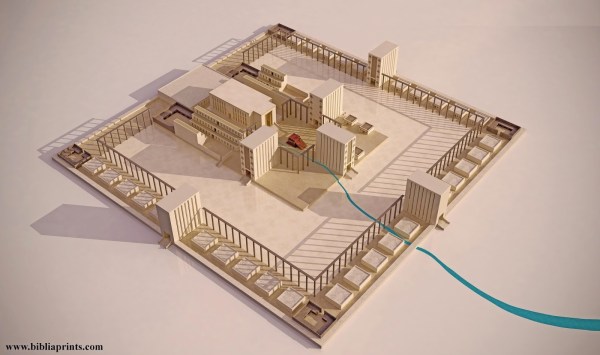 A living temple. “After this” John was sent to “measure the temple, the altar and those who worship there” (11:1). By the time of John’s writing, the temple in Jerusalem had been destroyed for more than 20 years – so the temple refers to the church (1 Corinthians 3:16; 6:19; 1 Peter 2:5 etc.). This “man measuring the temple with a rod” clearly alludes to Zechariah’s vision (Zechariah 2:1 – 5). Here, in John’s vision, no measurements are given; what matters is that measures are taken. The temple, altar and worshipers are “measured” or counted because they matter to God. The promise of peace and protection in Zechariah 2:5 is the intended message to John’s readers: “I will be to her a wall of fire all around, declares the Lord, and I will be the glory in her midst.” God has measured his people, and not a single one will be lost (compare chapter 7, where God’s servants are “sealed” for protection).

Vulnerable yet Invincible. However, “the outer court” should not be measured, for it would be “trampled upon for 42 months” (11:2), “1,260 days” (11:3) – or 3½ years (“time, times and half a time”). 42 is significant in the apocalyptic genre because it is an important number in Israel’s history. For example, 42 is the number of stages in Israel’s journey through the wilderness toward the Promised Land (Numbers 33). 42 months is the period that Elijah had stopped the heavens from raining to bring the nations to repentance (1 Kings 17; James 5:17). Matthew’s genealogy is portrayed in three sets of 14, amounting to 42 generations, showing that the birth of Jesus marks the end of waiting for Israel’s Messiah (Matthew 1). Therefore, 42 represents the fullness of time in any stage of redemptive history. For the readers of Revelation, 42 represents the period we live in – the time allowed for the nations to come to repentance, between the cross and Christ’s return. Darrel Johnson writes:
“42 months represents the period of time from the day Jesus Christ constituted the new temple by the shedding of his blood, until the day when the new city without a temple, the city which is a temple, comes down out of heaven” (Discipleship of the Edge: An expository journey through the Book of Revelation; Regent Publishing: 2004)
In putting verses 1-2 together, we see that the church is measured and protected by God’s seal until the Day of Judgment but will be resisted and persecuted by secular nations until that time. We are simultaneously invincible and very vulnerable in this age – “like lambs in the midst of wolves” (Matthew 10:16). Why, then, are we here?
Two Witnesses. John sees two witnesses like olive trees and lamp stands. Olive trees represent God’s covenant people… [Read the full commentary of Revelation in Faithful to the End]

Quick links to full THE END Revelation Series posts
1 2 3 4 5 6 7 8 9 10 11 12 13 14 15 16 17 18 19 20 21 22 23 24 25 26






 These judgments are generally interpreted in four ways: Preterists see all fulfilled before the 1st or 4th centuries.







 walklikejesus