The End? Release of the Four Horsemen

This 12th reflection in our journey through Revelation displays the vibrant apocalyptic genre of this prophetic letter.  A recording of this post is available on Shofar Durbanville Youtube channel, as part of the Revelation Series. Follow the link below.

The middle section of Revelation we now enter (chapters 6-16) contains three sets of seven judgments each:
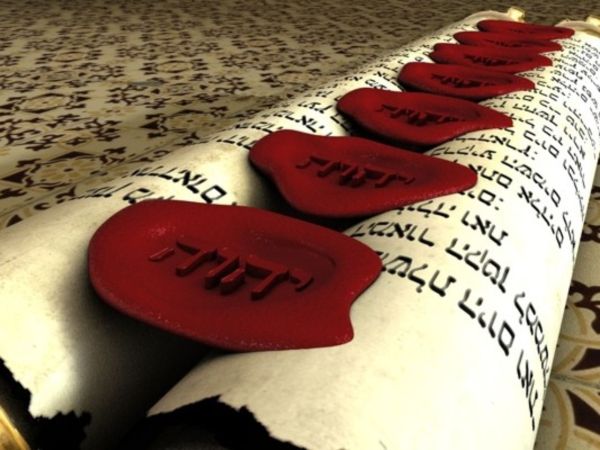
Scroll_Seven_Seals

  • the opening of the seven seals (chapters 6-8a),
    • interluded with a roll call of the Lamb’s Army (chapter 7)
  • the blowing of the seven trumpets (chapters 8b-11),
    • interluded with a description of the Lamb’s temple and two witnesses (chapter 10)
    • and the seven signs of warning (chapters 12-14)
  • the pouring out of the seven bowls (chapters 15-16).

These judgments that proceed from the throne room of God, as the Lamb opens his scroll, are acts of God’s redemption of creation, “reconciling all things to himself… by the blood of his cross.” (Colossians 1:20)

How do you read it?

There are various interpretations of Revelation, especially of this middle section.

interpretations_revelationThese judgments are generally interpreted in four ways: Preterists see all fulfilled before the 1st or 4th centuries.  Historicists believe these have been performed throughout history.  Idealists do not read Revelation literally but see all as symbolic of the struggle between good and evil.  Futurists await the chronological fulfilment of these events (Ch 4-22), which they believe will result in a crisis period leading up to Christ’s second coming.

I believe that these three sets are not limited to events of the past or events in the future but are indicative of crises that occur in every generation.  I believe these three sets of seven are not to be read as a chronological prediction but rather as three different perspectives on the many crises the world and the church have faced throughout history (from there, the many repetitions in these chapters).  Remember, this prophecy was written as encouragement and exhortation to seven real congregations who experienced much of these crises in their own time.

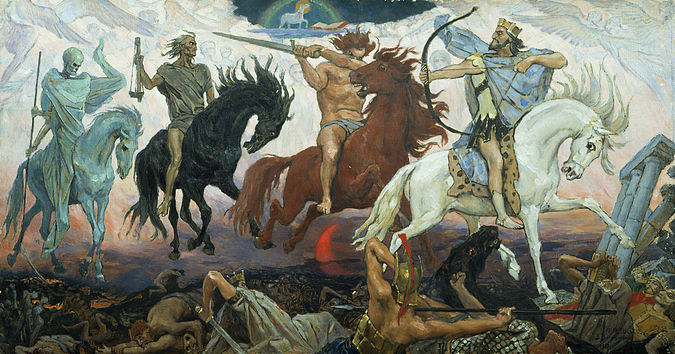
The four horsemen of the apocalypse

seven_seals

In keeping with the nature of the apocalyptic genre, all three sets of judgments draw richly from Old Testament literature.  The opening of the seven seals starts with the unleashing of the Four Horsemen of Zechariah (1:7-14; 6:1-7), who would unleash “four disastrous acts of judgment, sword, famine, wild beasts, and pestilence, to cut off from it man and beast!” (Ezekiel 14:21; compare Deuteronomy 32:23-25).

It is important to note that these acts of judgment proceed from the decrees of the scroll, as the Lamb unrolls God’s redemptive plans for the creation, bringing all other kingdoms into subjection to his reign (compare Colossians 1:15-20).  The judgments are initiated by Christ; the horsemen are… [Read the full commentary of Revelation in Faithful to the End]


Faithful to the End is a simple commentary that helps make sense of the encouraging message of Revelation.

Quick links to full THE END Revelation Series posts

1  2  3  4  5  6  7  8  9  10  11  12  13  14  15  16  17  18  19  20  21  22  23  24  25  26
The End? The Lion and the Lamb.

In this 11th post on the apocalypse, we come to Revelation 5, where Christ is worshipped as the One who is worthy to unfold God’s redemptive plan for all creation. A recording of this session is available here

John and the oppressed church in his day struggled to make sense of their suffering in the light of their belief that Christ is Lord of all.  Then, while in prayer, John receives the comforting vision that the resurrected Jesus is still among his church (Chapters 1-3), and that God is indeed sovereign over all of creation (Chapter 4).  His vision of the throne room in heaven continues in chapter 5 as he sees a scroll and a shared throne.  

A paramount scroll (5:1-5)

In keeping with the apocalyptic genre of Revelation, the importance of the scroll is indicated in several ways.  (The opening of this scroll sets the script for the next eleven chapters). The manuscript is “on the right hand of Him who sits on the throne”, a position of prominence and power. It is inscribed on the front and back – an unfamiliar practice in John’s day – meaning the scroll was full and complete, with nothing to be added or taken away (compare 22:18-19). The manuscript is sealed perfectly “with seven seals” so that no one can lift a corner to peek into it.  When “no one in heaven or on earth or under the earth was able to open the scroll”, John “began to weep loudly.” John’s response should be our response because this scroll’s unfolding is paramount to ending the tyranny, seduction and deception under which the church and the world are bent.

What is this scroll?  The following chapters will reveal that this scroll contains God’s redemptive plan for his creation – the King’s decrees for restoring his Kingdom.  Chapters six through sixteen will show how this progressive unfolding of God’s redemption of creation aligns with the opening of the scroll.  The scroll is his victory over sin, Satan, and the gentile kingdoms that resist his reign and oppress his church.  As such, this scroll contains the answer to the cry of John and the church in his day, as well as all suffering saints since then: “Lord, don’t you care, don’t you see? If you are the Christ, when will your kingdom come?”

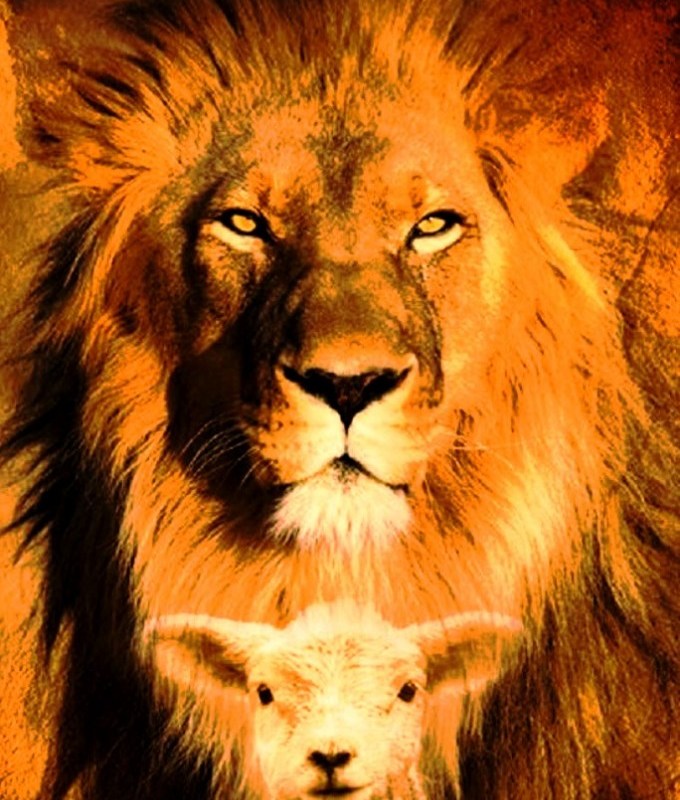
Who, then, is this champion for God’s redemptive quest with creation? “Who is worthy to open the scroll?”  This question reveals the central figure of Revelation – the only one who is worthy to unfold this scroll.  John hears the elder’s reassurance: “Weep no more!  Behold, the Lion of the tribe of Judah, the Root of David, has conquered so that he can open the scroll and its seven seals.”  The elder’s words paint the picture of a mighty Messianic figure, a lion-like leader from the loins of David.

But like so many times in Revelation, what John hears and sees are two different things. Things are not as they seem…

 [Read the full commentary of Revelation in Faithful to the End]

Faithful to the End is a simple commentary that helps make sense of the encouraging message of Revelation.

Quick links to full THE END Revelation Series posts

1  2  3  4  5  6  7  8  9  10  11  12  13  14  15  16  17  18  19  20  21  22  23  24  25  26

The End?A Throne set in Heaven.

In this 10th session in our series of Revelation, John is invited to “come up here” and see God’s throne room, and view life from his perspective (Revelation 4).   A recording of this will be made available at Shofar Durbanville’s Youtube channel.

Revelation 4 starts with the phrase “after this” – after the first part of the vision of Christ among the seven churches, addressing each of them with a specific word of comfort and correction (chapters 1 – 3).  Then John looks up – shifts his perspective from down here on earth to what is going on in heaven.  He sees “a door open in heaven” and is invited to “come up here” – to gain a Godly perspective on the chaos and conflict the church endures on earth and to identify with the Sovereign reign of God.

Imagine this! The only instruction the reader receives in this chapter is to “behold” (4:1,2) – to imagine this or picture this.  John invites the reader twice to see what he sees – because this hopeful message to the church is contained in the vision of what takes place in heaven.  John sees a throne, the Ruler, and the response of those around the throne.

A Universal Throne (4:2).  As he enters the door, John sees a magnificent throne. The early church was familiar with a throne over many peoples and nations – and that was not good news to them. Emperor Domitian’s reign (like those before him) was egocentric and brutal.  But this throne John sees was universal over all of creation – he was the true King of kings and Lord of lords who Domitian claimed to be.  The throne was not the problem – the one who sits on the throne determines whether his subjects will weep or rejoice.  And this is what John sees next…

[Read the full commentary of Revelation in Faithful to the End]


Faithful to the End is a simple commentary that helps make sense of the encouraging message of Revelation.

Quick links to full THE END Revelation Series posts

1  2  3  4  5  6  7  8  9  10  11  12  13  14  15  16  17  18  19  20  21  22  23  24  25  26

The End? Lukewarm waters

This 9th post in our journey through Revelation brings us to the last of the seven letters to the recipients of Revelation, the message to Laodicea (Revelation 3:14-22).  A recording of this post will be available on the Shofar Durbanville Youtube channel.   

John’s Revelation aims to comfort and challenge the church in its uncertain times.  This book reveals three significant threats against the churches during the last decade of the first century: the intimidation by Rome (“the Beast”), the seduction of luxurious living (“Babylon the harlot”), and the deception of false religions (“the False Prophet”) – all agents of Satan (“that Great Dragon”) attempting to snuff out the faith of the church.  In Christ’s letter to Laodicea, the lure of carnal living was the most significant threat to the church’s devotion to Christ and their witness of his Kingdom.

Laodicea was situated southeast of Philadelphia, close to major trade routes that connected it to Ephesus, Smyrna and Sardis.  It was a wealthy city, renowned for its banking industry, wool industry, medical school, and boasting an elaborate aqueduct system bringing water four miles from the springs at Denizli.

collage_Laodicea
The ancient city of Laodicea was wealthy city renown for its banking, wool and medicine as well as its impressive aqueduct systems.

The church in Laodicea was probably founded by Epaphras (Colossians 4:13; 1:7). It was prominent and privileged to receive correspondence from both the Apostles John and Paul (Revelation 1:11; Colossians 4:16).  This church, unlike the other churches in its time, was wealthy and self-sufficient (Revelation 3:17), a fact which forms the focal point of Christ’s message to the Laodicean believers.

The Revelation of Christ (3:14).  Christ reveals himself as… [Read the full commentary of Revelation in Faithful to the End]

Faithful to the End is a simple commentary that helps make sense of the encouraging message of Revelation.

Quick links to full THE END Revelation Series posts

1  2  3  4  5  6  7  8  9  10  11  12  13  14  15  16  17  18  19  20  21  22  23  24  25  26

The End? Standing strong

This post, the 8th in a series on Revelation, looks at Christ’s letter to the church in Philadelphia (Revelation 3:7-13).  A recording of this session is available on the Shofar Durbanville YouTube channel as part of the Revelation Series.

During the reign of Domitian, emperor of Rome (AD 90-92), Christians were persecuted for refusing to worship him as “King of kings, Lord of lords.” He charged the Roman army and Roman courts to cleanse his realm from any subjects who denied him this glory. Not only did the state persecute the disciples of Jesus, but the trade guilds of the day refused to do business with people who did not worship their pagan gods, claiming they were the cause of lousy karma resulting in natural disasters.  Christians were especially despised by the Jews for worshipping Jesus as God.

This left first-century Christians generally destitute (unemployed), persecuted by the state, hated by their Greek and Jewish neighbours, and pushed into the corners of society.  These social pressures, in a world pursuing sensual pleasure and social power, filled with pagan spiritualism, left believers vulnerable to doubt, desertion and dualism (to believe in Christ yet live like the pagans).   After all, if indeed Christ is Lord of all, why should they suffer like this?  Where was their God?  Will he still return to reign?

These were the cries of the apostle John while imprisoned on Patmos when Christ revealed himself as the One among the Lampstands – present among his church. This letter to Philadelphia (Revelation 3:7-13) is the fifth church Christ addresses in the opening section of the Revelation (unveiling) John received.

Collage_Philadelphia
Remains of Ancient Philadelphia testify to the prominence of massive pillars – a sense of security and stability in a city plagued by earthquakes.

Philadelphia (“brotherly love”) is situated in the fertile Kuzucay valley between Sardis and Laodicea.  The city was built by Pergamon King Eumenes, who named it after his love for his brother Attalus.  During the first century, the town was renamed often, from Decapolis to Flavia (in honour of Emperor Vespasian AD 69-79), to Neo-kaisaria. The city was also called “Little Athens” because its many pagan temples and public buildings were set on propagating Greek culture within Asia.

This city was known for the quality of its wine, for the colour of its “burnt soil” (volcanic ash) and for the frequent earthquakes it suffered.  These tremors caused many to flee the safety of the city walls, choosing to stay outside the city in fear of the prominent structures collapsing on them.  The size of the pillars that remain today indicates the tenacity of the early settlers to build a civilization in this unstable place. As such, these enduring pillars provide a proper context for the letter addressed to the church in Philadelphia.

The Revelation of Christ (3:7).  In this volatile, insecure environment, Christ reveals himself to this congregation as… [Read the full commentary of Revelation in Faithful to the End]

Faithful to the End is a simple commentary that helps make sense of the encouraging message of Revelation.

Quick links to full THE END Revelation Series posts

1  2  3  4  5  6  7  8  9  10  11  12  13  14  15  16  17  18  19  20  21  22  23  24  25  26

The End? Be Watchful!

This 7th post in our reflective study through Revelation hones in on the letter to Sardis (3:1-6).  A video recording is available on the Shofar Durbanville Youtube channel. See the link in the image below.

Revelation, a prophetic letter written in the Jewish apocalyptic genre, was written to seven churches during the harsh reign of Emperor Domitian (AD 90-92) to comfort and challenge them in their struggle against the evil they endured.  As is typical with this symbolic genre, Revelation draws much from the Old Testament canon to reveal what is at play in their day.  In noting these symbolic references and the historical context, we get a clear understanding of the intended message to the first readers, which in turn breaks open the word of encouragement and exhortation to us in our day.

collage_Sardis

This is the case with our reading of Christ’s message to the church in Sardis today.  Sardis (present-day Sartmustafa in western Turkey) was once an impenetrable mountain fortress, a wealthy agricultural and wool-trading city characterized by arrogance associated with religious adherence and learning.  Temple ruins and statues of the gods of Dionysus (Roman name Bacchus), Artemis, and Cybele remain as witnesses to the culture of the day.

Collage_Siege_Sardis_Babylon
These images above depict the Siege of Babylon and the Siege of Sardis – two “impenetrable cities” conquered by Cyrus the Great. The ruins of Sardis are on the top of the cliffs (right top and bottom).

During his Persian conquest, Cyrus the Great laid siege to both the impenetrable cities of Sardis (547 BC) and Babylon (539 BC).  The prophet Daniel describes the night of the Fall of Babylon in the Bible.  The arrogance of emperor Belshazzar and this great city led to its fall when besieged by the Persian army, they continued feasting, trusting in its secure walls.  That night, the Lord wrote in blood on the palace walls, “MENE, MENE, TEKEL, UPHARSIN…—God has numbered the days of your reign and has brought it to an end… you have been weighed on the balances and have not measured up… your kingdom has been divided and given to the Medes and Persians.” (Daniel 5:24-28).  Ironically, this siege is known as the Bloodless Battle: Cyrus the Great simply diverted the Euphrates River, which flowed through the city and marched his army into the capital.  Babylon woke up to a conquered city.

The historical Lydian capital Sardis fell in the same way: while the citizens kept their feast, trusting in their ancient, secure walls, a Persian scout noticed how a lookout’s helmet fell and how he retrieved it through a gap in the wall.  That night, Cyrus led his army through that gap, surprising the guards who were enjoying the feasting inside.  This arrogant security sets the background and tone for Christ’s letter to the church in Sardis (Revelation 3:1-6).

The revelation of Christ (3:1a). Christ reveals himself as … [Read the full commentary of Revelation in Faithful to the End]

Faithful to the End is a simple commentary that helps make sense of the encouraging message of Revelation.

Quick links to full THE END Revelation Series posts

1  2  3  4  5  6  7  8  9  10  11  12  13  14  15  16  17  18  19  20  21  22  23  24  25  26

The End? Renouncing the lie

For a short video recording of this 6th session through the book of Revelation, click here or on the image below. 

How much freedom do we have in Christ?  What may we do with our freedom?  These are the questions that the church in Thyatira grappled with towards the end of the first century.  Plagued by trials and temptations under tyrannical Roman rule, John penned words of comfort and correction to this and six other churches in Asia Minor about our victory in Christ; the circular letter is known as the Revelation of Christ.

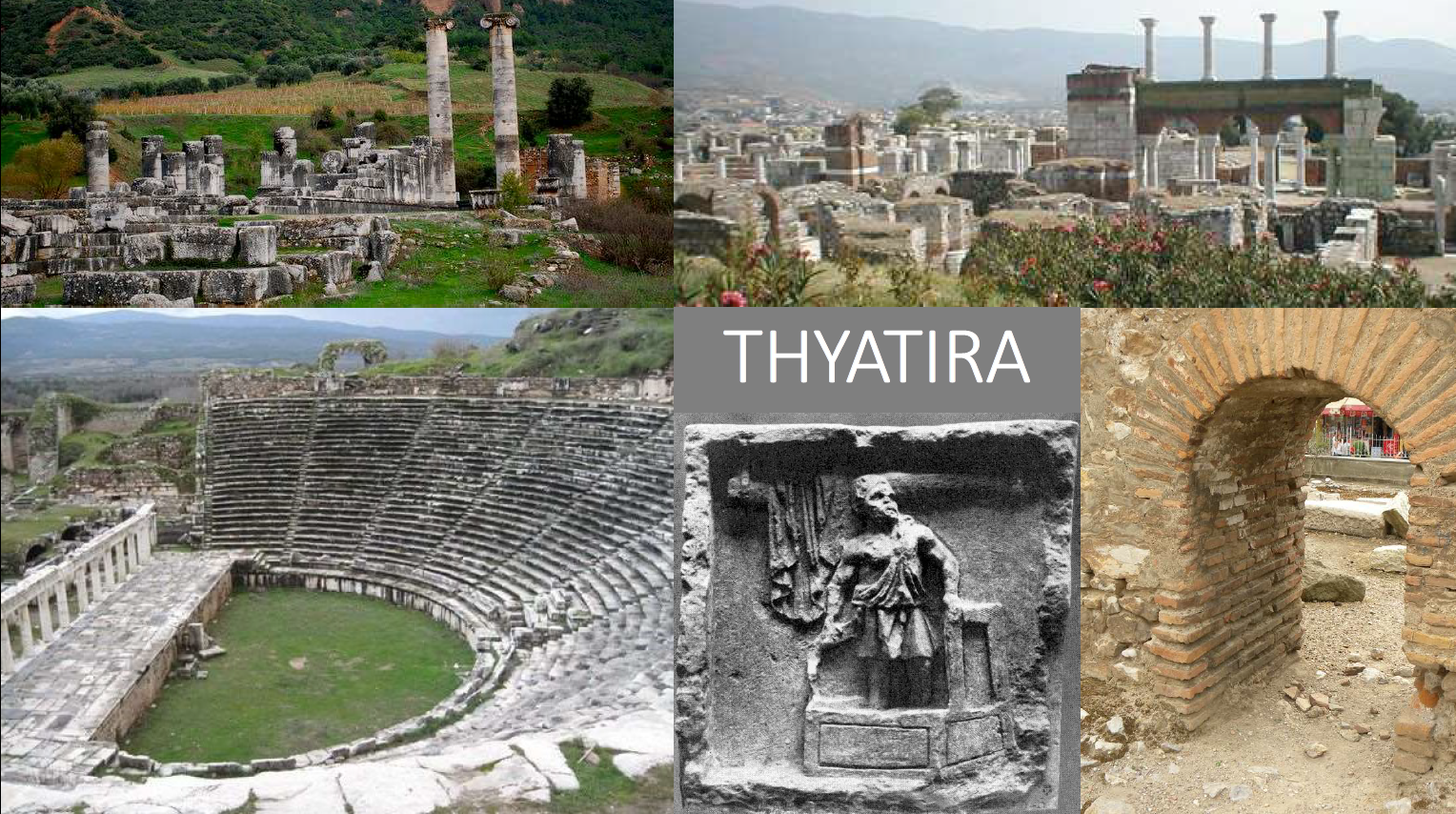
Thyatira is known today as Akhisar in far-west Turkey. This ancient city was strategically located as a buffer to the Roman empire, obstructing the path of its enemies and giving it time to gather military strength.  It was found in a rich agricultural area, famous for its purple dye and wine. This city prospered during the Roman Empire through the security of the army and the trade routes through it.  The archaeological discoveries of temple ruins, monuments, and amphitheaters give us a glimpse of historical culture.  Ancient manuscripts reveal that many Jews settled in Thyatira during the reign of Seleucus I (305-281 BC).

Collage_Thyatira

Thyatiran coins of that era reveal strong trade guilds of weaving, leather, pottery, and bronze melting active in this city.   These guilds, forerunners to our trade unions, formed leagues that promoted and protected their trade and its workers.  In this pagan environment, the guilds worshipped their own gods in the hope of success and prosperity.  These regular religious rituals involved sharing in a feast consisting of the meats offered to the gods – ending in revelries and religious orgies, symbolizing the prosperity of their trades.

Because of the pagan association of these trade guilds, Christians found it hard to work in cities with strong guilds: firstly because of a refusal to participate in the worship of pagan gods; secondly because they refused to eat meat offered to idols, and thirdly, because of the perverse nature of these communal meals.  And this was a contentious issue for the church in Thyatira at the time of John’s writing.

The letter of Christ to the church in Thyatira is the longest and sternest of all seven letters to the churches (Revelation 2:18-28).

 Revelation (2:18).  Christ reveals himself as… [Read the full commentary of Revelation in Faithful to the End]

Faithful to the End is a simple commentary that helps make sense of the encouraging message of Revelation.

Quick links to full THE END Revelation Series posts

1  2  3  4  5  6  7  8  9  10  11  12  13  14  15  16  17  18  19  20  21  22  23  24  25  26

The End? No more Compromise.

This post is the fifth post in a series through the book of Revelation.  Follow this link to a video recording of this post.

The Revelation John received was sent as a circular letter along a logical postal route through Asia Minor which started at the bustling city of Ephesus, moving north to ancient Pergamum, inland through Thyatira, and southeast to the wealthy city of Laodicea.  This letter contained a prophecy from Christ to these seven churches to comfort them during the tyrannical reign of emperor Domitian (AD 90-92), to correct their perspective in their fight against evil, and to charge them to remain faithful to Christ. There is a reward for those who remain loyal to the end!

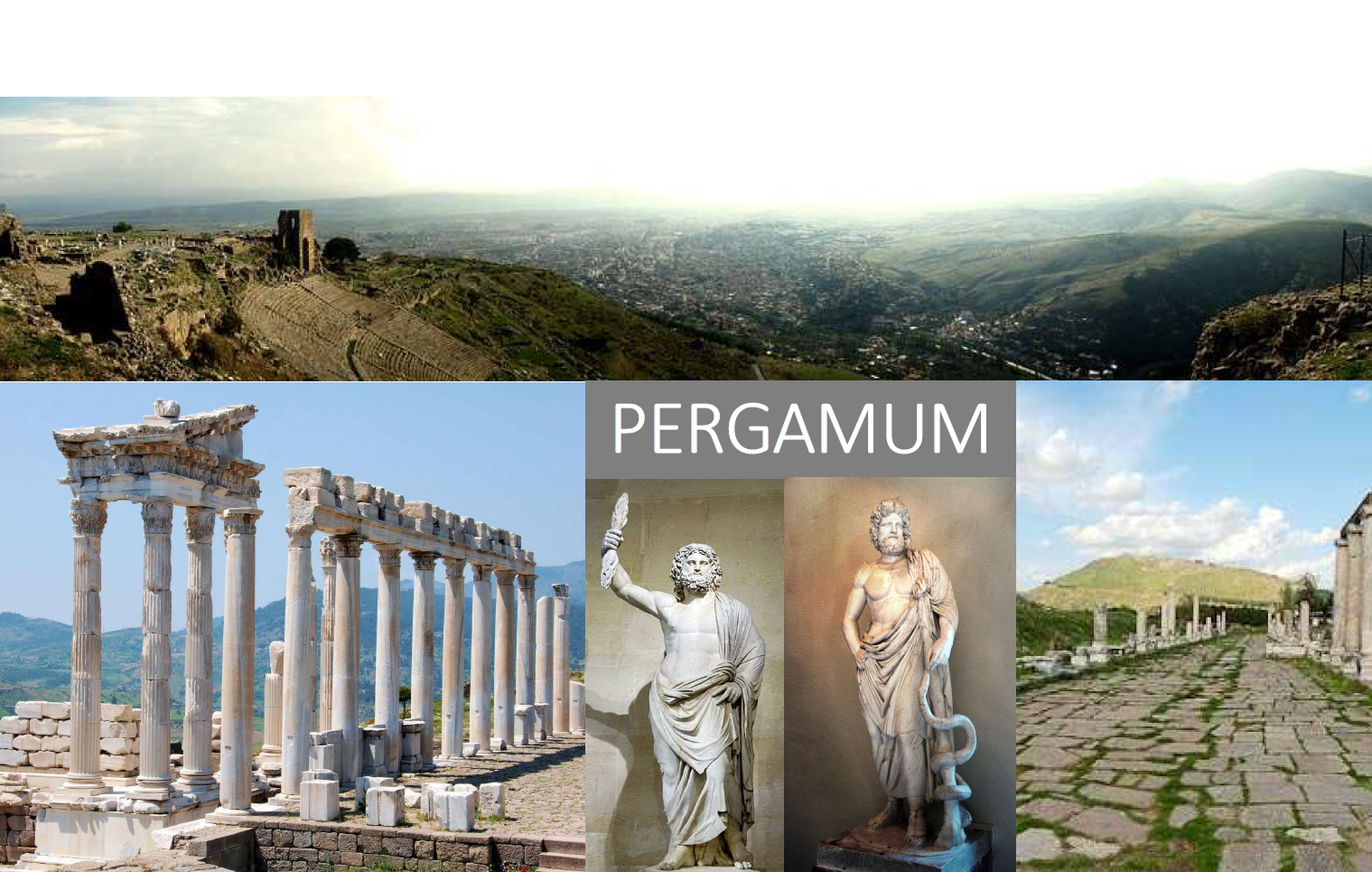
Pergamum, set on a hilltop overlooking the Caicus plain below, was a magnificent ancient city which exited from the springs of civilization in Asia (around 500 BC).  Pergamum (modern-day Bergama) lay about 55 miles north of Smyrna, inland from the Aegean coast.  The archaeological findings in this great city are rich in religious artefacts, including statues and temples of Zeus, Athena, Dionysos (Baccus in Roman mythology), and especially Asklepios, the god of medicine, whose cult was strong and accounted for the prestigious school of medicine in Pergamum. Asklepios’ serpent was a prominent brand in the city, displayed on many of the coins pressed there.

Apart from the medical school, the city was famous for its vast library, university, big parchment industry and the large amphitheatre overlooking the valley.  It was also a strategic Roman stronghold and inland regional administration, boasting the first Asian temple of the Imperial Cult in honour of Augustus (AD 29).  

collage_Pergamum

Within this ancient citadel which worshipped Domitian as king and lord, valued entertainment, education and science, was a vulnerable church who received this letter of comfort and correction, a charge to not compromise their devotion to Christ in word or in deed (Revelation 2:12-18).

The Revelation of Jesus Christ (2:12).  Christ is revealed as… [Read the full commentary of Revelation in Faithful to the End]

 
Faithful to the End is a simple commentary that helps make sense of the encouraging message of Revelation.

Quick links to full THE END Revelation Series posts

1  2  3  4  5  6  7  8  9  10  11  12  13  14  15  16  17  18  19  20  21  22  23  24  25  26

The End? Faithful until death.

This post is the fourth in a series on the book of Revelation. The link below takes you to a video recording of this blog post.

How does one endure hardship, and why? Why does God allow his people to undergo seasons of suffering? And where is God when it hurts? These are some of the questions that Jesus answers in the Revelation, a circular letter written by the apostle John to seven congregations in Asia Minor during the tyrannical reign of Emperor Domitian (AD 90-92).

St_Polycarp_of_Smyrna
Polycarp, Pastor at Smyrna (69 – 155 AD)

“Eighty-six years I have served Him, and He never did me any injury: how then can I blaspheme my King and my Saviour? …You threaten me with fire that burns only for an hour… but you are ignorant of the coming judgment and of eternal punishment reserved for the ungodly. What are you waiting for? Bring on what you will!” 

These were the last words St Polycarp, a famous martyr during another wave of heightened Roman persecution, revealing the church’s grit and attitude in Smyrna.  Polycarp was a pupil of the Apostle John and probably the “angel of the church” (messenger or leader) in Smyrna whom Jesus was addressing in Revelation 2:8-11.

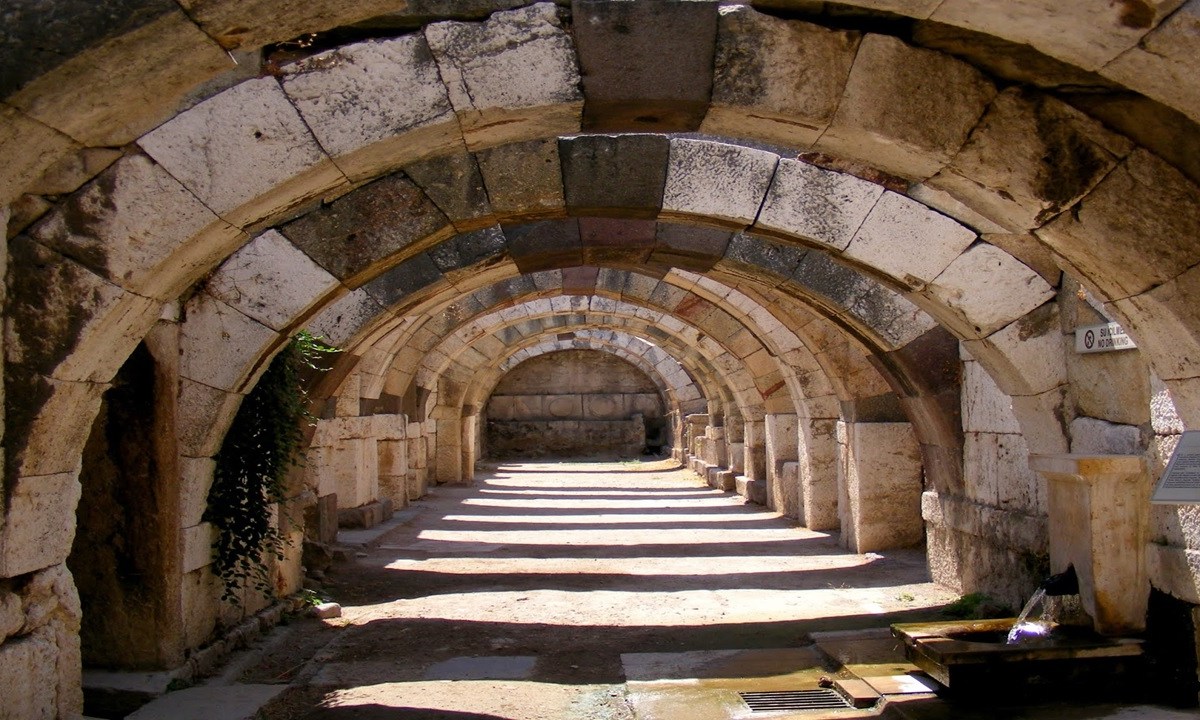
Smyrna, present-day Izmir in Turkey, printed coins which claimed it was “the biggest and most beautiful city in Asia.” This coastal city was prosperous because of the trade routes and its natural beauty.  The town was filled with magnificent temples and statues – some of these are well preserved today.  The figure of Bacchus (Roman) or Dionysus (Greek), god of wine and immoral revelling tells us much about the day’s culture.  So also, the statue Cybele, mother of the gods, reveals that in this city, women were honoured or even venerated within certain people groups.  The citizens of this Greek city were loyal to Rome, dedicating a temple to the goddess Roma around 195 BC.  It also had a temple preserved for the Imperial Cult, devoted to worshipping the emperor.

collage_Smyrna

Persecuted by the Jews. At the end of the first century (AD), Smyrna boasted a large community of Jews, bolstered by the migration of Judeans after the destruction of Jerusalem during The Jewish War (a significant rebellion against the Roman Empire, 66 AD – 73 AD). These Jews were especially hostile to Christians – in part because during the siege of Jerusalem (70 AD) Christian Jews fled the city (prompted by a prophetic Word from the Lord), just before the total destruction of the city and its temple. Also, the Jews viewed the worship of Jesus as an abomination.  These Jews were often the first to hand known Christians over to the Roman authorities for punishment.

Poor Christians. In this city, as in the broader community, Christians were often excluded from the formal employment sector because of the refusal to partake in the worship of the gods of the guilds (first-century trade unions).  In this pagan society, each guild had its god(s) who demanded tribute in exchange for prosperity.  Since Christians refused to worship any other gods, conversion implied the end of their careers.  The only jobs they could take were for the “cursed” in society: garbage removal, sewerage cleaning, the burial of the dead, etc.  Therefore, being Christian was synonymous with being poor in the early Church.

The letter to Smyrna follows the same structure as the other letters: opening with a unique and personal Revelation of Christ to them, it complies with a commendation, a charge, then a warning and finally a promise of reward.  However… [Read the full commentary of Revelation in Faithful to the End]

Faithful to the End is a simple commentary that helps make sense of the encouraging message of Revelation.

Quick links to full THE END Revelation Series posts

1  2  3  4  5  6  7  8  9  10  11  12  13  14  15  16  17  18  19  20  21  22  23  24  25  26

The End? Living from the heart.

This post is the third stop in our reflective journey through the book of Revelation, bringing us to the letter to the Ephesian church (2:1-7).  For a brief video recording of this post, click here or on the image below.

Remember that song “You’ve lost that Lovin’ Feeling” from the Righteous Brothers, popularized by the original Top Gun movie (1986)?  It gets to the heart of Jesus’ first letter to the churches, the church in Ephesus.

Ephesus was a prominent port city in the Aegean Sea, on the Western shore of modern-day Turkey, about 80 km south of Izmir, rich in archaeological discoveries.

Collage_Ephesus

Ephesus became the provincial seat of Roman government into Asia. It was renowned for its scholarship, housing Heraclitus’ first university and the Great Library of Celsus (top left). The city was a cultural hub as witnessed in the well-preserved great Amphitheatre (bottom right).  The city was a religious centre, most notably because of the temple (top right) of Artemis (Greek, central image) or Diana (Roman), and later because of the Christian influence.  In contrast, Ephesus was also known for its “sin industry” through the sailors frequenting its busy seaport.  Its unique setting and well-developed harbour (bottom left) made it a trade hub into Asia and Greece – notably the Silk Trade Route.

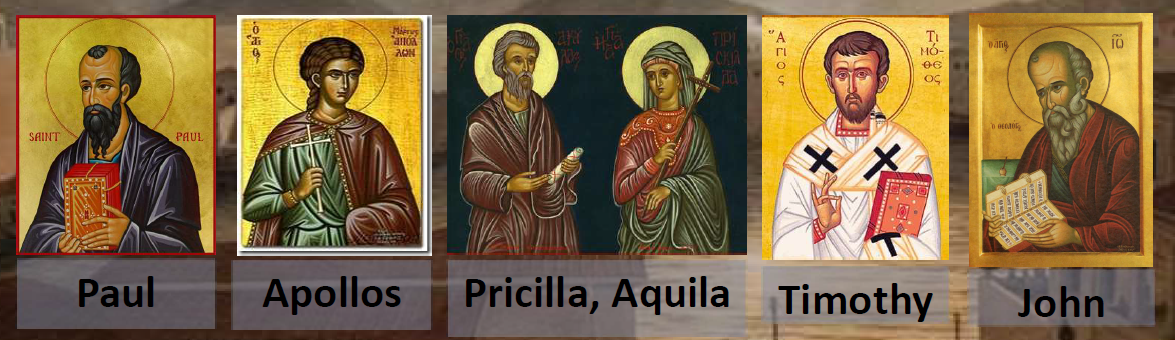
These political, religious, educational, cultural and trade hubs made Ephesus very influential in the region.  No wonder Paul stopped and spent more than 2 years there (Acts 19).  It is fair to say that, after Antioch, Ephesus was the most prominent church in the New Testament.  Other big apostolic leaders made Ephesus their headquarters, including Apollos, Priscilla and Aquila, Timothy and John. In some way, the church in Ephesus still has the greatest influence in the church today because many of the New Testament letters were written either from or to the church in Ephesus.

collage_ephesus_pastors
Apostolic leaders that settled in Ephesus for a significant time in the first century.

It is therefore not strange that the first church Christ addresses in his letters is the church in Ephesus.  By the time John penned these words of Jesus the Ephesian church was more than 50 years old – a second-generation church that had grown significantly and endured a few waves of severe persecution from various emperors.

Keep in mind that this short, personal letter to the Ephesian believers is part of a circular letter to the seven congregations (1:11) with the aim to comfort the persecuted believers and to correct their perspective in their struggle against evil.  As with each of these seven letters, this letter starts with a unique revelation of Christ, followed by a commendation, a condemnation, a charge, then a warning and finally a promise of reward.

[Read the full commentary of Revelation in Faithful to the End]

Faithful to the End is a simple commentary that helps make sense of the encouraging message of Revelation.

Quick links to full THE END Revelation Series posts

1  2  3  4  5  6  7  8  9  10  11  12  13  14  15  16  17  18  19  20  21  22  23  24  25  26