The End? Do not fear

This is our second post in our journey through Revelation.

The letter of Revelation was a message of hope and comfort to help and correct the early church in its struggle with evil – to endure both trials and temptation in faithful witness of Christ’s coming kingdom.  Although this prophecy was written for them, it is preserved for us.  Therefore, everyone who reads these holy words today and hears its invitation to “behold!” will also see how Christ is near to us, is moving in us, through us and for us his Church to accomplish the culmination of his glorious kingdom.  This revelation of Christ’s victory over evil in this world brings comfort and strength to endure until The End.

A note on my approach towards Revelation: In this discovery through Revelation, I will not write scholarly or critical, but rather devotional and encouraging.  The posts will be like all my other posts: an attempt to read the text from the view of the first readers.  How did these seven congregations make sense of this apocalyptic prophecy from their imprisoned apostle?  What was the message of hope to them?  For this, I will keep to the explicit nature of the book: Revelation is an apostolic letter to seven congregations in Asia Minor (1:4,11), which contained a prophecy from the Lord (1:3), in the apocalyptic genre (1:1) which is rich in symbolic images and numbers, rooted in (a) their first-century geopolitical context, and (b) Old Testament literature.  If we stick with these principles, the symbolism in this remarkable book becomes alive and life-giving. (I expounded more on this in the first post in this series).


Greeting and blessing (Revelation 1:4-8)

This short greeting by John is a masterful introduction and succinct overview of the book’s message.  He blesses his readers (and hearers) with grace (divine help) and peace (wellness) from the Triune God.  His name for the Father “(He) who is and who was and who is to come” (1:4) takes the readers back to God’s self-revelation to Moses (Exodus 3:14) before His great deliverance from Egypt.  The Spirit is titled “Seven Spirits” (1:4) from Isaiah 11:2 in that great chapter that speaks of the Messiah’s divine wisdom and righteousness by which he will destroy the oppressive nations and restore all of creation in peace. Here John says “God had delivered his people before from the tyranny you suffer, and He has promised to end this violence once for all!

Next, John answers the question “Can Jesus save us?” with a loud “Yes, he can, and he will!”  Jesus is first introduced as the “Christ” (1:5) – the long-awaited Messiah who will restore the righteous rule of God on earth.  Then Jesus is hailed “the faithful witness” to a church struggling to maintain their faithful witness under brutal persecution and the seduction of a perverse society.  He is held as their example who faithfully proclaimed and demonstrated God’s kingdom and eventually accomplished it by His vicarious death and resurrection: the ultimate witness of God’s Kingdom coming to earth is Jesus’ rank “Firstborn from (or over) death” (1:5).  Not only does Jesus have authority over every spirit, even death, he is also “Ruler over the kings of the earth” (1:5) – good news to the readers oppressed by Emperor Domitian!  These titles stirred flickers of hope to those battered congregations wondering whether Jesus is indeed the Christ who will bring righteousness and peace to the earth.

The next portion answers the question in the heart of every suffering believer: Does God care about me?”  John writes YES HE DOES!  Jesus is called “Him who loved us and loves us and frees us from our sin by His own blood” (1:5). This phrase, a reference to the Cross, is a clear allusion to the Passover lambs slaughtered to deliver God’s covenant people from Egypt by judging the oppressors and preserving the Israelites (Exodus 12:21 ff).  And as God adopted and honoured the delivered Hebrew slaves, these battered believers were called “kings and priests to God” (1:6, compare Exodus 19:6), sharing in his eternal reign.

“But does God not see how we suffer by the hand of our oppressors?” Yes, he does, and his Day of Judgment will come!  Alluding to Zechariah 12:8-10, John writes how the Christ will defend and deliver his covenant people from their oppressors, and how he will reveal Himself in glory to those oppressors so that they will weep at his fierce judgment (1:8).

As the nature of the letter is prophecy, the greeting ends with Jesus introducing himself as “the Alpha and the Omega, the Beginning and the End who is and who was and who is to come” (1:8).  For the contemporary reader of the day, the Greek alphabet was known to have each letter attributed to a major Greek god.  Thus, Jesus’ self-revelation comforted his hopeless church “I am the All-powerful, Ever-living One – your covenant God and Saviour. Do not despair!”

Section 1: Christ among the Lampstands (Revelation 1:4-3:22)


Want to learn more about Revelation? Click on the link for the book.

Quick links to full THE END Revelation Series posts

1  2  3  4  5  6  7  8  9  10  11  12  13  14  15  16  17  18  19  20  21  22  23  24  25  26

THE END?  An introduction to Revelation

This is the first post in a series through the book of Revelation – a letter meant to bring comfort and encouragement during times of uncertainty and hardship.

What have you heard or read about the book of Revelation?  How does that make you feel?

For many, their response to this book includes feelings of uncertainty, confusion and anxiety.  These feelings are precisely what Revelation aims to address in its readers, leaving them feeling comforted, encouraged and hopeful in Christ’s presence and victory over evil in the world.

7 trumpets - mountains

How should we read Revelation, then, to make the meaning clear and leave us peaceful and hopeful during times of uncertainty and hardship? John states this clearly in his introduction: this document is an apostolic letter (1:4) containing prophecy from God (1:3), written in the Jewish apocalyptic genre (1:1). Reading the book with this in mind will encourage and exhort you to live confidently in Christ through tough times.


THE NATURE OF REVELATION: A letter containing prophecy in the apocalyptic genre

Revelation is a letter of encouragement and exhortation to suffering believers.  This epistle was penned by John (1:1,9; probably the Beloved disciple), while imprisoned on the island Patmos (1:9) addressed “to seven churches in Asia” (1:4; 1:11).

The meaning of the book becomes apparent when it is read from the perspective of the first readers – the seven congregations in Asia minor listed as recipients.  Like every other apostolic letter by Paul, Peter, James, Jude and John, this letter answered real questions, brought instruction, warnings and encouragement to the first readers. The message was written to them, yet preserved for us. The truth becomes clear to us as we see what the letter meant for them.

Secondly, Revelation is called prophecy (1:3) ­– God’s Word to a people in a specific context. Like Isaiah, Amos, Malachi, etc. this book contains prophecy (God’s spoken word) to the seven congregations in the seven towns in Asia minor.  This message from the Lord brought real comfort and confidence as the Lord revealed love and care for them, but also corrections and challenges as prophecy always calls God’s people to covenantal faithfulness.

Prophecy is often addressed to his people in a particular time and place. However, Revelation, like many old Testament Prophets, places this Word from God in the context of his cumulative redemptive work through the ages.   It is said that 287 of the 404 verses in this book contain allusions to Old Testament texts, notably from Exodus, Isaiah, Daniel, Ezekiel and Zechariah.  This means that John, here in a prophetic capacity, aimed to ground this accumulative message to these seven, suffering churches in the history of God’s great redemptive plan for his people.  God is bringing his great work of salvation to a climax.

Again, the reader is invited to read this book primarily as a prophecy from God to the persecuted believers in these seven congregations.  This message was clear and made sense to them.  If we want to understand God’s word to us, we have to understand God’s word to them first.

Thirdly, this book is self-titled as “Revelation [or apocalypse] of Jesus Christ” (1:1).  This Jewish literary style, of which Revelation, Daniel, Ezekiel, and Zechariah are prime examples, was at its most popular during the time of John’s writing.  Apocalypse means “unveiling” or “uncovering” and aims to show that things are not entirely as they seem – there is more at play than meets the eye. More specifically, it reveals the heavenly drama behind our earthly struggles – that “our fight is not against flesh and blood but against principalities, powers, rulers of the darkness of this age, against spiritual hosts of wickedness in the heavenly realms” (Eph. 6:12).  Note how Revelation starts with the earthly reality of the seven congregations and shifts realms to show the cosmic drama behind everyday events.

Apocalyptic writing makes use of symbolism through vivid imagery and representative numbers in dramatic scenes that aim to evoke powerful emotions, and a sense of participation in the story told. Secondly, this genre is rooted in Old Testament literature; Revelation is filled with Old Testament references (but not one direct quotation, as this is uncharacteristic of the style).  Thirdly, Apocalyptic language is rooted in the historic-political context of its day; the message of the writing was clear to the 1st Century Greco-Roman believers of their day, and this ancient context is our key to unlocking its meaning.  Lastly, this genre (like most Jewish genres) is not chronological.  The reader should not ask, “What happens next?” but rather, “What does John see next?”  The letter is written in the sequence of John’s visions, not chronological time – and therein is much meaning.

[Read the full commentary of Revelation in Faithful to the End]

Interested to learn more about John’s Revelation? Click on the link for the book.

Quick links to full THE END Revelation Series posts

1  2  3  4  5  6  7  8  9  10  11  12  13  14  15  16  17  18  19  20  21  22  23  24  25  26

Feeling Overwhelmed

Measure your stress levels

Are you stressed out?  Irritable and impatient?  Depressed and down.  Confused and uncertain? Or are you numb, dry and lifeless?  Does the word “overwhelmed” ring true for you? Read on – you’re not alone.

StressTest

This image went viral in December 2018 and is said to indicate your level of neurological stress: the more movement you see, the more stressed you are.  (Yes, it’s a hoax but still very amusing to look at!)

Feeling overwhelmed – a sense of drowning, suffocating, or not coping – can either be caused by a single traumatic event or prolonged levels of high stress, leading to physical and emotional burn-out.  It affects more than one’s emotions and cognitive abilities, impacting one’s immune system, drive, vitality, digestive system, as well as one’s desire and ability to connect with others.

Deep, big shifts throw us off balance

earth_changing-fire

Our world is rapidly changing. Technological advances have made our world very small, causing substantive changes in the way we relate, communicate, work, trade and recreate. This has initiated deep changes worldwide to the very social fabric of human culture.  Add to this global political and economic instability, worldwide mass migration and a general abandonment of absolutes. The net result is a general sense uncertainty and widespread anxiety, leaving people feeling ungrounded and overwhelmed in a profound way.

This has happened before

But we are not the first generation to experience such a significant transformation.  History is filled with global economic depressions, continental epidemics, World wars, genocides, and countless natural disasters of epic proportions.  Not surprising, such are the contexts that set the background to most of the 66 books written in the Bible.  In times of great uncertainty, men cry out, and God responds.

The Psalms are recordings of such prayers and declarations, often revealing how ancient worshippers felt “horror overwhelms” them (55:5) or how situations cause their “heart / spirit (to) faint” (61:2/ 142:2).  In particular David’s prayer in Psalm 143 is a poignant picture of an overwhelmed soul, paving a pathway out of this dark, hopeless place.

A portrait of the overwhelmed soul

man_overwhelemd

The overwhelmed soul feels isolated, making it difficult to feel connected to people, to God and even to self (v1).  He/she is often acutely aware of his/her own inabilities and shortcomings (v2), probably because he/she struggles to get control of his/her own emotions (inner world) and environment (outer world).  This can lead to thoughts of guilt, condemnation and self-critique.

The overwhelmed person has lost inner peace and feels under constant attack; he/she may feel defeated, overcome with a sense of darkness, heaviness or lifelessness (v3).  In short, symptoms of depression.  He or she also shows signs of anxiety: incapacitated by irrational fears, a general sense of horror, and a lack of will or will or drive (v4).

The overwhelmed soul has a desperation and urgency to be freed from this turmoil and is overcome with feelings of helplessness (v7).   This person often feels unloved (v8), even abandonment, and generally uncertain (v8).   The mental condition of emotional overwhelm leads to a burnout manifesting in of apathy or lifelessness (v11).

A pathway to life

rural roads

Firstly, David starts with remembrance of God’s works in redemption (in Israel’s history and his own story) as well as creation (v5).  David reminds himself that God cares for all his creatures, and has shown his special covenantal concern for Israel, also his own life in particular.  He is reminded that God is alive and always at hand, and in response he opens his hands and heart to encounter God (v6).

Secondly, David passionately petitions three things from God:

  • Love me. The Shepherd-king boldly prays for God to speak words of affirmation and affection into his ear. For his soul to heal, he needs to hear that he is loved.
  • Lead me. This second request is also very personal. Not only does David ask for the way to get out of this horrible darkness, or for instructions on how to   This king asks the Great Shepherd to personally lead him to still waters by his “good Spirit”.
  • Revive me. In addition to paternal love and personal presence, David pleads that the Source of Life will resuscitate him again to revive his dead soul. Like he did to Adam, God must breath life into him again, otherwise he will perish inside-out. David asks for a personal encounter with God.

The reason for David’s boldness

Throughout the Psalm, David’s brazen confidence is striking.  As in other Psalms, David’s boldness is rooted in God’s merciful, loving character (v2,5,8,10,12). But in this psalm David does not primarily appeal to God’s compassion and mercy to save him, but he calls on God’s covenantal faithfulness as suggested by the repeated phrase “in your righteousness” (v1,11); he asserts that it is right and fitting for God to save him based on God’s binding covenant with David (1 Samuel 7).   David’s boldness is expressed in the concluding motive for his prayer, “for I am your servant” (v12).  In these words he reminds God that he is not king by his own volition, but rather the Lord was the one who took him from behind the sheep and placed him by His will as ruler over Israel.  All these pressures that overwhelm his soul is because of God’s calling, and therefore it is the Lord who ought to deliver his servant form this dark place.  After all, David cannot save himself, nor can he run from his office.  His Lord must save him so he might continue in his royal office, for the Lord.

earth_hand

Transition and turmoil

David was a strong transformational leader, leading the tribally oppressed and divided Israel into a victorious monarchy, ushering an era of peaceful reign under the Kingdom of God.  He had plenty of political enemies, many familial problems, constant war and a few national crises to resolve.  Yet there was no-one in Israel to mentor him or help him – with every step he was breaking new ground into the unknown.

There should be no surprise that David’s soul was overwhelmed with anxiety and depression – he was living and leading with a constant sense of uncertainty, in an unstable and unsafe environment.  This sense of being ungrounded, uncertain and overwhelmed is common to Biblical leaders in times of uncertainty.  The Bible records instances of emotional turmoil in the lives of Job, Jacob, Moses, Elijah, Jonah, Jeremiah, Paul, Timothy, the disciples and even Jesus.

Moreover, modern history reveals that transformational leaders such as reformer Martin Luther, abolitionist William Wilberforce, president Winston Churchill, preacher Charles Spurgeon as well as liberator Martin Luther King all suffered through seasons of depression and anxiety.

This is very liberating.  Feeling overwhelmed is not a sign of failure or even a lack of faith.  It is the natural human response to drastically changing environment.  God is also not less pleased with the me when I feel overwhelmed; David most frequently brings these feelings to God and prayer, and he is hailed “a man after God’s own heart.”

In today’s radically reforming world many battle the turmoil of transition.  What can we learn from King David’s Psalm 143 about dealing with the debilitating sense of being overwhelmed?  I can shamelessly confess my need to God, reminding myself of his faithfulness in history, my story and creation: he is always at work and always at hand!  Secondly, I should petition him to remind me of his love, lead me in his light, and breath life into my soul – because I am his servant: my life is in his hand.

Uprooted | Nostalgic | Homesick

How often do you catch yourself reliving the best days of your life, your “Summer of 69”? Do you miss your old home, “watching the sunset over the Castle on the Hill”?  Listening  to songs such as these can evoke feelings of nostalgia.

The term was fist coined by 17th century Swiss medical student Johannes Hofer, combining two Greek words: nóstos (homecoming) and álgos (pain) .  He was alarmed at the number of Swiss mercenaries deployed in the lowlands of Italy and France who became sick, longing for home.  Symptoms included insomnia, fatigue, indigestion, stomach aches, etc.  Some doctors suggested this “Swiss ailment” was a neurological disease caused by brain and inner ear damage due to the constant clanging of cow bells in their Alpine homeland.

cow_culture_8

Today we know that everyone becomes nostalgic at times, that painful pleasure of remembering the good times. Anyone can get homesick. (Apparently 7 out of 10 adults still think of “home” as the one they grew up in!)  This longing for a particular time or place leaves a sense of being uprooted, the loss of stability and security, relationship and belonging.  And we all instinctively long for love, protection and comfort – feelings we normally associate with home and our childhood days.

How we relate to the past – the degree to which we indulge in or suppress nostalgia – can be helpful or hurtful.  For example, remembering the good old days during difficult times of transitioning reminds us that we are loved, cherished and valuable, increasing confidence and drive to push through the hardship of resettling in a new community or company.  In this way nostalgia is helpful to cope with the stress of change.

lost_in_crowd

But, as John Piper points out, our relation to the past can be hurtful in two extremes: both the neglect of the past (never going there) and the obsession with the past (constantly longing for it) can wreck your life.

Not surprisingly, Jewish composers also wrote a number of Psalms during spouts of nostalgia, later canonized for reflection and instruction.  One such example is Psalm 137, written by exiled Jews after 586 BC, deported as slaves into Babylon.  This song gives us insight into the unhealthy obsession of living in the past.

Psalm 137 opens with passionate unveiling of the emotional state of these uprooted people.  “1  By the rivers of Babylon, there we sat down and wept, when we remembered Zion. 2  On the willows there we hung up our lyres (harps).” They were heart-broken, defeated, without joy and unaware of the surrounding beauty.

But their hung harps were more than a sign of sadness.  The sense of uprootedness left these exiles with a loss of identity as captured in the fourth verse: “4  How shall we sing the LORD’s song in a foreign land?”  This central theme is the profound theological question these exiles battled with.  As the offspring of Abraham, they increased as God had promised, had possessed their own land, and was blessed to be a blessing to other nations.   How are they still God’s special people here as slaves in a pagan country?  Could these oppressed indeed God’s blessed? How can they be a blessing here in a foreign land?  Feeling uprooted left these Jews with a lack of confidence with who they are (identity) and what their role is in this world (purpose).

The Psalm goes on (verses 5-6) to expound the emotional state of these sad slaves, showing their obsessive longing for Jerusalem their (previous) home. Indeed, the writers pronounce a curse over themselves, should they ever let go of the joyful memories they had back home.  Jerusalem should always remain “my highest joy” (verse 6).  In these verses the exiles reveal what they truly feel: they would never again have goodness and pleasure as they enjoyed in Jerusalem.  They believed that those days were the good days, but now it is forever gone.  They will never enjoy life like that again.  These slaves were without a hope for a good future; all they expected was darkness and gloom.

Not only were the hopeless, but as the Psalm continues, we see that these exiles were angry and full of hateful vengeance.  They wished death and destruction for their Babylonians captors in the most violent ways (verses 8-9).  They also prayed disaster upon their Edomite neighbours who did not help them in their day of trouble but cheered at their destruction (verse 7).   In short, they were angry and bitter at these nations who caused the end of their “good life”.  “Our joyful and peace is gone, and it is all their fault!”

But God had not left his people; he never does.  To these uprooted people, heartbroken and hopeless, the Lord spoke through faithful Jeremiah:

Jeremiah 29:4-7

4  “Thus says the LORD of hosts, the God of Israel, to all the exiles whom I have sent into exile from Jerusalem to Babylon:


God impressed on them that they were not there by some demonic triumph, a cosmic coincidence, or even God’s rejection.   No, they are there by Sovereign design; the LORD of Heaven’s Armies had sent them there.  The Babylonians are merely his servants.
5  Build houses and live in them; plant gardens and eat their produce.  6  Take wives and have sons and daughters; take wives for your sons, and give your daughters in marriage, that they may bear sons and daughters; multiply there, and do not decrease. And what should they do as exiles in Babylon?  Build, live, plant, marry, increase. Don’t just survive and wait out the 70 years (verse 10) – thrive here! Do what God had commanded mankind to do: be fruitful, multiply, fill the earth, have dominion (Gen 1:27-28).  Prosper and live life to the utmost, even here.
7  But seek the welfare of the city where I have sent you into exile, and pray to the LORD on its behalf, for in its welfare you will find your welfare.


More specifically, even though you were brought here as slaves, seek the Shalom – that welfare and peace and joy that you experienced in Jerusalem – seek and expect the same here in Babylon.

God’s invitation to these uprooted Jews affirms the truth that shalom (the fullness of joy, peace and prosperity) is not locked up in a time or place.  His sovereign providence leads us in his purpose through the changing seasons, but in every season he invites us to share in his shalomn.

Can you identify with these uprooted, homesick and nostalgic exiles?  Do you have a longing for the good old days, fearing that those days are forever lost? I have good news for you: every story in the Bible shows that the best is yet to come as we hold on to God!

left_home

How do I deal with feeling Uprooted?

  1. Allow your nostalgia to overflow in thanks.

Psalm 136 calls Jewish worshipers to reflect on God’s faithfulness, reaffirming 26 times “His love endures forever”.  As these uprooted Jews would think back on the defining moments in their history through this song, thanking God for his faithful acts of deliverance and provision, their repeated thanks would affirm the truth that, again here in this present exile crisis, “His love endures forever.”

This is the power of thanksgiving: it reminds us of the loving care and persistent presence of God in our lives.  This truth gives us confidence for today, knowing we can bank on his love and goodness here, now – although we have been uprooted.

  1. Allow your nostalgia to overflow in grieving.

Nostalgia is a sense of loss of that which was good: the painful loss of a pleasant period in a peaceful place with precious people.  You remember the good times, but now it is no more.  From there the bitter-sweet sensation of nostalgia.

For my heart to be healed, I need to mourn this loss.  Neither suppression of the past, nor the obsession with the past will help me to move on. The process of grieving or lamenting allows the wounded heart to acknowledge the pain and trauma of loss, to work through the emotions and consequences of the loss.

I find it significant that more than half of the 150 psalms canonized in the Bible are songs of lamenting.  I find it equally significant that the prophet Jeremiah was able to help these Jews find meaning in their displacement, inviting them to shoot new roots and expect shalom even in exile – after he himself had wrestled through his Lamentation, also canonized in the Bible.  Once he found healing he could not only move on, but he could also help others grieve their losses.

Grief has many stages, but prayers like Psalm 43 and 137 are good examples of how Biblical authors have poured out their emotions of loss, expressing their emotions of shock, sadness and even anger in their prayers to God.

stages_of_grief_sml

  1. Don’t let nostalgia blind you to the beauty of God’s provision and presence: praise Him!

The homesick exiles were blinded by their nostalgia to the beauty of their new homeland.  Their belief that the good life was in Jerusalem and is now forever over made them miss the goodness and provision of God around them.

Indeed, every season has serves God’s purpose, He made everything beautiful in its time.” (Ecclesiastes 3:11).  There is bliss and beauty in today, and the discipline of praise brings it out and lightens our eyes to see God at work where we are.

  1. Let nostalgia stir your hope that the best is yet to come.

As for the heart-broken exiles of Psalm 137, the trauma of loss can snuff out our flame of hope, so that we may not expect any good to come.  But nostalgia is a reminder that in this life, amidst its pain and trauma, goodness has come.  Nostalgia is our way of holding on to the belief that there is goodness, joy, peace, belonging and love in this broken world.  And because God had given that in the past, He can do it again.

The Bible is filled with accounts of hopeless situations where people cried out to God, and the Lord turned the situation around for good.  It follows the lives of everyday people, often oppressed, who held unto the belief of God’s goodness and power, resulting in the most incredible and inspirational turnaround of events.

These teachings invite uprooted people to believe that the best is yet to come. Like Joseph, Naomi and Ruth, Ester, Daniel and his friends and countless other uprooted people in the Bible we can know that God makes all things work together for your good (Rom. 8:28).  God still has great plans for you – a hope and a future secure (Jer. 29:11). And even through the troubling times, God leads us on in victory upon victory (2 Cor. 2:14).  You might feel uprooted now, but watch this space: God is always at work.

Feeling uprooted?  Feel like hanging up your harp for good? 

Don’t lose heart!  Embrace your place.  Live as though God had sent you there.  Let those painfully-pleasant memories of nostalgia remind you of the reality of God’s goodness, and thank him for it.  Allow the pain of loss of that place and its people to pour through prayers of grief for your healing.  But don’t live locked in the past – open your eyes and praise God for his beautiful provision in your life today.  And let the memories of happiness remind you that indeed, there is goodness in God’s gift of life – and the best is yet to come! Watch as He makes all things new (Rev 21:5).

Willow_Grey

Your work and God’s Kingdom

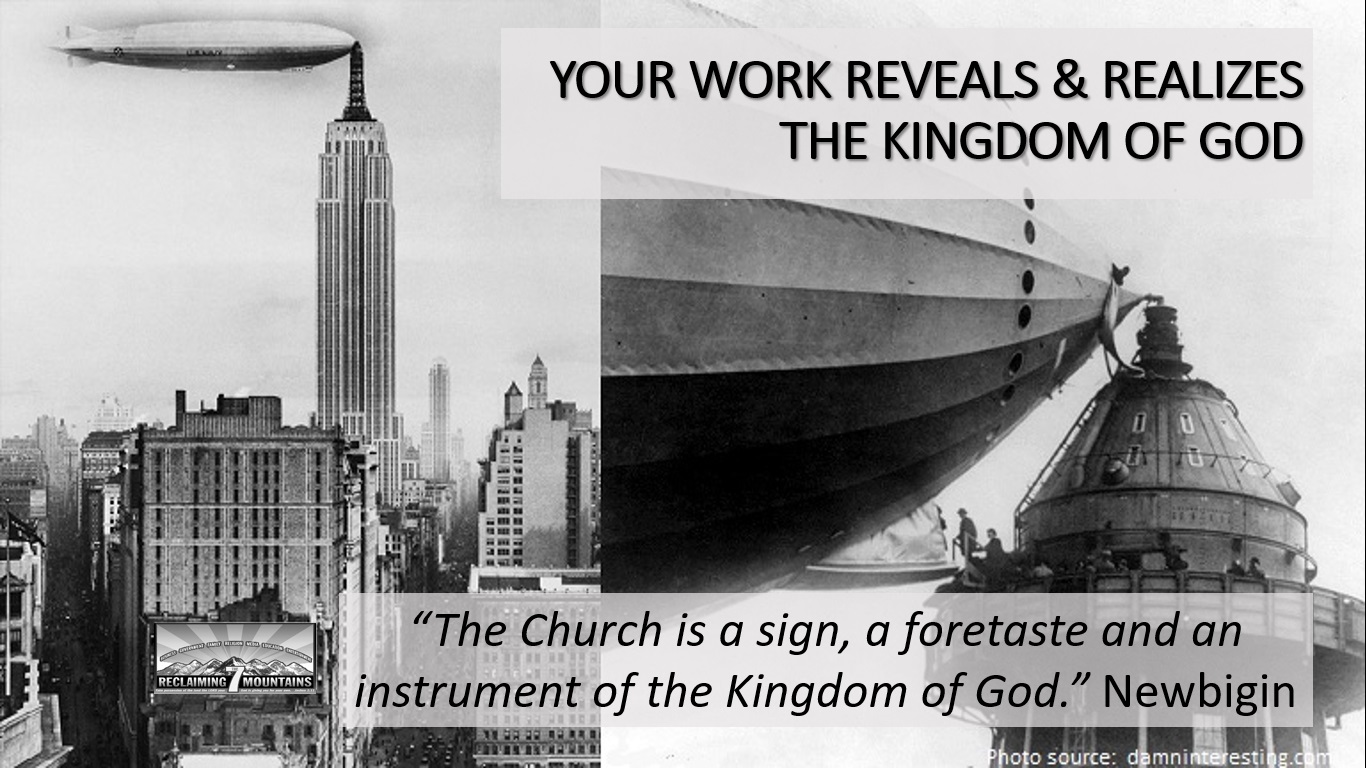
What does your work have to do with the Kingdom of God?

You can expect to spend more than 100’000 hours at work during your lifetime; that is close to 60% of your awake life.  Sadly, 80% of people in our generation are dissatisfied within their current working environments.  For many, Christians and non-Christians alike, work is meaningless, mundane, merely a means to make money; a necessary evil to pay the bills.

Some passionate believers see their sole purpose at work to extend their church services into the workplaces, in order to get their co-workers to church on Sundays, in preparation for the eternal church service in the sky.  Church is important, work is not.  After all, the worship leader did say to them that nothing is as important as worship (he meant “singing”) because that is what we will do for all eternity.  Really?  If singing is our highest and only enduring purpose why then does that not excite us? And why did God not make us all to be singers in the beginning?

Work and Gods Kingdom2

God created co-workers

The first thing we learn about the Triune God in the opening page of the Bible is that God is a relational being and a powerful creator.  The first thing we learn about mankind is that we are made in God’s very image: highly relational men and women who would oversee his created order.

Genesis 1:27-28, 2:15

God created man in his own image… male and female… to have dominion …to keep and cultivate the earth.


This stewardship involves both preservation (to keep) and wealth creation (to cultivate).  It is easy to see that every meaningful job description on earth can be traced back to this mandate: keep what is good, and increase it.  Think how farmers keep and cultivate the ground; how teacher keep and cultivate human potential; law enforcement officers keep and cultivate society; investment bankers keep and cultivate money; lawyers keep and cultivate human relationships and interests; businessmen keep and cultivate the economy; musicians and artists keep and cultivate culture; and so forth.

We see that God’s original intent with mankind was to be co-workers with Him, as both the crown and stewards of his glorious creation. As sin entered, it marred our identity, fractured our relationships, and distorted our holy vocation.  In societies like ancient Egypt, the work place elevated some people to a god-like status while others became worthless subjects.  This is still true all around the world today. Work no longer is a delightful partnership of love; it became a means of oppression and greed, a dreaded duty filled with anxiety and strife.

After delivering the slaves from Egypt God reorder this new nation, rightly orienting this emancipated people’s relation to work by commanding both work and rest days (holy days); both laziness and over-work are evil.[i]  So is unemployment!  Therefore, God instituted social welfare that goes beyond charity to empowerment that prevents and redeems unemployed people from poverty.  Access to work is a holy right that must be preserved and cultivated.

Leviticus 25:35-36

“If a member of your community becomes poor in that their power slips with you, you shall make them strong… that they may live with you.”

Jesus also came, revealing God as a worker.[ii]  The Christ came to redeem and reconcile all things to Himself,[iii] to end the destruction and restore all things – as it was in the beginning.[iv]  Our desire and capacity to work will also be renewed. In His Coming Kingdom, in the renewed earth, mankind will again reign and rule with God over His creation.  We will still work and plant, produce and trade and build, [v]   as this is the eternal nature and purpose of man: stewards who rule over, keep and cultivate God’s creation.

But even now we are the first-fruits of God’s New Kingdom, invited and empowered to witness and serve Christ and his Kingdom here on earth.


How do I redeem my work in this fallen world?

Work and Gods Kingdom3

Daniel and his friends’ engagement in secular work is very helpful in demonstrating how we can serve God’s Kingdom in our places of work.

These young exiles were in a hostile, foreign kingdom where the ruler deemed himself an enemy of God and oppressor of God’s people.  In their refugee camp Daniel and his friends heard the prophesy of Jeremiah that they would be in exile for 70 years,[vi] but that they should not merely survive in Babylon.  Rather, the exiles were sent there by God to thrive in there for God’s sake: to witness and establish His Shalom reign in this pagan nation to benefit all.[vii]  Jeremiah said that even in this ungodly environment God’s people ought to live out their original intent: dwell in the land, have dominion, increase and witness God’s nature and reign. [viii]

Jeremiah 29:5-7

Thus says the LORD of hosts, the God of Israel, to all the exiles whom I have sent into exile from Jerusalem to Babylon:

“Build houses and settle down; plant gardens and eat what they produce. Marry and have sons and daughters; find wives for your sons and give your daughters in marriage, so that they too may have sons and daughters. Increase in number there; do not decrease.”

And seek the peace of the city where I have caused you to be carried away captive, and pray to the LORD for it; for in its peace you will have peace.”

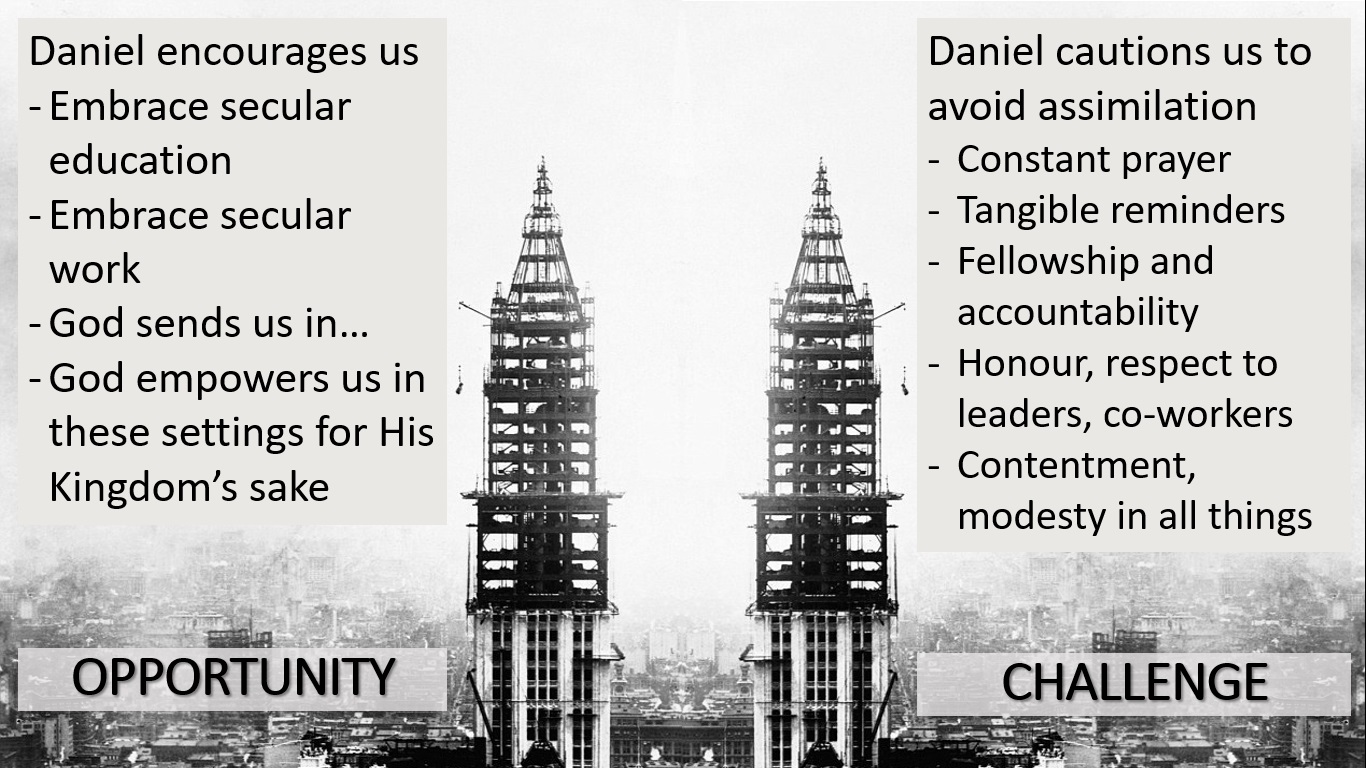
Daniel’s response to this instruction was significant: when the King sought for bright Jewish youths to be trained as officials in his palace, Daniel and his friends made themselves available to “seek the Shalom of the city where [they] have been taken captive.”   Working in this secular environment presented a great opportunity to witness and establish the peaceful reign of God from within this civic center.  It was the invitation to facilitate political conversion, where the oppressor becomes servant of God, his people and his purpose.

But Daniel was aware that this opportunity also presented the great challenge of cultural assimilation: that through the education and engagements these young God-fearing believers might grow to be indistinguishable from the pagan Chaldeans.  Therefore, Daniel establish a practical rhythm in his daily routine as a reminder that he is indeed set aside for God, and although he serves this ruler in his palace, he is indeed first a servant of Yahweh.   Although they willingly endured the (very pagan) Chaldean education, culture and even new identities (pagan names), Daniel and his friends resolved to not defile himself with the king’s food…” (1:8).  Their diet and devotional prayer discipline “three times a day, since his youth” (6:10) inoculated him against cultural assimilation.  These habits also identified these men “servants of the Living God”[ix] – labels by which Daniel and his friends were known in their places of work.

God’s response to Daniel’s vow of sanctity and service is very encouraging (1:9, 17, 20).  God bestowed on these young witnesses favor and compassion in the sight of their overseers; they were treated with kindness and respect – more than their peers.   God blessed these young men with the ability to acquire learning and skill so that they proved to be ten times better that their peers.  What is more, God gave Daniel a particular ability to interpret dreams and visions that set him apart and made him sought after in his workplace.  Because Daniel and his friends resolved to serve God in the palace, God empowered them to serve Him there.

The overarching message form the book of Daniel is how God’s Kingdom toppled a pagan empire, and how His reign permeated the entire Babylonian realm, because four young believers resolved to serve God within that hostile, secular environment.  Their example is our invitation and inspiration today.

Lessons learnt from Daniel at work

Daniel and his friends encourage us to embrace secular education and secular work environments for God’s sake; to understand that we have been commissioned and empowered by God and to engage these secular environments in service of His reign.  But Daniel and his friends also caution us to avoid cultural assimilation by instilling tangible reminders and a lifestyle of prayer, fellowship and accountability with like-minded believers.

Daniel and his friends show us how to work for God in a in a secular society:

Firstly, resolve to serve God first in all things (1:8), regardless of the cost; how I endure the fire is my greatest witness to my faith in God’s reign.   This calls for a life of integrity (6:4) and spirit of excellence (6:6; 5:12) – meaning live beyond reproach and do all to the best of my ability – “as unto the Lord”. [x]

Secondly, seek favor and grace from God that I may be empowered to serve him well at work (1:9, 17, 20).  For Daniel it meant he had the ear of his leaders, and he could recall and apply his learning in wise was.  Also, his unique gifting brought him before the emperor, presenting opportunities to witness God and His Kingdom effectively.  Seek these gifts from God, and yield it confidently, for God’s sake.

Thirdly, Daniel demonstrated servant leadership, showing me that my position and power is not meant for personal privilege, but as empowerment to serve those entrusted to me (3:26, 6:20).  This concept of servant leadership is foreign to our world. Trust God that your faithfulness will lead to promotion, to wield greater influence of righteousness, peace and joy where you live and work. [xi]

How do you think about your work?  Into which domain did the Lord call you to serve his creation and witnessing his peaceful reign?  I urge you: seek His favor and ask for grace to serve him well that you may see the transformation as His Kingdom comes through your witness and work.  You will have your reward when He returns.

Work and Gods Kingdom4

[i] Exodus 20:6; Leviticus 23:3-4.

[ii] John 5:17.

[iii] Colossians 1:16-21.

[iv] Matthew 18:19; Revelation 20:5.

[v] Revelation 5:10; 21:24-26; Isaiah 65:17, 21.

[vi] Jeremiah 29:10

[vii] Jeremiah 29:5-7.

[viii] cf. Genesis 1:27-28.

[ix] Eg. Daniel 6:10 and 3:28.

[x] Colossians 3:17.

[xi] Psalm 75:6-7.

(Not) Enough!

At times I feel I need 8 arms like an octopus, just to have hands on everything that is going on.  But I don’t.

The other day I spoke to God about the moments when I do not feel the peace of God, when I feel disconnected from the God of peace.  I concluded that I feel anxious and frustrated whenever I am overwhelmed with all the people, projects and places I am unable to sufficiently connect to and serve.

I find that (my) life is simply too demanding to do everything well.  As a husband, I am at times unable to connect to and love my wife the way I want to.  As a father of two beautiful young children I find that I am at times to busy and too drained to bless them the way I would want to.  As pastor and overseer I am thoroughly aware of all the people going through hardships whom I would want to spend time with to comfort and care for – as well as the people with great potential whom I would want to coach and encourage.  What drains my peace is that in every area of my life I feel that I am falling short; I am too busy to give my wife, my children, my congregation, my friends, my community, my studies and my God the time and devotion I want to or feel I should.  As such I am always aware that I can (and should) be a better husband, better father, better friend, better pastor, better steward, and better Christian.  I am failing everyone, mostly God and myself. I don’t do (well) enough, and I am not (being) enough for anyone.

These are the moments when I am acutely aware of my inadequacy, my insufficiency to be everything for everyone. My emotions dashboard lights up with anxiety, frustration, disappointment, shame, and that familiar sense of being overwhelmed.  At these moments I am acutely aware that I am not enough, and that I just don’t do enough.

I want to be more.  I want to do more. And I feel I should.

If you can identify with these emotions, then cheer up – we’re in great company!

Joshua felt insufficient

intimidated_incompetence

Joshua was apparently also overwhelmed with a sense of being insufficient, unqualified, and uncertain of himself.   Moses was dead, and Joshua had to take the reins of leading Israel to occupy the promised land.[i]  Joshua certainly had the faith in God to face those giants in their fortified cities,[ii] and had shown himself competent in combat.[iii]  The Bible writes that Joshua was faithful,[iv] and full of the Spirit of wisdom, [v] and knowing God intimately.[vi]  Moses had mentored him for 40 year, and now God himself called him to step up and take the lead.[vii]

In spite of all these qualities Joshua was intimidated and for the task at hand.  He needed much encouragement, or rather, much urging to step up and lead.  It was not the giants or the combat that freaked him out.  He felt insignificant, insufficient, incapable compared to Moses whose shoes he had to fill – a mighty leader who regularly demonstrated the power of God.[viii]  And who can blame Joshua for feeling small in comparison to the man who stood in front of Pharaoh and brought down ten plagues that plummeted the mighty Egyptian empire?  Or the man for whom the Red Sea opened up, mountains shook, manna rained down and water gushed out of rock?  The man who brought identity, moral law and formalized worship for the Israelites?  Who would not be intimidated?

The irony is that, when God at first called Moses for his task, he also felt intimidated.  He declared himself incompetent and insufficient for his task.  And I’d say he had a good enough reason – this leader couldn’t speak in public, and had the bad reputation of murderer and deserted in Egypt.  Moses of all people knew where he fell short, where he was not qualified, not good enough for the role he was called to fulfill.

But Moses was not merely sent to do a job for God; he was called to do something with God.  He was not called to bring down Pharaoh and his oppressive empire for God, but with God.  He was not sent to lead the people out of Egypt, through the Red Sea and the wilderness into the Promised Land for God.  He was called to follow God and walk with God as he led the people.  Moses’ significance and success were not determined on his own performance and perfection but on God’s presence and power.  He just had to stay in step with God.

Yes, Moses was incompetent, insufficient, incomplete as father, as husband, as leader, as worshiper.  The Bible records his flaws on purpose.  But Moses appears larger than life in the Sacred Text because in spite of all these imperfections and shortcomings, God was with him.  All the successes attributed to Moses were God’s miraculous compensation for human shortcomings.

Therefore, all Joshua needed to hear to be brave, to be strong, to lead God’s people and to possess the land was the promise that “As I was with Moses, so I will be with you.”

I’m insufficient.  God is not.

Back to my weekend encounter with God about my insufficiency to do everything well: I poured out my heart and told God how I felt insufficient, how I felt that I did nothing good enough because I am too busy, too scattered.  If I had less commitments, perhaps I could do at least a few things well.  But what can I cut from my life?  I am quite confident that I am connected and committed where God has led me.  I feel that it is in fact God’s tasks that make me feel insufficient and incompetent.  Could that be?

As I was praying, I heard God clearly answer me: “I know you are insufficient.  I called you, knowing you are not perfect.  I don’t expect perfection from you.  I don’t expect more from you.  But I am with youMy grace is sufficient.

These words were as refreshing and revitalizing as cold water on a hot day.  I felt as though weights dropped off my shoulders, a burden left my chest.  God does not expect more from me; he knows my insufficiency.

Simply the Gospel

Over against a striving culture that that celebrates performance and perfection, the gospel of Christ sounds the invitation that God’s sufficiency in Christ qualifies and compensates the insufficient and imperfect.  His invitation to the weary and incomplete is to find rest in his sufficiency.[ix]  In Christ, God does not frown upon the insufficient nor does he reject the imperfect.  Rather, God is compassionately drawn to our brokenness and weakness,[x] “because he remembers that we are dust.”[xi]

And that is the gospel: that the Perfect One redeems and embraces the imperfect ones through the sufficiency of Christ’s atoning sacrifice.  God is always with us.

God with me 

“I am with you,” God said to the stuttering Moses,[xii] to the hesitant Joshua,[xiii] to the fainthearted Gideon,[xiv] and the youthful Jeremiah.[xv]  The list goes on.  Yet, aware of (and even intimidated by) their insufficiency in the face of their calling, these believers were inspired to step out, assured of God’s empowering presence.

That’s how the stuttering Moses lead 4 million Hebrews out of Slavery, hesitant Joshua conquered the Promised Land, fainthearted Gideon defeated the powerful Midianites with 300 men, and young Jeremiah faithfully proclaimed God’s word in wicked times.  God’s grace proved sufficient, his strength was perfected in their weakness. [xvi]

Imperfect, but worthy

Realizing our insufficiency is a good thing.  It does not help to brainwash ourselves with Ted Talks, nor to try and persuade ourselves with “mirror-mirror” pep talks that indeed, we are sufficient and have what it takes.   Our inner and outer reality clearly shows that we fall short.  But our imperfection does not diminish our worth or our work. 

God opposes the proud but gives grace to the humble.[xvii]
enough1

Our (in)sufficiency does not (dis)qualify us from salvation.  Quite the opposite!  The reason why God sent his son into the world was because everyone fall short of God’s perfection; therefore God in Christ has made a way to impart his sufficiency to us, that we might stand sufficient before him. [xviii]  Whoever humbly asks for this gift we call salvation will be made right before God.[xix]

Our (in)competence does not (dis)qualify us from service.  God is not intimidated or irritated by our shortcomings!  Comparing yourself to the accomplishments of others is futile.  Accomplishments does not qualify us before God, the true eternal judge: God alone calls, God alone qualifies, God alone commends us before him.[xx]  Every character in the Bible who played a meaningful role in history reminds us that God calls, qualifies, commends and empowers imperfect people to accomplish significant work with him.  That’s still his way with me and with you.

The Invitation

In those moments that I feel strong, that I feel on top of everything, I usually have courage to exert myself for concerns bigger than myself.  I have courage to stretch myself beyond my own needs.  But God challenged Joshua to do just that when he was intimidated by his own imperfections: to be strong and act courageous in the face of his incompetence.  How?  By the assurance of the Sovereign Lord’s personal presence.

Think about it: what could Joshua possibly face that is too big, too hard for God?  Not the Jordan river in flood, not Jericho with its high walls, not the seven mighty nations in Canaan.  No, not even the rebellious people God had entrusted to him!

That invitation to walk towards God’s Promised Peace today is the same:  in spite of my insufficiency, God is with me.  And that is how my heart is encouraged to act with confidence.  Today, in every place and every situation, God has my back to compensate for every inadequacy and insufficiency.

The reminder

What would I say to myself next time I am overwhelmed by my own incompetence and insufficiency.  I would remind myself that God is not irritated with my imperfections, nor is he not disappointed with my defective performance.  I will remind myself that his grace has made me both accepted in he presence and empowered by His partnership.  He has not sent me to do work on his behalf – he has invited me to live a life of service with him.  I will remind myself that God does expect perfection of me – he knows that I am dust and has perfected me in Christ.  I will remind myself to look beyond my inabilities, to discern God’s presence and trust in his God’s sovereign power.  I will urge myself to look to him and be strong – because it is not the “perfect ones” that do great; the ones who know their God will do great exploits.[xxi]

[i] Joshua 1:1-10

[ii] Numbers 13:16-14:9

[iii] Exodus 17:8-13

[iv] Exodus 32:1-17

[v] Exodus 33:11

[vi] Deut. 34:1-12.

[vii] Deut. 31:14-23

[viii] Deuteronomy 34:12

[ix] Isaiah 55:1-2

[x] Psalm 34:18

[xi] Psalm 103:14

[xii] Exodus 4:10-12

[xiii] Joshua 1:2-6

[xiv] Judges 6:12-14

[xv] Jeremiah 1:6-9

[xvi] 2 Cor 12:9

[xvii] 1 Pet 5:5-6; James 4:6

[xviii] Rom 3:23, 6:23

[xix] Romans 10:13

[xx] 2 Cor 10:18

[xxi] Dan 11:32

Greater still – the best is yet to come

If in this life we hope only in ourselves, in the best that we can dream up, delve up or deliver, then we have reason to be dreadful and live on in despair.  If our fate rests on the fullness of our faculty and fidelity then yes, we have reason to be frantic and fear the future.  Mankind is a mess.

But Christians have cause for hope, a reason to look up and expect the good.  Our surety of survival is in God, the eternally good and ever strong God.  Our security for today and faith for the future is not based on nature’s mood, on man’s motive or my own mojo.  We are hopeful because Our God Reigns!  And his arm is not too short to save, his ear not too deaf to ear.[i]  Our God is near, and He hears.

There is no place for hopelessness or defeatism in the heart and mind of a Christian.  Like the elder said to despairing John imprisoned on Patmos, God is saying to the church today “WEEP NO MORE!”[ii] Christ has triumphed and is already unfolding His universal reign of peace!”  Yes, Christ has come to reclaim God’s rightful reign and to redeem all of creation to Himself.  God is up to something great!

Because of God’s generous, faithful character and expanding reign, I believe that the best is yet to come!  Your tomorrow is better than today; expect to thrive and not only survive.  You can be sure that God’s reign is always expanding, his grace is always abounding, his glory ever more visible.  In God, your future is looking brighter still. The best is yet to come!

Greater_Still4

Your best life is yet to come.  Ageing does not mean fading; your best years are still ahead.  The psalmist recorded that “he who is planted in the house of the Lord will bear fruit in old age, he will be fresh and flourishing to declare that God is righteous!”[iii]  Our Lord Jesus always keeps the best wine for the last, and makes the latter glory outshine the former.[iv]

Is your life miserable now?  Then smile – in Christ, you can always expect better!  No matter what this life throws at you, God makes ALL THINGS work together for your good.[v]  That is your confidence of a good tomorrow!

Regardless where you are at in life, look up!  God’s plans are for better welfare, a better hope, a better future.[vi]  He has more and better plans prepared for you to walk in.[vii]  He had already written your book, prepared all your days[viii] – your life story is not over yet, but we know it ends in glory!  Come on, God is leading you upward, onward.  Can you recall some of the surprises he has showered over your path in the past?  Prepare your heart for more – your next leg is already littered with love. The best is yet to come!

Greater_Still5

The best you is yet to come.  When you look at the mirror, do you like what you see? Do you love whom you’ve become?  Cheer up – the best version of you is still being formed.   God has started weaving you in your mother’s womb,[ix] but He is not done with you yet!  You’re still “under construction” because God is ALWAYS at work in you shaping your character, growing your competence.[x]  The resurrection Spirit is EVEN NOW giving life to your body,[xi] transforming you for gory to glory – just keep your eyes fixed on Him![xii]  He is the not done with you yet – what He has started he will complete in you;[xiii] he is the Author and Perfecter of your faith.  Christ, your hope of glory, is alive and at work in you.[xiv]  The best is yet to come!

Greater_Still6

Your best victory is yet to come.  God always leads us on in victory, from glory to glory until we win our last fight in Christ by overcoming death.[xv]  I wrote previously that every scar is a reminder of a victory we have won in Christ, of our faith that has been tested, purified and approved.  “What does not kill you makes you stronger” is true for every Christian.  In all things we are more than overcomers in Christ![xvi]

You are stronger than you were before.  David first conquered the lion, then the bear, then Goliath, and later the Philistine armies.  Likewise, God is leading us through progressive victories.  Do not fear these future fights – in God’s providential wisdom you will not be tested beyond what you can bear.[xvii]  And for everything you face, His grace is sufficient and His strength is perfected.[xviii]  Heads up!  Your greatest victory is yet to come!

Another year is over.  Another year of God’s faithful love and preserving grace.  Another chapter in your book declaring “Thus far the Lord has brought us”.[xix]  But the story is not done yet: there are grander adventures to live through, more glorious victories to be won, greater love to enjoy. The path of your purpose is prepared with plentiful provisions and pleasures.   Look up! Be strong! Take courage! Nothing you will face tomorrow is impossible for God.  You are growing from glory to glory.  His mercies are new for every day, his grace sufficient for every challenge.  With God, the best is yet to come.  God is up to something great.


[i] Isaiah 57:1.

[ii] Revelation 5:4.

[iii] Psalm 92:13-15.

[iv] John 2:10.

[v] Romans 8:28.

[vi] Jeremiah 29:11.

[vii] Ephesians 2:13.

[viii] Psalm 139:16.

[ix] Psalm 139:13.

[x] Philippians 2:13.

[xi] Romans 8:11.

[xii] 2 Coronthians 3:18.

[xiii] Philippians 1:6.

[xiv] Colossians 1:27.

[xv] 2 Corinthians 14:14; 1 Corinthians 15:57.

[xvi] Romans 8:37.

[xvii] 1 Corinthians 10:13.

[xviii] 2 Corinthians 12:9.

[xix] 2 Samuel 7:12.

Known by my scars

This week I got a new scar.  The doctor says its not going to be a pretty one.  It’s on my calve, so I’m not too bothered about the mark.   Ironically, this scar fills me with gratitude and joy because it reminds me of what could have been – of what I was saved from.

I have another scar on my arm.  This one always brings a smile to my face as it reminds me of the night I got it.  I was was sixteen years old.   Me and my brothers were doing dishes.  I splashed oily water and Conrad ducked away, “accidently” stabbing me in the arm with the steak knife he was drying. There was a lot of blood and screaming. We all got a big fright! But a few stitches and cleaning up restored the peace.  This was thirty years ago; Conrad passed away two years ago.  I’m fond of the scar on my arm, because it reminds me of the love and the friendship we shared.  The sudden loss of my brother left an unseen scar, and somehow this old knife wound represents the loss I feel.

Just like the marks on a tree, our scars bear testimony to the things we lived through.  They give shape to and character to our lives.  The scars can never fully reveal the trauma we encountered, but like the marks in a tree trunk, our scars reveal our growth response to these events. our scars are evidence of how we healed.  As such, our scars tell the story of our resilience – what we endured and survived.

People tend to hide their scars, ashamed of the imperfections and afraid of the painful memories.  In contrast, the apostle Paul boasted in his scars[i] and listed the events which caused these scars (inside and outside) with gratitude and dignity, claiming that his scars are something to be cherished, even honoured. [ii]  How could our scars be something to be thankful for, something to be cherished and even paraded?  What can we learn from Paul about our scars and the trauma which caused it?

Firstly, each scars is a witness to my weakness, and therefore a tangible signs of grace.  We get scars because we are not bullet-proof.  Our scars are a testament to our vulnerability, our frailty.  Paul boasted in this weakness[iii] – his limitations or the end of his ability – because that’s where he experienced grace: the help and intervention from God.  The traumatic events Paul listed scarred his body, soul and spirit.  Violence and disasters left marks on his body; betrayal and abandonment wounded his soul; accusations and demonic torments injured his spirit.  Yet Paul cherished each scar – visible and invisible – as a reminder of God’s sustaining grace.  Without God’s grace Paul would have died, given up, or turned back from the call for his life.

One evening in our high school years, my brother Conrad took a test drive with a friend’s motorcycle – without a helmet.  Somewhere in the ride he accidently switched off the headlights. As he approached our house, another vehicle – who did not see him – turned in front of him without indicating.  Conrad crashed into the car, was flung in the air and landed headfirst on the tar.  We though he was dead, but God showed him grace.  He had a scar above his right eye as a daily reminder of the grace of God.

Likewise, my own scars are reminders of what I was saved from, and how I was restored.  They testify of God’s presence, providence and power at work in every situation that threatened my life.  The scar says “If it had not been for the Lord,[iv] this would have been my end… but God carried me through and restored me!”   As such these scars bring me daily comfort that God is always with me, and will turn everything I face today for my good.[v]  My strength may fail, but His strength will not.[vi]  When fear wants to overwhelm me, my scars remind me that “stronger is He that is in me” than what I may face in the world today.[vii]  I never face anything alone.[viii]

Scars - faith
This fireman has felt the sting of fire.

Secondly, my scars are witness to the tests I have passed.  Each scar – whether visible or invisible – tells a story of pain that I endured, of hardship that I was not spared. And therefore, as a believer in Christ, these scars are signs of faith that remind me that I was tested and purified as through fire.[ix]  Like Job, I kept on believing in the goodness and power of God in spite of the troubles I endured.[x] Through the pain, loss, or shame I kept on trusting in Jesus, believing that he has overcome the world.[xi]  As I walked through the fire of testing, my faith was proven and found to be real because I have come to trust God’s character more than my experience.

Looking at my scars as marks of faith bring me daily confidence.  My scars remind me that “nothing can separate me from God’s love” and that in every hardship I endure “I am more than a conqueror through Christ who gives me strength.”[xii]  In this sense each scar is an affirmation of my faith, adding confidence in the face of adversity.

Scars - hope
This Nigerian Christian faced the brutal hatred of this world. One day this will end.

Thirdly, my scars are witness to a fading, fallible world.   We only get scars on earth because the rule of sin and its decaying effect is limited to this fallen world of ours.  Our scars are caused by things like violence, sickness, calamity – and these have temporal power here.  The driving forces that bring us pain and leave us scars are often hatred, jealousy, greed, betrayal, or abuse – and these are only at work in this age.  But when Christ returns to reign there will be no more pain, no more sickness, no more calamity[xiii] – there will be no new scars in heaven.

Every scar reminds me that our world is fallen, and that this is why Jesus came to earth.  Seeing scars stirs my longing for the day when Christ will come to make all things new.[xiv]  As such our scars are signs of hope, reminders that Christ will bring an end to sin and suffering and establish His universal reign of peace. Looking at my scars in this light brings me joyful endurance, knowing that whatever I might face today is temporal; it cannot compare to the eternal glory that awaits me.[xv]

Lastly, my scars are reminders of Christ’s scars on his body. Jesus has scars on his body because he came to identify with me in my sin and suffering. Moved by love the Eternal Perfect One exchanged his pain-free heaven for our pain-stricken existence.  He willingly embraced our suffering to redeem us to Himself.[xvi]  This sacrificial love left the Eternal Perfect One scarred forever – as a Lamb having been slain.[xvii]

Our scars point us to His scars, a tangible reminder that we are greatly loved.  As such, my scars are signs of love.  He was marred in body, soul and spirit for our healing, peace and forgiveness.[xviii]  In this – His scars – His love for us is proven.[xix]  Looking at my scars in this way stirs my gratitude and devotion to Christ.

What scars do you carry in your body?  Ask yourself: How does this scar remind me of God’s sustaining grace? Can I see this mark as affirmation of my proven faith? How does this injury stir my hope in Christ’s return? And does this healed wound remind me of God’s immense love for me?

Now we can look at your scars and say with Paul: “We do not lose heart. Even though our outward man is perishing, yet the inward man is being renewed day by day. These light afflictions, which is but for a moment, is working for us a far more exceeding and eternal weight of glory…” [xxi]

[i] Galatians 6:17.

[ii] 2 Corinthians 11:23-33, 12:8-10.

[iii] See above.

[iv] Psalm 124:1.

[v] Romans 8:28.

[vi] 2 Corinthians 12:8-10.

[vii] 1 John 4:4.

[viii] Isaiah 43:2.

[ix] 1 Peter 1:6-7.

[x] Hebrews 11:6.

[xi] John 16:33.

[xii] Romans 8:35-37.

[xiii] Revelation 21:4.

[xiv] Revelation 21:5.

[xv] 2 Corinthians 4:17.

[xvi] Revelation 5:9.

[xvii] Revelation 5:6.

[xviii] Isaiah 53:4-6.

[xix] Romans 5:8.

[xx] If you read ‘spirit’ in this sense, it is helpful to think of identity, as well as your relational ability to love, hope and trust.

[xxi] 2 Corinthians 4:16-17.

Confident parenting through the tough times

I’ve been an officer in the Air Force, a church planter, a pastor and a husband.  But for nothing have I felt more uncertain and unequipped than the honoured job-title of “dad”.  I remember the day we brought our first-born, Nathan, home.  The sobering weight of responsibility left me feeling out of my depth.  Through the years that feeling of insufficiency has frequently surfaced.  As a parent I realize my need for God’s help in wisdom, strength and love.

Two moments early in my parenting path portray my need for grace. When Nathan was just two weeks old he was hospitalised with an infection.  He was really sick – dehydrated and weak.  My wife Magriet spent the days with him and I spent the evenings.  Our concern brought us to our knees in prayer – what else could we do?  During that testing time I discovered the passion of a parent that connects deeply with God, the concerned Father.  In my deep parental love and desperation, I discovered that this is the nature of our God: a Dad that would move mountains to heal a hurting child.  In my prayers I identified with God’s passion and purpose, and God responded as he identified with my passionate plea.  And we were both concerned over the same child, his son that he had entrusted to me, to us.  God heard us and healed our son.

As every parent would know, fear is never far removed from the heart that loves deeply.  The delightful path of parenthood is often littered with dread.

When Nathan was three it was such a season form us again.  Our son was in trouble again and I felt utterly helpless.  We watched as the bold, bubbly boy had grown increasingly reserved and unsure of himself, because he was unable to speak.  We sought professional help, but the prognosis was not at all reassuring, and reading up about his condition in medical journals did not help at all.  I recall several evenings waking up from nightmares in cold sweat because my troubled mind dreamed up scenarios where my speechless son would get lost in a mall, unable to say his name or who his parents are.  Another time I woke up crying as I dreamed Nathan was being bullied at school and he could not tell me about it.   These sleepless nights pushed me to raw prayers to our Concerned Father Whose heart I had discovered in that hospital room three years earlier.  And He heard our prayers, and healed our boy once more.

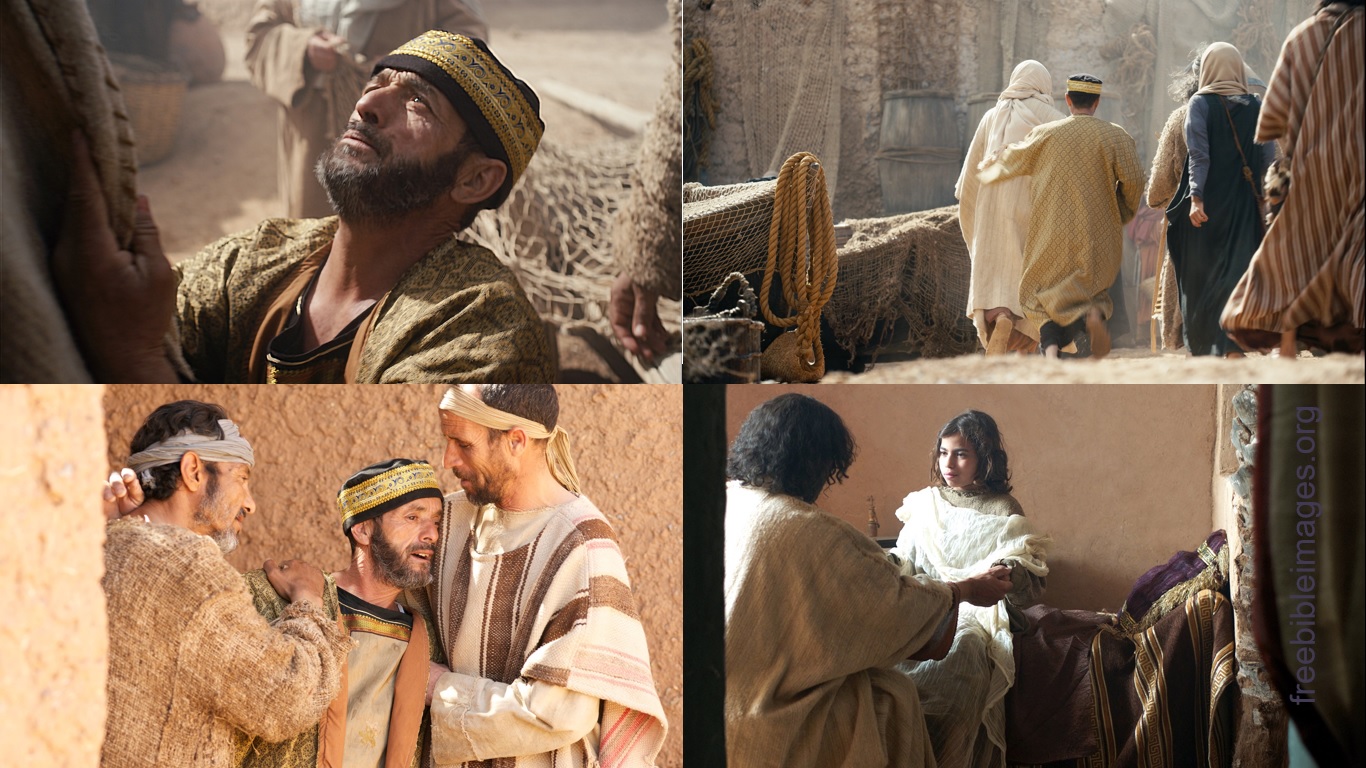
Jesus came to reveal God as loving Father, redeeming the prodigals, healing homes.  The Gospels retell how Jesus demonstrated God’s compassion for concerned parents.  One such account is of Jairus,[i] the synagogue leader in Capernaum. This father foregoes of all protocol and prestige as he desperately knelt before Jesus on the crowded beach, pleading to come home and heal his 12-year old daughter.   Amidst the public pressures and presumed needs surrounding Christ, Jesus eagerness to walk home with Jairus reveals God’s compassion for all troubled parents.

Jairus_story

On the way home Jairus received the terrifying message “do not trouble the Teacher any more – your daughter is dead.”  Yet Jesus insisted on still going to his home hopefully.  Having moved all the mockers and mourners outside, Jesus brought both parents together inside with tree disciples, then took the little girl by the hand and restored her to life.  Having given her to her parents, he asked them to keep this between them.  In Christ’s mind this miracle was not meant to be for public propaganda – it was personal; God was moved by the pleas of a parent, and brought healing to their hurting home.

As a concerned parent I am encouraged by this account, as it shows God’s concern for my household.  In fact, there are four accounts in the New Testament where Jesus responded to the cries of parents: Jairus, the synagogue leader (Luke 8:40-56); the widow of Nain with the demon-possessed girl (Luke 7:11-17); and the Canaanite woman whose son died (Matt. 15:22-28); the father of the epileptic man (Matt. 17:14-18).  In these four accounts we have fathers and mothers, sons and a daughter, small children and adult sons; we have faithful Jewish parents and unbelieving (Canaanite) parents.  But what all these stories have in common is that God responds to the pleas or cries of a concerned, grieving parent.  God’s heart overflows with compassion for the broken-hearted parent.  He knows what you feel.

There are four take encouragements from Jairus’ story that gives me confidence to parent through these tough times.

Firstly, I am encouraged to relentlessly “Trouble the Teacher” because I see here that God strongly identifies with the pain of a perplexed parent; that is why the Father sent His Son into the world.  And although you may hear voices saying “don’t trouble the Teacher”, this Text says don’t stop – He will come!

Secondly, I see in the story that when Jesus comes, he not saves the child in trouble, but he heals the family.  As Jesus enters the home he unites mom and dad who were grieving suffering separately.  I have seen how the burden of a child in peril splits the parents.  A crisis threatens to divide a family, but Christ comes to unite the family.  Trouble the Teacher to come!

Thirdly, when Jesus enters he shuts the door to mourners and mockers and he restores peace.  Parenting through tough times in our Google-generation brings dilapidating doubt; there is always another opinion or a new technique (with the subtle accusation that you’ve been doing it wrong – you’re the reason your child is still in trouble).  Our world is a dangerous place for our children, and an even harsher place to their parents.  Confusion and condemnation abound!  But when Jesus enters, he closes the door to the critics and neigh sayers; he is the Prince that brings peace to the home.

Lastly, I notice Christ does not come alone – he brings his friends, his disciples.  Any crisis, and especially a troubled child, tends to isolate a home.  Loneliness and hopelessness are comfortable companions in crisis.  But when Christ enters a home, he comes with his three most faith filled, compassionate companions.  He not only banishes the faithless critics, but he fills the home with hopeful helpers.  Jesus is among his friends; even the personal miracle is not a private matter.  In the miracle, Jesus restores the home to a hopeful, healing community.

Dear parent, are you concerned about your child?  Consider yourself in the greatest company, for God Himself is a concerned parent also.  If your heart breaks for your child – regardless of his or her age – you are not alone – God’s heart is moved with compassion too.  Jairus would encourage us to relentlessly “Trouble the Teacher” – He will enter your home, unite your family, banish unbelief, heal your child and restore you to community.  After all, your child had always been his child, and your concern had always been his concern.  Let him take your beloved by the hand and lead him / her to life again.

CastBurdens_Lord2

[i] Luke 8:40-56

Does God really care?

Whenever one finds oneself in a hopeless situation, and God seems slow to intervene, one may be tempted to think that God does not listen and that God does not care.  King David knew that feeling all too well, as we see in many of his Psalms.  But Psalm 8 is different.

Picture David in the wilderness, helpless and hopeless. Perhaps he was fleeing from the jealous king Saul who wanted to protect his throne from this young, valiant warrior.  Or perhaps he was fleeing from his own son Absalom who hoped to position himself on David’s throne.  Some of David’s most beautiful songs were written during these two periods as he passionately petitioned God for preservation and restoration to his place among God’s people.

Picture David praying to God with familiar phrases like “Save me from the hands of my enemies”, “how long, Lord…?”, and “have you forgotten me…?”  He wants to know if God is mindful of him, and if God cares about him at all.

God_care_consider

Then, suddenly he finds his prayers stilled as he is mesmerized by the clear desert nightlight, awestruck at the sheer size and serenity of the stars. He erupts in worship to the Creator of such a magnificent scene.  “O LORD, our Lord, how majestic is your name in all the earth!  You have set your glory in the heavens!”  And now David prays differently.

The awareness of the beauty and bigness of these star-studded heavens makes David feel small, insignificant.  The stars seem constant, flawless, glorious. Yet David sees himself fragile, fallible, as fickle as dessert grass (Psalm 103:15). Psalm 8

3  When I look at your heavens, the work of your fingers, the moon and the stars, which you have set in place,

4  what is man that you are mindful of him, and the son of man that you care for him?


The stars are glorious, I am dust.  Why would God even think about me, moreover care for me?
But as David reflects on the creation account (Gen 1-2), and recalls that although God had made the heavens to show his glory, mankind enjoys a privileged position in God’s heart, and therefore in His creation order. After all, only mankind was created in His image, just “a little lower” than the angels (Hebrew Elohim, a name for God the mighty Creator), and to receive authority to rule the earth. Psalm 8

5  Yet you have made him a little lower than the angels [Heb: Elohim] and crowned him with glory and honour.

6  You have given him dominion over the works of your hands; you have put all things under his feet…

 Genesis 1:26,28  Then God said, “Let us make man in our image, after our likeness. And let them have dominion…”

God had chosen mankind to bear his glory, and to share in his rule.  That’s why David confidently declares that even the smallest “babies and nursing infants” (verse 2) reflects the greatest glory of God, and would silence those who declare there is no God.

So David’s questions “God, are you mindful of me” and “God, do you care about me?” are satisfied in God’s creation and intent for mankind: yes, David, the Great Creator are mindful of you, and does care for you!  He has made you like Himself to relate to you, and has shared his glory and his authority with you.  Your fickleness and frailty does not change God’s attention on or affections towards you! You are created for His pleasure!

Looking to this prayer of David, 3000 years ago in the wilderness, New Testament believers have a special reading on it through the shadow of the cross.  The questions “is God mindful of me?” and “does God care about me?” are answered affirmatively in the birth of Jesus Christ, who came to reveal the love of God. In his coming, this baby silenced the great Enemy and Avenger once for all.  God’s loving concern and care is known in the incarnation and vicarious suffering of Jesus Christ our Lord. “In this the love of God is demonstrated for you…!” (Romans 5:18)

The next time you wonder whether God cares for you, gaze at the stars and remember that you are so much more glorious than that!

Calvin_stars