The End? The end of Evil

This 22nd post in our series through Revelation studies the message of chapter 18. A recording of this is available on the Shofar Durbanville Youtube channel.

We use metaphors in our daily conversations to bring across rich ideas.  We refer to “Wall Street” collectively as the market economy system.  “Hollywood” is synonymous with the movie industry.  “Newspapers” rarely refer to printed media but rather journalism as a whole.  The “Cayman Islands” are synonymous with tax havens.   In the same way, we use words like “The East”, “The West”, or “9-11” to bring across collective ideas and, with it, powerful sentiments.

Revelation is full of metaphors that are meant to move its readers emotionally.  We read about Christ being the Alpha and Omega, the Bright Morning Star, the Lamb of God, the Lion of Judah, etc.  Judgments are depicted as seals, trumpets and bowls.  The Church is called golden lampstands, the 144’000, the Bride of Christ, the New Jerusalem, etc.  In contrast, Rome is depicted as the Beast, the Great Harlot, Babylon, etc.  Just as the 144’000 refer to God’s saints through the ages (7:4-8)Babylon also refers to more than Rome.  It refers to all who “want to make a name for themselves” (Babel, Genesis 11:4), any and all empires or ideologies that resist God and his reign.

Revelation 18 paints the picture of the destruction of Babylon with a funeral scene. In it the Author alludes to the judgments of the pagan cities Sodom and Gomorrah (Genesis 19), ancient Babylon (Is 13:19-21) and Edom (Is 34:11-17).  John’s vision reveals three reasons for the destruction of Babylon – a warning to all.

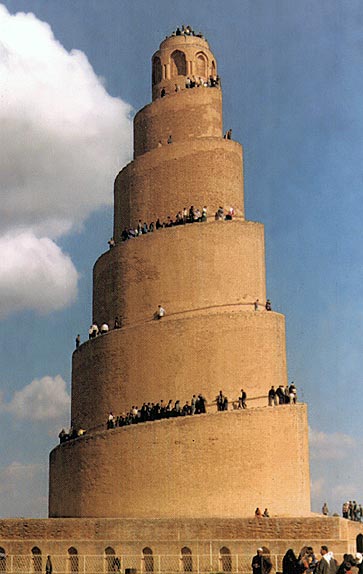
tower_Babel0
Al Samara, Iraq.

Self-glorification (18:7-8). “Because she glorified herself”, God poured out on her the seals and trumpets and bowls.  Six times in this chapter, Babylon is called “great” (18:2, 10, 16, 18, 19, 21); like ancient Babel, this city has succeeded in making a name for herself (Genesis 11:4).  Her boasting alludes to the arrogance of King Nebuchadnezzar who said “Is not this great Babylon, which I have built by my mighty power as a royal residence and for the glory of my majesty?” (4:30).  That very moment God brought the proud king down.  Indeed, “pride goes before destruction” (Proverbs 16:18). Indeed, “God resists the proud, but gives grace to the humble” (James 4:6).

The self-glorification and destruction of Babylon are in stark contrast to the thankful humility and exaltation of the New Jerusalem, which “has no need of sun or moon to shine in it, for the glory of God gives it light, and its lamp is the Lamb.” (Revelation 21:23)

Roman_Wealth
Emperor Crassus, the richest man in his time (www.nationalgeographic.com)

Power, prosperity and perversion (18:3).  The Caesars of Rome promised peace and prosperity to all who submitted to their rule through the Pax Romana.  The life they offered was one of sensuality, wealth and security through its military might.  To the first recipients of Revelation, “Babylon” pointed to Rome.  In this chapter, we see three groups of people mourning its destruction: “Kings” representing the pursuit of power, “merchants” representing the pursuit of prosperity, and “ship masters and sailors” representing the pursuit of immoral pleasures (18:9,11,17).  The Author shows that Babylon is destroyed because it seduces and ensnares people with the lure of power, wealth and immoral living. 

The bulk of the chapter is directed at Babylon’s failed promise of prosperity and its lure of “luxury” (repeated three times 18:3,7,9).  Riches are said to be “deceitful” (Matthew 13:22) because it promises joy and peace – the fullness of life – but Jesus warns that life does not consist in the accumulation of wealth and possessions (Luke 12:15).  The same can be said about Babylon’s lies promising power and sensuality…

 [Read the full commentary of Revelation in Faithful to the End]

Faithful to the End is a simple commentary that helps make sense of the encouraging message of Revelation.

Quick links to full THE END Revelation Series posts

1  2  3  4  5  6  7  8  9  10  11  12  13  14  15  16  17  18  19  20  21  22  23  24  25  26

The End? The struggle is real

In 21st post in our study of Revelation we look at the Fall of Babylon (chapter 17). A recording of this post is available on the Shofar Durbanville Youtube channel.

We are easily tempted to heroify the struggle for faith in the early church and downplay our own challenges to remain faithful to Christ.  In doing so we diminish our battles and remain ignorant of the dangerous evil forces waging war against us (Ephesians 6:12; 2 Corinthians 10:3-5).    The spiritual forces opposing us within our own culture are real and could be life-threatening to our faith. (Do you have friends or family who have drifted away from Jesus?)  Therefore, we should not be ignorant of the schemes of Satan (2 Corinthians 2:11).  Revelation 17 unveils the satanic forces within the 1st century Roman culture, Christ’s judgment on it, and how to overcome it.  A careful look at their struggle within their own seductive culture will unmask our struggle within our culture – so this message becomes personal. 

This chapter unveils three seductive lies which is potentially lethal to faith in God, as well as three truths to overcome Satan’s scheme in these lies.

Absolute autonomy.  John sees Babylon, the Great Harlot, riding on the Beast, superior over many nations and people groups on many waters (nations and people groups) (17:1,3,5,15).  All the rulers on earth are said to be seduced and subjected to her (17:2, 18). She is the one responsible for the death of God’s saints through the ages, as well as witnesses of Jesus, as she resists their message of the reign of God in Christ (17:6).

beast_Rev17

In John’s day this clearly pointed to Rome, the ancient city surrounded by seven mountains from which the empire was ruled (17:9; 18).  But Rome was not the first or the last city to be named Babylon (17:9-10): the Old Testament prophets also referred to Nineveh, Tyre, and Greece as “Babylon”. ) Original Babylon was named after Babel (Genesis 11:4), the first city that revolted against God’s rule. Afterwards, Babylon became synonymous throughout the Scriptures with humanity’s claim for self-rule, self-sufficiency, and self-seeking.  This is an extension of mankind’s original sin in the Garden – succumbing to the temptation to decide what is good and right so that I may satisfy my needs all by myself.  As such, Babylon represents all of mankind who choose to live in sin, to live apart from God and his rule.

Why then the name Babylon the “Mother of all harlots” (17:5)?  Scripturally, spiritual idolatry is likened to sexual immorality in that every single man and woman is created by God: “from him and through him and for him are all things” (Romans 11:36; refer Hosea; Ezekiel 16; Isaiah 3).  Each person belongs to God, as a husband or wife belongs to his/her spouse.  Therefore, denying him and living as though we do not belong to another to live for our own pleasures is the spiritual equivalent of sexual infidelity in a marriage. And this is the seductive heresy of Babylon: “I belong to no-one; I will decide what is right and wrong and give answer to no-one. I am my own master!”

Do you see this lie at work in our culture, in the undertones of films, music, advertisements and career pursuits? Do you hear this voice in your head when you are tempted to deny God and serve yourself – like most people in society?

beast_Rev17_2

Luxurious living. John is mesmerized, almost hypnotized by the image of the seductive Babylon – in spite of her brutality (17:6-7).  She is displayed in great power (over the nations, mastering the beast (17:2-3, 15), arrayed in opulence and glamour (17:3-4), and oozing sexual seduction (17:2).  She is the epitome of John’s description of sin: “the lust of the flesh, lust of the eyes, the pride of life” (1 John 2:16)  

The picture John sees is the promise of the fulfilment of all our desires.  Hedonism is calling to us: “Look at me: I can fulfil all your desires!” All she asks is to stop resisting, to give in and enjoy her.  She will give you life!   Can you hear her call in our sensual, self-seeking culture?  Do you believe her?

It’s beautiful to see here how God is not rebuking believers for their sensual desires.  Rather, he makes the readers aware that resisting sensual temptations in this self-gratifying culture amounts to waging spiritual war.  We are taking our thoughts captive, breaking down strongholds, battling principalities and powers (2 Corinthians 10:1-5; Ephesians 6:12).  Christ helps believers to see the true nature of this Beauty and her Beast: Her beauty is skin-deep; she is vulgar, blood-thirsty and downright evil (17:3).  The message to believers is clear: resist her and live, or succumb to her temptation and die (compare with the seductress of Proverbs 5:3-6 and 7:6-27). 

The futile fight.   [Read the full commentary of Revelation in Faithful to the End]

Faithful to the End is a simple commentary that helps make sense of the encouraging message of Revelation.

Quick links to full THE END Revelation Series posts

1  2  3  4  5  6  7  8  9  10  11  12  13  14  15  16  17  18  19  20  21  22  23  24  25  26

The End? Making sense of judgment

Our 20th stop in the journey together through the book of Revelation has brought us to chapters 15 and 16.  A recording of this will be available on the Shofar Durbanville Youtube channel.

not_fair1
“It’s not fair!”” Our craving for justice.

“Where is the justice?”  How do you feel when another corrupt politician escapes the law through bribery? Or when another rapist go free because of sloppy police work? Or gang members buy off another local police precinct to look the other way?

We are all born with an innate sense of right and wrong, a desire for justice.  Justice affirms there is indeed a universal right and a wrong and particular right and wrong within a community (customs and traditions).  Justice demands retribution (punishment) and reparation (restoration) to allow reconciliation (peace).  A system of justice aims to act for the weak ones in society, who are ignored by the powerful ones in their pleas for justice.   Without justice, there is no peace.

A lot of judgment. The middle section of Revelation (chapters 6-20) is devoted to God’s just judgments.  For fourteen chapters, God’s wrath is poured out as seven seals, seven trumpets, and seven bowls during natural disasters, great wars, cosmic chaos, and celestial visitations. Knowing that this is heavy reading, the Author graciously allows for interludes depicting God’s care for his people and his invitation to participate in his work of redemption. 

These judgments are in response to the rebellious nations’ idolatry, immorality and violence (9:20-21), and in particular, the suffering saint’s cries for justice (6:11; 16:7).  These three sets of judgments illustrate increasing intensity, inviting repentance, yet repeatedly we read the wicked nations “cursed God” and “did not repent”.

Before we make sense of these three sets of judgments together, let’s review the bowls (chapters 15-16). 

Victory in the fire.  The scene opens again with a contrasting view similar to the previous chapter (chapter 14). The saints are depicted as victorious over the Beast, at peace and worshipping while the fires of God’s judgment are lighting up the world (15:2; compare 4:6; 5:10; 14:3).  They sing about God’s “righteous acts” (15:4) from the song of Moses (Deuteronomy 32), the lyrics which describe the judgments being poured out not only in the seven bowls (chapter 16) but also the seven seals and seven trumpets.

bowls_1

Just holy wrath.  These bowls of judgments are portrayed as coming from the Most Holy Place in the Tabernacle (15:5-8).  By referring to “the Song of Moses” (15:3; Deuteronomy 32), these judgments on the wicked and rewards for the righteous are depicted as the blessing for obedience (Deuteronomy 27-28) and curses for disobedience (Deuteronomy 29-32) recorded in the Law and kept in the Most Holy Place in the Dessert Tabernacle (Deuteronomy 31:24-30).    

Patient in mercy. These bowls of judgments are called “seven plagues” (15:1).  As God demonstrated his patience towards Pharaoh and Egypt, allowing 10 times to repent before every plague, we also see God’s rich mercy allowing for the nations to turn from the rebellion in repentance to him.  But the nations did not repent from their wickedness and cursed God (16:9, 11, 20).

Sound familiar? There are great parallels between the seven seals, seven trumpets and seven bowls, especially the last two sets of judgments (see table below).  All of these contain allusions to the fulfillment God’s promises in the song of Moses (Deuteronomy 32) to which Jesus also alluded in his end times teachings (Matthew 24).  Deuteronomy 32:22-25 (famine, plague, pestilence, wild animals and the sword) is the substance of the first four seals, and 32:41-41-43 is the substance of the last two seals. With a slight change in order, the seven trumpets and seven bowls follow a similar pattern, alluding to God’s plagues in Egypt (Exodus 7-11)…

 [Read the full commentary of Revelation in Faithful to the End]

Faithful to the End is a simple commentary that helps make sense of the encouraging message of Revelation.

Quick links to full THE END Revelation Series posts

1  2  3  4  5  6  7  8  9  10  11  12  13  14  15  16  17  18  19  20  21  22  23  24  25  26

The End? The Reason to Endure

In this 19th study of revelation we look at need for salvation and the reality judgment and Hell in chapter 14.  A recording of this will be uploaded at the Shofar Durbanville Youtube channel.

endurance1

“What’s the point of all this hardship? Why push through the pain?  Others have given up, and they seem to be having an easier life! What can be worth this much effort?”  Whether it’s a marathon, long-term studies, a gruelling project or a start-up initiative – somewhere along the road, you will ask that question in agonizing pain.  So, too, in your journey of faith.

The answer to this question is what Revelation 14 offers to struggling churches.  The scenes instil courage in the hearts of believers tempted to give in or give up, but it does not shy away from the sober reality of what is at stake.  The chapter is divided into three logical sections, revealing the role models, the reason and the reward for endurance.

The role models for endurance (14:1-5).  Chapter 14 opens in stark contrast to Chapter 13’s end.  Moving from the Beasts and those who receive the mark, John’s attention falls on the Lamb and his army of 144’000 who bear the mark of His Father on their foreheads.  In our post on the 144’000 from chapter 7, we concluded that this group represents the fullness of people who remain loyal to Christ’s blood and who are saved by Christ’s blood.

From the contrasting groups, John hears contrasting sounds (14:2-3): God’s voice roars from heaven “like many waters” accompanied by “load thunders” (repeated in 8:5; 11:19; 16:18; refer 4:5), alluding to God’s justice and judgment from his Law (Exodus 19:16). This originates from his judgment on the and his worshiper (14:8ff).  John also hears the harpists’ joyful, tranquil music.  These come from the believers singing before the throne the song of the redeemed (compare 4:3 with 5:8-10) – a song that only those who have been saved by the blood of the Lamb can faithfully sing.

many_brides
        Here comes the brides!

The redeemed are described as those “who have not defiled themselves with women, for they are virgins… who follow the Lamb wherever he goes”. (14:4).  This phrase is not a reference to physical celibacy but spiritual fidelity, as it contrasts God’s faithful people to those seduced into “fornication” with “Babylon the Great, the mother of harlots and abominations of the earth” (14:8; 17:6).  Here, drawing from the Old Testament prophets (notably Hosea), John describes idolatry as the Church’s spiritual unfaithfulness to God symbolically with a married person’s immorality and sexual unfaithfulness towards his or her spouse.  Paul uses this imagery when he laments the Corinthians’ backsliding: I betrothed you to one husband, to present you as a pure virgin to Christ. But I am afraid that… your thoughts will be led astray from a sincere and pure devotion to Christ. (2 Corinthians 2:11).  But the ones before the throne are a bride “without blemish” (4:5; compare Ephesians 5:27).

The reason for endurance (14:6-12). The next section in this chapter outlines the basic theology of judgment, revealed by three angelic messengers.  Angel One proclaims…  the “eternal gospel: Fear God and give him glory.”  God is the creator of all the earth, that he is sovereign over all the nations, and that he will judge all people, everywhere – and that hour is soon (14:6-7).  Angel Two announces the destruction of “Babylon” because she leads people everywhere into idolatry and immorality (14:8; compare Isaiah 21, Jeremiah 51).  In chapters 18-19, the author returns to this theme, wherein Babylon is described as a city infested by demons and inhabited by the defiled (18:2).  Angel three decrees God’s wrath on the beast and all who bears his mark: eternal judgment in “fire and sulfur” (14:9-11) – an allusion to Hell…

 [Read the full commentary of Revelation in Faithful to the End]

Faithful to the End is a simple commentary that helps make sense of the encouraging message of Revelation.

Quick links to full THE END Revelation Series posts

1  2  3  4  5  6  7  8  9  10  11  12  13  14  15  16  17  18  19  20  21  22  23  24  25  26

The End? The Beast and his Mark

The Beast and his mark is the focus of this study as our 18th stop in our journey through Revelation brings us to the 13th chapter and its infamous images. A recording of this will be available on the Shofar Durbanville Youtube channel.

Political satires like Swift’s Gulliver’s Travels, Orwell’s Animal Farm, or even cartoonists like Zapiro, comment in their own generation on the need for renewal of human  society and government in particular.  Using creative and often comical images it portrays the politics and people of its day to show the flaws in ideology and society at large. Apocalyptic literature like Daniel, Ezekiel, and Revelation had this same purpose and pattern in its call for reform of God’s people and government in its day.

Beast_Daniel7_4
Four beasts described in Daniel 7.

Revelation 13 opens with John standing on the sand by the sea where he saw Christ standing as Sovereign over land and sea (10:2).  In this way he reminds the readers that whatever happens in the land or sea is within Christ’s control.

The First Beast: Political Power. Then he sees a beast like a lion, leopard and bear combined rising out of the sea having seven heads, ten horns and  crowns (like the Great Red Dragon in the previous chapter who gives him strength) – having a blasphemous name on his head (13:1-2). This image is an allusion to Daniel 7 – a reference to the four successive empires of Babylon, Persia, Greece and Rome. The Beast in Revelation 13, looking like a combination of these four beasts, hints to the Roman Empire of its day, but also represents every other human government that opposes Christ.

The Beast is an image of anti-Christ government.  Although the word anti-Christ does not appear in Revelation, John writes about it in his epistles.  “The world is passing away… it is the last hour, and as you have heard that antichrist is coming, so now many antichrists have come. Therefore we know that it is the last hour. “ (2:17-18)   Fifty years earlier, Paul also wrote about anti-Christ government already at work in the world (2 Thessalonians 2:7, 8-10).  Examples of these range from Pharaoh to Alexander the Great, Nero to Domitian, Ganges Khan to Napoleon, Stalin to Hitler, Mao to Castro, and Mugabe to Kim Jong Un.  The pages of history are filled with the blood from the oppressive regimes of the Beast.

Beast_sea3

What do we learn about this Beast of human government?  It is said to have full strength and great authority given to him.  It speaks blasphemies (13:1,5), implying it defames God and exalts itself to god-like status.  It gets its power from Satan himself (13:2).  Its rule is characterised by intimidation, conquest and carnivorous violence (13:2, 10).  It has the power to revive itself after defeat (13:3).  Christ permits this beast to yield his authority for “42 months” during which it will wage war against the Lord’s servants (13:8) –  implying the redemptive period from Christ’s resurrection to his return (as discussed in a previous post).

The way this beast wages war against the church is through intimidation, leading to suffering and death (as in the church at Smyrna, 2:8-14) or seduction, leading to cultural compromise (as in Laodicea, 3:14-22).

The Second Beast: Seductive Ideology. A second beast coming out of the land is introduced, likened to the Lamb in that it looks like a lamb but roars like a dragon (compare 13:11 with 5:5-6).  Here the relationship between the first Beast and the second Beast alludes to the relationship between Him who sits on the throne and the Lamb in that the second Beast yields the authority of the first Beast and causes all to worship him (13:12).  This second beast performs great signs and deceives many, telling people to worship the first Beast…. 

 [Read the full commentary of Revelation in Faithful to the End]

Faithful to the End is a simple commentary that helps make sense of the encouraging message of Revelation.

Quick links to full THE END Revelation Series posts

1  2  3  4  5  6  7  8  9  10  11  12  13  14  15  16  17  18  19  20  21  22  23  24  25  26
The End? The dragon, the woman and the boy

This 17th study through Revelation focuses on the age-old war between the dragon, the Woman, and her offspring.  We will stop at chapter 12 today.  A recording will be uploaded to Shofar’s YouTube channel

If Jesus is victorious, and Satan is defeated, why are things in such a wrong way?  This question rang in the minds of the oppressed believers in John’s day – the question that gets answered clearly in chapter 12.  The first half of the Revelation focused on the reality of the church (ch 1-3), God’s throne room and Christ’s unfolding reign played out on earth (ch 6-11).  Chapter 12 reveals the cosmic battle in heaven, which results in chaos on earth and persecution of the saints.

Revelation 12 depicts an epic war between a woman with a male child and a great red dragon.  This scene from the middle of the book is the first of seven “signs” or symbols that explore the depth of the scroll’s message.  These seven “signs” depict greater mysteries that govern our world’s realities and are rich in theological substance, helping the church make sense of its struggles on earth. (See 12:1-7; 13:1-10; 13:11-18; 14:1-5; 14:6-13; 14:14-20; and 15:2-4).

You will note again in this chapter that Revelation is not a chronological roll-out of God’s redemptive plan but, in various ways, depicts the church’s struggle with evil throughout history.  Although chapter 11 concludes with a picture of the 7th trumpet as God’s Final judgment and victory in the end, chapter 12 revisits the origin of this battle, starting in Eden, in Bethlehem and Jesus’ ministry.  But this time, the struggle is shown from heaven’s perspective.

This sign introduces three characters: the Woman, the great red dragon, and the male child. Who are they  

woman_Rev12_1
By Ted Larson (2004)

The Woman is said to be clothed in the sun, the moon at her feet, having twelve stars around her head – an allusion to Israel in Joseph’s dream (12:1; Genesis 37:9).  But there is more: this woman “gave birth to a male child, one who is to rule all the nations with a rod of iron” (12:5; compare Psalm 2:9) – representing Mary, the mother of Jesus.  Furthermore the dragon wages war with the Woman and her offspring – an allusion to the curse on the serpent in the garden of Eden and Eve (12:17; compare Genesis 3:15).  And lastly, we read that this Woman’s offspring are “those who keep the commandments of God and hold to the testimony of Jesus” (12:17)– meaning that the Woman also represents the church.

The Woman in Revelation 12’s first sign simultaneously represents Israel, Mary, Eve, and the church—God’s redeemed Kingdom people throughout the ages. This is another depiction of the Lamb’s army, or 144’000 from every tribe, tongue, people, and nation depicted in Revelation 7.

OXYGEN

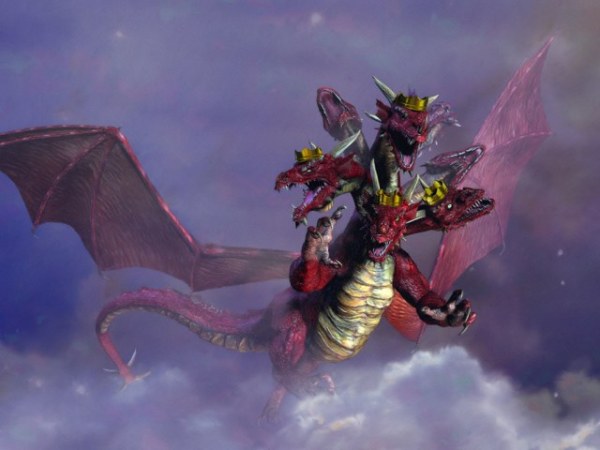
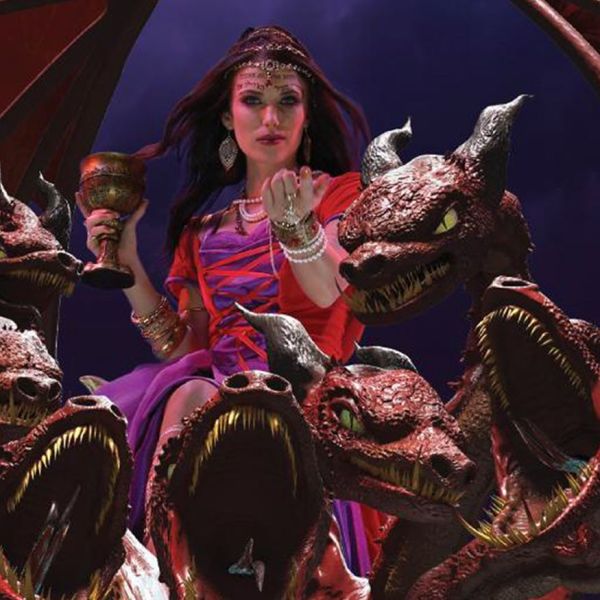
The Red Dragon is “great”, with seven heads, seven horns, seven diadems and a large sweeping tail – a picture of full strength and reign.  This dragon is “the ancient serpent” of Eden, named “the devil and Satan, the deceiver of the whole world” (12:9).  In the chapters to follow, we will see that the Dragon is the source of power behind the beasts (all that is oppressive and intimidating), Babylon the great prostitute (all that is sensual and seductive), and the False Prophet (all that is deceptive).  The Red Dragon symbolises all that is oppressing, seducing and deceiving God’s people.

Revelation-12-woman-child-dragon

The Male Child is the man Jesus, the Son of God, “one who is to rule all the nations with a rod of iron… [and] was caught up to God and to his throne” (12:5, compare with Psalm 2:9 and Acts 1:9).  This is not meant to be read that Jesus was taken away as a child. Still, these things are said so we may know his and the Woman’s identities. This drama focuses on the battle between the Dragon and the Woman.

The Drama. [Read the full commentary of Revelation in Faithful to the End]


Faithful to the End is a simple commentary that helps make sense of the encouraging message of Revelation.

Quick links to entire THE END Revelation Series posts

1  2  3  4  5  6  7  8  9  10  11  12  13  14  15  16  17  18  19  20  21  22  23  24  25  26

The End? Can’t keep silent

This, our 16th post in our journey through Revelation, explores chapter 11, devoted to the Two Witnesses. A video recording of this will be available on the Shofar Durbanville Youtube channel.

In chapter 10, John is invited to take and eat the scroll containing God’s redemptive purpose, to embody God’s redemptive plan on earth.  The chapter concludes with John’s commission to prophesy – to participate in the Lamb’s redemption of creation by witnessing God’s renewal of all things.  Chapter 11 continues with a vision of two witnesses, depicting the identity, purpose and destiny of the church in the Lamb’s renewal of all things.

This is a complex chapter, rich in symbolism from the Old Testament, but very helpful in understanding the role of the church in a wicked world.  To simplify the reading of the chapter, we will focus on three questions this chapter answers about the church:

  • who are we?  (identity)

  • why are we here?  (purpose)
  • where is this all leading? (destiny)

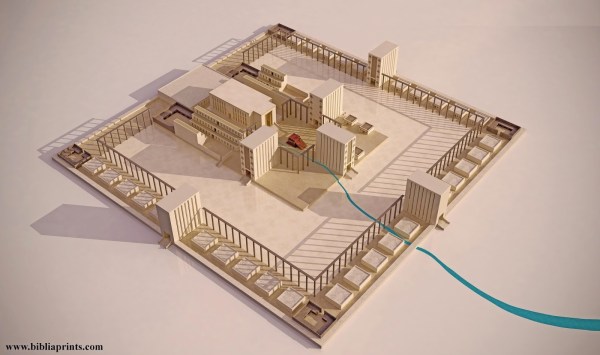
Measure_temple_EzekielA living temple. “After this” John was sent to “measure the temple, the altar and those who worship there” (11:1). By the time of John’s writing, the temple in Jerusalem had been destroyed for more than 20 years – so the temple refers to the church (1 Corinthians 3:16; 6:19; 1 Peter 2:5 etc.). This “man measuring the temple with a rod” clearly alludes to Zechariah’s vision (Zechariah 2:1 – 5).  Here, in John’s vision, no measurements are given; what matters is that measures are taken. The temple, altar and worshipers are “measured” or counted because they matter to God.  The promise of peace and protection in Zechariah 2:5 is the intended message to John’s readers: “I will be to her a wall of fire all around, declares the Lord, and I will be the glory in her midst.”  God has measured his people, and not a single one will be lost (compare chapter 7, where God’s servants are “sealed” for protection).

number_42

Vulnerable yet Invincible.  However, “the outer court” should not be measured, for it would be “trampled upon for 42 months” (11:2), “1,260 days” (11:3) or 3½ years (“time, times and half a time”). 42 is significant in the apocalyptic genre because it is an important number in Israel’s history.  For example, 42 is the number of stages in Israel’s journey through the wilderness toward the Promised Land (Numbers 33).  42 months is the period that Elijah had stopped the heavens from raining to bring the nations to repentance (1 Kings 17; James 5:17). Matthew’s genealogy is portrayed in three sets of 14, amounting to 42 generations, showing that the birth of Jesus marks the end of waiting for Israel’s Messiah (Matthew 1).  Therefore, 42 represents the fullness of time in any stage of redemptive history.  For the readers of Revelation, 42 represents the period we live in – the time allowed for the nations to come to repentance, between the cross and Christ’s return.  Darrel Johnson writes:

“42 months represents the period of time from the day Jesus Christ constituted the new temple by the shedding of his blood, until the day when the new city without a temple, the city which is a temple, comes down out of heaven” (Discipleship of the Edge: An expository journey through the Book of Revelation; Regent Publishing: 2004)

In putting verses 1-2 together, we see that the church is measured and protected by God’s seal until the Day of Judgment but will be resisted and persecuted by secular nations until that time. We are simultaneously invincible and very vulnerable in this age – “like lambs in the midst of wolves” (Matthew 10:16).  Why, then, are we here?

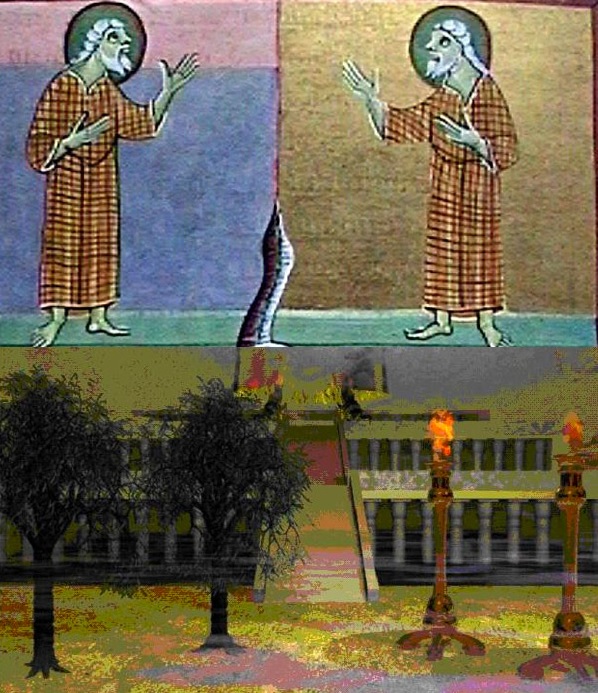
Two Witnesses. John sees two witnesses like olive trees and lamp stands.  Olive trees represent God’s covenant people[Read the full commentary of Revelation in Faithful to the End]

Faithful to the End is a simple commentary that helps make sense of the encouraging message of Revelation.

Quick links to full THE END Revelation Series posts

1  2  3  4  5  6  7  8  9  10  11  12  13  14  15  16  17  18  19  20  21  22  23  24  25  26

The End? From spectator to partaker

Our journey through Revelation in this is the 15th post brings us to chapter 10. A recording of this will be available on the Shofar Durbanville Youtube channel.

Let’s first catch up where we are in our journey through this apocalypse.  In that glorious scene of God’s throne room (ch 4), the Lamb received the Scroll containing God’s redemptive plans to renew all of fallen creation (Ch 5).  As the Lamb opened the seven seals of the scroll, terrible judgments were released on earth (ch 6).  These judgments were paused to mark God’s servants with a seal of protection from the final judgment (ch 7). With the opening of the 7th seal, heaven became quiet as God focused his attention on the prayers of his saints, which were mixed with the fire from his altar and poured out as six more severe judgments on the earth (ch 8-9).

In chapter 10, the scene continues, but the judgments are interrupted again (as in chapter 7). This time, the focus is on John, who is invited to move from spectator of the vision to participator in Christ’s Revelation.

Angel_scroll_rev10_3

In John’s vision, a mighty angel comes down from heaven, standing with one foot on the earth and one on the seas (sovereign over land and sea, refer 8:7-8).  He was clothed in white, his face shone as the sun, and he had a rainbow around his head, his feet were like fire, and his voice like a lion.  John describes the Angel as Jesus himself (compare 10:1-3 with 1:15-18; 4:3).

The Angel had a little scroll in his right hand (compare 10:2 with 5:7), and when he spoke, there were seven thunders. But when John wanted to record these seven thunders, like the previous seven seals and seven trumpets, the Angel prevented him and then raised his hand and vowed to God “that there should be delay no longer” (10:6).  This scene is a powerful allusion to Daniel 12 – a vision about the end, where the wicked will grow more wicked and the righteous will grow more righteous.


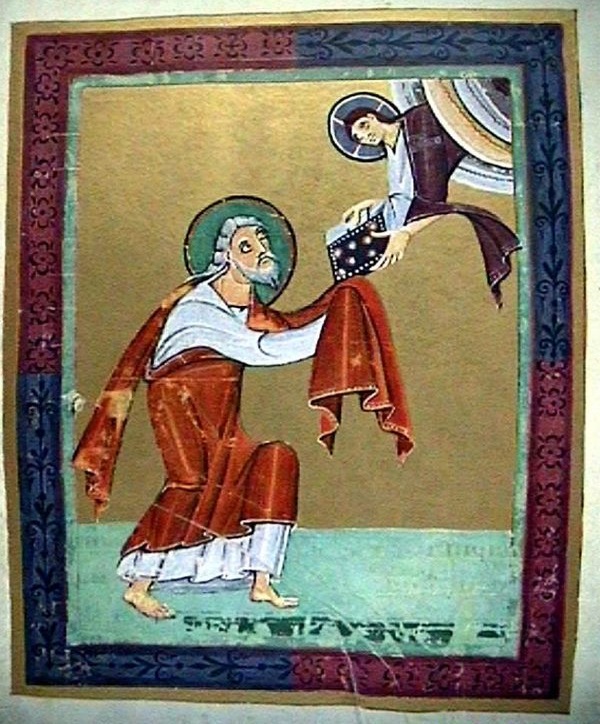
John was commanded to take this scroll and to eat it – compare this to a similar command given to the prophet Ezekiel, with the following charge: “All My words that I shall speak to you receive in your heart, and hear with your ears.” (Ezekiel 2:10-3:2, 10).  As John ate, it tasted “sweet as honey”, but his “stomach became bitter” (10:9-10; compare Jeremiah 15:16 and Ezekiel 3:3).  Then John is sent to “prophesy about many peoples and nations and languages and kings” similar to the commission given to God’s prophets and apostles  (compare 10:11 with Isaiah 6; Jeremiah 1; Ezekiel 3; Acts 1:8; 9:15).

From spectator to participator.  This pause after the six trumpet judgments, which still left the nations unrepentant of their wickedness and rebellion (9:20-21), shows the mystery of God’s redemptive plan.  Here, we see that John was invited to discern and understand God’s redemptive acts and participate in his plan.  The scroll – which no one could receive and open – was now handed to John.  The scroll that unleashed God’s redemption of creation through terrible judgments was given for John to take and digest.  John, as with everyone who reads his words and “beholds” this Revelation, is invited to embody God’s plan – the renewal of all things…

[Read the full commentary of Revelation in Faithful to the End]

Faithful to the End is a simple commentary that helps make sense of the encouraging message of Revelation.

Quick links to full THE END Revelation Series posts

1  2  3  4  5  6  7  8  9  10  11  12  13  14  15  16  17  18  19  20  21  22  23  24  25  26

The End? Blow the trumpets!

This post, the 14th in a series through Revelation, finds us in the second set of seven judgments. We will look into chapters 8 and 9.  A recording of this post is available on Shofar Durbanville’s Youtube channel

In our day, it is often easier to imagine God as the Sacrificial Lamb slain for our sins than to see him as the Sovereign Judge over all.  That is why Revelation 5 reads so much easier than chapters 8 and 9, where the Lord rains down disasters on the earth as his redemptive judgments on sin.  What do these chapters on divine judgment reveal about God’s character in relation to mankind?

prayer_child

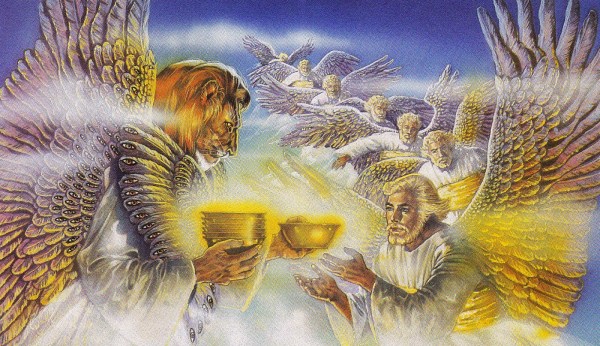
Yes, God hears you! Unfolding the first six seals of the scroll unleashed chaos and cries on earth (ch 6), followed by a command to cease all judgment so that God’s servants may be sealed to be spared from the great Day of Judgment (7:1-3).  As the 7th seal is opened heaven becomes still, “silent for about half an hour” (8:1). John then describes how God’s full attention is given to the prayers of the saints (8:3-5).

To the churches who received this letter at first, oppressed economically, excluded socially and persecuted religiously – in addition to the periodic earthquakes, famines and threats of war they faced – this was so necessary to hear.  It reassured them that “You matter; I listen to you.”  Faced with the daily troubles, their faith in an Almighty, Loving Father and hope for the return of Christ, the Prince of Peace, was waning.  They needed to be reassured that indeed, despite all the madness in the world and all the magnificence surrounding his throne, God pays attention to every single prayer of the simplest of his saints.  And these prayers are pleasing to him, like the scent of incense burning (8:4).

Yes, your prayers are powerful! But do these prayers make a difference?  Long-term suffering can often lead one to doubt whether God is good or whether one’s prayers are received and accepted.  This was certainly the case for these seven churches in Asia Minor, the recipients of the Revelation.  Their prayers did not seem to change their circumstances because the suffering only intensified over time.  That is why this hopeful vision of prayers as incense mixed with fire from God’s altar and poured out in wrath on the earth (8:5-6), brought hopeful encouragement that indeed their cries are heard, and their prayers are effective.  Christ’s kingdom was advancing by the power of their prayers.  These disasters that surrounded them were simply “birth pains” of the emerging Kingdom of Christ – all affected by their prayers.

Yes, God is just! If God is just, why do the righteous suffer and the wicked prosper? Does God not see? Does God not care about the injustice and oppression of the vulnerable and the righteous? These are the age-old questions believers have wrestled with throughout the ages (Psalm 73; Jeremiah 12; Job 21, etc.).  This was also the cry of God’s saints (6:10) during the vile and violent Roman Empire from which John wrote this letter.  The vision of their prayers being mixed with fire from God’s altar, poured out over the earth, resulted in “noises, thundering, lightning and earthquakes” (8:5).  This phrase is repeated twice more in this middle section of the book when God’s judgments are poured out, notably in response to the blood of his martyrs (11:19; 16:18; refer 4:5).  The image of “lightning, thunder and voices” alludes to the giving of the Law on Mount Sinai (Exodus 19:16), and occurs throughout Scripture about God’s justice and judgment (e.g. Psalm 77:18 and Hebrews 12:18).

The seven trumpets which follow (8:6-9:21; 11:15-19) are God’s just judgment response to the prayers of the saints.  Christ’s message in this vision to these seven churches is “Yes, I am just.  These judgments on the nations are my response to your prayers for justice.”   But how do these disasters help God’s people?

 [Read the full commentary of Revelation in Faithful to the End]


Faithful to the End is a simple commentary that helps make sense of the encouraging message of Revelation.

Quick links to full THE END Revelation Series posts

1  2  3  4  5  6  7  8  9  10  11  12  13  14  15  16  17  18  19  20  21  22  23  24  25  26

The End? The Lamb’s Army

This post, the 13th in our series through Revelation, is devoted to chapter 7 – the marking and listing of the Lamb’s army. A recording of this will be available on Shofar Durbanville’s Youtube channel as part of the Revelation Series.

Chapter 6 depicts Christ unfolding the scroll containing God’s redemptive plan for creation. This brought about terrible judgments so that eventually everyone on earth hid and cried out “Who can stand before the wrath of Him Who sits on the throne and the Lamb?” (6:17).  Chapter 7 answers this question.

Hold the wind! (7:1-3) Suddenly four angels were seen to hold back the four winds over the earth (7:1). Holding back the wind implies withholding the destructive forces released over creation by the first six seals (6:1-17; compare Ezekiel 5:12).  The reason for the pause in destruction is to wait until “we sealed the servants of our God on their foreheads” (7:3).  This protection from wrath by a seal from God alludes to Exodus 12:21-27 (destruction of Egypt, preservation of Israel) and Ezekiel 9:3-8 (destruction of Israel, preservation of the righteous).

Gideon_army
Gideon’s army defeats the Midianites (Judges 6-7). (Source: Moody Press, Free Bible Images)

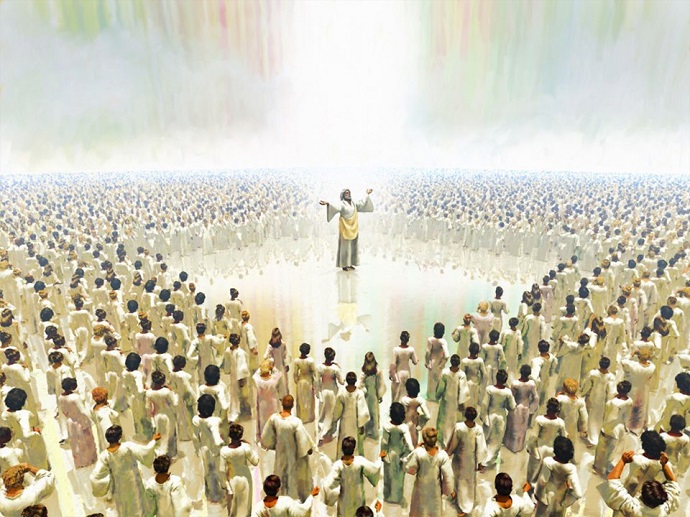
The 144’000 (7:4-8).  These servants of God are identified as John hears a roll call of Israel’s fighting men, like in Numbers 1 before the conquest of Canaan.  The 144’000 are said to be 12’000 from every tribe in Israel. Remember that in the apocalyptic language of Revelation, images and numbers are not read literally, but should be read to signify something that comforted and challenged the first readers in their struggle against evil during their tribulation (1:9-11).

This number of 144’000 faithful Israelite have been used – and is still being used – by many cults worldwide who claim their veracity and special election.  But 144’000 is clearly a symbolic number (like the 7 horns and 7 eyes of the Lamb in chapter 5).  144’000 is made up of 12x12x1000.  Twelve in  a (?)literary genre points to God’s covenant people: the 12 tribes of Israel and the 12 apostles of the Church.  1000 is a number meaning innumerable, all or fullness.  So, John hears: “Mark God’s people with his seal!” and is told Israel’s faithful, fighting ones are numbered.

In keeping with the apocalyptic genre, Israel here should also not be viewed from the genetic line or national citizenship, but rather as symbolic of God’s covenant people. Jesus said that “salvation is from the Jews”, not just for the Jews (John 4:22). Paul defined “a true Jew (as) one inwardly” (Romans 2:29)having a “circumcised” or transformed heart faithful to God This tribal list here in Revelation 7 is a picture of “the Israel of God” (Galatians 6:15-16).

But this list of Israel’s tribes is unlike any other found in Jewish scriptures (compare, for instance, Genesis 35:23-26; 49:1-28; Numbers 1:1-46, and Deuteronomy 33:6-25) – and that is the point of this part of the vision.  The discrepancies in this list highlight the truth Jesus wants to show John…  [Read the full commentary of Revelation in Faithful to the End]

Faithful to the End is a simple commentary that helps make sense of the encouraging message of Revelation.

Quick links to full THE END Revelation Series posts

1  2  3  4  5  6  7  8  9  10  11  12  13  14  15  16  17  18  19  20  21  22  23  24  25  26