This post is the fourth in a series on the book of Revelation. The link below takes you to a video recording of this blog post.
How does one endure hardship, and why? Why does God allow his people to undergo seasons of suffering? And where is God when it hurts? These are some of the questions that Jesus answers in the Revelation, a circular letter written by the apostle John to seven congregations in Asia Minor during the tyrannical reign of Emperor Domitian (AD 90-92).

“Eighty-six years I have served Him, and He never did me any injury: how then can I blaspheme my King and my Saviour? …You threaten me with fire that burns only for an hour… but you are ignorant of the coming judgment and of eternal punishment reserved for the ungodly. What are you waiting for? Bring on what you will!”
These were the last words St Polycarp, a famous martyr during another wave of heightened Roman persecution, revealing the church’s grit and attitude in Smyrna. Polycarp was a pupil of the Apostle John and probably the “angel of the church” (messenger or leader) in Smyrna whom Jesus was addressing in Revelation 2:8-11.
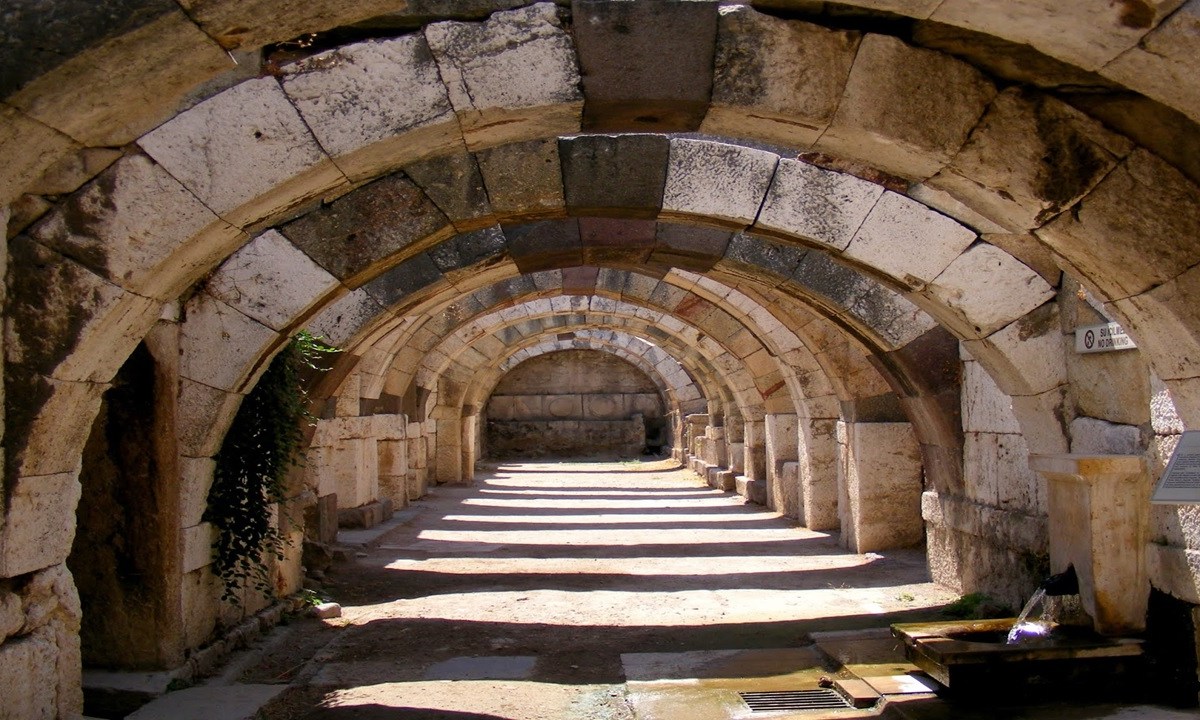
Smyrna, present-day Izmir in Turkey, printed coins which claimed it was “the biggest and most beautiful city in Asia.” This coastal city was prosperous because of the trade routes and its natural beauty. The town was filled with magnificent temples and statues – some of these are well preserved today. The figure of Bacchus (Roman) or Dionysus (Greek), god of wine and immoral revelling tells us much about the day’s culture. So also, the statue Cybele, mother of the gods, reveals that in this city, women were honoured or even venerated within certain people groups. The citizens of this Greek city were loyal to Rome, dedicating a temple to the goddess Roma around 195 BC. It also had a temple preserved for the Imperial Cult, devoted to worshipping the emperor.

Persecuted by the Jews. At the end of the first century (AD), Smyrna boasted a large community of Jews, bolstered by the migration of Judeans after the destruction of Jerusalem during The Jewish War (a significant rebellion against the Roman Empire, 66 AD – 73 AD). These Jews were especially hostile to Christians – in part because during the siege of Jerusalem (70 AD) Christian Jews fled the city (prompted by a prophetic Word from the Lord), just before the total destruction of the city and its temple. Also, the Jews viewed the worship of Jesus as an abomination. These Jews were often the first to hand known Christians over to the Roman authorities for punishment.
Poor Christians. In this city, as in the broader community, Christians were often excluded from the formal employment sector because of the refusal to partake in the worship of the gods of the guilds (first-century trade unions). In this pagan society, each guild had its god(s) who demanded tribute in exchange for prosperity. Since Christians refused to worship any other gods, conversion implied the end of their careers. The only jobs they could take were for the “cursed” in society: garbage removal, sewerage cleaning, the burial of the dead, etc. Therefore, being Christian was synonymous with being poor in the early Church.
The letter to Smyrna follows the same structure as the other letters: opening with a unique and personal Revelation of Christ to them, it complies with a commendation, a charge, then a warning and finally a promise of reward. However… [Read the full commentary of Revelation in Faithful to the End]

Quick links to full THE END Revelation Series posts
1 2 3 4 5 6 7 8 9 10 11 12 13 14 15 16 17 18 19 20 21 22 23 24 25 26
 walklikejesus
I think your section on how being Christian was synonymous with being poor in that time period made a real impact on the perspective of the early Christians. I’m going through Acts right now and having this knowledge of how they suffered and endured for the gospel will aid me in understanding the context of the book. I also liked your draw this article to a close-by touching upon some of the misunderstandings of Western Christian culture. It offers a direct contrast to your earlier illustrations of the hardships of the early Christians. Your points certainly push me to think more critically about our modern times. Thanks for posting! Very well researched.
LikeLike
Thank you Macy!
LikeLike