The End? The new beginning

With this last chapter of Revelation, John focuses again on Jesus and his centrality to all of God’s creation and redemption. A recording of this post is available on the Shofar Durbanville YouTube channel.

The Bible begins and ends with the description of a paradise garden in which there is a tree of life and a life-giving river. In this last chapter of John’s Apocalypse, John shows how God’s restoration and renewal of all things are brought to completion. In this final vision of the Revelation of Jesus Christ (1:1), we see the Gospel of God beautifully painted.

Jesus is life (22:1-5).  Continuing with the scene of the New Jerusalem (Revelation 21), John describes the River of Life flowing from the throne room of God and the Lamb.  The picture of the life-giving river alludes to Eden (Genesis 2:7-10) and Ezekiel’s vision (Ezekiel 47:1-12).  This River of Life flows in the middle of the street of this Holy City.   On its banks is the Tree of Life, bearing fruit all year long, with “its leaves for the healing of nations” (22:2; Ezekiel 47:7,12).

tree-of-life3_1

After Adam and Eve rebelled and ate of the tree of the knowledge of good and evil, God removed them from the Garden “lest [they] stretch out [their] hand, and take also from the tree of life, and eat, and live forever” in their fallen state (Genesis 3:22-24).  But access to the Tree of Life is a sign that there is no more sin, no more darkness, “for the Lord God will be their light” (22:5), and those who dwell therein will forever reign.  This garden image is a compelling picture of Christ’s full redemption and restoration of mankind, where mankind will live in communion with God, share in his life, and reign over his creation with goodness (Genesis 1:26-27).  Here, life is as it always should have been.

The symbolism is beautiful and meant to be both hope-giving and instructive to the readers. Christ is the source of all light and life (John 1:4-5; 11:25; 14:6).  The Life-giving River “which make glad the city of our God” (Psalm 36:8; 46:4) depicts the nature and work of the Holy Spirit – the “Spirit of Life” (Romans 8:2, 11) who satisfy believers to “never thirst again” (John 4:13; Isaiah 55:1), even to overflow with “rivers of living water” (John 7:38-39).  The street in the Holy City is “the Highway of Holiness” (Isaiah 35:8), “the Way” of life Jesus taught of and made possible by his blood (Acts 24:14,22, Hebrews 10:19-20).  The Tree of Life is the church, God’s redeemed creation, who in turn is God’s redemptive gift to the world.  It is the tree that grows from the Gospel seed (Matthew 13:31-32), that is planted next to the River of Life and therefore “yields its fruit in its season, and its leaf does not wither” (Psalm 1:3; Jeremiah 17:7-8).  Through the reigning of the Lamb and the nourishing of his Spirit, the church now and forever reign (Revelation 5:9-10; Romans 5:17).

Put together, the church is those renewed and sustained by the Spirit of God, who walks in the Way of Holiness as they submit to the reign of God and the Lamb.  By drawing from the water of the Spirit, the church bears fruit that gives life and healing to the nations, displacing evil.  This is as much a picture of the church today as it points to Christ’s coming kingdom.    
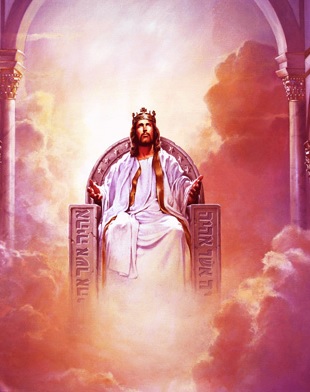
judge_Jesus1_1

Jesus is the judge (22:12).  Four times in this chapter, John records the words that Jesus’ return is “soon”, and hears Christ’s admonition to “hear the words of this prophesy and keep it.” (22:7). The angelic warning about the end on the river-bank pictures a strong allusion to Daniel 12.  But in contrast to Daniel, who was told to “seal up” and “shut up” the prophecy “until the last days”, John is now instructed to “not seal up the prophecy, for the time is near” – implying the Day of the Lord, the Day of Judgment is near (22:10; Daniel 12:4, 9).  Alluding to Daniel’s vision (22:10; Daniel 12:10) the angel says:

“Let the evildoer still do evil, and the filthy still be filthy, 

[let] the righteous still do right, and the holy still be holy.”

This does not imply that the time of grace is over.  John writes that doing proceeds from being.  In keeping with the rest of the prophecy to the seven churches, John urges believers, if indeed they have been redeemed and sanctified by the Blood of the Lamb (5:9-10), that they then act in accordance with their standing.  Since you are holy, do righteous deeds!  Do not live in the filthy ways of Babylon because Jesus is coming soon as the judge “to repay each one for what he has done” (22:12; Isaiah 40:10).

Jesus is the goal (22:13).  [Read the full commentary of Revelation in Faithful to the End]


Faithful to the End is a simple commentary that helps make sense of the encouraging message of Revelation.

Quick links to full THE END Revelation Series posts

1  2  3  4  5  6  7  8  9  10  11  12  13  14  15  16  17  18  19  20  21  22  23  24  25  26

The End? All things new

The renewal of all things: this is the message of Revelation 21, our 25th study in the encouraging book.  A recording of this study is available on the Shofar Youtube channel.

What do you deeply desire for the future, your future?  What is your ultimate hope?  If every problem is fixed, every desire is met, and once all things are restored again, what will your reality be like?  How confident are you that this will happen?

This hope for God’s renewal of all things is the focus of John’s vision Revelation 21.  His only invitation to the reader is to “behold”, to picture the beauty of God’s renewed creation.

A physical future.  We are often tempted to think of life after this as only spiritual, eternally living a disembodied existence.  We imagine floating on the clouds, enjoying the bliss of an unending spa while singing praises with the angels.  We think that when Jesus returns, we will once and for all be rid of our sensual bodies and the earth, as though this material world is the root of the problem.

The idea that matter is inherently corrupted or “lesser than spiritual” comes from Greek philosophy.  Yet the  Bible teaches that God is the creator of our material world and that everything he made “was good”.  Mankind he made with body and soul, breathing His very spirit into them, and affirmed them as “very good”.  Then came the fall and the corruption of sin.  Still, we are called to “glorify God in our bodies”, even in the most mundane things like “eating or drinking” (1 Corinthians 6:20, 10:31).  God is the one who gives us these material things to enjoy (1 Timothy 6:17).  Our material world is not inherently the problem – the corruption of sin is, and that affects both our earthly and heavenly realms.

new_heaven_earth3

The first thing John notices of God’s great renewal is the continuity of our lives as we know it – that our eternal existence will be both physical and spiritual, lived out in “a new heaven and a new earth” (21:1; compare Isaiah 65:17-25).  God’s promise is the renewal of our physical and spiritual existence.  So Paul’s cry for deliverance “from this [wretched] body of death?” (Romans 7:24-25) is not answered by being eternally free of a body.  No, “when we see [Christ], we’ll be like him” – having the same resurrected body as he has.  We don’t know much, just that our resurrected bodies will be “imperishable”, “glorious” and “powerful” (1 Corinthians 15:42-43).  Eternally free of corruption and at peace – as it was in the Garden.

Free of fear and flaw.  The next thing John notices of this renewed creation is that “the sea was no more” (21:1).  In this apocalyptic genre, John is not trying to say that the new earth will be one big continent without oceans.  (Do I hear the surfers and divers sighing in relief?)  As mentioned in a previous post, the sea in ancient literature represents everything mysterious and dangerous, all the hidden forces of evil.  In stating that the “sea was no more,” John sees a world where there is no more evil, and therefore, there is no need to fear.  It speaks of a life without terror, loss, and lack.  John clarifies this by writing, “Death shall be no more, neither shall there be mourning, nor crying, nor pain anymore, for the former things have passed away.” (21:4)  O, what peace awaits us!

NewJerusalem

A glorious city.   [Read the full commentary of Revelation in Faithful to the End]


Faithful to the End is a simple commentary that helps make sense of the encouraging message of Revelation.

Quick links to full THE END Revelation Series posts

1  2  3  4  5  6  7  8  9  10  11  12  13  14  15  16  17  18  19  20  21  22  23  24  25  26

The End? The reign of peace

This 24th post looks into the 20th chapter of Revelation.  A recording of this study is available on Shofar Durbanville’s Youtube channel.

What is wrong with the world?  And what will make everything right again?  How you answer these questions defines your religion and your approach to and expectation of life itself.  This is the focal point of Revelation 20.  John describes the end of Satan, sin and death, ushering in 1000 years of peace.  This 1000 years of peace,  called the millennium (Latin for thousand), is the cause of much debate in Christian circles.  

If you are new to Christianity, the millennium debate might seem strange.  However, six times in this chapter, 1000 years are mentioned, which is central to the meaning of this chapter.  Moreover, this reign of peace is central to the message of Revelation: the destruction of Satan’s earthly forces (Babylon, the Beast and the False Prophet) in the previous chapters and here the end of Satan, sin and death, signifying the culmination of Christ’s work of redemption – making the 1000 years of peace possible.  From John’s perspective, the millennial reign of peace is central to God’s plan to redeem creation and, therefore, significant for you and me. It is what the church – and all mankind – longs for.  How we make sense of this chapter will impact your view and expectations of life.

What is John’s vision of 1000 years of peace, then? When is it? John’s Millennium can be read in three primary ways.

millennial-views

Premillennialism expects Jesus to return and end the tribulation, reign in peace for 1000 years, and then make an end to Satan, sin and death. This is the most prominent view among Christians in the West today.

Postmillennialism expects the church, through the Gospel, to usher in God’s peaceful reign for 1000 years before Christ returns to judge the world.

Amillennialism reads the 1000 years as symbolic, having been initiated by Christ’s death, resurrection and ascension.  From this perspective, we are now in this thousand years of peace.

All three of these views are held by very learned people who have given much thought to these views.  Sadly, some beautiful truths in Revelation remain unnoticed in all the dust kicked up by the debates about when the millennium will or has commenced (d).  Let’s walk through the chapter and ask ourselves, “What did John see, and what could this have meant to him?”

The end of Satan (20:1-3, 7-10).  An angel descends from heaven and binds Satan in the Abyss, sealing the pit. Satan is tied up not by God, not by Christ, not by a known archangel like Michael or Gabriel. Instead, Satan is bound by some ordinary angel who “came down from heaven.”  This reassured  John that Satan is not God’s equal and never a threat to God’s authority or purposes.  Although Satan persecuted the church on earth and gave power to the empires of the Beast, the Sovereign Lord allowed Satan to roam loose in service of his redemptive plan. Once the Devil had served his purpose, God commissioned an angel to bind him up.  At an appointed time, Satan will be released briefly again to serve God’s redemptive purpose in bringing judgment on the wicked nations.  After that, he will be thrown into the lake of fire forever, joining his servants, the Beast and the False Prophet.

The thousand years (20:2-7). One thousand years” is mentioned six times in these six verses – the only place in the Bible explicitly naming the thousand years of peace.  How do we read it?  For one, we know that we cannot read this as literal ten centuries in the apocalyptic genre. This genre calls for a symbolical interpretation, just as we read the seven horns and seven eyes of the Lamb of God to convey a particular truth about Christ.  We also note this symbolism elsewhere in the Bible.  When we read that God “owns the cattle on a thousand hills” (Psalm 50:10), we don’t ask, “On which thousand hills do God’s cattle roam?”  When reading “with the Lord, a day is like a thousand years” (2 Peter 3:8), we don’t start calculating our age in God-years; instead, we understand that the Ever-living One is not bound by time as we are…

 [Read the full commentary of Revelation in Faithful to the End]

Faithful to the End is a simple commentary that helps make sense of the encouraging message of Revelation.

Quick links to full THE END Revelation Series posts

1  2  3  4  5  6  7  8  9  10  11  12  13  14  15  16  17  18  19  20  21  22  23  24  25  26
The End? Reasons to rejoice

The contrasting conclusions in this 19th chapter of Revelation bring much hope to suffering believers.  A recording of this 23rd study in our series through Revelation will be available on the Shofar Durbanville Youtube channel.

As Christians, we want to believe that God will (and should) protect us from hardships.  Even though our news feeds are filled with the reality of hardships today and our Bibles are stories of suffering saints, we are often stunned at the sting of suffering.  The early believers were warned by Peter to “not be surprised at the fiery trial when it comes upon you to test you, as though something strange were happening to you. But rejoice…” (1 Peter 4:13; compare Romans 5:3-5).  What contrast!  Yet this verse is such a good summary of the message Revelation conveyed to its first readers/hearers.

What is there to rejoice in when you suffer?  Paul wrote that believers should “rejoice in hope, be patient in tribulation, be constant in prayer” (Romans 12:12).   Along with patience and prayer, rejoicing in hope carries believers through times of trouble (compare Hebrews 12:1-3)

Hope_offspring_Abraham
God’s promise to Abraham – a picture of hope.

Images of hope.  Hope is the confidence that things will end well, an image that depicts a desired outcome. It is more than a target – these images move us deeply as they invite us to envision the promise as a fulfilled reality.  These images of hope give a reason to go on – the assurance that my endurance will be rewarded.  To Abraham, it was the stars above and the sand in his toes that symbolized his offspring.  To Joseph, it was the dreams of his reign that kept him faithful to God through enslavement and imprisonment.  

Revelation 19 paints three pictures of hope meant to spur on the suffering saints: Babylon’s destruction, the marriage of the Lamb, and victory over the Beast and his False Prophet. Seeing these images will stir the same joyful hope in us today.

Babylon_destroyed2

Babylon’s destruction (9:1-8). Chapter 18 depicts the fall of Babylon, representing the destruction of each and every worldly system that sets itself up against God and His rightful reign. The saints are called to “rejoice” over her destruction (18:20); chapter 19 opens with this rejoicing.

John hears four “hallelujah” cries, with four reasons to rejoice over the end of this evil empire.  The first shout celebrates God’s justice that had been served against Babylon’s cruelty and injustice (19:1-3). The saints were redeemed from oppression, and their enemies were destroyed.

The second shout John hears celebrates Babylon’s destruction as final and eternal – perversion had been destroyed once and for all (19:3-4).  Creation had been fully rid of lust, greed and pride, to never seduce the world again.

The third set of shouts celebrates the end of evil’s reign on earth; God’s reign had come, having triumphed over his enemies (19:6).  Righteousness, peace and joy will govern the earth forever (Romans 14:7)!

Happily ever after (19:7-8)…  [Read the full commentary of Revelation in Faithful to the End]

Faithful to the End is a simple commentary that helps make sense of the encouraging message of Revelation.

Quick links to full THE END Revelation Series posts

1  2  3  4  5  6  7  8  9  10  11  12  13  14  15  16  17  18  19  20  21  22  23  24  25  26

The End? The end of Evil

This 22nd post in our series through Revelation studies the message of chapter 18. A recording of this is available on the Shofar Durbanville Youtube channel.

We use metaphors in our daily conversations to bring across rich ideas.  We refer to “Wall Street” collectively as the market economy system.  “Hollywood” is synonymous with the movie industry.  “Newspapers” rarely refer to printed media but rather journalism as a whole.  The “Cayman Islands” are synonymous with tax havens.   In the same way, we use words like “The East”, “The West”, or “9-11” to bring across collective ideas and, with it, powerful sentiments.

Revelation is full of metaphors that are meant to move its readers emotionally.  We read about Christ being the Alpha and Omega, the Bright Morning Star, the Lamb of God, the Lion of Judah, etc.  Judgments are depicted as seals, trumpets and bowls.  The Church is called golden lampstands, the 144’000, the Bride of Christ, the New Jerusalem, etc.  In contrast, Rome is depicted as the Beast, the Great Harlot, Babylon, etc.  Just as the 144’000 refer to God’s saints through the ages (7:4-8)Babylon also refers to more than Rome.  It refers to all who “want to make a name for themselves” (Babel, Genesis 11:4), any and all empires or ideologies that resist God and his reign.

Revelation 18 paints the picture of the destruction of Babylon with a funeral scene. In it the Author alludes to the judgments of the pagan cities Sodom and Gomorrah (Genesis 19), ancient Babylon (Is 13:19-21) and Edom (Is 34:11-17).  John’s vision reveals three reasons for the destruction of Babylon – a warning to all.

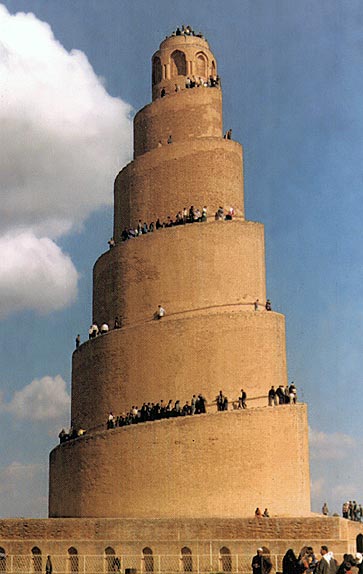
tower_Babel0
Al Samara, Iraq.

Self-glorification (18:7-8). “Because she glorified herself”, God poured out on her the seals and trumpets and bowls.  Six times in this chapter, Babylon is called “great” (18:2, 10, 16, 18, 19, 21); like ancient Babel, this city has succeeded in making a name for herself (Genesis 11:4).  Her boasting alludes to the arrogance of King Nebuchadnezzar who said “Is not this great Babylon, which I have built by my mighty power as a royal residence and for the glory of my majesty?” (4:30).  That very moment God brought the proud king down.  Indeed, “pride goes before destruction” (Proverbs 16:18). Indeed, “God resists the proud, but gives grace to the humble” (James 4:6).

The self-glorification and destruction of Babylon are in stark contrast to the thankful humility and exaltation of the New Jerusalem, which “has no need of sun or moon to shine in it, for the glory of God gives it light, and its lamp is the Lamb.” (Revelation 21:23)

Roman_Wealth
Emperor Crassus, the richest man in his time (www.nationalgeographic.com)

Power, prosperity and perversion (18:3).  The Caesars of Rome promised peace and prosperity to all who submitted to their rule through the Pax Romana.  The life they offered was one of sensuality, wealth and security through its military might.  To the first recipients of Revelation, “Babylon” pointed to Rome.  In this chapter, we see three groups of people mourning its destruction: “Kings” representing the pursuit of power, “merchants” representing the pursuit of prosperity, and “ship masters and sailors” representing the pursuit of immoral pleasures (18:9,11,17).  The Author shows that Babylon is destroyed because it seduces and ensnares people with the lure of power, wealth and immoral living. 

The bulk of the chapter is directed at Babylon’s failed promise of prosperity and its lure of “luxury” (repeated three times 18:3,7,9).  Riches are said to be “deceitful” (Matthew 13:22) because it promises joy and peace – the fullness of life – but Jesus warns that life does not consist in the accumulation of wealth and possessions (Luke 12:15).  The same can be said about Babylon’s lies promising power and sensuality…

 [Read the full commentary of Revelation in Faithful to the End]

Faithful to the End is a simple commentary that helps make sense of the encouraging message of Revelation.

Quick links to full THE END Revelation Series posts

1  2  3  4  5  6  7  8  9  10  11  12  13  14  15  16  17  18  19  20  21  22  23  24  25  26

The End? The struggle is real

In 21st post in our study of Revelation we look at the Fall of Babylon (chapter 17). A recording of this post is available on the Shofar Durbanville Youtube channel.

We are easily tempted to heroify the struggle for faith in the early church and downplay our own challenges to remain faithful to Christ.  In doing so we diminish our battles and remain ignorant of the dangerous evil forces waging war against us (Ephesians 6:12; 2 Corinthians 10:3-5).    The spiritual forces opposing us within our own culture are real and could be life-threatening to our faith. (Do you have friends or family who have drifted away from Jesus?)  Therefore, we should not be ignorant of the schemes of Satan (2 Corinthians 2:11).  Revelation 17 unveils the satanic forces within the 1st century Roman culture, Christ’s judgment on it, and how to overcome it.  A careful look at their struggle within their own seductive culture will unmask our struggle within our culture – so this message becomes personal. 

This chapter unveils three seductive lies which is potentially lethal to faith in God, as well as three truths to overcome Satan’s scheme in these lies.

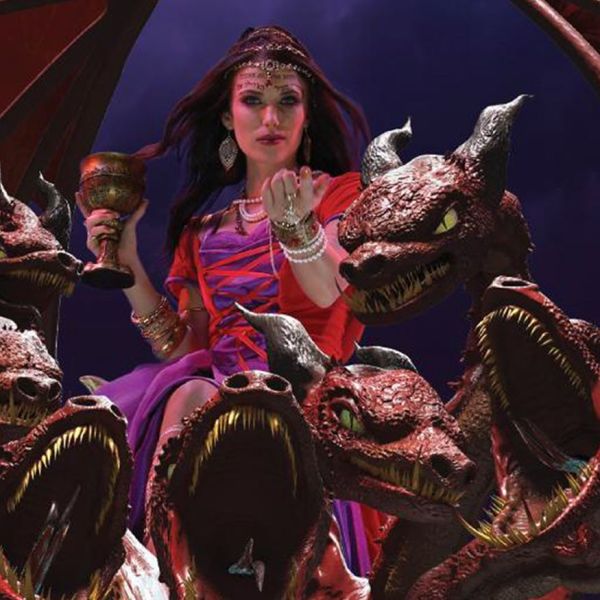
Absolute autonomy.  John sees Babylon, the Great Harlot, riding on the Beast, superior over many nations and people groups on many waters (nations and people groups) (17:1,3,5,15).  All the rulers on earth are said to be seduced and subjected to her (17:2, 18). She is the one responsible for the death of God’s saints through the ages, as well as witnesses of Jesus, as she resists their message of the reign of God in Christ (17:6).

beast_Rev17

In John’s day this clearly pointed to Rome, the ancient city surrounded by seven mountains from which the empire was ruled (17:9; 18).  But Rome was not the first or the last city to be named Babylon (17:9-10): the Old Testament prophets also referred to Nineveh, Tyre, and Greece as “Babylon”. ) Original Babylon was named after Babel (Genesis 11:4), the first city that revolted against God’s rule. Afterwards, Babylon became synonymous throughout the Scriptures with humanity’s claim for self-rule, self-sufficiency, and self-seeking.  This is an extension of mankind’s original sin in the Garden – succumbing to the temptation to decide what is good and right so that I may satisfy my needs all by myself.  As such, Babylon represents all of mankind who choose to live in sin, to live apart from God and his rule.

Why then the name Babylon the “Mother of all harlots” (17:5)?  Scripturally, spiritual idolatry is likened to sexual immorality in that every single man and woman is created by God: “from him and through him and for him are all things” (Romans 11:36; refer Hosea; Ezekiel 16; Isaiah 3).  Each person belongs to God, as a husband or wife belongs to his/her spouse.  Therefore, denying him and living as though we do not belong to another to live for our own pleasures is the spiritual equivalent of sexual infidelity in a marriage. And this is the seductive heresy of Babylon: “I belong to no-one; I will decide what is right and wrong and give answer to no-one. I am my own master!”

Do you see this lie at work in our culture, in the undertones of films, music, advertisements and career pursuits? Do you hear this voice in your head when you are tempted to deny God and serve yourself – like most people in society?

beast_Rev17_2

Luxurious living. John is mesmerized, almost hypnotized by the image of the seductive Babylon – in spite of her brutality (17:6-7).  She is displayed in great power (over the nations, mastering the beast (17:2-3, 15), arrayed in opulence and glamour (17:3-4), and oozing sexual seduction (17:2).  She is the epitome of John’s description of sin: “the lust of the flesh, lust of the eyes, the pride of life” (1 John 2:16)  

The picture John sees is the promise of the fulfilment of all our desires.  Hedonism is calling to us: “Look at me: I can fulfil all your desires!” All she asks is to stop resisting, to give in and enjoy her.  She will give you life!   Can you hear her call in our sensual, self-seeking culture?  Do you believe her?

It’s beautiful to see here how God is not rebuking believers for their sensual desires.  Rather, he makes the readers aware that resisting sensual temptations in this self-gratifying culture amounts to waging spiritual war.  We are taking our thoughts captive, breaking down strongholds, battling principalities and powers (2 Corinthians 10:1-5; Ephesians 6:12).  Christ helps believers to see the true nature of this Beauty and her Beast: Her beauty is skin-deep; she is vulgar, blood-thirsty and downright evil (17:3).  The message to believers is clear: resist her and live, or succumb to her temptation and die (compare with the seductress of Proverbs 5:3-6 and 7:6-27). 

The futile fight.   [Read the full commentary of Revelation in Faithful to the End]

Faithful to the End is a simple commentary that helps make sense of the encouraging message of Revelation.

Quick links to full THE END Revelation Series posts

1  2  3  4  5  6  7  8  9  10  11  12  13  14  15  16  17  18  19  20  21  22  23  24  25  26
The End? Making sense of judgment

Our 20th stop in the journey together through the book of Revelation has brought us to chapters 15 and 16.  A recording of this will be available on the Shofar Durbanville Youtube channel.

not_fair1
“It’s not fair!”” Our craving for justice.

“Where is the justice?”  How do you feel when another corrupt politician escapes the law through bribery? Or when another rapist go free because of sloppy police work? Or gang members buy off another local police precinct to look the other way?

We are all born with an innate sense of right and wrong, a desire for justice.  Justice affirms there is indeed a universal right and a wrong and particular right and wrong within a community (customs and traditions).  Justice demands retribution (punishment) and reparation (restoration) to allow reconciliation (peace).  A system of justice aims to act for the weak ones in society, who are ignored by the powerful ones in their pleas for justice.   Without justice, there is no peace.

A lot of judgment. The middle section of Revelation (chapters 6-20) is devoted to God’s just judgments.  For fourteen chapters, God’s wrath is poured out as seven seals, seven trumpets, and seven bowls during natural disasters, great wars, cosmic chaos, and celestial visitations. Knowing that this is heavy reading, the Author graciously allows for interludes depicting God’s care for his people and his invitation to participate in his work of redemption. 

These judgments are in response to the rebellious nations’ idolatry, immorality and violence (9:20-21), and in particular, the suffering saint’s cries for justice (6:11; 16:7).  These three sets of judgments illustrate increasing intensity, inviting repentance, yet repeatedly we read the wicked nations “cursed God” and “did not repent”.

Before we make sense of these three sets of judgments together, let’s review the bowls (chapters 15-16). 

Victory in the fire.  The scene opens again with a contrasting view similar to the previous chapter (chapter 14). The saints are depicted as victorious over the Beast, at peace and worshipping while the fires of God’s judgment are lighting up the world (15:2; compare 4:6; 5:10; 14:3).  They sing about God’s “righteous acts” (15:4) from the song of Moses (Deuteronomy 32), the lyrics which describe the judgments being poured out not only in the seven bowls (chapter 16) but also the seven seals and seven trumpets.

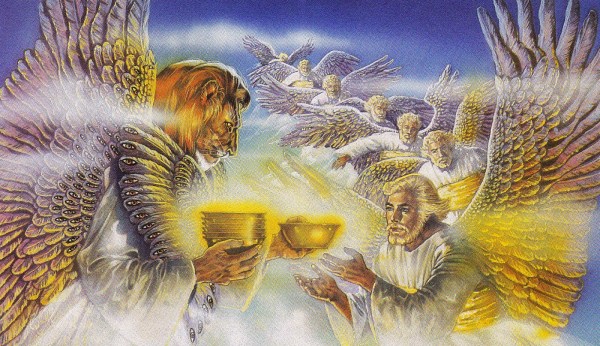
bowls_1

Just holy wrath.  These bowls of judgments are portrayed as coming from the Most Holy Place in the Tabernacle (15:5-8).  By referring to “the Song of Moses” (15:3; Deuteronomy 32), these judgments on the wicked and rewards for the righteous are depicted as the blessing for obedience (Deuteronomy 27-28) and curses for disobedience (Deuteronomy 29-32) recorded in the Law and kept in the Most Holy Place in the Dessert Tabernacle (Deuteronomy 31:24-30).    

Patient in mercy. These bowls of judgments are called “seven plagues” (15:1).  As God demonstrated his patience towards Pharaoh and Egypt, allowing 10 times to repent before every plague, we also see God’s rich mercy allowing for the nations to turn from the rebellion in repentance to him.  But the nations did not repent from their wickedness and cursed God (16:9, 11, 20).

Sound familiar? There are great parallels between the seven seals, seven trumpets and seven bowls, especially the last two sets of judgments (see table below).  All of these contain allusions to the fulfillment God’s promises in the song of Moses (Deuteronomy 32) to which Jesus also alluded in his end times teachings (Matthew 24).  Deuteronomy 32:22-25 (famine, plague, pestilence, wild animals and the sword) is the substance of the first four seals, and 32:41-41-43 is the substance of the last two seals. With a slight change in order, the seven trumpets and seven bowls follow a similar pattern, alluding to God’s plagues in Egypt (Exodus 7-11)…

 [Read the full commentary of Revelation in Faithful to the End]

Faithful to the End is a simple commentary that helps make sense of the encouraging message of Revelation.

Quick links to full THE END Revelation Series posts

1  2  3  4  5  6  7  8  9  10  11  12  13  14  15  16  17  18  19  20  21  22  23  24  25  26