The End? The reign of peace

This 24th post looks into the 20th chapter of Revelation.  A recording of this study is available on Shofar Durbanville’s Youtube channel.

What is wrong with the world?  And what will make everything right again?  How you answer these questions defines your religion and your approach to and expectation of life itself.  This is the focal point of Revelation 20.  John describes the end of Satan, sin and death, ushering in 1000 years of peace.  This 1000 years of peace,  called the millennium (Latin for thousand), is the cause of much debate in Christian circles.  

If you are new to Christianity, the millennium debate might seem strange.  However, six times in this chapter, 1000 years are mentioned, which is central to the meaning of this chapter.  Moreover, this reign of peace is central to the message of Revelation: the destruction of Satan’s earthly forces (Babylon, the Beast and the False Prophet) in the previous chapters and here the end of Satan, sin and death, signifying the culmination of Christ’s work of redemption – making the 1000 years of peace possible.  From John’s perspective, the millennial reign of peace is central to God’s plan to redeem creation and, therefore, significant for you and me. It is what the church – and all mankind – longs for.  How we make sense of this chapter will impact your view and expectations of life.

What is John’s vision of 1000 years of peace, then? When is it? John’s Millennium can be read in three primary ways.

millennial-views

Premillennialism expects Jesus to return and end the tribulation, reign in peace for 1000 years, and then make an end to Satan, sin and death. This is the most prominent view among Christians in the West today.

Postmillennialism expects the church, through the Gospel, to usher in God’s peaceful reign for 1000 years before Christ returns to judge the world.

Amillennialism reads the 1000 years as symbolic, having been initiated by Christ’s death, resurrection and ascension.  From this perspective, we are now in this thousand years of peace.

All three of these views are held by very learned people who have given much thought to these views.  Sadly, some beautiful truths in Revelation remain unnoticed in all the dust kicked up by the debates about when the millennium will or has commenced (d).  Let’s walk through the chapter and ask ourselves, “What did John see, and what could this have meant to him?”

The end of Satan (20:1-3, 7-10).  An angel descends from heaven and binds Satan in the Abyss, sealing the pit. Satan is tied up not by God, not by Christ, not by a known archangel like Michael or Gabriel. Instead, Satan is bound by some ordinary angel who “came down from heaven.”  This reassured  John that Satan is not God’s equal and never a threat to God’s authority or purposes.  Although Satan persecuted the church on earth and gave power to the empires of the Beast, the Sovereign Lord allowed Satan to roam loose in service of his redemptive plan. Once the Devil had served his purpose, God commissioned an angel to bind him up.  At an appointed time, Satan will be released briefly again to serve God’s redemptive purpose in bringing judgment on the wicked nations.  After that, he will be thrown into the lake of fire forever, joining his servants, the Beast and the False Prophet.

The thousand years (20:2-7). One thousand years” is mentioned six times in these six verses – the only place in the Bible explicitly naming the thousand years of peace.  How do we read it?  For one, we know that we cannot read this as literal ten centuries in the apocalyptic genre. This genre calls for a symbolical interpretation, just as we read the seven horns and seven eyes of the Lamb of God to convey a particular truth about Christ.  We also note this symbolism elsewhere in the Bible.  When we read that God “owns the cattle on a thousand hills” (Psalm 50:10), we don’t ask, “On which thousand hills do God’s cattle roam?”  When reading “with the Lord, a day is like a thousand years” (2 Peter 3:8), we don’t start calculating our age in God-years; instead, we understand that the Ever-living One is not bound by time as we are…

 [Read the full commentary of Revelation in Faithful to the End]
Faithful to the End is a simple commentary that helps make sense of the encouraging message of Revelation.

Quick links to full THE END Revelation Series posts

1  2  3  4  5  6  7  8  9  10  11  12  13  14  15  16  17  18  19  20  21  22  23  24  25  26

The End? Making sense of judgment

Our 20th stop in the journey together through the book of Revelation has brought us to chapters 15 and 16.  A recording of this will be available on the Shofar Durbanville Youtube channel.

not_fair1
“It’s not fair!”” Our craving for justice.

“Where is the justice?”  How do you feel when another corrupt politician escapes the law through bribery? Or when another rapist go free because of sloppy police work? Or gang members buy off another local police precinct to look the other way?

We are all born with an innate sense of right and wrong, a desire for justice.  Justice affirms there is indeed a universal right and a wrong and particular right and wrong within a community (customs and traditions).  Justice demands retribution (punishment) and reparation (restoration) to allow reconciliation (peace).  A system of justice aims to act for the weak ones in society, who are ignored by the powerful ones in their pleas for justice.   Without justice, there is no peace.

A lot of judgment. The middle section of Revelation (chapters 6-20) is devoted to God’s just judgments.  For fourteen chapters, God’s wrath is poured out as seven seals, seven trumpets, and seven bowls during natural disasters, great wars, cosmic chaos, and celestial visitations. Knowing that this is heavy reading, the Author graciously allows for interludes depicting God’s care for his people and his invitation to participate in his work of redemption. 

These judgments are in response to the rebellious nations’ idolatry, immorality and violence (9:20-21), and in particular, the suffering saint’s cries for justice (6:11; 16:7).  These three sets of judgments illustrate increasing intensity, inviting repentance, yet repeatedly we read the wicked nations “cursed God” and “did not repent”.

Before we make sense of these three sets of judgments together, let’s review the bowls (chapters 15-16). 

Victory in the fire.  The scene opens again with a contrasting view similar to the previous chapter (chapter 14). The saints are depicted as victorious over the Beast, at peace and worshipping while the fires of God’s judgment are lighting up the world (15:2; compare 4:6; 5:10; 14:3).  They sing about God’s “righteous acts” (15:4) from the song of Moses (Deuteronomy 32), the lyrics which describe the judgments being poured out not only in the seven bowls (chapter 16) but also the seven seals and seven trumpets.

bowls_1

Just holy wrath.  These bowls of judgments are portrayed as coming from the Most Holy Place in the Tabernacle (15:5-8).  By referring to “the Song of Moses” (15:3; Deuteronomy 32), these judgments on the wicked and rewards for the righteous are depicted as the blessing for obedience (Deuteronomy 27-28) and curses for disobedience (Deuteronomy 29-32) recorded in the Law and kept in the Most Holy Place in the Dessert Tabernacle (Deuteronomy 31:24-30).    

Patient in mercy. These bowls of judgments are called “seven plagues” (15:1).  As God demonstrated his patience towards Pharaoh and Egypt, allowing 10 times to repent before every plague, we also see God’s rich mercy allowing for the nations to turn from the rebellion in repentance to him.  But the nations did not repent from their wickedness and cursed God (16:9, 11, 20).

Sound familiar? There are great parallels between the seven seals, seven trumpets and seven bowls, especially the last two sets of judgments (see table below).  All of these contain allusions to the fulfillment God’s promises in the song of Moses (Deuteronomy 32) to which Jesus also alluded in his end times teachings (Matthew 24).  Deuteronomy 32:22-25 (famine, plague, pestilence, wild animals and the sword) is the substance of the first four seals, and 32:41-41-43 is the substance of the last two seals. With a slight change in order, the seven trumpets and seven bowls follow a similar pattern, alluding to God’s plagues in Egypt (Exodus 7-11)…

 [Read the full commentary of Revelation in Faithful to the End]

Faithful to the End is a simple commentary that helps make sense of the encouraging message of Revelation.

Quick links to full THE END Revelation Series posts

1  2  3  4  5  6  7  8  9  10  11  12  13  14  15  16  17  18  19  20  21  22  23  24  25  26

The End? The Reason to Endure

In this 19th study of revelation we look at need for salvation and the reality judgment and Hell in chapter 14.  A recording of this will be uploaded at the Shofar Durbanville Youtube channel.

endurance1

“What’s the point of all this hardship? Why push through the pain?  Others have given up, and they seem to be having an easier life! What can be worth this much effort?”  Whether it’s a marathon, long-term studies, a gruelling project or a start-up initiative – somewhere along the road, you will ask that question in agonizing pain.  So, too, in your journey of faith.

The answer to this question is what Revelation 14 offers to struggling churches.  The scenes instil courage in the hearts of believers tempted to give in or give up, but it does not shy away from the sober reality of what is at stake.  The chapter is divided into three logical sections, revealing the role models, the reason and the reward for endurance.

The role models for endurance (14:1-5).  Chapter 14 opens in stark contrast to Chapter 13’s end.  Moving from the Beasts and those who receive the mark, John’s attention falls on the Lamb and his army of 144’000 who bear the mark of His Father on their foreheads.  In our post on the 144’000 from chapter 7, we concluded that this group represents the fullness of people who remain loyal to Christ’s blood and who are saved by Christ’s blood.

From the contrasting groups, John hears contrasting sounds (14:2-3): God’s voice roars from heaven “like many waters” accompanied by “load thunders” (repeated in 8:5; 11:19; 16:18; refer 4:5), alluding to God’s justice and judgment from his Law (Exodus 19:16). This originates from his judgment on the and his worshiper (14:8ff).  John also hears the harpists’ joyful, tranquil music.  These come from the believers singing before the throne the song of the redeemed (compare 4:3 with 5:8-10) – a song that only those who have been saved by the blood of the Lamb can faithfully sing.

many_brides
        Here comes the brides!

The redeemed are described as those “who have not defiled themselves with women, for they are virgins… who follow the Lamb wherever he goes”. (14:4).  This phrase is not a reference to physical celibacy but spiritual fidelity, as it contrasts God’s faithful people to those seduced into “fornication” with “Babylon the Great, the mother of harlots and abominations of the earth” (14:8; 17:6).  Here, drawing from the Old Testament prophets (notably Hosea), John describes idolatry as the Church’s spiritual unfaithfulness to God symbolically with a married person’s immorality and sexual unfaithfulness towards his or her spouse.  Paul uses this imagery when he laments the Corinthians’ backsliding: I betrothed you to one husband, to present you as a pure virgin to Christ. But I am afraid that… your thoughts will be led astray from a sincere and pure devotion to Christ. (2 Corinthians 2:11).  But the ones before the throne are a bride “without blemish” (4:5; compare Ephesians 5:27).

The reason for endurance (14:6-12). The next section in this chapter outlines the basic theology of judgment, revealed by three angelic messengers.  Angel One proclaims…  the “eternal gospel: Fear God and give him glory.”  God is the creator of all the earth, that he is sovereign over all the nations, and that he will judge all people, everywhere – and that hour is soon (14:6-7).  Angel Two announces the destruction of “Babylon” because she leads people everywhere into idolatry and immorality (14:8; compare Isaiah 21, Jeremiah 51).  In chapters 18-19, the author returns to this theme, wherein Babylon is described as a city infested by demons and inhabited by the defiled (18:2).  Angel three decrees God’s wrath on the beast and all who bears his mark: eternal judgment in “fire and sulfur” (14:9-11) – an allusion to Hell…

 [Read the full commentary of Revelation in Faithful to the End]

Faithful to the End is a simple commentary that helps make sense of the encouraging message of Revelation.

Quick links to full THE END Revelation Series posts

1  2  3  4  5  6  7  8  9  10  11  12  13  14  15  16  17  18  19  20  21  22  23  24  25  26

The End? Release of the Four Horsemen

This 12th reflection in our journey through Revelation displays the vibrant apocalyptic genre of this prophetic letter.  A recording of this post is available on Shofar Durbanville Youtube channel, as part of the Revelation Series. Follow the link below.

The middle section of Revelation we now enter (chapters 6-16) contains three sets of seven judgments each:

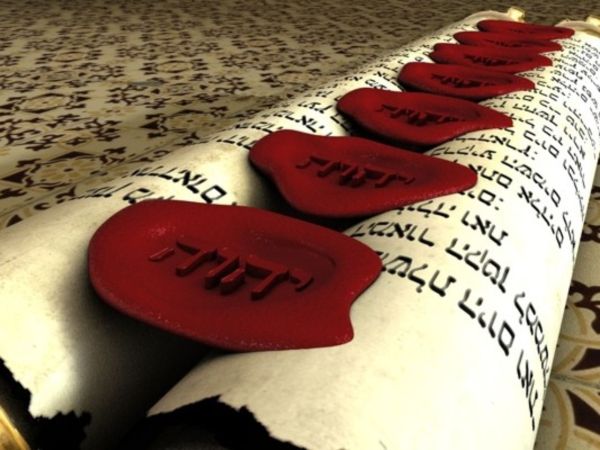
Scroll_Seven_Seals

  • the opening of the seven seals (chapters 6-8a),
    • interluded with a roll call of the Lamb’s Army (chapter 7)
  • the blowing of the seven trumpets (chapters 8b-11),
    • interluded with a description of the Lamb’s temple and two witnesses (chapter 10)
    • and the seven signs of warning (chapters 12-14)
  • the pouring out of the seven bowls (chapters 15-16).

These judgments that proceed from the throne room of God, as the Lamb opens his scroll, are acts of God’s redemption of creation, “reconciling all things to himself… by the blood of his cross.” (Colossians 1:20)

How do you read it?

There are various interpretations of Revelation, especially of this middle section.

interpretations_revelationThese judgments are generally interpreted in four ways: Preterists see all fulfilled before the 1st or 4th centuries.  Historicists believe these have been performed throughout history.  Idealists do not read Revelation literally but see all as symbolic of the struggle between good and evil.  Futurists await the chronological fulfilment of these events (Ch 4-22), which they believe will result in a crisis period leading up to Christ’s second coming.

I believe that these three sets are not limited to events of the past or events in the future but are indicative of crises that occur in every generation.  I believe these three sets of seven are not to be read as a chronological prediction but rather as three different perspectives on the many crises the world and the church have faced throughout history (from there, the many repetitions in these chapters).  Remember, this prophecy was written as encouragement and exhortation to seven real congregations who experienced much of these crises in their own time.

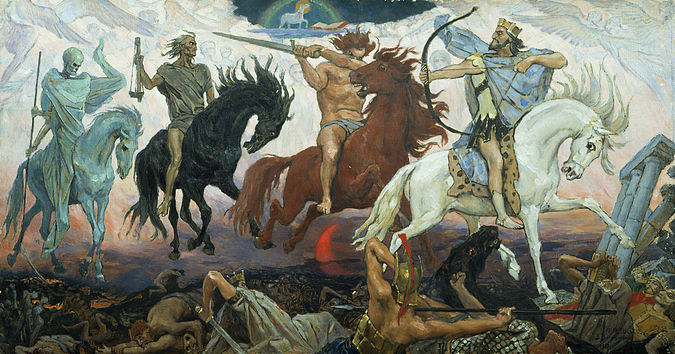
The four horsemen of the apocalypse

seven_seals

In keeping with the nature of the apocalyptic genre, all three sets of judgments draw richly from Old Testament literature.  The opening of the seven seals starts with the unleashing of the Four Horsemen of Zechariah (1:7-14; 6:1-7), who would unleash “four disastrous acts of judgment, sword, famine, wild beasts, and pestilence, to cut off from it man and beast!” (Ezekiel 14:21; compare Deuteronomy 32:23-25).

It is important to note that these acts of judgment proceed from the decrees of the scroll, as the Lamb unrolls God’s redemptive plans for the creation, bringing all other kingdoms into subjection to his reign (compare Colossians 1:15-20).  The judgments are initiated by Christ; the horsemen are… [Read the full commentary of Revelation in Faithful to the End]


Faithful to the End is a simple commentary that helps make sense of the encouraging message of Revelation.

Quick links to full THE END Revelation Series posts

1  2  3  4  5  6  7  8  9  10  11  12  13  14  15  16  17  18  19  20  21  22  23  24  25  26