
We all know the feelings of guilt and shame. We all know that voice hurling accusations at us in our moment of weakness. “You blew it again!” “Can’t you keep it together?” “When will you get it right?” “Disappointment!” “Disgrace!” “Disqualified!”
How can you pray with these feelings? How can you come before God with this voice in your head? What would it take to silence the Accuser?
I find tremendous freedom in a vision shown to the prophet Zechariah. It was when the first exiles returned from Persia to rebuild Jerusalem (520 BC). Along with Haggai, Zechariah was exhorting the people to rebuild the temple to allow the Jews to worship God again.

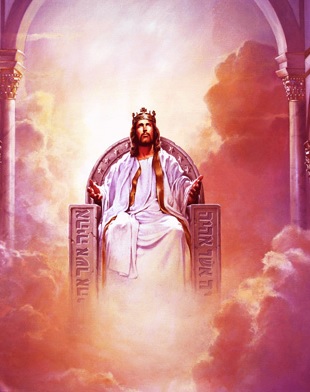
The vision of the court (Zachariah 3)
In this vision, Zechariah saw Joshua, the high priest standing before the Lord, with Satan accusing him. The accusation? Joshua was standing before the Lord with his ceremonial clothes covered in filth. What’s the big deal? The high priest was the one man in Israel who had the privilege and responsibility of atoning for the sins of Israel once a year, reconciling the people to God.
Only on the day of Yom Kippur (see Leviticus 16), the high priest could enter the most holy place to offer sacrifices to YHWH. The custom was that the high priest would fast and pray the 24 hours leading up to Yom Kippur, confessing all his sins and cleansing himself in the presence of God, with groups of priests supporting him in prayer throughout the day. The next morning, he would wash himself, get dressed and enter the most holy place to offer a bull to atone for his personal sins. He would walk out all bloodied, wash himself and get dressed in his next clothes. Then he would return to offer a ram to atone for the priesthood. He would wash and get dressed again to atone for the sins of Israel by offering a goat. Whenever he would enter the most holy place, he would have bells on his clothes and a rope around his ankle so that if he had unconfessed sins and died in the presence of God, the people could drag him out. God is holy.
Here we have Joshua standing before the Lord covered in filth, guilty and shamed. Joshua was the high priest that year – the one man who should keep it together so that Israel would have an example of godliness and a mediator before God. And Satan did well to remind Joshua of that. The accuser screams, “He is unfit!” “He is unholy!” “He is sinful!” “Disappointment!” “Disgrace!” “Disqualified!” “Throw him in the fire!”
Not disgraced, disappointed or disqualified

SHAMED
To Joshua’s surprise, the Lord did not strike him dead. The Lord did not seem surprised that Joshua was covered in filth. He did not rebuke or strike Joshua. Instead, the Lord rebuked the accuser, reminding him of three things:
- Joshua was a man that was destined to the fire (condemnation), but the Lord had pity on him and saved him from the fire.
- The Lord had chosen Joshua and his people Israel for himself – he has favour on Joshua and his people.
- The Lord has chosen Jerusalem as his dwelling place and has therefore instituted the priestly order with Joshua, to mediate between him and his chosen people.
In short, the Lord has compassion for Joshua, has chosen Joshua, and set him apart as the high priest. Joshua has not earned this prized position through his holy living – it is all grace.
Therefore, the Lord orders that Joshua’s filthy clothes be removed and that he be clothed in new high priestly clothes. The Lord Himself has removed the sins from Joshua.
Then the Lord assures Joshua that his failure has not disqualified him from his priestly privileges. Surprisingly, the Lord assures the man that if he continues to seek and serve God in his role, he will continually have access to his presence. Moreover, Joshua will see the restoration of Israel and the coming of the Messianic reign. He has the privilege to play a part in this fulfilment!
A friend in need
One of the most beautiful moments in this scene is Zachariah’s response. When he sees how graciously the Lord responds to his shamed friend, Zachariah gets excited and cries out, “Give him a clean headdress!” Seeing his friend’s failure, the prophet did not join in the slandering of the accuser. Nor did he stand by passively to see what happens next. Rather, Zacheriah joined in the Lord’s effort to restore and encourage the fallen priest. “Give that priest new clothes to work with!”

A Mirror to my reality
I am a husband, a father, and a pastor of a congregation. I am a leader, an example to others of how to walk in godliness. Yet I fail. Often. I can deeply identify with Joshua’s sense of shame in the presence of God. I know what it feels like to stand before God with dirty garments. I have heard the words of the accuser ringing in my ears “You blew it, again!” “Can’t you keep it together, man?” “Failure!” “Hypocrite!” “Disgrace! “Disappointment!” “Disqualified!”
Accusation and shame are familiar companions to all the children of Adam and Eve who ate of the Tree of the Knowledge of Good and Evil. Their aim in life is to persuade you and me that we are a disgrace and disappointment to God, and that God has disqualified us to come before him. The accuser wants you to stay away from God and to give up on your purpose.
But Satan is a liar.

A Window into God’s Kingdom
Therefore I find so much comfort in how the Lord responds to Satan’s accusation of Joshua, God’s priest. God tells Satan to keep quiet, to keep out of his business, to leave the priest alone. Why? Because Joshua is God’s chosen priest, appointed by God to serve God by atoning for God’s people.
The whole chapter is framed in covenant language. YHWH (the LORD, Israel’s covenant God) has chosen and redeemed Israel for himself to participate in His redemption and renewal of all creation. God knows that all people are flawed – he remembers that he made them from dust. That is why God has instituted the priesthood, and why he chose Joshua to serve him as high priest: to atone for Israel’s sins and make peace between God and his people.
Yet God knows that even the high priest is only a man. He speaks of another High Priest called The Branch or The Stone (the foundation of his true temple), who will atone for Joshua’s sins. Now Joshua can experience mercy and get cleansed by God.

A Door to God’s Kingdom
How should I respond? How can I participate in this heavenly court scene? There are two people here, and I am invited to play the roles of either Joshua or Zachariah in this vision.
When I hear the accuser condemning me, I see myself in the place of Joshua. The accused priest does nothing except to:
- hear the Lord’s rebuke of Satan
- hear the Lord’s forgiveness
- receive the new clean clothes,
- and hear that he is not disqualified – he must continue confidently in his ministry!
This scene does not lure me to passivity. Whenever I hear the accuser, I am invited to see myself in this scene before the Lord and wait until he rid me of the accusations, to declare me clean and acceptable in his sight. I wait on the Lord as David did in Psalms 62 and 130.
Secondly, I am invited to imitate Zachariah in this scene. When I see a friend bent over under the burden of guilt and shame, I am invited to participate in the gracious Lord’s restoration. I am urged to mirror the mercy of God: to announce a clean slate and encourage my friend to continue serving God with confidence in this fallen world.
When you stand in the presence of the Lord today, who do you feel like?
| Are you Joshua, burdened by shame and whipped by Satan’s accusations? Are you yearning for the Lord’s deliverance and loving restoration? | “Let us then with confidence draw near to the throne room of grace, that we may receive mercy and find grace to help in time of need.” Hebrews 4:16 |
| Or will you imitate Zachariah the prophet, seeking out that friend to encourage with the mercy of God? | “A bruised reed he will not break, and a faintly burning wick he will not quench.” Isaiah 42:3 |



 walklikejesus