unLimited – embracing the gift of limits

Have you felt stretched too thin lately? Worn out or burnt out? You are not alone. Our culture fights against limits and pushes against the boundaries that frame our lives. We don’t want to miss out. “More is better”, we believe, so we try harder to experience more to get more. Yet, there is always more. This leaves us unsatisfied, angry and exhausted.

Our marketing memes show our belief that “more is better.” Just add the word “unlimited,” and customers will buy whatever you sell. Because we believe the good life is found beyond our boundaries, we always strive for more. We war against the boundaries of our lives but end up fatigued, frustrated, fearful, and flat—in a word, lifeless. How is it that “more” leaves me feeling “empty”?

In a world where limitless is life, we fantasise about superheroes. Yet we are creatures, not gods. We are limited beings, blessed to thrive within our boundaries. Pete Scazzero lists some limits that we all can relate to. My life on this earth is a blessing, but it is brief; I can’t escape death. My mind has its limits, regardless of my learning. My personality or temperament has its strengths and weaknesses in every situation. My gifts are great, but it has their limits. My family or origin gifts me within a particular cultural, financial and social context; this is a blessing, but it holds its limits. Whether I am rich or poor, black or white, male or female – each attribute empowers and impedes me in life. Likewise, my own past (actions and experiences) holds great treasures, but with its limiting consequences. Each season of life has its gifts and limitations; we can’t change that – only embrace the season with its invitation and limitation.

The Apostle Paul also wrestled with his human limitations. In 2 Corinthians 12:7-10, he recounts a life-altering meeting with Jesus that changed his perspective on limits. “…I have received such wonderful revelations from God. So, to keep me from becoming proud, I was given a thorn in my flesh, a messenger from Satan to torment me and keep me from becoming proud. Three different times I begged the Lord to take it away. Each time he said, “My grace is all you need. My power works best in weakness.” So now I am glad to boast about my weaknesses so that the power of Christ can work through me. 10 That’s why I take pleasure in my weaknesses, and in the insults, hardships, persecutions, and troubles that I suffer for Christ. For when I am weak, then I am strong.”

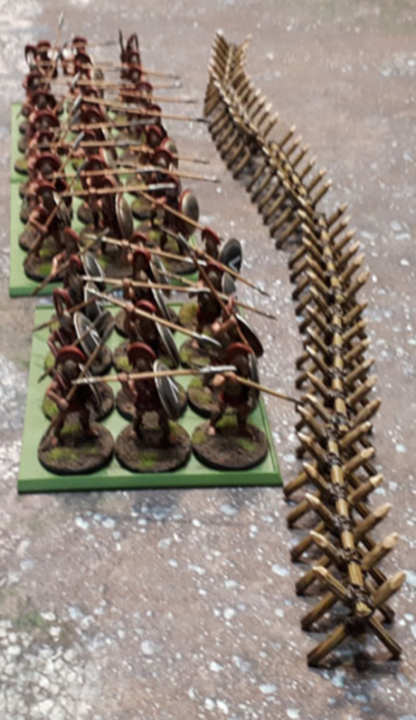
Paul’s reference to “a thorn in the flesh” is often misunderstood as a slight pinch in the foot. But, Pete Scazzero explains that the original language referred to a pike-like military defensive barrier (see image below). Today, Paul might have used “a sharp palisade fences or barb-wire in my flesh.” Pressing against this barrier caused him anguishing pain and left him feeling frustrated (angry and powerless).
Many have speculated about this “thorn in the flesh” in Paul’s letter. Some read Paul’s “thorn in the flesh” as a painful or shameful bodily obstacle that inhibited his life or mission. It might have been a speech impediment, like Peter’s lisp (Matthew 26:72-73) or Moses’ stuttor (Exodus 4:10). Others think Paul lived with a painful and debilitating eye infection (see Galatians 4:13-15, 6:11). Some sceptics believed Paul suffered from episodes of epilepsy (because of his disabling visions, as in Acts 9:3-9 and 2 Corinthians 12:7. Yet, others argue that Paul used the phrase “thorn in flesh” metaphorically to refer to emotional pain caused by his loneliness or the ongoing opposition by the Judaizers who constantly discredited his message and character. A last group believed that Paul’s torment was only spiritual, caused by some demonic “messenger from Satan”.

Whatever it was, we know that this “thorn in the flesh” was painful and limiting. Paul suffered from it and could not fix the problem himself. His prayers were not answered either – the Lord did not relieve him of this burden either.

Our culture does not readily accept the limits of “no.” Our culture believes you can do anything and everything if you put your mind to it. Not accepting limits or “no” leaves us exhausted, angry, and inhibited. What can we learn from Paul’s message?

Flourishing within limits

The Bible includes examples of people who served God with tremendous freedom despite their limitations. These limits did not hamper the ministry or legacy of these faith heroes; instead, these faith heroes flourished within these limits, often because of these limits. Jesus taught that “blessed are the meek, for theirs is the kingdom of heaven.” Meekness means submission to restraints as a horse submits to the saddle and bridle of a rider. We are blessed (better off) when we learn to rest within our constraints and trust that God can and will give us goodness here where we find ourselves.

Moses’ life-long speech impediment did not prevent him from fulfilling his call. It seems ironic that, despite all the miracles performed through Moses, the Almighty did not heal him of his stutter. God chose to appoint a man with a speech impediment as his spokesman. In his weakness, God’s power was made known.

David was small, the youngest and most neglected member of his family. Yet God chose this insignificant shepherd boy to deliver his people from the Philistine giant and unite them in one glorious kingdom.

Daniel and his friends were enslaved, yet his God’s sovereignty was made known through these young Hebrews as they faithfully served their captors in the palace.

John the Apostle was a political prisoner on the Island of Patmos, far removed from the oppressed churches under his care. Yet here, God revealed powerful visions with messages of hope that have served the church for millennia.

Likewise, Paul’s most potent and lasting ministry was from within a Roman prison, as he learned to rely on God’s grace. He discovered that these impediments taught him not to become proud (happy, independent, or self-reliant) but rather to rely on God’s grace. “My grace is all you need. My power works best in weakness.” 

Jesus Christ is God in the flesh, living as a poor Jewish boy raised in an insignificant rural village while the mighty Roman Empire ruled his people. This God suffered hunger, ridicule, shame, betrayal, torture and violent death. Through this, God restored his kingdom and delivered all who trusted in him from death.

My limitations as gifts

Paul discovered that the “thorn in his flesh” did not diminish his life; his life and legacy expanded as he embraced his limitations.

  • Paul’s limitation taught him humility – a life that relies on God’s grace, not his own strength and wisdom.
  • Resting in his limitation gives him a revelation of God’s nearness and grace.
  • His limits were the means to intimacy, the reason to draw near to God and trust him more.
  • Paul’s limiting imprisonment was the door to his most significant legacy — the letters that became the blueprint for every Christian church in history.

Paul’s message to the Corinthians invites me to see my limitations as gifts from God to keep me humble and dependent on Christ. It reminds me that these impediments drive me to draw daily strength from Christ. These limitations are the windows that witness the power of Christ in a world filled with weakness. Paul invites me to see my impediments not as limitations to my life, but as a door to my most significant legacy.

We are limited beings invited to live flourishing lives under the care of our compassionate creator. We will do well to learn the secret of being content in every situation (Phil. 4:11-13). Then, our weakness will become our strength.
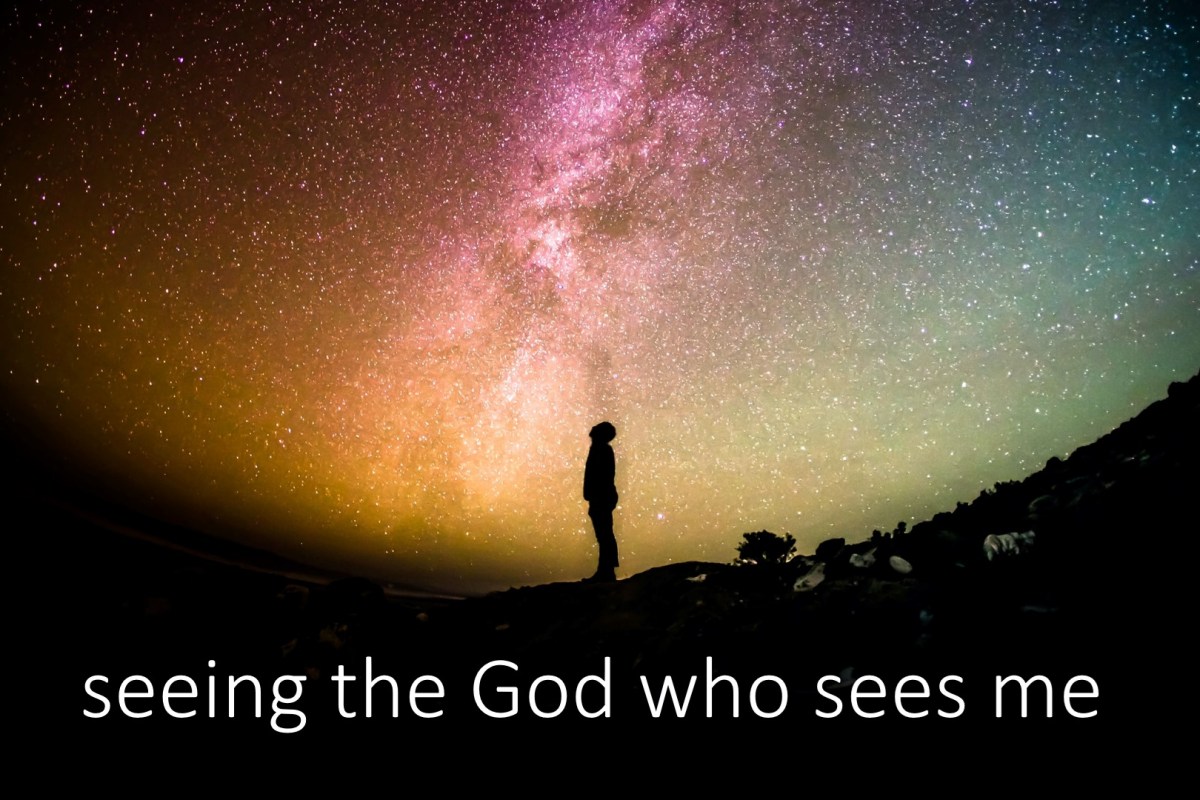
Seeing Him who sees me

This simple practice changed my prayer life. It transformed my quiet time from duty to delight, enlightenment to encounter. So simple, yet so profound.

Noticing the God Who Sees Me

Hagar had this experience when she fled from Sarai for the first time (Genesis 16:1-14). She was a young Egyptian slave, far from the land and her people. As Sarai’s property, she became the incubator for Abram’s descendants when her mistress could not conceive. She was given to Abram until she was pregnant. Her life was not her own, her body was not her own, and now even the baby in her womb was not her own. She was a nobody; Abram and Saria never called her by her name – she was just a nameless “servant” and not regarded as someone with feelings, thoughts, dreams and desires. This injustice made Hagar furious.

Her contempt towards her mistress resulted in harsh treatment. Hopeless, Hagar ran away into the desert – a decision akin to suicide. Exhausted, she found a well and sat down. Hagar was angry and alone, hungry and without hope. Then she encountered the Lord, “the God who sees me” (16:13). For the first time, she noticed Him, who has been watching her all along. She was unaware of the God whose loving gaze was on her all this time. 

Hagar was shocked to discover that the Lord was intimately aware of her. He knew her name, her situation, her pain and anger, and her deepest desires. Beside that well, Hagar met a personal God who was present and attentive to her. This meeting changed everything for her. She was no longer alone and left to fend for herself in a hostile world. She was beloved and known. Hagar named him “El Roi – the God who sees me.”

Spiritual Autism

Robert R. Marsh writes that small children cannot imagine other people having independent minds. Likewise, people with severe autism do not treat other persons as though they see, think or feel differently than themselves. This is often referred to as mind-blindness – to live ignorant of the thoughts, feelings and desires of others. Marsh observes that this is how people habitually approach God – more as an object than a person with unique thoughts, feelings and desires. As such, we speak about God or to God rather than converse with him. We acknowledge his presence but don’t consider his opinions or feelings. Marsh concludes that “Spiritual autism is a pathology of our times.” 

How often does this describe personal or public meetings with God? We may enter a worship service or prayer meeting and go about our discipline, not once stopping to notice the Lord’s demeanour. The result is a dull duty without any dazzle or delight.

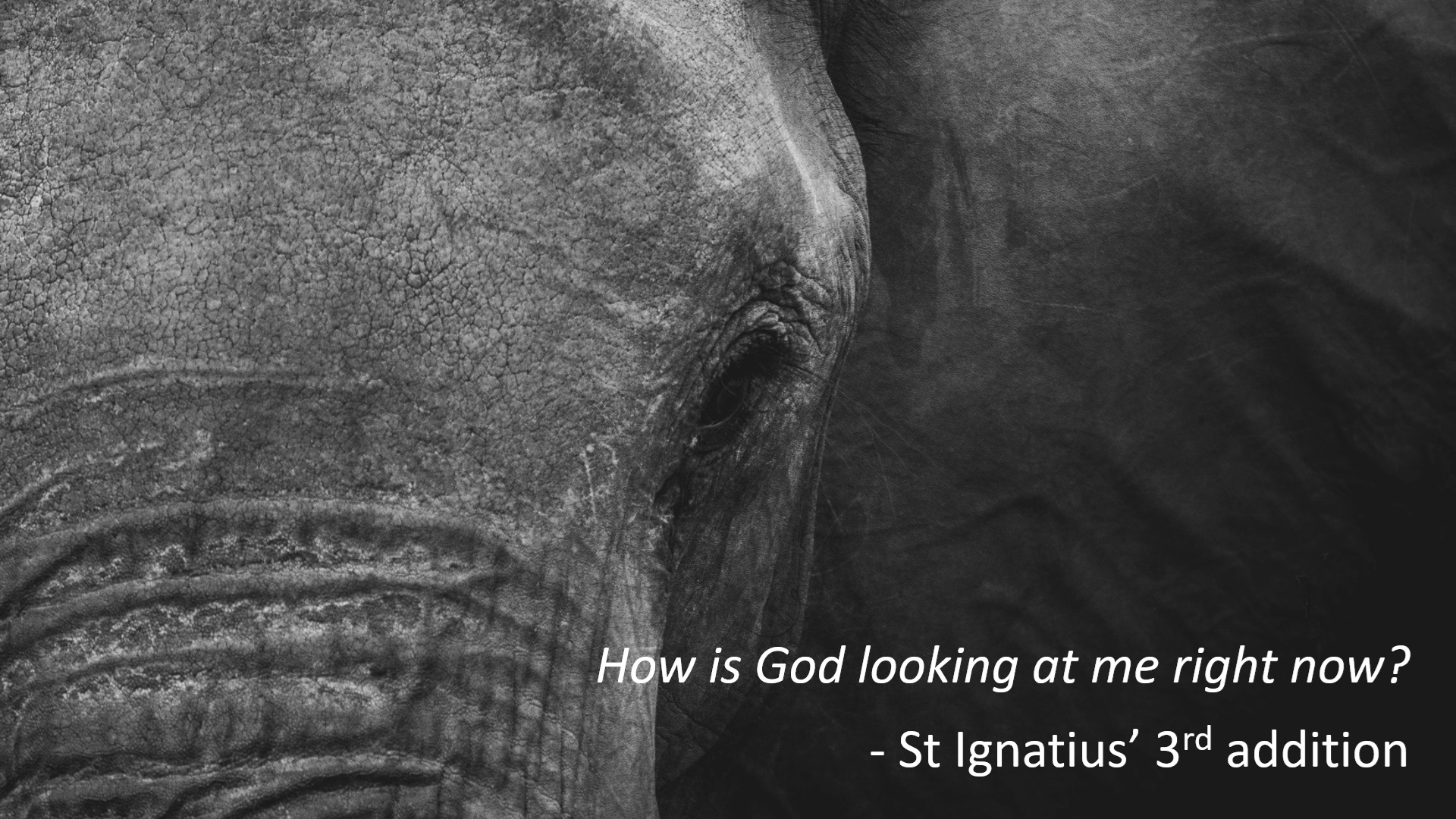
How is God looking at me right now?

The Spanish priest Ignatius of Loyola knew the danger of discipline without intimacy. At the back of his spiritual exercises, he suggested this simple practice that ensures his prayer time remains a personal encounter rather than a principled exercise: “A step or two before the place where I stand or kneel to pray, I pause for the length of an Our Father (45 seconds?)… considering how God our Lord is looking at me”..” (Ignatius, Spiritual Exercises, 3rd Addition)

This practice transformed my prayer life and deepened my relationship with God. Every time I start my prayer time with this simple habit, it becomes a delightful encounter with God himself. As I become aware of the Lord’s presence and posture, my prayer becomes a conversation, not a petition that I raise to some distant domain. This turns my prayer time from cold and transactional to intimate and transformational.

When alone, I set the agenda and steer the activity; there is no place for surprise. Yet every time I start my prayer time with the awareness of how God is looking at me, my prayer time begins with surprise.

Naming our Well

Hagar met “the God who sees me”.   Moreover, Hagar was wise to memorialise this life-changing encounter by (re)naming the well Beer-lahai-roi (which means “well of the Living One who sees me” (16:14). Memorialising this meeting with God served as a reminder that there was a time and place where I encountered God; this is what he is like and what he said to me. The memory encouraged Hagar (and still inspires us four thousand years later) that God is immanent and intimate.

Take God’s presence seriously

I’ve learned from Hagar to take God’s presence seriously and expect encounters with the Living Lord. Moreover, I record these encounters in a journal as reminders that God is near. I start my prayer times by paying attention to God, who is present, and noting how he is towards me. (This is often more of a sense than an open vision). Then, I start by telling God what I notice and how that makes me feel.

One evening, I was deeply upset by a conversation I had during the day. As Ignatius taught me, I retreated into an empty room to meet with God and paused to discern God’s presence and posture. Immediately, I saw a big desert elephant, strong and peaceful, looking into my soul with his big, reassuring eyes. I had a Hagar moment: I perceived that the Lord was here, strong, and in control, and he knew about my frustrations and concerns. In that moment, His peace became my peace. My time of prayer did not require many words that evening.

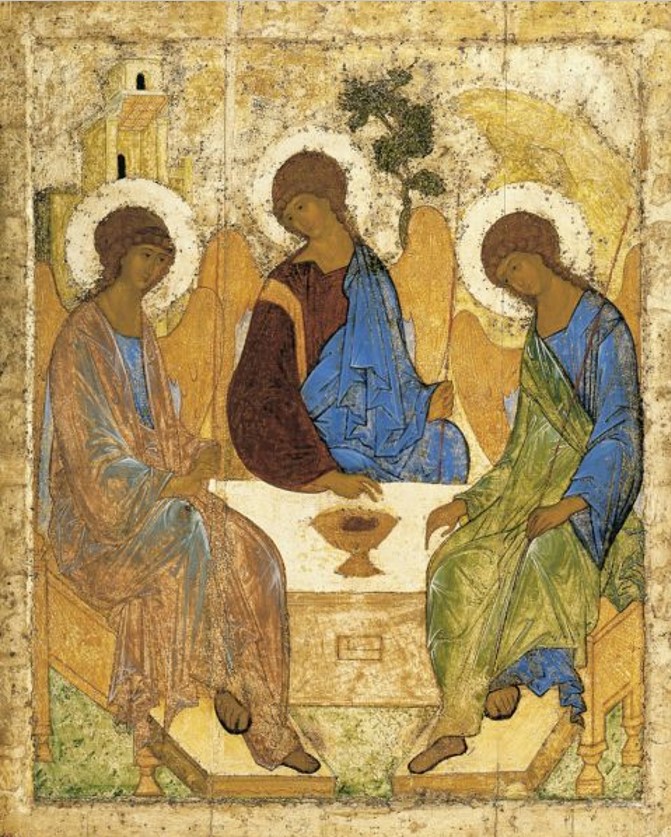
Another profound encounter happened early one morning on a beach. Until then, I often felt a sense of “performance pressure” when I met with God—the feeling that I had to make this encounter happen. (Can you relate?)  Yet, as I paused to notice how God was looking at me, I suddenly found myself at a table with God the Father, the Son and the Holy Spirit. Their fellowship was so vibrant and joyful! I was welcomed into their warm fellowship. At once, the pressure to make something happen or to perform before God was gone. I experienced the joyful fellowship of the Triune God. I saw what Daniel Migliore meant when he wrote, “God is eternally self-giving, other-regarding, community-forming love.”

That day, I experienced what Rublev painted in his famous picture of God’s visit to Abraham (Genesis 18): the Triune God sits at a square table and welcomes us to join his fellowship. There is a joyful fellowship I don’t have to initiate – but I am always welcome to join. I am simply invited to see and join Him, who has been watching me all along.

The End? The Lion and the Lamb.

In this 11th post on the apocalypse, we come to Revelation 5, where Christ is worshipped as the One who is worthy to unfold God’s redemptive plan for all creation. A recording of this session is available here

John and the oppressed church in his day struggled to make sense of their suffering in the light of their belief that Christ is Lord of all.  Then, while in prayer, John receives the comforting vision that the resurrected Jesus is still among his church (Chapters 1-3), and that God is indeed sovereign over all of creation (Chapter 4).  His vision of the throne room in heaven continues in chapter 5 as he sees a scroll and a shared throne.  

A paramount scroll (5:1-5)

In keeping with the apocalyptic genre of Revelation, the importance of the scroll is indicated in several ways.  (The opening of this scroll sets the script for the next eleven chapters). The manuscript is “on the right hand of Him who sits on the throne”, a position of prominence and power. It is inscribed on the front and back – an unfamiliar practice in John’s day – meaning the scroll was full and complete, with nothing to be added or taken away (compare 22:18-19). The manuscript is sealed perfectly “with seven seals” so that no one can lift a corner to peek into it.  When “no one in heaven or on earth or under the earth was able to open the scroll”, John “began to weep loudly.” John’s response should be our response because this scroll’s unfolding is paramount to ending the tyranny, seduction and deception under which the church and the world are bent.

What is this scroll?  The following chapters will reveal that this scroll contains God’s redemptive plan for his creation – the King’s decrees for restoring his Kingdom.  Chapters six through sixteen will show how this progressive unfolding of God’s redemption of creation aligns with the opening of the scroll.  The scroll is his victory over sin, Satan, and the gentile kingdoms that resist his reign and oppress his church.  As such, this scroll contains the answer to the cry of John and the church in his day, as well as all suffering saints since then: “Lord, don’t you care, don’t you see? If you are the Christ, when will your kingdom come?”

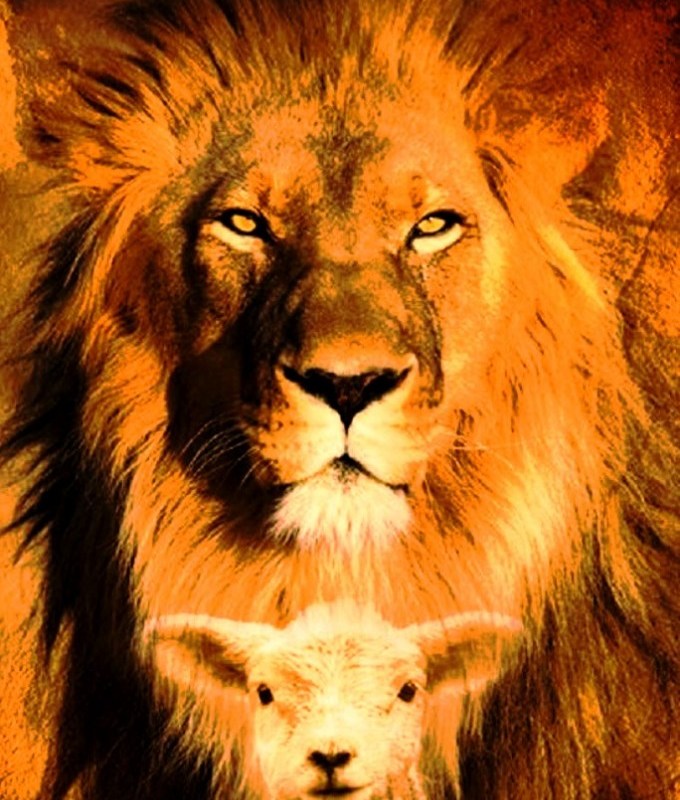
Who, then, is this champion for God’s redemptive quest with creation? “Who is worthy to open the scroll?”  This question reveals the central figure of Revelation – the only one who is worthy to unfold this scroll.  John hears the elder’s reassurance: “Weep no more!  Behold, the Lion of the tribe of Judah, the Root of David, has conquered so that he can open the scroll and its seven seals.”  The elder’s words paint the picture of a mighty Messianic figure, a lion-like leader from the loins of David.

But like so many times in Revelation, what John hears and sees are two different things. Things are not as they seem…

 [Read the full commentary of Revelation in Faithful to the End]

Faithful to the End is a simple commentary that helps make sense of the encouraging message of Revelation.

Quick links to full THE END Revelation Series posts

1  2  3  4  5  6  7  8  9  10  11  12  13  14  15  16  17  18  19  20  21  22  23  24  25  26