Finding God in the dark

On the way home after church one morning, a little girl asked,
“Mommy, why does the preacher always pray before preaching?”
“He asks God to help him, honey,” her mother replied.
The little girl frowned and asked,
“But why does God not answer his prayer?”

Why does God not answer his prayer?

Although “praises” and “psalms” go hand-in-hand, more than a third of the psalms in the Bible are songs of lament. These songs of sorrow teach believers to pray through seasons of hardship as we wait for help from Heaven. While most of these laments have glimmers of hope, Psalm 88  has no resolution and no happy ending – the closing line reads, “My closest friend is darkness is.” Often called The Darkest Psalm, its tone is death, difficulty, desertion and darkness. The Psalm is a maskil, a teaching that has helped believers pray through the darkest seasons when God feels distant or disinterested. For the past 3000 years, believers have found comfort in this poem. In their times of distress and disillusionment, they saw another one who felt what they felt – abandoned in their pain and frustration, with no hope. Yet God honoured his prayer and preserved it in the Bible as an example.

The Darkest Psalm

The 88th Psalm is attributed to Heman the Ezrahite, a prophet like his grandfather Samuel and a worship leader appointed by King David (1 Chronicles 6:33; 25:1-6; 2 Chronicles 5:12).  He directs his prayer to YAHWEH —the God who bound himself by covenant to the descendants of Abraham. Based on this bond, Heman appealed to God for help. His prayer is preserved between Psalms 87 and 89, songs praising YAHWEH for his covenantal faithfulness to Israel, David, and his descendants. This shows us that God is the God of Israel in his glory, of David in his kingship, but also the God of Heman and any other believer who feels abandoned and ignored by him. God remains faithful.

I can pray this way!

Psalm 88 comforts believers who suffer from anxiety, depression and hopelessness. Here, we find a prayer by a spiritual leader in Israel—a well-respected priest, worship leader, and prophet who has felt “terrors and dispair… since my youth.” This godly leader did not pray a pious prayer with pretty words. His prayer is overflowing with anger and frustration, depression and despair, loneliness and abandonment, anxiety and fears. This is a prayer that many of us can relate to, a prayer that echoes our own struggles and fears.

God honoured Heman’s raw, honest prayer by preserving it in the Bible, between two beautiful prayers declaring God’s faithfulness. This invites us to pray authentically, to bring our true feelings and struggles before God.

This psalm gives me hope.

There are four ways in which this raw, unresolved psalm gives me hope.
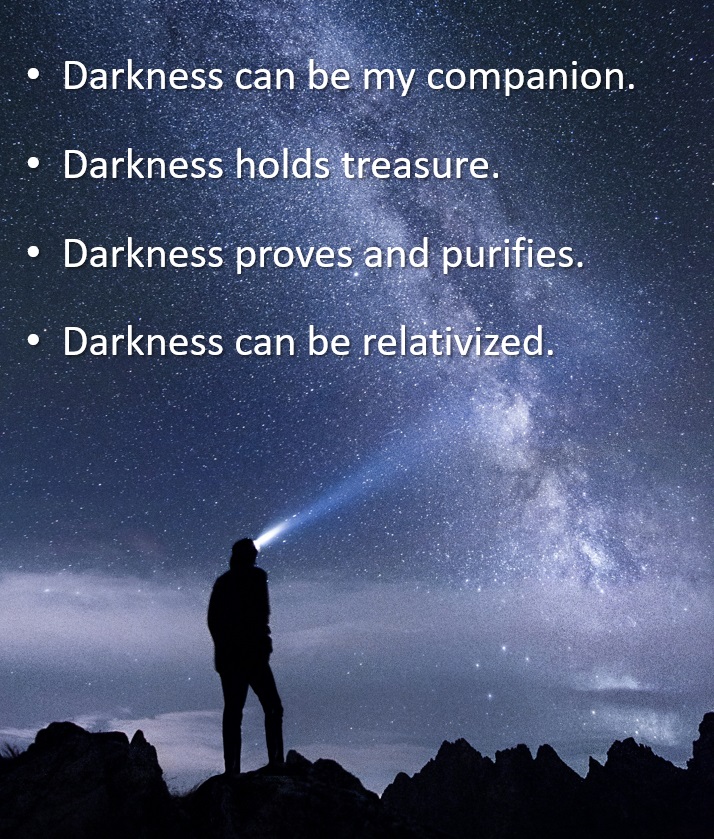
The psalm shows me that darkness can be my companion for a long time. Heman complains about difficulties, depression and despair that had been part of his life “since his youth.” Every morning, he prays to God; this looming darkness stays with him “all day long”. Michael Wilcock writes in his commentary on Psalm 88:

“This darkness can happen to a believer, this Psalm says. It doesn’t mean you’re lost. This darkness can happen to someone who does not deserve it, after all it happened to Jesus. This doesn’t mean you’ve strayed. This darkness can happen at any time as long as this world lasts because only in the next world will such things be done away with. This darkness can happen without you knowing why, but there are answers, there is a purpose, and eventually you will know it.”

Feeling this way does not mean God has abandoned you. Moreover, feeling depressed or deserted by God does not mean having no faith. Christians will not always escape disappointment, disease, disaster, dread and death. “In this world, we will have trouble,” Jesus said. These experiences and emotions lay heavy on the human soul – as they should. (Remember Jesus at the death of his friend Lazarus or before his trial?) It is comforting to know that God is with us in our struggles, that our faith is not in vain. The Darkest Psalm assures us that God hears our prayers in distress and honours our faith (trust) in him.

Scripture (and our experience) show us that darkness holds treasures. During seasons of hardship, we get to know God in a new way, see our motivations, strengths, and weaknesses, and understand how God has ordered the world. We come out of darkness more sober and wiser than we entered it.

Seasons of darkness prove and purify my faith. The book of Job shows that Job’s troubles tested whether his worship of God was sincere: Would he worship and trust in God without the benefits? In Job’s darkness, his faith was verified—he did not turn his back on God but rather wrestled with God.

Job’s faith was also purified in his season of darkness. Job’s hardships revealed his convictions and challenged him to reconsider who God is and how God relates to us and the world. Like precious metals, Job’s faith was purified in the fire as he saw a side of God that was hidden before.

My darkness can also be relativized. In his notes on Psalm 88, Timothy Keller points to the darkness Jesus experienced on the cross. During his darkest hours on the cross, where he felt God had forsaken and forgotten him, Jesus did not forsake or forget us. “For the joy (of our salvation) he endured the cross and despised the shame…” the apostle wrote (Hebrews 12:2). When he felt forsaken from God on the cross, Jesus cried out from Psalm 22:1-2

My God, my God, why have you forsaken me?
Why are you so far from saving me,
so far from my cries of anguish?
My God, I cry out by day,
but you do not answer,
by night, but I find no rest.

In all his anguish and pain, Jesus did not forsake us. We can be confident that Jesus will not forsake us in our moment of darkness. Moreover, in our greatest darkness, we will never suffer the darkness Jesus suffered. The Father turned his face from Jesus as he bore my sins so that the Father may never turn his face from me. I will never be alone in my darkness; I am reconciled to God in Christ. What a comfort!

The invitation in this Psalm.

Heman’s prayer invites me to be honest with God in my suffering and pray without pretence. All the psalms of lament teach us to pray for our fears, pain, disappointments, and shame. If it’s too difficult to say it out loud, learn from Heman and write a poem or journal, then cast your burdens on the Lord, and he will sustain you through. (Psalm 55:22)

Heman’s prayer reminds us that our experiences don’t always reflect reality. Despite being a worship leader, prophet, and priest who had enjoyed God’s glory and friendship for years, he prayed that he had never felt joy and companionship. It’s important to remember God’s goodness and moments of joy, to remind ourselves that life has been good and will be good again. Like the shepherd who “leads us through the valley of the shadows of death,” this difficult time will also pass.

Lastly, in my moments of darkness, I am reminded that I have my Friend on the cross. When I feel forgotten and forsaken by God, I am comforted that Jesus has felt what I am feeling. I know that he has been there, and I can draw grace from him (Hebrews 2:15; 4:16). He promised to never leave me, and he will lead me through (Psalm 23:4).

There will be seasons when I feel “God does not hear, God does not care.” This feeling does not mean I am fickle or faithless – Job, Jesus, David and Heman felt this way. Heman’s poem is a powerful prayer to find God in the dark and draw grace from him for today.

Closing Chapters: Wrapping up 2020 (part 1 of 4)

2020 was a surprisingly rough year.  It still is.  How do you muster hope and confidence for a new year after one so tumultuous as this?

From discovering a new Coronavirus strain far away in Wuhan City, China, 12 months ago a global pandemic culminated in the simultaneous lockdown of more than 200 countries just six months later. The lockdowns confined people to their homes, shutting down schools, businesses and all social gatherings.  Governments banned all travel, calling for a state of disaster, restricting countries under martial law.  And now a second wave is in full swing.

The global pandemic pressure exposed the fault lines in vulnerable economies, politics, and social fibres worldwide.  Newsfeeds flooded with reports of large-scale corruption, election rigging, racial tension and wild conspiracy theories.    These compounding disruptions also highlighted the vulnerabilities in societies’ emotional-spiritual wellness, resulting in heightened anxieties, widespread domestic violence and unhealthy coping mechanisms.  No-one escaped the sting of this pandemic.

At several moments during this year, I hoped for someone to call an end to the year, to reset the calendar and start afresh.  I waited for some referee to recognize our fatigue, to throw in the towel or count us out.  At long last, the year is over, but now the entrance into 2021 looks very similar to the exit of 2020.  The difference is: (a) now we know what to expect, and (b) 2020 has had a significant physical, emotional and spiritual impact on each of us.  For that reason, many of us face the new year with a sense of dread.  

Why bother with the past ?

There is a need to properly wrap up the old year and bring meaning to a particular season before starting afresh.  Failure to conclude a life chapter can cause one to get stuck in a destructive cycle.  Trying to move on with unresolved disappointments, hurts, trauma or even blind spots and character flaws will likely cause one to live reactively to past events.  The past will repeat itself like a bad nightmare. There has to be some resolve, some closure before your story can continue in a new chapter.

Biblical books at the end of seasons

It is noteworthy to consider that all the history books in the Bible – from Genesis to Ester in the OT and the Gospels to Acts in the NT – were recorded at critical moments in God’s people’s history.  These records are not merely cold recordings of history.  Each history book is a prophetic reinterpretation of the events God’s people went through, written to help make sense of God’s redemptive purposes through these periods.  It aims to affirm the first readers’ identity and purpose as God’s covenant people.  As such, each of these books is a means to “close a chapter” in a particular people’s history, giving God’s people resolve to move on, helping them understand why they had to endure this.  

What is a life chapter?

Consider every memorable story, and you will conclude that hard times shaped the character and beautify his/her account. Samuel anointed David to be king, but many difficult chapters fill the years before becoming Israel’s beloved king. Yet his story is memorable because these middle chapters tell of familial rejection, battle with a giant, fleeing a vengeful monarch, harsh years in exile, uniting a divided Israel, and later attempted patricide and exile again, to name a few highlights.  God’s journey with him through valleys of shadows of death makes his story beautiful and inspirational.

God promised Joseph prominence and power, and the fulfilment thereof was beyond his wildest imagination.  His story brings encouragement 3800 years later because God’s promise prevailed despite familial betrayal, enslavement, wrongful imprisonment, and neglect of a companion. In particular, his story endures because he could look his brothers loving in the eyes and declare “You intended to harm me, but God intended it for good to accomplish what is now being done, the saving of many lives.” (Genesis 50:20) That is why and how you close a life chapter: make sense of a season to affirm your identity and purpose in the light of God’s presence and providence.

A life chapter brings a conclusion to a season characterized in some unique way.  Some chapters close naturally, like when you progress from primary school to high school or graduate from college or end an internship.  Other life chapters might require help to resolve, due to an unfair dismissal from work, an abrupt end to a long relationship, or a sudden relocating with the family.  Especially after a season of hardship, we struggle to move on because these tend to impact us emotionally and spiritually – leaving lasting scars on our identity (affecting our self-view), relationships and confidence (impacting our purpose and potential).  Such seasons have the power to hold us back or alter the course of our lives – for the good or the bad.  As such, reflection and resolve is paramount. Closing life chapters means making memories and finding meaning in it. Our challenge is to do a personal, prophetic reinterpretation of our experience to discern God’s presence and work in, through and for us.  In particular, it affirms our identity, reforms our relationships and refines our purpose in life. 

How do we properly close life chapters?

We say that “experience makes us wiser.”  But observation tells us that this is not true.  Experience often leaves us poorer, tired, hurt, or lonely. If we’re lucky, experience leaves us happy, enriched or loved.  We tend to repeat past mistakes, suffering the same painful results – unless we intentionally reflect and learn from our experience.  A more accurate statement reads, “evaluated experience makes us wiser.” 

In her book Rooted in Love Margaret Blackie sketches her life as a plant rooted in rich soil. The plant symbolizes her life, flourishing. The roots seek security and nourishment in the fertile soil. The ground, enriched by the processed plant matter, represents reflected past experiences.  Together, this image powerfully portrays how our lives flourish when anchored and nourished by our awareness of God’s presence and purpose with our everyday lives.  Therefore, closing a life chapter aims to root us securely in the rich soil of the previous season, ready to bloom in the next season.

We close the chapter on 2020 by making a memory and find its meaning in the light of our life’s trajectory as a whole.  First, we look back to review the highs and lows of the year.  Second, we look up to recognize and give thanks for God’s goodness in the past season.  Third, we reflect on the losses, hurts and disappointments by look inward; we own our share in the pain and release those who caused us harm.  Lastly, we look forward as we revision the next leg our of our journey with hope.  We will work through each of these points in subsequent blog posts.

So what do you expect to take with you out of 2020? You might be surprised at the insights and hopeful energy gained from such a reflection.

Marching on – joining God’s restoration

If there was ever a time to “rebuild, restore, repair” (Isaiah 61:4) a nation, the time is now. Covid-19 hit South Africa hard in a time during which it was reeling from the blows of post-Apartheid tensions, wide-spread corruption, a series of droughts and ongoing political instability.  Today, unemployment is at an all-time high and our economy has shrunk by 50%.  Racial and socio-economic polarization is ever widening and social unrest is a common occurance.  The education system is struggling to meet the need.  Infrastructure is deteriorating.  The social fibre of families and communities are fractured, resulting in lower morals, violence and a general sense of hopelessness.  The “rainbow nation” dream we embarked on 25 years ago seems as evasive as the pot of gold grounding this colourful symbol of hope to our land.

In this dire situation, there is a call for the courageous ones to lead the charge.  But rather than courage I see even faith-filled people disengaged from God’s invitation to “rebuild up the ancient ruins; raise the former devastations; repair the ruined cities”.  The waves of devastation persuade many to defect from God’s Kingdom quest to renew all things.[1]  Others seem distracted from the call to rebuild by their pursuits of security and comfort.[2]  Many will admit that they are dismayed – pacified from terror by scale decay and destruction. Sadly, the majority of faithful, courageous Kingdom veterans seem disheartened, weary from the repeated efforts to reconcile, rebuild and restore a nation in pain; They have lost confidence in their ability to make a lasting impact and are tired of trying. 

Can you identify with one of these groups?  Because if you can, the historical account of Jonathan and his armour bearer will speak not just into our contemporary context, but also into your heart.

1 Samuel 13 opens with the newly crowned King Saul and his son Jonathan leading the oppressed tribes of Israel in combat against the Philistines strongholds in Gibeah.  By God’s grace, they had success in these two battles, and 30’000 men joined King Saul’s army.  However, the Philistines responded by marching an innumerable mass of foot soldiers, 30’000 chariots and 6’000 horseback riders. The Israelites were terrified, knowing that they were not only outnumbered but also outclassed by Philistines technology – they had no blacksmiths who could produce iron weapons like their enemies.

These overwhelming odds left Saul’s army intimidated.  After one week 24’000 defectors, dismayed, and distracted soldiers abandoned the quest to liberate Israel from its oppressors. And the 600 who were left were dismayed, hiding out in a spot where the Benjamites also fortified themselves for four months a few years earlier.[3]  However, 1 Samuel 14 shows how two men’s faith in God not only brought about a great victory but revived the hearts of the soldiers to trust in God and fight for the restoration of Israel again.  

This account was recorded as an encouragement and example for God’s people facing similar overwhelming odds.[4]  What can we, facing equally devastating challenges, learn from this inspiring story?

Lessons from Jonathan’s quest

The contrast between King Saul and his son Jonathan is striking: while the king and his army were “taking it easy” (14:2 MSG) in their hideout, Jonathan remembered that there is a cause. Yes, he could play it safe and enjoy his status and comfort, but Jonathan’s conviction persuaded him the crisis called him to act in courage.  In a similar situation, three chapters later, his future friend David challenged the cowering soldiers’ passivity: “Is there not a cause?”[5]  Jonathan was compelled to act on his conviction.  Yes, it is safer and more comfortable to secure yourself, to stay away from the destructive forces and maintain the status quo, but there is a cause that calls for courage.

Jonathan’s courage would make Brene Brown very proud: he planned to be vulnerable and show up in the face of fear, and trust in God.  Outnumbered, with only one sword, in an exposed, defenceless position at the bottom of the ravine, he tested his conviction to check whether indeed was with him in this endeavour.  He acted in humble faith, not arrogant presumption.  Jonathan knew that Israel’s covenant God had delivered his people from even greater dangers in the past and that He was faithful and able to save them from this situation.  But he did not pressure that his plan was indeed Israel’s plan, and therefore he checked with God before climbing the cliff face into combat.

Once his check confirmed his conviction that God is indeed calling him into this conflict, Jonathan was confident to climb into combat.  But he was not alone – the prince was comforted by the companionship of his dedicated armour bearer’s vow “I’m with you all the way.” And where two of more agrees about anything, there the Lord is present, commanding a blessing.   The Lord’s cooperation in their fight was more than their strength in combat: the Lord himself was fighting for the liberation of his people from oppression, “the ground itself quaking”.  He did not send Jonathan into battle on his behalf – he was inviting Jonathan to join him in the liberation of his people.

The chaos of combat attracted the attention of the look-outs above king Saul’s hideout. Learning that the cries came from his son’s charge against the Philistine garrison, Saul called the priest closer to inquire the will of God (through some ritual).  But the noise of combat became so loud that he got the army to combat.  God was in the move, calling Israel to join the deliverance! 

Courage is contagious, as we see in this account. The disheartened regained strength, the defectors returned to Israel’s army, the dismayed reemerged from their hideouts, and the distracted rejoined the quest to rid the land of evil.  And therein is the hope for our day: one believer who responds to God’s invitation to join him or her in his quest to rebuild, repair and restore will instil the courage to those disengaged from God’s Kingdom mission to renew the land.

A call for our day

It is tempting to flee from the devastation that is sweeping over the country.  It is comforting to gather with God’s people for safety and avoid the dangers and oppression in the world around us.  It is easier to focus on personal security and comfort of our homes.  But ignoring the pain and destructive forces will only embed the ruin for coming generations. Like Jonathan, the Lord of Liberty and Life is calling him to join him as he tackles the evils that enslave the nation. 

Landa Cope writes of research into “the most Christian city in America” where Dallas, Texas boasts the most active Christian Church attendance and giving in the nation.  The sobering outcome of the study reveals that mere devotion to God and church activities has seemly no impact on the wellbeing (peace) of the city.  If the charge on the church could be summed in the phrase “Let God’s Kingdom Come”, or “seek the peace of the city”[6], then this research suggests that mere church attendance and ministry among the members utterly fails the mandate of the church.  We are called to get out of the safe spaces and engage the enemies of God’s kingdom with the Lord of Hosts.

And like Jonathan learned, this text shows us that God is on the march with those who dare, and all barriers bow in his presence among his people.    

“What ails you, O sea, that you flee?
    O Jordan, that you turn back?
O mountains, that you skip like rams?
    O hills, like lambs?

Tremble, O earth, at the presence of the Lord,
    at the presence of the God of Jacob”

Psalm 114

This account is both comforting and inspirational to me. An oppressed and divided nation, led by a cowardice ruler and self-preserving security force was captured by a hoard of coordinated, brutal plunderers. One man had it in his heart to risk his comfort for the cause, confident of God’s power and faithfulness.  He did more than recapture that piece of land; his charge inspired the confidence of Israel’s fighting men.   Imitating Jonathan’s trust in God will be rewarded by God’s cooperation, as well as the spreading of contagious courage. 

This text calls me to quiet down and consider where God calls me to join him in his work of restoration and reconciliation.  Which “garrison” of evil we would love to see demolished first.  What cause is close to us, always in our mind and on our heart?  Which companion will join us in this charge?  But before we move, we need to check whether this is charge is something the Lord is inviting you into, at this time.


[1] Revelation 21:5; Matthew 19:28-30

[2] “A soldier refrains from entangling himself with the affairs of this world” (2 Timothy 2:4)

[3] Compare 1 Samuel 14:1-4 with Judges 20:47.

[4] Romans 15:4

[5] 1 Samuel 17:29

[6] Jeremiah 29:7

The End? The new beginning

With this last chapter of Revelation, John focuses again on Jesus and his centrality to all of God’s creation and redemption. A recording of this post is available on the Shofar Durbanville YouTube channel.

The Bible begins and ends with the description of a paradise garden in which there is a tree of life and a life-giving river. In this last chapter of John’s Apocalypse, John shows how God’s restoration and renewal of all things are brought to completion. In this final vision of the Revelation of Jesus Christ (1:1), we see the Gospel of God beautifully painted.

Jesus is life (22:1-5).  Continuing with the scene of the New Jerusalem (Revelation 21), John describes the River of Life flowing from the throne room of God and the Lamb.  The picture of the life-giving river alludes to Eden (Genesis 2:7-10) and Ezekiel’s vision (Ezekiel 47:1-12).  This River of Life flows in the middle of the street of this Holy City.   On its banks is the Tree of Life, bearing fruit all year long, with “its leaves for the healing of nations” (22:2; Ezekiel 47:7,12).

tree-of-life3_1

After Adam and Eve rebelled and ate of the tree of the knowledge of good and evil, God removed them from the Garden “lest [they] stretch out [their] hand, and take also from the tree of life, and eat, and live forever” in their fallen state (Genesis 3:22-24).  But access to the Tree of Life is a sign that there is no more sin, no more darkness, “for the Lord God will be their light” (22:5), and those who dwell therein will forever reign.  This garden image is a compelling picture of Christ’s full redemption and restoration of mankind, where mankind will live in communion with God, share in his life, and reign over his creation with goodness (Genesis 1:26-27).  Here, life is as it always should have been.

The symbolism is beautiful and meant to be both hope-giving and instructive to the readers. Christ is the source of all light and life (John 1:4-5; 11:25; 14:6).  The Life-giving River “which make glad the city of our God” (Psalm 36:8; 46:4) depicts the nature and work of the Holy Spirit – the “Spirit of Life” (Romans 8:2, 11) who satisfy believers to “never thirst again” (John 4:13; Isaiah 55:1), even to overflow with “rivers of living water” (John 7:38-39).  The street in the Holy City is “the Highway of Holiness” (Isaiah 35:8), “the Way” of life Jesus taught of and made possible by his blood (Acts 24:14,22, Hebrews 10:19-20).  The Tree of Life is the church, God’s redeemed creation, who in turn is God’s redemptive gift to the world.  It is the tree that grows from the Gospel seed (Matthew 13:31-32), that is planted next to the River of Life and therefore “yields its fruit in its season, and its leaf does not wither” (Psalm 1:3; Jeremiah 17:7-8).  Through the reigning of the Lamb and the nourishing of his Spirit, the church now and forever reign (Revelation 5:9-10; Romans 5:17).

Put together, the church is those renewed and sustained by the Spirit of God, who walks in the Way of Holiness as they submit to the reign of God and the Lamb.  By drawing from the water of the Spirit, the church bears fruit that gives life and healing to the nations, displacing evil.  This is as much a picture of the church today as it points to Christ’s coming kingdom.    

judge_Jesus1_1

Jesus is the judge (22:12).  Four times in this chapter, John records the words that Jesus’ return is “soon”, and hears Christ’s admonition to “hear the words of this prophesy and keep it.” (22:7). The angelic warning about the end on the river-bank pictures a strong allusion to Daniel 12.  But in contrast to Daniel, who was told to “seal up” and “shut up” the prophecy “until the last days”, John is now instructed to “not seal up the prophecy, for the time is near” – implying the Day of the Lord, the Day of Judgment is near (22:10; Daniel 12:4, 9).  Alluding to Daniel’s vision (22:10; Daniel 12:10) the angel says:

“Let the evildoer still do evil, and the filthy still be filthy, 

[let] the righteous still do right, and the holy still be holy.”

This does not imply that the time of grace is over.  John writes that doing proceeds from being.  In keeping with the rest of the prophecy to the seven churches, John urges believers, if indeed they have been redeemed and sanctified by the Blood of the Lamb (5:9-10), that they then act in accordance with their standing.  Since you are holy, do righteous deeds!  Do not live in the filthy ways of Babylon because Jesus is coming soon as the judge “to repay each one for what he has done” (22:12; Isaiah 40:10).

Jesus is the goal (22:13).  [Read the full commentary of Revelation in Faithful to the End]


Faithful to the End is a simple commentary that helps make sense of the encouraging message of Revelation.

Quick links to full THE END Revelation Series posts

1  2  3  4  5  6  7  8  9  10  11  12  13  14  15  16  17  18  19  20  21  22  23  24  25  26

The End? All things new

The renewal of all things: this is the message of Revelation 21, our 25th study in the encouraging book.  A recording of this study is available on the Shofar Youtube channel.

What do you deeply desire for the future, your future?  What is your ultimate hope?  If every problem is fixed, every desire is met, and once all things are restored again, what will your reality be like?  How confident are you that this will happen?

This hope for God’s renewal of all things is the focus of John’s vision Revelation 21.  His only invitation to the reader is to “behold”, to picture the beauty of God’s renewed creation.

A physical future.  We are often tempted to think of life after this as only spiritual, eternally living a disembodied existence.  We imagine floating on the clouds, enjoying the bliss of an unending spa while singing praises with the angels.  We think that when Jesus returns, we will once and for all be rid of our sensual bodies and the earth, as though this material world is the root of the problem.

The idea that matter is inherently corrupted or “lesser than spiritual” comes from Greek philosophy.  Yet the  Bible teaches that God is the creator of our material world and that everything he made “was good”.  Mankind he made with body and soul, breathing His very spirit into them, and affirmed them as “very good”.  Then came the fall and the corruption of sin.  Still, we are called to “glorify God in our bodies”, even in the most mundane things like “eating or drinking” (1 Corinthians 6:20, 10:31).  God is the one who gives us these material things to enjoy (1 Timothy 6:17).  Our material world is not inherently the problem – the corruption of sin is, and that affects both our earthly and heavenly realms.

new_heaven_earth3

The first thing John notices of God’s great renewal is the continuity of our lives as we know it – that our eternal existence will be both physical and spiritual, lived out in “a new heaven and a new earth” (21:1; compare Isaiah 65:17-25).  God’s promise is the renewal of our physical and spiritual existence.  So Paul’s cry for deliverance “from this [wretched] body of death?” (Romans 7:24-25) is not answered by being eternally free of a body.  No, “when we see [Christ], we’ll be like him” – having the same resurrected body as he has.  We don’t know much, just that our resurrected bodies will be “imperishable”, “glorious” and “powerful” (1 Corinthians 15:42-43).  Eternally free of corruption and at peace – as it was in the Garden.

Free of fear and flaw.  The next thing John notices of this renewed creation is that “the sea was no more” (21:1).  In this apocalyptic genre, John is not trying to say that the new earth will be one big continent without oceans.  (Do I hear the surfers and divers sighing in relief?)  As mentioned in a previous post, the sea in ancient literature represents everything mysterious and dangerous, all the hidden forces of evil.  In stating that the “sea was no more,” John sees a world where there is no more evil, and therefore, there is no need to fear.  It speaks of a life without terror, loss, and lack.  John clarifies this by writing, “Death shall be no more, neither shall there be mourning, nor crying, nor pain anymore, for the former things have passed away.” (21:4)  O, what peace awaits us!

NewJerusalem

A glorious city.   [Read the full commentary of Revelation in Faithful to the End]


Faithful to the End is a simple commentary that helps make sense of the encouraging message of Revelation.

Quick links to full THE END Revelation Series posts

1  2  3  4  5  6  7  8  9  10  11  12  13  14  15  16  17  18  19  20  21  22  23  24  25  26

The End? Reasons to rejoice

The contrasting conclusions in this 19th chapter of Revelation bring much hope to suffering believers.  A recording of this 23rd study in our series through Revelation will be available on the Shofar Durbanville Youtube channel.

As Christians, we want to believe that God will (and should) protect us from hardships.  Even though our news feeds are filled with the reality of hardships today and our Bibles are stories of suffering saints, we are often stunned at the sting of suffering.  The early believers were warned by Peter to “not be surprised at the fiery trial when it comes upon you to test you, as though something strange were happening to you. But rejoice…” (1 Peter 4:13; compare Romans 5:3-5).  What contrast!  Yet this verse is such a good summary of the message Revelation conveyed to its first readers/hearers.

What is there to rejoice in when you suffer?  Paul wrote that believers should “rejoice in hope, be patient in tribulation, be constant in prayer” (Romans 12:12).   Along with patience and prayer, rejoicing in hope carries believers through times of trouble (compare Hebrews 12:1-3)

Hope_offspring_Abraham
God’s promise to Abraham – a picture of hope.

Images of hope.  Hope is the confidence that things will end well, an image that depicts a desired outcome. It is more than a target – these images move us deeply as they invite us to envision the promise as a fulfilled reality.  These images of hope give a reason to go on – the assurance that my endurance will be rewarded.  To Abraham, it was the stars above and the sand in his toes that symbolized his offspring.  To Joseph, it was the dreams of his reign that kept him faithful to God through enslavement and imprisonment.  

Revelation 19 paints three pictures of hope meant to spur on the suffering saints: Babylon’s destruction, the marriage of the Lamb, and victory over the Beast and his False Prophet. Seeing these images will stir the same joyful hope in us today.

Babylon_destroyed2

Babylon’s destruction (9:1-8). Chapter 18 depicts the fall of Babylon, representing the destruction of each and every worldly system that sets itself up against God and His rightful reign. The saints are called to “rejoice” over her destruction (18:20); chapter 19 opens with this rejoicing.

John hears four “hallelujah” cries, with four reasons to rejoice over the end of this evil empire.  The first shout celebrates God’s justice that had been served against Babylon’s cruelty and injustice (19:1-3). The saints were redeemed from oppression, and their enemies were destroyed.

The second shout John hears celebrates Babylon’s destruction as final and eternal – perversion had been destroyed once and for all (19:3-4).  Creation had been fully rid of lust, greed and pride, to never seduce the world again.

The third set of shouts celebrates the end of evil’s reign on earth; God’s reign had come, having triumphed over his enemies (19:6).  Righteousness, peace and joy will govern the earth forever (Romans 14:7)!

Happily ever after (19:7-8)…  [Read the full commentary of Revelation in Faithful to the End]

Faithful to the End is a simple commentary that helps make sense of the encouraging message of Revelation.

Quick links to full THE END Revelation Series posts

1  2  3  4  5  6  7  8  9  10  11  12  13  14  15  16  17  18  19  20  21  22  23  24  25  26

The End? Living from the heart.

This post is the third stop in our reflective journey through the book of Revelation, bringing us to the letter to the Ephesian church (2:1-7).  For a brief video recording of this post, click here or on the image below.

Remember that song “You’ve lost that Lovin’ Feeling” from the Righteous Brothers, popularized by the original Top Gun movie (1986)?  It gets to the heart of Jesus’ first letter to the churches, the church in Ephesus.

Ephesus was a prominent port city in the Aegean Sea, on the Western shore of modern-day Turkey, about 80 km south of Izmir, rich in archaeological discoveries.

Collage_Ephesus

Ephesus became the provincial seat of Roman government into Asia. It was renowned for its scholarship, housing Heraclitus’ first university and the Great Library of Celsus (top left). The city was a cultural hub as witnessed in the well-preserved great Amphitheatre (bottom right).  The city was a religious centre, most notably because of the temple (top right) of Artemis (Greek, central image) or Diana (Roman), and later because of the Christian influence.  In contrast, Ephesus was also known for its “sin industry” through the sailors frequenting its busy seaport.  Its unique setting and well-developed harbour (bottom left) made it a trade hub into Asia and Greece – notably the Silk Trade Route.

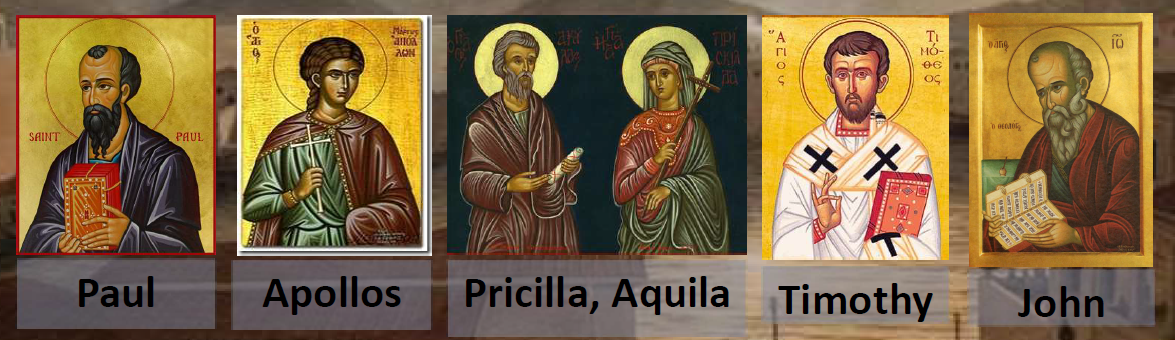
These political, religious, educational, cultural and trade hubs made Ephesus very influential in the region.  No wonder Paul stopped and spent more than 2 years there (Acts 19).  It is fair to say that, after Antioch, Ephesus was the most prominent church in the New Testament.  Other big apostolic leaders made Ephesus their headquarters, including Apollos, Priscilla and Aquila, Timothy and John. In some way, the church in Ephesus still has the greatest influence in the church today because many of the New Testament letters were written either from or to the church in Ephesus.

collage_ephesus_pastors
Apostolic leaders that settled in Ephesus for a significant time in the first century.

It is therefore not strange that the first church Christ addresses in his letters is the church in Ephesus.  By the time John penned these words of Jesus the Ephesian church was more than 50 years old – a second-generation church that had grown significantly and endured a few waves of severe persecution from various emperors.

Keep in mind that this short, personal letter to the Ephesian believers is part of a circular letter to the seven congregations (1:11) with the aim to comfort the persecuted believers and to correct their perspective in their struggle against evil.  As with each of these seven letters, this letter starts with a unique revelation of Christ, followed by a commendation, a condemnation, a charge, then a warning and finally a promise of reward.

[Read the full commentary of Revelation in Faithful to the End]

Faithful to the End is a simple commentary that helps make sense of the encouraging message of Revelation.

Quick links to full THE END Revelation Series posts

1  2  3  4  5  6  7  8  9  10  11  12  13  14  15  16  17  18  19  20  21  22  23  24  25  26

Uprooted | Nostalgic | Homesick

How often do you catch yourself reliving the best days of your life, your “Summer of 69”? Do you miss your old home, “watching the sunset over the Castle on the Hill”?  Listening  to songs such as these can evoke feelings of nostalgia.

The term was fist coined by 17th century Swiss medical student Johannes Hofer, combining two Greek words: nóstos (homecoming) and álgos (pain) .  He was alarmed at the number of Swiss mercenaries deployed in the lowlands of Italy and France who became sick, longing for home.  Symptoms included insomnia, fatigue, indigestion, stomach aches, etc.  Some doctors suggested this “Swiss ailment” was a neurological disease caused by brain and inner ear damage due to the constant clanging of cow bells in their Alpine homeland.

cow_culture_8

Today we know that everyone becomes nostalgic at times, that painful pleasure of remembering the good times. Anyone can get homesick. (Apparently 7 out of 10 adults still think of “home” as the one they grew up in!)  This longing for a particular time or place leaves a sense of being uprooted, the loss of stability and security, relationship and belonging.  And we all instinctively long for love, protection and comfort – feelings we normally associate with home and our childhood days.

How we relate to the past – the degree to which we indulge in or suppress nostalgia – can be helpful or hurtful.  For example, remembering the good old days during difficult times of transitioning reminds us that we are loved, cherished and valuable, increasing confidence and drive to push through the hardship of resettling in a new community or company.  In this way nostalgia is helpful to cope with the stress of change.

lost_in_crowd

But, as John Piper points out, our relation to the past can be hurtful in two extremes: both the neglect of the past (never going there) and the obsession with the past (constantly longing for it) can wreck your life.

Not surprisingly, Jewish composers also wrote a number of Psalms during spouts of nostalgia, later canonized for reflection and instruction.  One such example is Psalm 137, written by exiled Jews after 586 BC, deported as slaves into Babylon.  This song gives us insight into the unhealthy obsession of living in the past.

Psalm 137 opens with passionate unveiling of the emotional state of these uprooted people.  “1  By the rivers of Babylon, there we sat down and wept, when we remembered Zion. 2  On the willows there we hung up our lyres (harps).” They were heart-broken, defeated, without joy and unaware of the surrounding beauty.

But their hung harps were more than a sign of sadness.  The sense of uprootedness left these exiles with a loss of identity as captured in the fourth verse: “4  How shall we sing the LORD’s song in a foreign land?”  This central theme is the profound theological question these exiles battled with.  As the offspring of Abraham, they increased as God had promised, had possessed their own land, and was blessed to be a blessing to other nations.   How are they still God’s special people here as slaves in a pagan country?  Could these oppressed indeed God’s blessed? How can they be a blessing here in a foreign land?  Feeling uprooted left these Jews with a lack of confidence with who they are (identity) and what their role is in this world (purpose).

The Psalm goes on (verses 5-6) to expound the emotional state of these sad slaves, showing their obsessive longing for Jerusalem their (previous) home. Indeed, the writers pronounce a curse over themselves, should they ever let go of the joyful memories they had back home.  Jerusalem should always remain “my highest joy” (verse 6).  In these verses the exiles reveal what they truly feel: they would never again have goodness and pleasure as they enjoyed in Jerusalem.  They believed that those days were the good days, but now it is forever gone.  They will never enjoy life like that again.  These slaves were without a hope for a good future; all they expected was darkness and gloom.

Not only were the hopeless, but as the Psalm continues, we see that these exiles were angry and full of hateful vengeance.  They wished death and destruction for their Babylonians captors in the most violent ways (verses 8-9).  They also prayed disaster upon their Edomite neighbours who did not help them in their day of trouble but cheered at their destruction (verse 7).   In short, they were angry and bitter at these nations who caused the end of their “good life”.  “Our joyful and peace is gone, and it is all their fault!”

But God had not left his people; he never does.  To these uprooted people, heartbroken and hopeless, the Lord spoke through faithful Jeremiah:

Jeremiah 29:4-7

4  “Thus says the LORD of hosts, the God of Israel, to all the exiles whom I have sent into exile from Jerusalem to Babylon:


God impressed on them that they were not there by some demonic triumph, a cosmic coincidence, or even God’s rejection.   No, they are there by Sovereign design; the LORD of Heaven’s Armies had sent them there.  The Babylonians are merely his servants.
5  Build houses and live in them; plant gardens and eat their produce.  6  Take wives and have sons and daughters; take wives for your sons, and give your daughters in marriage, that they may bear sons and daughters; multiply there, and do not decrease. And what should they do as exiles in Babylon?  Build, live, plant, marry, increase. Don’t just survive and wait out the 70 years (verse 10) – thrive here! Do what God had commanded mankind to do: be fruitful, multiply, fill the earth, have dominion (Gen 1:27-28).  Prosper and live life to the utmost, even here.
7  But seek the welfare of the city where I have sent you into exile, and pray to the LORD on its behalf, for in its welfare you will find your welfare.


More specifically, even though you were brought here as slaves, seek the Shalom – that welfare and peace and joy that you experienced in Jerusalem – seek and expect the same here in Babylon.

God’s invitation to these uprooted Jews affirms the truth that shalom (the fullness of joy, peace and prosperity) is not locked up in a time or place.  His sovereign providence leads us in his purpose through the changing seasons, but in every season he invites us to share in his shalomn.

Can you identify with these uprooted, homesick and nostalgic exiles?  Do you have a longing for the good old days, fearing that those days are forever lost? I have good news for you: every story in the Bible shows that the best is yet to come as we hold on to God!

left_home

How do I deal with feeling Uprooted?

  1. Allow your nostalgia to overflow in thanks.

Psalm 136 calls Jewish worshipers to reflect on God’s faithfulness, reaffirming 26 times “His love endures forever”.  As these uprooted Jews would think back on the defining moments in their history through this song, thanking God for his faithful acts of deliverance and provision, their repeated thanks would affirm the truth that, again here in this present exile crisis, “His love endures forever.”

This is the power of thanksgiving: it reminds us of the loving care and persistent presence of God in our lives.  This truth gives us confidence for today, knowing we can bank on his love and goodness here, now – although we have been uprooted.

  1. Allow your nostalgia to overflow in grieving.

Nostalgia is a sense of loss of that which was good: the painful loss of a pleasant period in a peaceful place with precious people.  You remember the good times, but now it is no more.  From there the bitter-sweet sensation of nostalgia.

For my heart to be healed, I need to mourn this loss.  Neither suppression of the past, nor the obsession with the past will help me to move on. The process of grieving or lamenting allows the wounded heart to acknowledge the pain and trauma of loss, to work through the emotions and consequences of the loss.

I find it significant that more than half of the 150 psalms canonized in the Bible are songs of lamenting.  I find it equally significant that the prophet Jeremiah was able to help these Jews find meaning in their displacement, inviting them to shoot new roots and expect shalom even in exile – after he himself had wrestled through his Lamentation, also canonized in the Bible.  Once he found healing he could not only move on, but he could also help others grieve their losses.

Grief has many stages, but prayers like Psalm 43 and 137 are good examples of how Biblical authors have poured out their emotions of loss, expressing their emotions of shock, sadness and even anger in their prayers to God.

stages_of_grief_sml

  1. Don’t let nostalgia blind you to the beauty of God’s provision and presence: praise Him!

The homesick exiles were blinded by their nostalgia to the beauty of their new homeland.  Their belief that the good life was in Jerusalem and is now forever over made them miss the goodness and provision of God around them.

Indeed, every season has serves God’s purpose, He made everything beautiful in its time.” (Ecclesiastes 3:11).  There is bliss and beauty in today, and the discipline of praise brings it out and lightens our eyes to see God at work where we are.

  1. Let nostalgia stir your hope that the best is yet to come.

As for the heart-broken exiles of Psalm 137, the trauma of loss can snuff out our flame of hope, so that we may not expect any good to come.  But nostalgia is a reminder that in this life, amidst its pain and trauma, goodness has come.  Nostalgia is our way of holding on to the belief that there is goodness, joy, peace, belonging and love in this broken world.  And because God had given that in the past, He can do it again.

The Bible is filled with accounts of hopeless situations where people cried out to God, and the Lord turned the situation around for good.  It follows the lives of everyday people, often oppressed, who held unto the belief of God’s goodness and power, resulting in the most incredible and inspirational turnaround of events.

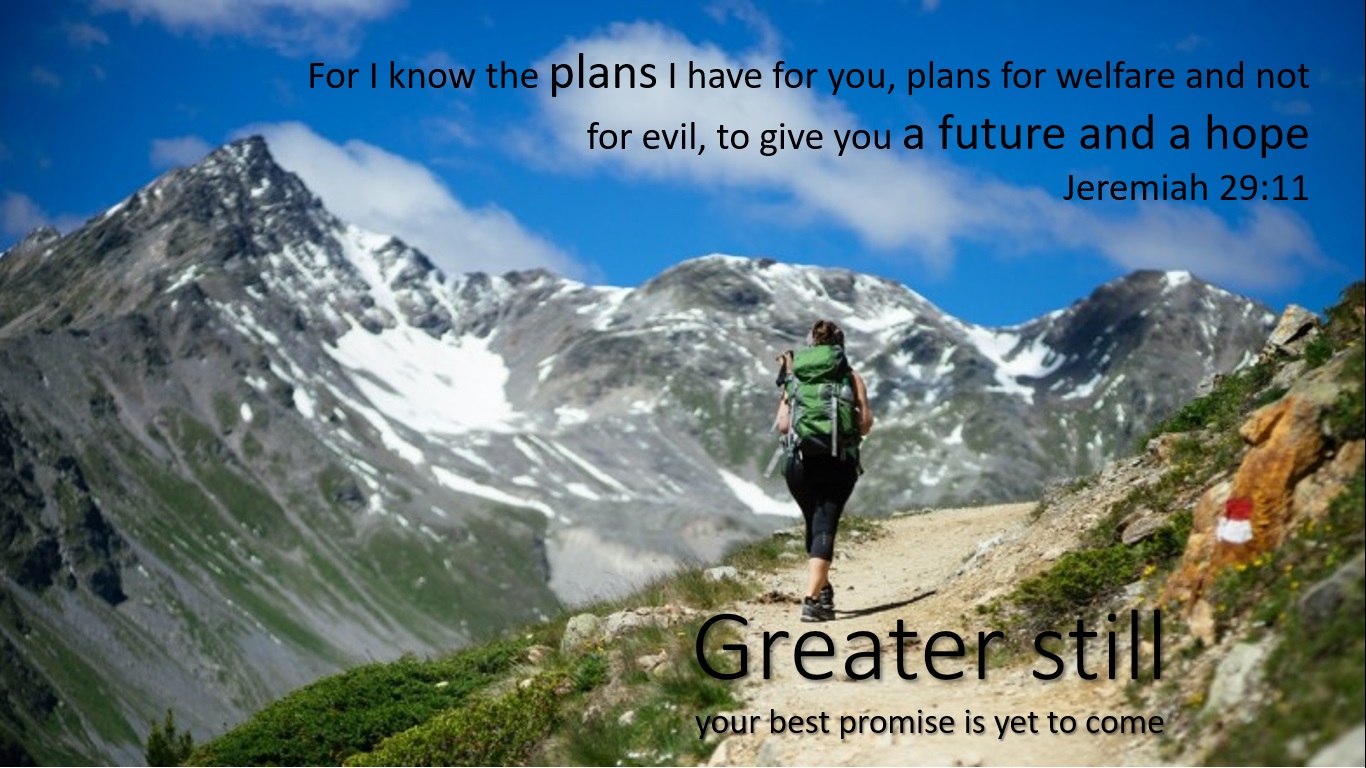
These teachings invite uprooted people to believe that the best is yet to come. Like Joseph, Naomi and Ruth, Ester, Daniel and his friends and countless other uprooted people in the Bible we can know that God makes all things work together for your good (Rom. 8:28).  God still has great plans for you – a hope and a future secure (Jer. 29:11). And even through the troubling times, God leads us on in victory upon victory (2 Cor. 2:14).  You might feel uprooted now, but watch this space: God is always at work.

Feeling uprooted?  Feel like hanging up your harp for good? 

Don’t lose heart!  Embrace your place.  Live as though God had sent you there.  Let those painfully-pleasant memories of nostalgia remind you of the reality of God’s goodness, and thank him for it.  Allow the pain of loss of that place and its people to pour through prayers of grief for your healing.  But don’t live locked in the past – open your eyes and praise God for his beautiful provision in your life today.  And let the memories of happiness remind you that indeed, there is goodness in God’s gift of life – and the best is yet to come! Watch as He makes all things new (Rev 21:5).

Willow_Grey

Greater still – the best is yet to come

If in this life we hope only in ourselves, in the best that we can dream up, delve up or deliver, then we have reason to be dreadful and live on in despair.  If our fate rests on the fullness of our faculty and fidelity then yes, we have reason to be frantic and fear the future.  Mankind is a mess.

But Christians have cause for hope, a reason to look up and expect the good.  Our surety of survival is in God, the eternally good and ever strong God.  Our security for today and faith for the future is not based on nature’s mood, on man’s motive or my own mojo.  We are hopeful because Our God Reigns!  And his arm is not too short to save, his ear not too deaf to ear.[i]  Our God is near, and He hears.

There is no place for hopelessness or defeatism in the heart and mind of a Christian.  Like the elder said to despairing John imprisoned on Patmos, God is saying to the church today “WEEP NO MORE!”[ii] Christ has triumphed and is already unfolding His universal reign of peace!”  Yes, Christ has come to reclaim God’s rightful reign and to redeem all of creation to Himself.  God is up to something great!

Because of God’s generous, faithful character and expanding reign, I believe that the best is yet to come!  Your tomorrow is better than today; expect to thrive and not only survive.  You can be sure that God’s reign is always expanding, his grace is always abounding, his glory ever more visible.  In God, your future is looking brighter still. The best is yet to come!

Greater_Still4

Your best life is yet to come.  Ageing does not mean fading; your best years are still ahead.  The psalmist recorded that “he who is planted in the house of the Lord will bear fruit in old age, he will be fresh and flourishing to declare that God is righteous!”[iii]  Our Lord Jesus always keeps the best wine for the last, and makes the latter glory outshine the former.[iv]

Is your life miserable now?  Then smile – in Christ, you can always expect better!  No matter what this life throws at you, God makes ALL THINGS work together for your good.[v]  That is your confidence of a good tomorrow!

Regardless where you are at in life, look up!  God’s plans are for better welfare, a better hope, a better future.[vi]  He has more and better plans prepared for you to walk in.[vii]  He had already written your book, prepared all your days[viii] – your life story is not over yet, but we know it ends in glory!  Come on, God is leading you upward, onward.  Can you recall some of the surprises he has showered over your path in the past?  Prepare your heart for more – your next leg is already littered with love. The best is yet to come!

Greater_Still5

The best you is yet to come.  When you look at the mirror, do you like what you see? Do you love whom you’ve become?  Cheer up – the best version of you is still being formed.   God has started weaving you in your mother’s womb,[ix] but He is not done with you yet!  You’re still “under construction” because God is ALWAYS at work in you shaping your character, growing your competence.[x]  The resurrection Spirit is EVEN NOW giving life to your body,[xi] transforming you for gory to glory – just keep your eyes fixed on Him![xii]  He is the not done with you yet – what He has started he will complete in you;[xiii] he is the Author and Perfecter of your faith.  Christ, your hope of glory, is alive and at work in you.[xiv]  The best is yet to come!

Greater_Still6

Your best victory is yet to come.  God always leads us on in victory, from glory to glory until we win our last fight in Christ by overcoming death.[xv]  I wrote previously that every scar is a reminder of a victory we have won in Christ, of our faith that has been tested, purified and approved.  “What does not kill you makes you stronger” is true for every Christian.  In all things we are more than overcomers in Christ![xvi]

You are stronger than you were before.  David first conquered the lion, then the bear, then Goliath, and later the Philistine armies.  Likewise, God is leading us through progressive victories.  Do not fear these future fights – in God’s providential wisdom you will not be tested beyond what you can bear.[xvii]  And for everything you face, His grace is sufficient and His strength is perfected.[xviii]  Heads up!  Your greatest victory is yet to come!

Another year is over.  Another year of God’s faithful love and preserving grace.  Another chapter in your book declaring “Thus far the Lord has brought us”.[xix]  But the story is not done yet: there are grander adventures to live through, more glorious victories to be won, greater love to enjoy. The path of your purpose is prepared with plentiful provisions and pleasures.   Look up! Be strong! Take courage! Nothing you will face tomorrow is impossible for God.  You are growing from glory to glory.  His mercies are new for every day, his grace sufficient for every challenge.  With God, the best is yet to come.  God is up to something great.


[i] Isaiah 57:1.

[ii] Revelation 5:4.

[iii] Psalm 92:13-15.

[iv] John 2:10.

[v] Romans 8:28.

[vi] Jeremiah 29:11.

[vii] Ephesians 2:13.

[viii] Psalm 139:16.

[ix] Psalm 139:13.

[x] Philippians 2:13.

[xi] Romans 8:11.

[xii] 2 Coronthians 3:18.

[xiii] Philippians 1:6.

[xiv] Colossians 1:27.

[xv] 2 Corinthians 14:14; 1 Corinthians 15:57.

[xvi] Romans 8:37.

[xvii] 1 Corinthians 10:13.

[xviii] 2 Corinthians 12:9.

[xix] 2 Samuel 7:12.

Known by my scars

This week I got a new scar.  The doctor says its not going to be a pretty one.  It’s on my calve, so I’m not too bothered about the mark.   Ironically, this scar fills me with gratitude and joy because it reminds me of what could have been – of what I was saved from.

I have another scar on my arm.  This one always brings a smile to my face as it reminds me of the night I got it.  I was was sixteen years old.   Me and my brothers were doing dishes.  I splashed oily water and Conrad ducked away, “accidently” stabbing me in the arm with the steak knife he was drying. There was a lot of blood and screaming. We all got a big fright! But a few stitches and cleaning up restored the peace.  This was thirty years ago; Conrad passed away two years ago.  I’m fond of the scar on my arm, because it reminds me of the love and the friendship we shared.  The sudden loss of my brother left an unseen scar, and somehow this old knife wound represents the loss I feel.

Just like the marks on a tree, our scars bear testimony to the things we lived through.  They give shape to and character to our lives.  The scars can never fully reveal the trauma we encountered, but like the marks in a tree trunk, our scars reveal our growth response to these events. our scars are evidence of how we healed.  As such, our scars tell the story of our resilience – what we endured and survived.

People tend to hide their scars, ashamed of the imperfections and afraid of the painful memories.  In contrast, the apostle Paul boasted in his scars[i] and listed the events which caused these scars (inside and outside) with gratitude and dignity, claiming that his scars are something to be cherished, even honoured. [ii]  How could our scars be something to be thankful for, something to be cherished and even paraded?  What can we learn from Paul about our scars and the trauma which caused it?

Firstly, each scars is a witness to my weakness, and therefore a tangible signs of grace.  We get scars because we are not bullet-proof.  Our scars are a testament to our vulnerability, our frailty.  Paul boasted in this weakness[iii] – his limitations or the end of his ability – because that’s where he experienced grace: the help and intervention from God.  The traumatic events Paul listed scarred his body, soul and spirit.  Violence and disasters left marks on his body; betrayal and abandonment wounded his soul; accusations and demonic torments injured his spirit.  Yet Paul cherished each scar – visible and invisible – as a reminder of God’s sustaining grace.  Without God’s grace Paul would have died, given up, or turned back from the call for his life.

One evening in our high school years, my brother Conrad took a test drive with a friend’s motorcycle – without a helmet.  Somewhere in the ride he accidently switched off the headlights. As he approached our house, another vehicle – who did not see him – turned in front of him without indicating.  Conrad crashed into the car, was flung in the air and landed headfirst on the tar.  We though he was dead, but God showed him grace.  He had a scar above his right eye as a daily reminder of the grace of God.

Likewise, my own scars are reminders of what I was saved from, and how I was restored.  They testify of God’s presence, providence and power at work in every situation that threatened my life.  The scar says “If it had not been for the Lord,[iv] this would have been my end… but God carried me through and restored me!”   As such these scars bring me daily comfort that God is always with me, and will turn everything I face today for my good.[v]  My strength may fail, but His strength will not.[vi]  When fear wants to overwhelm me, my scars remind me that “stronger is He that is in me” than what I may face in the world today.[vii]  I never face anything alone.[viii]

Scars - faith
This fireman has felt the sting of fire.

Secondly, my scars are witness to the tests I have passed.  Each scar – whether visible or invisible – tells a story of pain that I endured, of hardship that I was not spared. And therefore, as a believer in Christ, these scars are signs of faith that remind me that I was tested and purified as through fire.[ix]  Like Job, I kept on believing in the goodness and power of God in spite of the troubles I endured.[x] Through the pain, loss, or shame I kept on trusting in Jesus, believing that he has overcome the world.[xi]  As I walked through the fire of testing, my faith was proven and found to be real because I have come to trust God’s character more than my experience.

Looking at my scars as marks of faith bring me daily confidence.  My scars remind me that “nothing can separate me from God’s love” and that in every hardship I endure “I am more than a conqueror through Christ who gives me strength.”[xii]  In this sense each scar is an affirmation of my faith, adding confidence in the face of adversity.

Scars - hope
This Nigerian Christian faced the brutal hatred of this world. One day this will end.

Thirdly, my scars are witness to a fading, fallible world.   We only get scars on earth because the rule of sin and its decaying effect is limited to this fallen world of ours.  Our scars are caused by things like violence, sickness, calamity – and these have temporal power here.  The driving forces that bring us pain and leave us scars are often hatred, jealousy, greed, betrayal, or abuse – and these are only at work in this age.  But when Christ returns to reign there will be no more pain, no more sickness, no more calamity[xiii] – there will be no new scars in heaven.

Every scar reminds me that our world is fallen, and that this is why Jesus came to earth.  Seeing scars stirs my longing for the day when Christ will come to make all things new.[xiv]  As such our scars are signs of hope, reminders that Christ will bring an end to sin and suffering and establish His universal reign of peace. Looking at my scars in this light brings me joyful endurance, knowing that whatever I might face today is temporal; it cannot compare to the eternal glory that awaits me.[xv]

Lastly, my scars are reminders of Christ’s scars on his body. Jesus has scars on his body because he came to identify with me in my sin and suffering. Moved by love the Eternal Perfect One exchanged his pain-free heaven for our pain-stricken existence.  He willingly embraced our suffering to redeem us to Himself.[xvi]  This sacrificial love left the Eternal Perfect One scarred forever – as a Lamb having been slain.[xvii]

Our scars point us to His scars, a tangible reminder that we are greatly loved.  As such, my scars are signs of love.  He was marred in body, soul and spirit for our healing, peace and forgiveness.[xviii]  In this – His scars – His love for us is proven.[xix]  Looking at my scars in this way stirs my gratitude and devotion to Christ.

What scars do you carry in your body?  Ask yourself: How does this scar remind me of God’s sustaining grace? Can I see this mark as affirmation of my proven faith? How does this injury stir my hope in Christ’s return? And does this healed wound remind me of God’s immense love for me?

Now we can look at your scars and say with Paul: “We do not lose heart. Even though our outward man is perishing, yet the inward man is being renewed day by day. These light afflictions, which is but for a moment, is working for us a far more exceeding and eternal weight of glory…” [xxi]

[i] Galatians 6:17.

[ii] 2 Corinthians 11:23-33, 12:8-10.

[iii] See above.

[iv] Psalm 124:1.

[v] Romans 8:28.

[vi] 2 Corinthians 12:8-10.

[vii] 1 John 4:4.

[viii] Isaiah 43:2.

[ix] 1 Peter 1:6-7.

[x] Hebrews 11:6.

[xi] John 16:33.

[xii] Romans 8:35-37.

[xiii] Revelation 21:4.

[xiv] Revelation 21:5.

[xv] 2 Corinthians 4:17.

[xvi] Revelation 5:9.

[xvii] Revelation 5:6.

[xviii] Isaiah 53:4-6.

[xix] Romans 5:8.

[xx] If you read ‘spirit’ in this sense, it is helpful to think of identity, as well as your relational ability to love, hope and trust.

[xxi] 2 Corinthians 4:16-17.