
Where can we find the virtuous, honorable man?
Proverbs 31 describes in detail the characteristics of a virtuous woman – a truly inspirational picture of a person who with wisdom, selflessness and skills pours out her life to benefit her family and community. The description begs the reader to ask “If she does all this, but what does her husband do?” The answer: “Her husband is known in the gates, when he sits among the elders of the land.” (Proverbs 31:23)
At first glance, it might seem that, while this woman works effortlessly to provide for her family, her husband is relaxing with his peers in the public square. This thin reading has lead many to despise the absent husband of the virtuous wife. However, a contextual reading of this text in the Middle-Eastern culture of its day sketches the opposite picture.
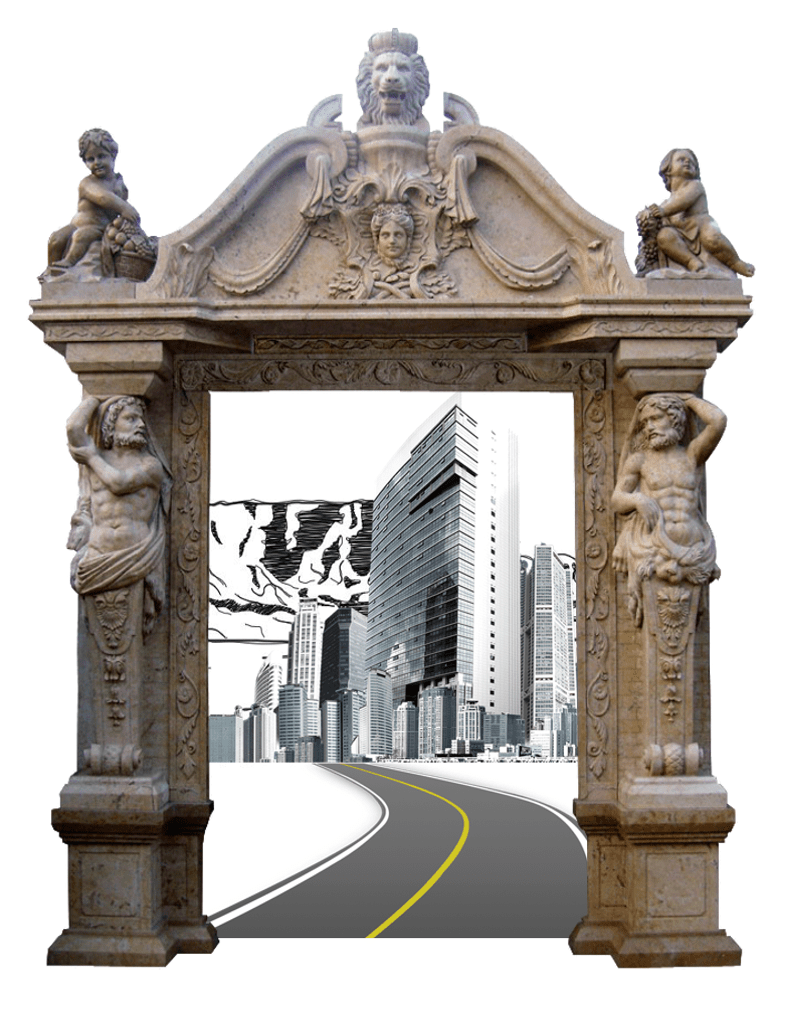
The Gates. City Gates were significant to preserve a peaceful and prosperous community. It was a barrier to the dangers on the outside as it completed the city walls, but it also formed the insiders into a closed community, allowing for common customs and regulations which typified its culture. Within the city gates one was safe.
These gates were the most vulnerable part of a city’s structural defense. As such, city gates were built as a strategic stronghold, often with watch towers, a moat with drawbridge and sharp spikes to fortify the city’s access point.
As one enters the city gate, one would generally walk onto the city square – an open plain used for town gatherings such as communal threshing floor, the village market, court room, and civic center for both administration and celebrations.
Whoever possessed the gates of the city had rule of the city.
That is where the man in Proverbs 31:23 sat. What did he do at the gate all day long?
The Elders at the Gates. Elders were chosen from among the people groups within the city as wise, honorable representatives to govern and administer the city. They were called out of the hustle of everyday life to be concerned with the wellness of their community. They ensured fair commercial practices, judged civil disputes, administration, ensured the cultural celebration and the safety of the city. Whoever sat in the city gates guarded the culture of the city.
In short, the Bible reveals that city elders were tasked to cultivate and preserve an atmosphere of justice, peace, and joy for all its inhabitants (by wise rule). What the Bible calls Shalom.
At the city gates, priests would address moral issues according to the Law, prophets would call for justice and the fear of God, and the decrees of the reigning king would be read. These teachings, prophesies and decrees were entrusted to the elders for implementation, for the good of the whole community.
In short, elders controlled access to and the atmosphere of the city.
“This is interesting, but what does this have to do with me?” you might ask. If you are a follower of Jesus, then everything!
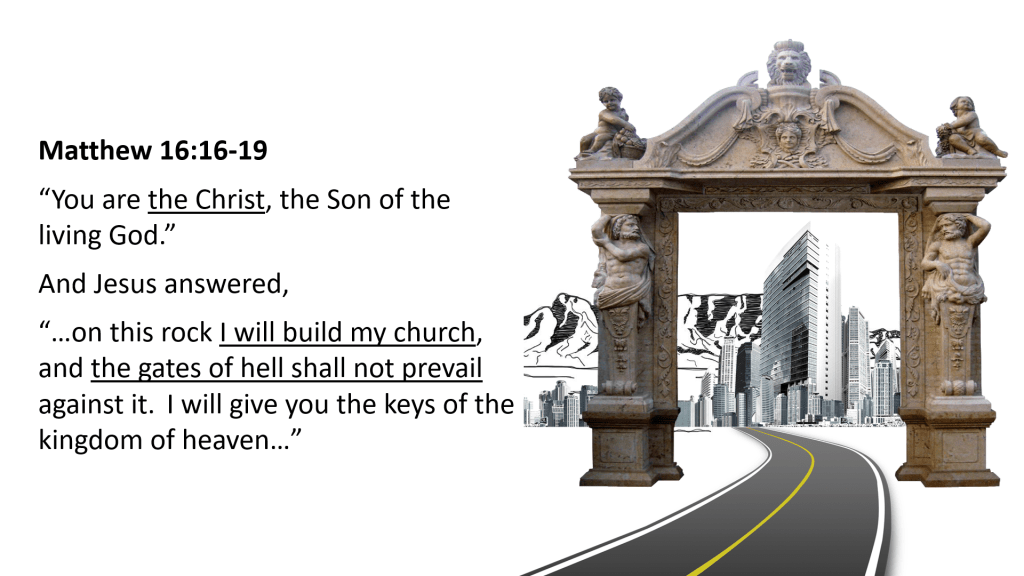
When Paul addressed the church, for instance in 1 Corinthians, he names them “ekklesia (the Church) tou theo (of God) en korintho (in Corinth),” specifying that they are ones sanctified and called to this place by the Lord Jesus Christ. The word ekklesia in its context refers to the elders called out of the hustle of everyday life, summoned to meet the God, the Great King, about His rightful reign in this city.
The church are the chosen ones, called to sit as elders in the gates of the city, to ensure the reign of God in their community.

When we gather, we represent our community, bearing its current concerns, gain wisdom from the Rule of God, listen to His call justice, and how to bring about righteousness, peace and joy to our people. Male and female, young and old, educated or not – we are all ekklesia, called out ones summoned to serve the Kingdom of God in this city. We are called to be ambassadors of the Great King in the gates of our cities.
When we consider this call to guard the gates, we should also consider the blessing God promised to us as Abraham’s decedents through faith: “I will surely bless you, and I will surely multiply your offspring as the stars of heaven and as the sand that is on the seashore. And your offspring shall possess the gate of his enemies, and in your offspring shall all the nations of the earth be blessed, because you have obeyed my voice.” Genesis 22:17-18
When we rightly possess the gates, our communities enjoy God’s peace (blessing). But our modern cities generally don’t have gates. If we are called to sit and govern, where do we yield our influence?
The 7 Mountains Mandate. In 1975, in the heyday of the Jesus Movement that awakened a youth missions movement across the globe, Loren Cunningham (of YWAM) and Bill Bright (of Campus Crusade for Christ) met for lunch. Each received a revelation from the Lord they had to share with the other about what it takes to “disciple a nation” and “win a nation for Christ.” They were so shocked that their Revelations that day were exactly the same: to “disciple a nation” and “win a nation for Christ” involves more than individual conversions: one would have to transform the culture by “conquering seven cultural mountains” (Cunningham) or “possess seven gates of culture” (Bright). See the short embedded video of Loren Cunningham’s account below.
The seven gates of culture (or seven mountains), pertain to Media, Government, Education, Economy, Religion, Family and Celebration/Arts, with Science and Technology frequently added to the list. These spheres of influence into a community orient the dominant culture of the day either towards God’s Kingdom or another value system.
These revelations by Cunningham and Bright are in line with God’s Old Testament Template for society in the Law of Moses, as Landa Cope unpacks in her book. In these first five books of the Bible God gives the blueprint for a society – his Kingdom Law of shalom – prescribing the wholesome (“blessed”) life in each of these domains.
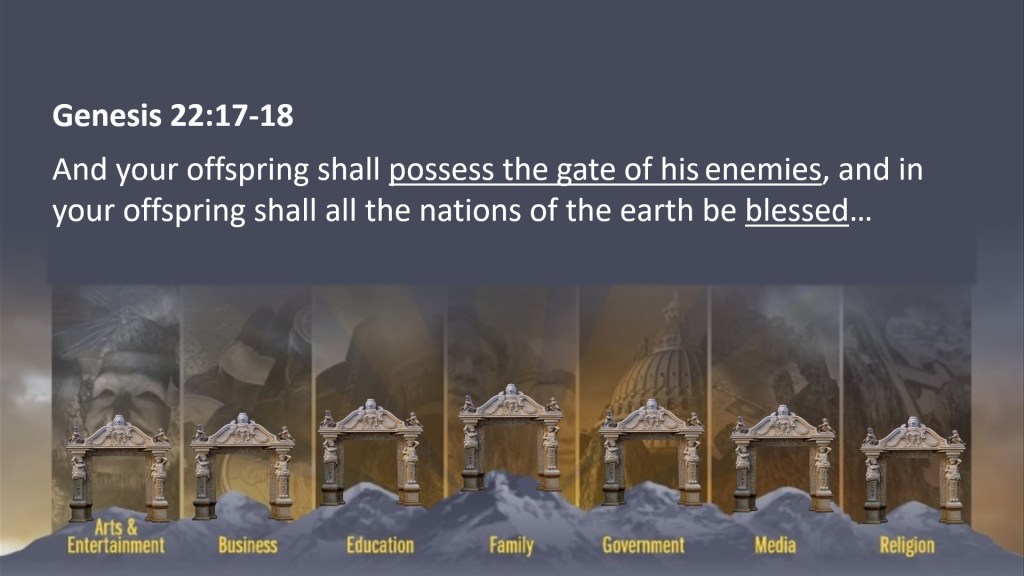
To subject a nation to God’s Kingdom and receive his blessing, the church are called to possess these gates in society to bring about justice, peace and joy.
If you are part of the church of God, called to represent and reinforce his good reign in your community – in which gate do you sit? How has He gifted you to bring his rich culture of peace to your city? What are the concerns that press on your heart? Be bold to step out and act for God’s sake – Christ promised the grace to conquer and the reward for your faith.

 walklikejesus