The End? All things new

The renewal of all things: this is the message of Revelation 21, our 25th study in the encouraging book.  A recording of this study is available on the Shofar Youtube channel.

What do you deeply desire for the future, your future?  What is your ultimate hope?  If every problem is fixed, every desire is met, and once all things are restored again, what will your reality be like?  How confident are you that this will happen?

This hope for God’s renewal of all things is the focus of John’s vision Revelation 21.  His only invitation to the reader is to “behold”, to picture the beauty of God’s renewed creation.

A physical future.  We are often tempted to think of life after this as only spiritual, eternally living a disembodied existence.  We imagine floating on the clouds, enjoying the bliss of an unending spa while singing praises with the angels.  We think that when Jesus returns, we will once and for all be rid of our sensual bodies and the earth, as though this material world is the root of the problem.

The idea that matter is inherently corrupted or “lesser than spiritual” comes from Greek philosophy.  Yet the  Bible teaches that God is the creator of our material world and that everything he made “was good”.  Mankind he made with body and soul, breathing His very spirit into them, and affirmed them as “very good”.  Then came the fall and the corruption of sin.  Still, we are called to “glorify God in our bodies”, even in the most mundane things like “eating or drinking” (1 Corinthians 6:20, 10:31).  God is the one who gives us these material things to enjoy (1 Timothy 6:17).  Our material world is not inherently the problem – the corruption of sin is, and that affects both our earthly and heavenly realms.

new_heaven_earth3

The first thing John notices of God’s great renewal is the continuity of our lives as we know it – that our eternal existence will be both physical and spiritual, lived out in “a new heaven and a new earth” (21:1; compare Isaiah 65:17-25).  God’s promise is the renewal of our physical and spiritual existence.  So Paul’s cry for deliverance “from this [wretched] body of death?” (Romans 7:24-25) is not answered by being eternally free of a body.  No, “when we see [Christ], we’ll be like him” – having the same resurrected body as he has.  We don’t know much, just that our resurrected bodies will be “imperishable”, “glorious” and “powerful” (1 Corinthians 15:42-43).  Eternally free of corruption and at peace – as it was in the Garden.

Free of fear and flaw.  The next thing John notices of this renewed creation is that “the sea was no more” (21:1).  In this apocalyptic genre, John is not trying to say that the new earth will be one big continent without oceans.  (Do I hear the surfers and divers sighing in relief?)  As mentioned in a previous post, the sea in ancient literature represents everything mysterious and dangerous, all the hidden forces of evil.  In stating that the “sea was no more,” John sees a world where there is no more evil, and therefore, there is no need to fear.  It speaks of a life without terror, loss, and lack.  John clarifies this by writing, “Death shall be no more, neither shall there be mourning, nor crying, nor pain anymore, for the former things have passed away.” (21:4)  O, what peace awaits us!
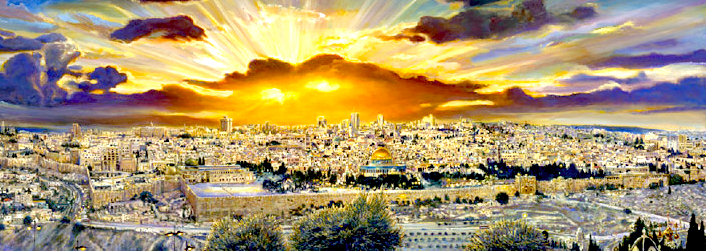
NewJerusalem

A glorious city.   [Read the full commentary of Revelation in Faithful to the End]


Faithful to the End is a simple commentary that helps make sense of the encouraging message of Revelation.

Quick links to full THE END Revelation Series posts

1  2  3  4  5  6  7  8  9  10  11  12  13  14  15  16  17  18  19  20  21  22  23  24  25  26

The End? Reasons to rejoice

The contrasting conclusions in this 19th chapter of Revelation bring much hope to suffering believers.  A recording of this 23rd study in our series through Revelation will be available on the Shofar Durbanville Youtube channel.

As Christians, we want to believe that God will (and should) protect us from hardships.  Even though our news feeds are filled with the reality of hardships today and our Bibles are stories of suffering saints, we are often stunned at the sting of suffering.  The early believers were warned by Peter to “not be surprised at the fiery trial when it comes upon you to test you, as though something strange were happening to you. But rejoice…” (1 Peter 4:13; compare Romans 5:3-5).  What contrast!  Yet this verse is such a good summary of the message Revelation conveyed to its first readers/hearers.

What is there to rejoice in when you suffer?  Paul wrote that believers should “rejoice in hope, be patient in tribulation, be constant in prayer” (Romans 12:12).   Along with patience and prayer, rejoicing in hope carries believers through times of trouble (compare Hebrews 12:1-3)

Hope_offspring_Abraham
God’s promise to Abraham – a picture of hope.

Images of hope.  Hope is the confidence that things will end well, an image that depicts a desired outcome. It is more than a target – these images move us deeply as they invite us to envision the promise as a fulfilled reality.  These images of hope give a reason to go on – the assurance that my endurance will be rewarded.  To Abraham, it was the stars above and the sand in his toes that symbolized his offspring.  To Joseph, it was the dreams of his reign that kept him faithful to God through enslavement and imprisonment.  

Revelation 19 paints three pictures of hope meant to spur on the suffering saints: Babylon’s destruction, the marriage of the Lamb, and victory over the Beast and his False Prophet. Seeing these images will stir the same joyful hope in us today.

Babylon_destroyed2

Babylon’s destruction (9:1-8). Chapter 18 depicts the fall of Babylon, representing the destruction of each and every worldly system that sets itself up against God and His rightful reign. The saints are called to “rejoice” over her destruction (18:20); chapter 19 opens with this rejoicing.

John hears four “hallelujah” cries, with four reasons to rejoice over the end of this evil empire.  The first shout celebrates God’s justice that had been served against Babylon’s cruelty and injustice (19:1-3). The saints were redeemed from oppression, and their enemies were destroyed.

The second shout John hears celebrates Babylon’s destruction as final and eternal – perversion had been destroyed once and for all (19:3-4).  Creation had been fully rid of lust, greed and pride, to never seduce the world again.

The third set of shouts celebrates the end of evil’s reign on earth; God’s reign had come, having triumphed over his enemies (19:6).  Righteousness, peace and joy will govern the earth forever (Romans 14:7)!

Happily ever after (19:7-8)…  [Read the full commentary of Revelation in Faithful to the End]

Faithful to the End is a simple commentary that helps make sense of the encouraging message of Revelation.

Quick links to full THE END Revelation Series posts

1  2  3  4  5  6  7  8  9  10  11  12  13  14  15  16  17  18  19  20  21  22  23  24  25  26

The End? The end of Evil

This 22nd post in our series through Revelation studies the message of chapter 18. A recording of this is available on the Shofar Durbanville Youtube channel.

We use metaphors in our daily conversations to bring across rich ideas.  We refer to “Wall Street” collectively as the market economy system.  “Hollywood” is synonymous with the movie industry.  “Newspapers” rarely refer to printed media but rather journalism as a whole.  The “Cayman Islands” are synonymous with tax havens.   In the same way, we use words like “The East”, “The West”, or “9-11” to bring across collective ideas and, with it, powerful sentiments.

Revelation is full of metaphors that are meant to move its readers emotionally.  We read about Christ being the Alpha and Omega, the Bright Morning Star, the Lamb of God, the Lion of Judah, etc.  Judgments are depicted as seals, trumpets and bowls.  The Church is called golden lampstands, the 144’000, the Bride of Christ, the New Jerusalem, etc.  In contrast, Rome is depicted as the Beast, the Great Harlot, Babylon, etc.  Just as the 144’000 refer to God’s saints through the ages (7:4-8)Babylon also refers to more than Rome.  It refers to all who “want to make a name for themselves” (Babel, Genesis 11:4), any and all empires or ideologies that resist God and his reign.

Revelation 18 paints the picture of the destruction of Babylon with a funeral scene. In it the Author alludes to the judgments of the pagan cities Sodom and Gomorrah (Genesis 19), ancient Babylon (Is 13:19-21) and Edom (Is 34:11-17).  John’s vision reveals three reasons for the destruction of Babylon – a warning to all.

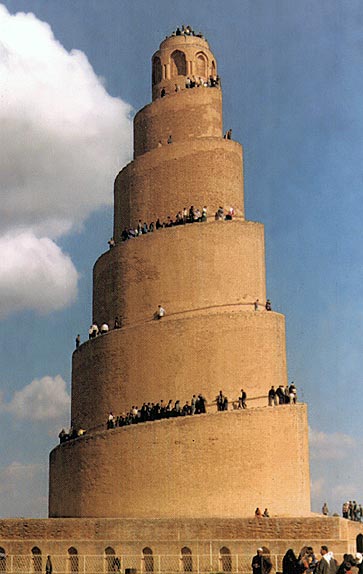
tower_Babel0
Al Samara, Iraq.

Self-glorification (18:7-8). “Because she glorified herself”, God poured out on her the seals and trumpets and bowls.  Six times in this chapter, Babylon is called “great” (18:2, 10, 16, 18, 19, 21); like ancient Babel, this city has succeeded in making a name for herself (Genesis 11:4).  Her boasting alludes to the arrogance of King Nebuchadnezzar who said “Is not this great Babylon, which I have built by my mighty power as a royal residence and for the glory of my majesty?” (4:30).  That very moment God brought the proud king down.  Indeed, “pride goes before destruction” (Proverbs 16:18). Indeed, “God resists the proud, but gives grace to the humble” (James 4:6).

The self-glorification and destruction of Babylon are in stark contrast to the thankful humility and exaltation of the New Jerusalem, which “has no need of sun or moon to shine in it, for the glory of God gives it light, and its lamp is the Lamb.” (Revelation 21:23)

Roman_Wealth
Emperor Crassus, the richest man in his time (www.nationalgeographic.com)

Power, prosperity and perversion (18:3).  The Caesars of Rome promised peace and prosperity to all who submitted to their rule through the Pax Romana.  The life they offered was one of sensuality, wealth and security through its military might.  To the first recipients of Revelation, “Babylon” pointed to Rome.  In this chapter, we see three groups of people mourning its destruction: “Kings” representing the pursuit of power, “merchants” representing the pursuit of prosperity, and “ship masters and sailors” representing the pursuit of immoral pleasures (18:9,11,17).  The Author shows that Babylon is destroyed because it seduces and ensnares people with the lure of power, wealth and immoral living. 

The bulk of the chapter is directed at Babylon’s failed promise of prosperity and its lure of “luxury” (repeated three times 18:3,7,9).  Riches are said to be “deceitful” (Matthew 13:22) because it promises joy and peace – the fullness of life – but Jesus warns that life does not consist in the accumulation of wealth and possessions (Luke 12:15).  The same can be said about Babylon’s lies promising power and sensuality…

 [Read the full commentary of Revelation in Faithful to the End]

Faithful to the End is a simple commentary that helps make sense of the encouraging message of Revelation.

Quick links to full THE END Revelation Series posts

1  2  3  4  5  6  7  8  9  10  11  12  13  14  15  16  17  18  19  20  21  22  23  24  25  26

The End? The struggle is real

In 21st post in our study of Revelation we look at the Fall of Babylon (chapter 17). A recording of this post is available on the Shofar Durbanville Youtube channel.

We are easily tempted to heroify the struggle for faith in the early church and downplay our own challenges to remain faithful to Christ.  In doing so we diminish our battles and remain ignorant of the dangerous evil forces waging war against us (Ephesians 6:12; 2 Corinthians 10:3-5).    The spiritual forces opposing us within our own culture are real and could be life-threatening to our faith. (Do you have friends or family who have drifted away from Jesus?)  Therefore, we should not be ignorant of the schemes of Satan (2 Corinthians 2:11).  Revelation 17 unveils the satanic forces within the 1st century Roman culture, Christ’s judgment on it, and how to overcome it.  A careful look at their struggle within their own seductive culture will unmask our struggle within our culture – so this message becomes personal. 

This chapter unveils three seductive lies which is potentially lethal to faith in God, as well as three truths to overcome Satan’s scheme in these lies.

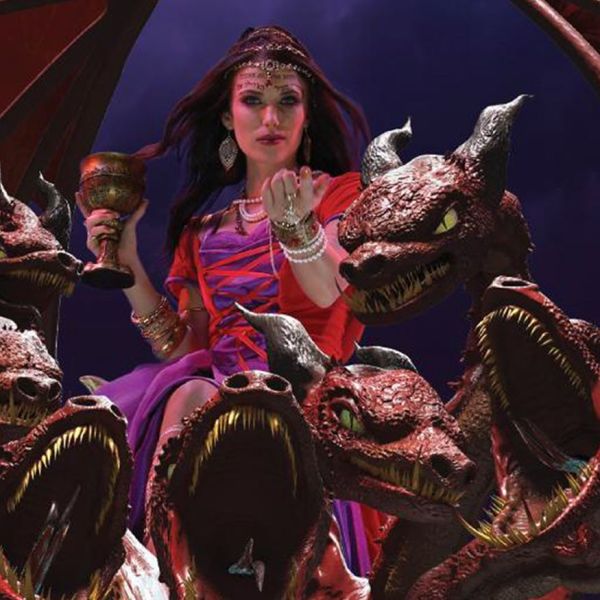
Absolute autonomy.  John sees Babylon, the Great Harlot, riding on the Beast, superior over many nations and people groups on many waters (nations and people groups) (17:1,3,5,15).  All the rulers on earth are said to be seduced and subjected to her (17:2, 18). She is the one responsible for the death of God’s saints through the ages, as well as witnesses of Jesus, as she resists their message of the reign of God in Christ (17:6).

beast_Rev17

In John’s day this clearly pointed to Rome, the ancient city surrounded by seven mountains from which the empire was ruled (17:9; 18).  But Rome was not the first or the last city to be named Babylon (17:9-10): the Old Testament prophets also referred to Nineveh, Tyre, and Greece as “Babylon”. ) Original Babylon was named after Babel (Genesis 11:4), the first city that revolted against God’s rule. Afterwards, Babylon became synonymous throughout the Scriptures with humanity’s claim for self-rule, self-sufficiency, and self-seeking.  This is an extension of mankind’s original sin in the Garden – succumbing to the temptation to decide what is good and right so that I may satisfy my needs all by myself.  As such, Babylon represents all of mankind who choose to live in sin, to live apart from God and his rule.

Why then the name Babylon the “Mother of all harlots” (17:5)?  Scripturally, spiritual idolatry is likened to sexual immorality in that every single man and woman is created by God: “from him and through him and for him are all things” (Romans 11:36; refer Hosea; Ezekiel 16; Isaiah 3).  Each person belongs to God, as a husband or wife belongs to his/her spouse.  Therefore, denying him and living as though we do not belong to another to live for our own pleasures is the spiritual equivalent of sexual infidelity in a marriage. And this is the seductive heresy of Babylon: “I belong to no-one; I will decide what is right and wrong and give answer to no-one. I am my own master!”

Do you see this lie at work in our culture, in the undertones of films, music, advertisements and career pursuits? Do you hear this voice in your head when you are tempted to deny God and serve yourself – like most people in society?

beast_Rev17_2

Luxurious living. John is mesmerized, almost hypnotized by the image of the seductive Babylon – in spite of her brutality (17:6-7).  She is displayed in great power (over the nations, mastering the beast (17:2-3, 15), arrayed in opulence and glamour (17:3-4), and oozing sexual seduction (17:2).  She is the epitome of John’s description of sin: “the lust of the flesh, lust of the eyes, the pride of life” (1 John 2:16)  

The picture John sees is the promise of the fulfilment of all our desires.  Hedonism is calling to us: “Look at me: I can fulfil all your desires!” All she asks is to stop resisting, to give in and enjoy her.  She will give you life!   Can you hear her call in our sensual, self-seeking culture?  Do you believe her?

It’s beautiful to see here how God is not rebuking believers for their sensual desires.  Rather, he makes the readers aware that resisting sensual temptations in this self-gratifying culture amounts to waging spiritual war.  We are taking our thoughts captive, breaking down strongholds, battling principalities and powers (2 Corinthians 10:1-5; Ephesians 6:12).  Christ helps believers to see the true nature of this Beauty and her Beast: Her beauty is skin-deep; she is vulgar, blood-thirsty and downright evil (17:3).  The message to believers is clear: resist her and live, or succumb to her temptation and die (compare with the seductress of Proverbs 5:3-6 and 7:6-27). 

The futile fight.   [Read the full commentary of Revelation in Faithful to the End]

Faithful to the End is a simple commentary that helps make sense of the encouraging message of Revelation.

Quick links to full THE END Revelation Series posts

1  2  3  4  5  6  7  8  9  10  11  12  13  14  15  16  17  18  19  20  21  22  23  24  25  26

The End? Be Watchful!

This 7th post in our reflective study through Revelation hones in on the letter to Sardis (3:1-6).  A video recording is available on the Shofar Durbanville Youtube channel. See the link in the image below.

Revelation, a prophetic letter written in the Jewish apocalyptic genre, was written to seven churches during the harsh reign of Emperor Domitian (AD 90-92) to comfort and challenge them in their struggle against the evil they endured.  As is typical with this symbolic genre, Revelation draws much from the Old Testament canon to reveal what is at play in their day.  In noting these symbolic references and the historical context, we get a clear understanding of the intended message to the first readers, which in turn breaks open the word of encouragement and exhortation to us in our day.

collage_Sardis

This is the case with our reading of Christ’s message to the church in Sardis today.  Sardis (present-day Sartmustafa in western Turkey) was once an impenetrable mountain fortress, a wealthy agricultural and wool-trading city characterized by arrogance associated with religious adherence and learning.  Temple ruins and statues of the gods of Dionysus (Roman name Bacchus), Artemis, and Cybele remain as witnesses to the culture of the day.

Collage_Siege_Sardis_Babylon
These images above depict the Siege of Babylon and the Siege of Sardis – two “impenetrable cities” conquered by Cyrus the Great. The ruins of Sardis are on the top of the cliffs (right top and bottom).

During his Persian conquest, Cyrus the Great laid siege to both the impenetrable cities of Sardis (547 BC) and Babylon (539 BC).  The prophet Daniel describes the night of the Fall of Babylon in the Bible.  The arrogance of emperor Belshazzar and this great city led to its fall when besieged by the Persian army, they continued feasting, trusting in its secure walls.  That night, the Lord wrote in blood on the palace walls, “MENE, MENE, TEKEL, UPHARSIN…—God has numbered the days of your reign and has brought it to an end… you have been weighed on the balances and have not measured up… your kingdom has been divided and given to the Medes and Persians.” (Daniel 5:24-28).  Ironically, this siege is known as the Bloodless Battle: Cyrus the Great simply diverted the Euphrates River, which flowed through the city and marched his army into the capital.  Babylon woke up to a conquered city.

The historical Lydian capital Sardis fell in the same way: while the citizens kept their feast, trusting in their ancient, secure walls, a Persian scout noticed how a lookout’s helmet fell and how he retrieved it through a gap in the wall.  That night, Cyrus led his army through that gap, surprising the guards who were enjoying the feasting inside.  This arrogant security sets the background and tone for Christ’s letter to the church in Sardis (Revelation 3:1-6).

The revelation of Christ (3:1a). Christ reveals himself as … [Read the full commentary of Revelation in Faithful to the End]

Faithful to the End is a simple commentary that helps make sense of the encouraging message of Revelation.

Quick links to full THE END Revelation Series posts

1  2  3  4  5  6  7  8  9  10  11  12  13  14  15  16  17  18  19  20  21  22  23  24  25  26