This post, the 8th in a series on Revelation, looks at Christ’s letter to the church in Philadelphia (Revelation 3:7-13). A recording of this session is available on the Shofar Durbanville YouTube channel as part of the Revelation Series.
During the reign of Domitian, emperor of Rome (AD 90-92), Christians were persecuted for refusing to worship him as “King of kings, Lord of lords.” He charged the Roman army and Roman courts to cleanse his realm from any subjects who denied him this glory. Not only did the state persecute the disciples of Jesus, but the trade guilds of the day refused to do business with people who did not worship their pagan gods, claiming they were the cause of lousy karma resulting in natural disasters. Christians were especially despised by the Jews for worshipping Jesus as God.
This left first-century Christians generally destitute (unemployed), persecuted by the state, hated by their Greek and Jewish neighbours, and pushed into the corners of society. These social pressures, in a world pursuing sensual pleasure and social power, filled with pagan spiritualism, left believers vulnerable to doubt, desertion and dualism (to believe in Christ yet live like the pagans). After all, if indeed Christ is Lord of all, why should they suffer like this? Where was their God? Will he still return to reign?
These were the cries of the apostle John while imprisoned on Patmos when Christ revealed himself as the One among the Lampstands – present among his church. This letter to Philadelphia (Revelation 3:7-13) is the fifth church Christ addresses in the opening section of the Revelation (unveiling) John received.
Remains of Ancient Philadelphia testify to the prominence of massive pillars – a sense of security and stability in a city plagued by earthquakes.
Philadelphia (“brotherly love”) is situated in the fertile Kuzucay valley between Sardis and Laodicea. The city was built by Pergamon King Eumenes, who named it after his love for his brother Attalus. During the first century, the town was renamed often, from Decapolis to Flavia (in honour of Emperor Vespasian AD 69-79), to Neo-kaisaria. The city was also called “Little Athens” because its many pagan temples and public buildings were set on propagating Greek culture within Asia.
This city was known for the quality of its wine, for the colour of its “burnt soil” (volcanic ash) and for the frequent earthquakes it suffered. These tremors caused many to flee the safety of the city walls, choosing to stay outside the city in fear of the prominent structures collapsing on them. The size of the pillars that remain today indicates the tenacity of the early settlers to build a civilization in this unstable place. As such, these enduring pillars provide a proper context for the letter addressed to the church in Philadelphia.
The Revelation of Christ (3:7). In this volatile, insecure environment, Christ reveals himself to this congregation as… [Read the full commentary of Revelation in Faithful to the End]
Faithful to the Endis a simple commentary that helps make sense of the encouraging message of Revelation.
Quick links to full THE END Revelation Series posts
This 7th post in our reflective study through Revelation hones in on the letter to Sardis (3:1-6). A video recording is available on the Shofar Durbanville Youtube channel. See the link in the image below.
Revelation, a prophetic letter written in the Jewish apocalyptic genre, was written to seven churches during the harsh reign of Emperor Domitian (AD 90-92) to comfort and challenge them in their struggle against the evil they endured. As is typical with this symbolic genre, Revelation draws much from the Old Testament canon to reveal what is at play in their day. In noting these symbolic references and the historical context, we get a clear understanding of the intended message to the first readers, which in turn breaks open the word of encouragement and exhortation to us in our day.
This is the case with our reading of Christ’s message to the church in Sardis today. Sardis (present-day Sartmustafa in western Turkey) was once an impenetrable mountain fortress, a wealthy agricultural and wool-trading city characterized by arrogance associated with religious adherence and learning. Temple ruins and statues of the gods of Dionysus (Roman name Bacchus), Artemis, and Cybele remain as witnesses to the culture of the day.
These images above depict the Siege of Babylon and the Siege of Sardis – two “impenetrable cities” conquered by Cyrus the Great. The ruins of Sardis are on the top of the cliffs (right top and bottom).
During his Persian conquest, Cyrus the Great laid siege to both the impenetrable cities of Sardis (547 BC) and Babylon (539 BC). The prophet Daniel describes the night of the Fall of Babylon in the Bible. The arrogance of emperor Belshazzar and this great city led to its fall when besieged by the Persian army, they continued feasting, trusting in its secure walls. That night, the Lord wrote in blood on the palace walls, “MENE, MENE, TEKEL, UPHARSIN…—God has numbered the days of your reign and has brought it to an end…you have been weighed on the balances and have not measured up… your kingdom has been divided and given to the Medes and Persians.” (Daniel 5:24-28). Ironically, this siege is known as the Bloodless Battle: Cyrus the Great simply diverted the Euphrates River, which flowed through the city and marched his army into the capital. Babylon woke up to a conquered city.
The historical Lydian capital Sardis fell in the same way: while the citizens kept their feast, trusting in their ancient, secure walls, a Persian scout noticed how a lookout’s helmet fell and how he retrieved it through a gap in the wall. That night, Cyrus led his army through that gap, surprising the guards who were enjoying the feasting inside. This arrogant security sets the background and tone for Christ’s letter to the church in Sardis (Revelation 3:1-6).
The revelation of Christ (3:1a). Christ reveals himself as … [Read the full commentary of Revelation in Faithful to the End]
Faithful to the Endis a simple commentary that helps make sense of the encouraging message of Revelation.
Quick links to full THE END Revelation Series posts
This post is the fourth in a series on the book of Revelation. The link below takes you to a video recording of this blog post.
How does one endure hardship, and why? Why does God allow his people to undergo seasons of suffering? And where is God when it hurts? These are some of the questions that Jesus answers in the Revelation, a circular letter written by the apostle John to seven congregations in Asia Minor during the tyrannical reign of Emperor Domitian (AD 90-92).
Polycarp, Pastor at Smyrna (69 – 155 AD)
“Eighty-six years I have served Him, and He never did me any injury: how then can I blaspheme my King and my Saviour? …You threaten me with fire that burns only for an hour… but you are ignorant of the coming judgment and of eternal punishment reserved for the ungodly. What are you waiting for? Bring on what you will!”
These were the last words St Polycarp, a famous martyr during another wave of heightened Roman persecution, revealing the church’s grit and attitude in Smyrna. Polycarp was a pupil of the Apostle John and probably the “angel of the church” (messenger or leader) in Smyrna whom Jesus was addressing in Revelation 2:8-11.
Smyrna, present-day Izmir in Turkey, printed coins which claimed it was “the biggest and most beautiful city in Asia.” This coastal city was prosperous because of the trade routes and its natural beauty. The town was filled with magnificent temples and statues – some of these are well preserved today. The figure of Bacchus (Roman) or Dionysus (Greek), god of wine and immoral revelling tells us much about the day’s culture. So also, the statue Cybele, mother of the gods, reveals that in this city, women were honoured or even venerated within certain people groups. The citizens of this Greek city were loyal to Rome, dedicating a temple to the goddess Roma around 195 BC. It also had a temple preserved for the Imperial Cult, devoted to worshipping the emperor.
Persecuted by the Jews. At the end of the first century (AD), Smyrna boasted a large community of Jews, bolstered by the migration of Judeans after the destruction of Jerusalem during The Jewish War (a significant rebellion against the Roman Empire, 66 AD – 73 AD). These Jews were especially hostile to Christians – in part because during the siege of Jerusalem (70 AD) Christian Jews fled the city (prompted by a prophetic Word from the Lord), just before the total destruction of the city and its temple. Also, the Jews viewed the worship of Jesus as an abomination. These Jews were often the first to hand known Christians over to the Roman authorities for punishment.
Poor Christians. In this city, as in the broader community, Christians were often excluded from the formal employment sector because of the refusal to partake in the worship of the gods of the guilds (first-century trade unions). In this pagan society, each guild had its god(s) who demanded tribute in exchange for prosperity. Since Christians refused to worship any other gods, conversion implied the end of their careers. The only jobs they could take were for the “cursed” in society: garbage removal, sewerage cleaning, the burial of the dead, etc. Therefore, being Christian was synonymous with being poor in the early Church.
The letter to Smyrna follows the same structure as the other letters: opening with a unique and personal Revelation of Christ to them, it complies with a commendation, a charge, then a warning and finally a promise of reward. However… [Read the full commentary of Revelation in Faithful to the End]
Faithful to the Endis a simple commentary that helps make sense of the encouraging message of Revelation.
Quick links to full THE END Revelation Series posts
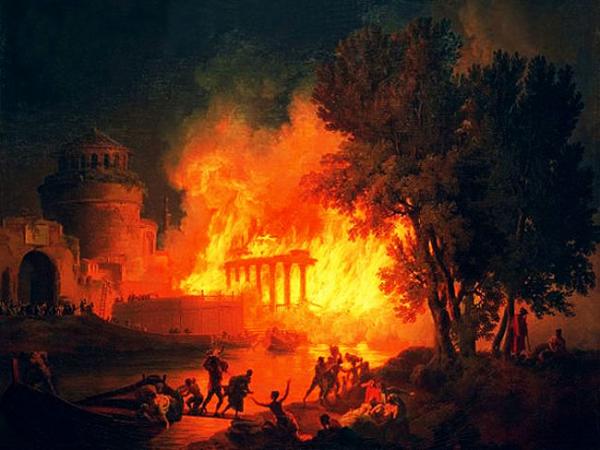
Writing to a congregation of predominantly Jewish Christians in Rome during Nero’s reign, the author of Hebrews repeatedly exhorted believers to not renounce Christ in fear of the mounting persecution. And that is necessary, because suffering moves one to re-evaluate what you believe. At some point in life we all walk through the fire – but how do you remain faithful to God amidst suffering? How do you endure the fires of life.
Brief background to and outline of Hebrews
The letter to the Hebrews was written to Jewish believers (1:1 “spoken to our fathers”) probably in Rome (13:24 “those from Italy greet you”). After hearing the gospel confirmed with signs and miracles (2:4), they were converted (3:16), were baptized and had partaken of the Holy Spirit (6:1-5). This was a long-established church (5:12) whose members have lived exemplary lives of faith and good works (6:10), and have experienced persecution, imprisonment (13:3) and the loss of property (10:32-33), but have not yet suffered martyrdom (12:4). The congregation were capable of charity and hospitality (13:2,16), and previously had great teachers and leaders (13:7) who grounded them in foundational Christian teaching in the Jewish Scriptures (6:1-2).
But their faith had been outlawed and these ostracized believers became discontent and discouraged and longed for earthly property and a sense of belonging in their society (13:5, 14). So they started questioning their beliefs, considering other avenues to God so they could be reintegrated into society; they were on the verge of walking away from their Christian convictions. In response the author of Hebrews wrote this “word of exhortation” (13:22) to bolster the faith and perseverance of this wavering Christian community, reminding them how to correctly “draw near…” (10:23) to God.
The recipients seems to have been influenced by the first-century philosopher Philo of Alexandria who mixed Judaism with Greek philosophy and wrote that there were several ways for sinful man to approach God. He mentioned the Logos (elsewhere “the word or reason of God”), Sophia (elsewhere “the wisdom of God”), the angels, Moses, Melchizedek the high priest and the Jewish sacramental system were all avenues (or mediators) to bridge the divide between man and God. Reading Hebrews, it appears that the first recipients of this letter were considering these alternative avenues to avoid persecution, yet still worship God.[1] In response to their searching the author writes how Jesus Christ is better than Philo’s Logos and Sophia (1:1-3), better than the angels (1:4-2:18) and Moses (3:1-6), and better than the Aaronic priesthood (7:1-24), presenting a better offering (9:14) in better place (8:2). Jesus has also secured a better, eternal covenant by his sacrifice “once for all” (10:14) that he can guarantee fulfillment on behalf of both man and God (7:22). Our author shows this superiority to deter readers from turning to these “alternative mediators” to escape the pressures of persecution and to exhort readers to hold fast to their confession if faith in him amidst difficult times.
Faithful in the fire
How does this 2000 year old letter to Jewish believers suffering under Nero’s persecution help us today to “hold fast to your confession” (Hebrews 4:14; 10:23) in the midst of our own hardship and suffering? How can we be prepared to remain faithful in the fire and joyfully endure the suffering as these early believers who remained true to Christ through Nero’s fires?
The answer lies in the pivotal point of this letter, Hebrews 10:19, where the author moves from orthodoxy (or correct thinking) to orthopraxy (or correct living). Here the epistle shifts from theory to practice, with the transition “Therefore” meaning “based on our argument up to here” and then follows with three powerful exhortations that appeal to the required response of the hearers. These three exhortations contain the keys that will help the readers through the mounting persecution they feared. The author encourages readers to “draw near… in faith” (v22), “hold fast to … hope” (v23) and “to stir one another in love” (v24-25). Then he unpacks real faith in chapter 11, hope for endurance in chapter 12 and lovein practice in chapter 13. Like so many times in the letter he again reminds them that they need to remain faithful to Jesus, because of the coming judgment of Christ (v25-31).
These three exhortations to continue in faith, hope and love apply as much to us during times of hardships today.
Draw near in faith
These wavering believers were graciously encouraged to “draw near in full assurance of faith” (v22). Even although they considered renouncing Christ they were encouraged to “have confidence to draw near to the throne of grace through the blood” (4:16; cf 10:19). God has not written them off! Amidst their suffering and wavering they can be assured that their confidence before God was not based on their track record, but based on Jesus’ shed blood (v19). This also implies that their suffering was also not due to their failures. Rather they were encouraged that Jesus, their perfect High Priest has also “suffered when tempted, [and is therefore] able to help those who are being tempted” (2:18). He “is able to sympathize with our weaknesses” (4:15-16) – so draw near to get help!
Hold on to hope
Poor and pushed aside, mocked and outlawed, their current circumstances were very uncomfortable. And their immediate future looked even bleaker as the Roman persecution was escalating. Therefore the author encouraged these fragile believers to hold onto their Lord who promises their share in his eternal inheritance! He is their “forerunner” (6:20) who went to announce their coming and the High Priest who secured their confidence before God (6:20). There is no room for doubt: Jesus secured their access and inheritance in Jesus’ eternal kingdom. And “this hope is the anchor of the soul” (6:19) – it settles the emotions and keeps the believer on course to, not swept away by the circumstance. So the believer is encouraged to endure suffering the way their Lord did – joyfully anticipating his reward (12:1-2). This hope is the reason to remain faithful amidst the fire; their endurance will be rewarded!
Assemble to grow in love
Thirdly the author exhorts this congregation, fearful of being hurt or ostracized, to not neglect their assemblies (10:25). In effect he tells this fragile congregation “I know that you are afraid of being identified as a Christian, and I know that you will suffer and might even die when you are seen to gather with other believers – but do it!” Why the urgency? Why should they assemble? Could they not practice their faith in private?
The author motivates that their primary purpose of assembly is to “stir one another to love and good works” – to grow in godly character and excel in good works (10:24). More specifically, each congregant should make it their goal to think about how to help another excel in character and good works. As he did earlier in the letter he encourages them to continue love and service for the saints (6:10-12).
Enduring the fire today
How do we endure suffering? What was true for the Hebrew congregation in Rome suffering under Nero’s reign is true for me and you. First, hold on to your faith: you are loved by God, approved by God, sanctified by God and preserved by God ford God. Not the suffering nor your doubts or fears can separate you from God’s love in Christ Jesus (Romans 8:35-39). So boldly approach of throne of grace to receive help in time of need! (Hebrews 4:16).
Second, let hope stir your joy and calm your fears, motivate you to continue in faith, work for your reward and find purpose in all you do. God rewards faithfulness!
Thirdly, “never walk alone!”Join in the assembly to grow others “in love and good works” (Hebrews 10:24), and see how you are strengthen and encouraged yourself. Indeed, “it is more blessed to give than to receive!” (Acts 10:35)
References for understanding the letter to the Hebrews
Nash R.H., The Notion of Mediator in Alexandrian Judaism and the Epistle to the Hebrews, Westminster Theological Journal, Vol 40 (1977), p89-115.
Barclay W., The Daily Study Bible, The Letter to the Hebrews (Edinburgh: The Saint Andrews Press, 1998).
Gutrie D., Tyndale New Testament Commentaries Hebrews (Leicester: Inter-Varsity Press, 1993).
Schenck K., Understanding The Book Of Hebrews (Louisville, Kentucky: Westminister John Knox Press, 2003)
Marriage is still very popular[1], but it is increasingly reported that single Christians struggle to find suitable life partners[2], which is ironic in this information-age where a Google search for “dating web sites” return 122 million responses in under 1 second. This seems to indicate that a multitude of possible life partners does not solve the problem of loneliness. But why not? Is it because there are too many options, or that a more perfect partner is perhaps one more click away…?
Another possible explanation why single people today struggle to find suitable life partners are due to unclear or unrealistic expectations from marriage and marriage partners. The myriads of writings and media resources[3] bring varied opinions and ideologies about marriage which leave a world in confusion about the essence and design of marriage as God intended it. In particular three most destructive trends keep people from finding and enjoying fulfilled marital lives: firstly the culturally accepted norm of “falling in love”[4] where marital partners are selected (and de-selected) based primarily on emotions. Secondly, the belief that there is a “other half” or “soul-mate”[5] you need to find in order enjoy a fulfilled marriage relationship. Thirdly, the consumerist mindset that markets, searches and compares potential partners to seek an ideal fit, as we do with accessories, cars or clothes. These secular ideas are perpetually propagated and fueled by contemporary music, films and novels, and has become normative in our Christian thinking.
I believe that finding a marriage partner is not primarily about falling in love, not about finding my soul mate, and not at all about comparative shopping. These ideas are foreign to Scripture and does not lead to fulfilled marriage. This leaves us with the questions “what is marriage?” and “what makes marriage work?”
In the light of this confusion I find God’s message through the prophet Malachi refreshingly clear and concise. Although the tone of the conversation we pick up is quite negative: God says that He has no interest in listening to the religious elite’s prayers because of their lack of respect for the institution of marriage and their marriage partners (Malachi 2:13). Then the the Lord clarifies the intent and meaning of marriage, cautioning them regarding the destructiveness of promiscuity and divorce for both the couple and the children. Malachi 2:14-16 reads as follows:
But you say, “Why does [God not hear our prayers]?” Because the LORD was witness between you and the wife of your youth, to whom you have been faithless, though she is your companion and your wife by covenant. Did he not make them one, with a portion of the Spirit in their union? And what was the one God seeking? Godly offspring. So guard yourselves in your spirit, and let none of you be faithless to the wife of your youth. “For the man who does not love his wife but divorces her, says the LORD, the God of Israel, covers his garment with violence, says the LORD of hosts. So guard yourselves in your spirit, and do not be faithless.”
The terms God uses to define marriage in and it’s intent in this passage are companionship, covenant, union, for children, and faithfulness. Let’s look at each one of them to re-evaluate our understanding of marriage.
Marriage is companionship: “she is your companion”
In definition and defense of marriage in Malachi 2:14-18, God first mentions companionship. Here in Malachi 2:14-15 companion refers to the wife, but in Proverbs 2:17 it refers to the husband. Marriage is companionship.
The common interpretation of the role of the wife as “the helper” quoted from Genesis 2:18 is understood to mean that she should help in the purpose of the husband and running of the household.
However, that interpretation misses the intended meaning of Eve as helper, and the primary intent and definition of marriage. Genesis 2:18 reads “LORD God said, ‘It is not good that the man should be alone; I will make him a helper fit for him.’” To understand the meaning of the term “helper”, one should ask “in what area did Adam need help when the Lord graciously sought to solve his problem?” The answer is clear from the context: Adam was lonely – in the midst of a perfect world! Adam needed someone to share life with, to take away the sting of loneliness. Adam needed companionship, and the Lord gave him a helper, a companion.
This first picture of marriage is important since it reveals God’s design intent of marriage: to remove the sting of loneliness, so that man and woman may share the fullness of life together in intimate relationship.
Another important point to notice here is that while Adam was in a perfectenvironment, in a perfect relationship with God – with no sin and consequently no separation because of it – Adam had a need for companionship which God recognized, God articulated, and God acted upon to solve. (The solution was marriage). I mention this because I have read and heard too many times that single people should “find their happiness and contentment in God.” The sentiment is great, but it seems as though God did not meet that need for companionship in Adam, and that He was the one who recognized (and even created) that need in Adam, and provided that for that need in companionship.
Marriage is companionship. Marriage is given to eradicate loneliness. This is the primary task and responsibility of the marriage partner. Every other motive for entering into marriage will set one up for disappointment and eventually marital failure.
Rings – the sign of the covenant
Marriage is covenant: “she is …your wife by covenant”
In Christian circles we frequently hear that marriage is a covenant (legal promise). But less frequently the covenant is defined. We frequently read or hear about the ceremony regarding ancient vow-taking, but the essence of the vow is mentioned less frequently.
However, every person who contemplates divorce remembers his/ her vows to be something like “I will never leave you nor forsake you… in good times and bad… in sickness and health…” And that is the essence of the promise: marriage is a covenant of companionship[6] – a promise to never allow the other person to feel lonely again. Marriage is a promise which bind two people together in this life in mutual partnership. Where two is better than one.[7] It is not a contract of mutual performance (“you do this – i do that”) but rather a promise of companionship (“being with you always, regardless of your performance or state”) as Ruth did to Naomi. [8]
Marriage is covenant – a partnership by promise to remain together and share all “until death do us part”. Marriage is a covenant of companionship.
Marriage is unity: “make them one”
One of the most frequently quoted Old Testament text by New Testament authors is Genesis 2:24, where we are reminded that the essence of marriage is to “leave” what is familiar and “cleave” your spouse, and “the two shall become one flesh.” Thus the unity requires in part our participation (perpetual actions that move us towards our spouse (“cleave”) and move away from our old familiar life of singleness (“leave”). But God’s strong hatred for the Israelite’s prevailing indifference and unfaithfulness towards marriage in Malachi 2:15 also reveals His part in marital union: “did not I make them one with a portion of the Spirit in their union?”
This phrase shows the essence of marriage is a mystical, spiritual union of two people, brought about by God. “Mystical” means something difficult to explain, but can be understood through participation. This truth is also taught by Jesus when He is asked to comment on the practice of divorce made cheap in His day: “So they are no longer two but one flesh. What therefore God has joined together, let not man separate” (Mark 10:8-9). It is a mystical unity that speaks of a shared life, a shared identity.
Although the unity is difficult to observe, the effects of separation – what Malachi calls “violence to one’s flesh” (Malachi 2:16) – is observable. The well-researched, traumatic effects of divorce affect the loss of identity, decreased emotional and physical health as well as shortened life expectancy, lowered social status, increased financial pressure and lowered relational attachment[9]. The devastation in children affected by divorce include behavioral problems such as aggression and rebellion, psychological effects such as depression, anxiety and lowered concentration, followed lower academic achievement and poor self-esteem.[10] These adverse effects in physical, emotional and spiritual well-being makes sense when one considers that divorce is a tearing apart of two people that have in reality become one, causing tremendous injury and death in all involved.
Marriage is for Godly offspring: “what was… God seeking? Godly offspring.”
Contemporary Western civilization is self-seeking, bent on entertainment and consumerism. It is a culture that opposes long-term commitments, any difficulty and a sacrificial lifestyle. This lifestyle hates children and views such dependent relationships as burdensome and thus undesirable. Even within good marriages children will be delayed as long as possible to ensure a time of care-free enjoyment. And a family who has more than 2-3 children will be followed by stares and comments such as “don’t you have a TV?” from passer-by’s wherever they go.
At the heart of this culture, marriage is for self-enrichment and pleasure for self children is an after-though or necessity to prolong society. However, God says He made marriage as a union to solve the problem of man’s loneliness through the covenant of companionship. Yet, what He wants from this union is “godly offspring”. Marriage is the only setting where godly offspring can be raised, in the secure setting of mutual faithfulness. This is the place where godliness is modeled and grafted into the young children, and where children are protected in their identity and perception of others from the “violence” of divorce and unfaithfulness. Thus the immediate context of the phrase in Malachi 2:15-16 teaches us that “godly offspring” require “faithfulness” in the union between husband and wife, to not bring about “violence” to the home.
When God thinks of marriage, he thinks of children. What God wants from the union of marriage is godly offspring.
Marriage requires faithfulness: “do not be faithless”
“However, “Why does he not [hear our prayer]?” Because the LORD was witness between you and the wife of your youth, to whom you have been faithless, though she is your companion and your wife by covenant… So guard yourselves in your spirit, and do not be faithless.” (Malachi 2v16)
Marriage is a divine union through a covenant of companionship, a place where Godly offspring is raised. And marriage requires faithfulness. Two reasons for faithfulness emerge from the text:
Malachi 2:14 starts with a question from the Israelites who faithfully offer to God sacrifices to maintain good relationship with Him, and entreat His favor. But God says clearly that He does not hear their petitions, because of their marital unfaithfulness. About 450 years later the Apostle Peter again wrote to the people of God “Husbands, live with your wives in an understanding way, showing honor to the woman as the weaker vessel… so that your prayers may not be hindered.” (1 Peter 3:7). This is a profound statement – that God cares so much about our marital relations that He either hears our prayers or not! Thus the first reason for faithfulness in marriage is because God sees, God cares, and God requires faithfulness (and honor) at home before He accepts public worship or answers prayers.
Yet a second reason in the text seems to be the core reason of the appeal to marital faithfulness from God: to not cause “violence” to self, your spouse or your children. This text enriches our understanding of our sexuality, teaching us that sexual practices are not merely physical or biological activities, but also spiritual and relational. Malachi warns that sexual promiscuity has a negative impact on your own spirit and therefore cautions us to “guard yourself in your spirit”. Your spirit is the seat of your identity and relationships, is your capacity to create and dream (hope), to rejoice, to endure, to trust (or have faith), to communicate, to understand or perceive etc. God says “preserve this! – do not be sexually unfaithful!”
But God also says to remain faithful to your wife for the sake of your wife and children – since the breaking of the covenant brings violence to the spirits of the entire family (as mentioned in the previous section). It seems as though the covenant family enjoys protection from God as God enters into the marriage with “a portion of [His] Spirit in their union” (v15), and faithlessness regarding the covenant allows violence to spirits of the family members, especially if the faithlessness leads to the breaking of the covenant (divorce).
Conclusion and practical response
Thus a clear definition and intent of marriage from Malachi 2 could read:
Marriage is a covenant of companionship by which God makes the husband and wife one for the sake of godly offspring, which is preserved in mutual faithfulness.
How do we respond to this revelation of marriage from Scripture? We need to re-evaluate our expectations of marriage and our (potential) marriage partners in light of God’s design. For a fulfilled life, we need to approach marriage from a Biblical perspective otherwise we will not find the life of satisfaction and joy God contained therein.
Our first mental adjustment from this definition is that marriage isnot primarily a romantic notion. It is a relationship built on companionship, trust, faithfulness and a shared life. Thus the marriage partner is not firstly a lover, but a companion. The aim is an intimate life, not an erotic life. What one seeks for in a marriage partner, and seeks to maintain in marriage is good companionship: someone trustworthy, someone supportive, someone with whom you can live well and work well. Someone to take away loneliness by living a shared existence.
Secondly, marriage is permanent. Malachi’s understanding of marriage re-enforces the truth that marriage is indeed “until death do us part”, and the consequences of faithlessness and divorce is “violence” – death and destruction to all involved. This requires loyal devotion as well as patience and forgiveness from both marriage partners. Thus marriage cannot be approached with the self-centered consumer mindset, where marriage partners are compared and traded in.
Thirdly, the end of marriage is not merely “my happiness” but a Godly legacy, including God-fearing children. The pursuit of self-indulgence (“my happiness”) increases selfishness – the worst enemy of marital joy and bliss.
How do we renew our minds about Godly marriage? I suggest three ways, the first of which are obvious: study the Scriptures to prayerfully evaluate and re-adjust your own opinions of marriage. I do not believe that a mere reading of the Bible is sufficient for transformation here – one has to systematically study it, preferably in discussion with your spouse. Secondly, once a good Biblical understanding of marriage is established, one needs to actively evaluate the underlying presumptions and messages in contemporary music, novels and movies, etc relating to love and marriage. For the trout to swim upstream he needs to know the force with which the river is flowing downstream, and compensate appropriately. Lastly, and sadly this is a difficult one: find a godly example of marriage and make deliberate effort to spend time with them and learn from them. A good, living example is still the best way to grow in godliness.
So, in light of this Scripture – how does your view of marriage compare with God’s design and intent?
[3] A search into the Amazon online shopping database on “marriage” results in more than 230’000 books and related resources. Accessed 14 July 2014.
[4] From the Roman Cupid myth where the belief is that the angel Cupid shoots arrows and the victim falls helplessly in love with another upon sight. Refer http://en.wikipedia.org/wiki/Cupid
[5] From the Greek creation myth where the humans were created both male and female in one body, one soul, but for their rebellion Zeus split them in half so that they male and female would forwever wander miserably in search for their other half or “soul mate” Refer http://en.wikipedia.org/wiki/Soul_mate
[6] Adams J.E., Marriage, Remarriage and Divorce, Baker House Books (Grand Rapids, MI, 1980), p8
[8] See Ruth 1:16 -17 as a good example of such a vow, although this vow is not between husband and wife, the context is a vow of companionship.
[9] Hawkins J.H., Fackrell T.A., Should I keep trying to work it out? (Utah Commission on Marriage: 2009), p96. Online version and program available here: http://divorce.usu.edu/
[10]Cherlin A.J. et al, Longitudinal studies of effects of divorce on children in Great Britain and the United States, Science, Vol. 252 no. 5011, 7 June 1991, pp. 1386-1389










 walklikejesus