Closing Chapters: Wrapping up 2020 (part 1 of 4)

2020 was a surprisingly rough year.  It still is.  How do you muster hope and confidence for a new year after one so tumultuous as this?

From discovering a new Coronavirus strain far away in Wuhan City, China, 12 months ago a global pandemic culminated in the simultaneous lockdown of more than 200 countries just six months later. The lockdowns confined people to their homes, shutting down schools, businesses and all social gatherings.  Governments banned all travel, calling for a state of disaster, restricting countries under martial law.  And now a second wave is in full swing.

The global pandemic pressure exposed the fault lines in vulnerable economies, politics, and social fibres worldwide.  Newsfeeds flooded with reports of large-scale corruption, election rigging, racial tension and wild conspiracy theories.    These compounding disruptions also highlighted the vulnerabilities in societies’ emotional-spiritual wellness, resulting in heightened anxieties, widespread domestic violence and unhealthy coping mechanisms.  No-one escaped the sting of this pandemic.

At several moments during this year, I hoped for someone to call an end to the year, to reset the calendar and start afresh.  I waited for some referee to recognize our fatigue, to throw in the towel or count us out.  At long last, the year is over, but now the entrance into 2021 looks very similar to the exit of 2020.  The difference is: (a) now we know what to expect, and (b) 2020 has had a significant physical, emotional and spiritual impact on each of us.  For that reason, many of us face the new year with a sense of dread.  

Why bother with the past ?

There is a need to properly wrap up the old year and bring meaning to a particular season before starting afresh.  Failure to conclude a life chapter can cause one to get stuck in a destructive cycle.  Trying to move on with unresolved disappointments, hurts, trauma or even blind spots and character flaws will likely cause one to live reactively to past events.  The past will repeat itself like a bad nightmare. There has to be some resolve, some closure before your story can continue in a new chapter.

Biblical books at the end of seasons

It is noteworthy to consider that all the history books in the Bible – from Genesis to Ester in the OT and the Gospels to Acts in the NT – were recorded at critical moments in God’s people’s history.  These records are not merely cold recordings of history.  Each history book is a prophetic reinterpretation of the events God’s people went through, written to help make sense of God’s redemptive purposes through these periods.  It aims to affirm the first readers’ identity and purpose as God’s covenant people.  As such, each of these books is a means to “close a chapter” in a particular people’s history, giving God’s people resolve to move on, helping them understand why they had to endure this.  

What is a life chapter?

Consider every memorable story, and you will conclude that hard times shaped the character and beautify his/her account. Samuel anointed David to be king, but many difficult chapters fill the years before becoming Israel’s beloved king. Yet his story is memorable because these middle chapters tell of familial rejection, battle with a giant, fleeing a vengeful monarch, harsh years in exile, uniting a divided Israel, and later attempted patricide and exile again, to name a few highlights.  God’s journey with him through valleys of shadows of death makes his story beautiful and inspirational.

God promised Joseph prominence and power, and the fulfilment thereof was beyond his wildest imagination.  His story brings encouragement 3800 years later because God’s promise prevailed despite familial betrayal, enslavement, wrongful imprisonment, and neglect of a companion. In particular, his story endures because he could look his brothers loving in the eyes and declare “You intended to harm me, but God intended it for good to accomplish what is now being done, the saving of many lives.” (Genesis 50:20) That is why and how you close a life chapter: make sense of a season to affirm your identity and purpose in the light of God’s presence and providence.

A life chapter brings a conclusion to a season characterized in some unique way.  Some chapters close naturally, like when you progress from primary school to high school or graduate from college or end an internship.  Other life chapters might require help to resolve, due to an unfair dismissal from work, an abrupt end to a long relationship, or a sudden relocating with the family.  Especially after a season of hardship, we struggle to move on because these tend to impact us emotionally and spiritually – leaving lasting scars on our identity (affecting our self-view), relationships and confidence (impacting our purpose and potential).  Such seasons have the power to hold us back or alter the course of our lives – for the good or the bad.  As such, reflection and resolve is paramount. Closing life chapters means making memories and finding meaning in it. Our challenge is to do a personal, prophetic reinterpretation of our experience to discern God’s presence and work in, through and for us.  In particular, it affirms our identity, reforms our relationships and refines our purpose in life. 

How do we properly close life chapters?

We say that “experience makes us wiser.”  But observation tells us that this is not true.  Experience often leaves us poorer, tired, hurt, or lonely. If we’re lucky, experience leaves us happy, enriched or loved.  We tend to repeat past mistakes, suffering the same painful results – unless we intentionally reflect and learn from our experience.  A more accurate statement reads, “evaluated experience makes us wiser.” 
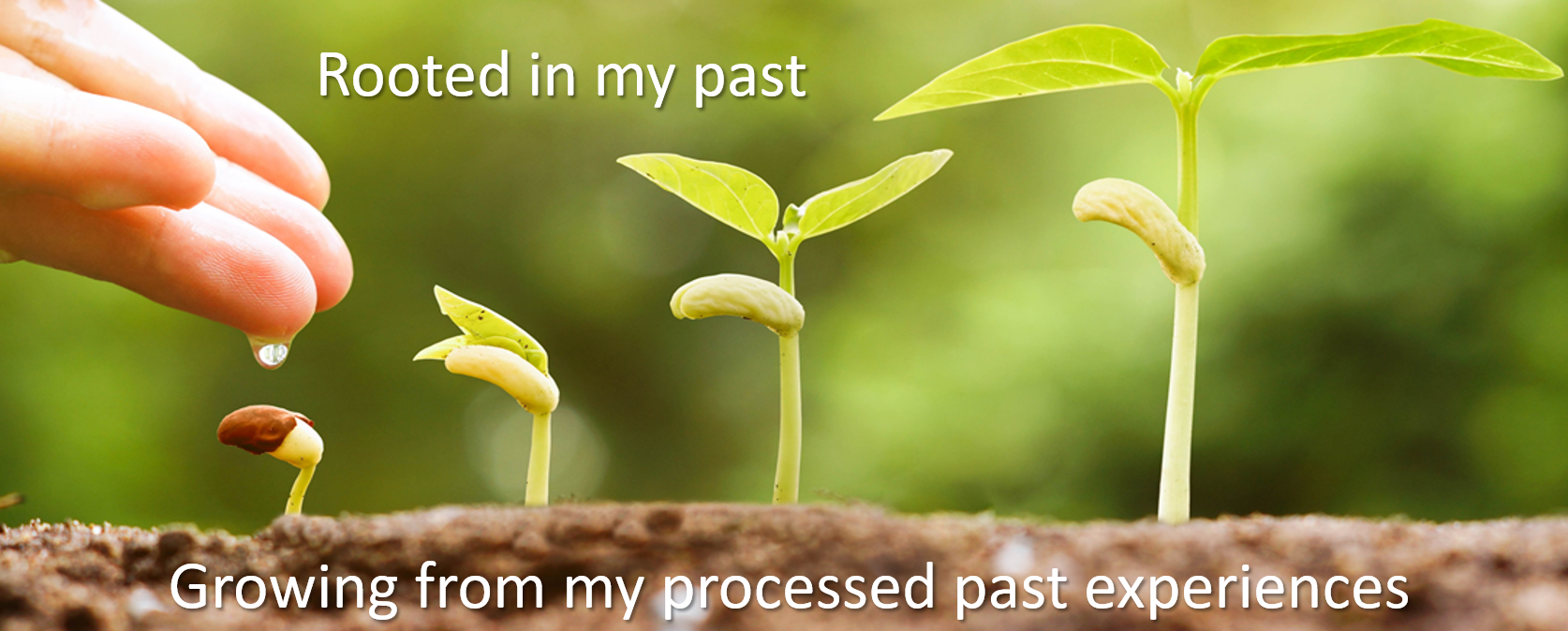
In her book Rooted in Love Margaret Blackie sketches her life as a plant rooted in rich soil. The plant symbolizes her life, flourishing. The roots seek security and nourishment in the fertile soil. The ground, enriched by the processed plant matter, represents reflected past experiences.  Together, this image powerfully portrays how our lives flourish when anchored and nourished by our awareness of God’s presence and purpose with our everyday lives.  Therefore, closing a life chapter aims to root us securely in the rich soil of the previous season, ready to bloom in the next season.

We close the chapter on 2020 by making a memory and find its meaning in the light of our life’s trajectory as a whole.  First, we look back to review the highs and lows of the year.  Second, we look up to recognize and give thanks for God’s goodness in the past season.  Third, we reflect on the losses, hurts and disappointments by look inward; we own our share in the pain and release those who caused us harm.  Lastly, we look forward as we revision the next leg our of our journey with hope.  We will work through each of these points in subsequent blog posts.

So what do you expect to take with you out of 2020? You might be surprised at the insights and hopeful energy gained from such a reflection.

The End? The Reason to Endure

In this 19th study of revelation we look at need for salvation and the reality judgment and Hell in chapter 14.  A recording of this will be uploaded at the Shofar Durbanville Youtube channel.

endurance1

“What’s the point of all this hardship? Why push through the pain?  Others have given up, and they seem to be having an easier life! What can be worth this much effort?”  Whether it’s a marathon, long-term studies, a gruelling project or a start-up initiative – somewhere along the road, you will ask that question in agonizing pain.  So, too, in your journey of faith.

The answer to this question is what Revelation 14 offers to struggling churches.  The scenes instil courage in the hearts of believers tempted to give in or give up, but it does not shy away from the sober reality of what is at stake.  The chapter is divided into three logical sections, revealing the role models, the reason and the reward for endurance.

The role models for endurance (14:1-5).  Chapter 14 opens in stark contrast to Chapter 13’s end.  Moving from the Beasts and those who receive the mark, John’s attention falls on the Lamb and his army of 144’000 who bear the mark of His Father on their foreheads.  In our post on the 144’000 from chapter 7, we concluded that this group represents the fullness of people who remain loyal to Christ’s blood and who are saved by Christ’s blood.

From the contrasting groups, John hears contrasting sounds (14:2-3): God’s voice roars from heaven “like many waters” accompanied by “load thunders” (repeated in 8:5; 11:19; 16:18; refer 4:5), alluding to God’s justice and judgment from his Law (Exodus 19:16). This originates from his judgment on the and his worshiper (14:8ff).  John also hears the harpists’ joyful, tranquil music.  These come from the believers singing before the throne the song of the redeemed (compare 4:3 with 5:8-10) – a song that only those who have been saved by the blood of the Lamb can faithfully sing.

many_brides
        Here comes the brides!

The redeemed are described as those “who have not defiled themselves with women, for they are virgins… who follow the Lamb wherever he goes”. (14:4).  This phrase is not a reference to physical celibacy but spiritual fidelity, as it contrasts God’s faithful people to those seduced into “fornication” with “Babylon the Great, the mother of harlots and abominations of the earth” (14:8; 17:6).  Here, drawing from the Old Testament prophets (notably Hosea), John describes idolatry as the Church’s spiritual unfaithfulness to God symbolically with a married person’s immorality and sexual unfaithfulness towards his or her spouse.  Paul uses this imagery when he laments the Corinthians’ backsliding: I betrothed you to one husband, to present you as a pure virgin to Christ. But I am afraid that… your thoughts will be led astray from a sincere and pure devotion to Christ. (2 Corinthians 2:11).  But the ones before the throne are a bride “without blemish” (4:5; compare Ephesians 5:27).

The reason for endurance (14:6-12). The next section in this chapter outlines the basic theology of judgment, revealed by three angelic messengers.  Angel One proclaims…  the “eternal gospel: Fear God and give him glory.”  God is the creator of all the earth, that he is sovereign over all the nations, and that he will judge all people, everywhere – and that hour is soon (14:6-7).  Angel Two announces the destruction of “Babylon” because she leads people everywhere into idolatry and immorality (14:8; compare Isaiah 21, Jeremiah 51).  In chapters 18-19, the author returns to this theme, wherein Babylon is described as a city infested by demons and inhabited by the defiled (18:2).  Angel three decrees God’s wrath on the beast and all who bears his mark: eternal judgment in “fire and sulfur” (14:9-11) – an allusion to Hell…

 [Read the full commentary of Revelation in Faithful to the End]

Faithful to the End is a simple commentary that helps make sense of the encouraging message of Revelation.
Quick links to full THE END Revelation Series posts

1  2  3  4  5  6  7  8  9  10  11  12  13  14  15  16  17  18  19  20  21  22  23  24  25  26

The End? The Beast and his Mark

The Beast and his mark is the focus of this study as our 18th stop in our journey through Revelation brings us to the 13th chapter and its infamous images. A recording of this will be available on the Shofar Durbanville Youtube channel.

Political satires like Swift’s Gulliver’s Travels, Orwell’s Animal Farm, or even cartoonists like Zapiro, comment in their own generation on the need for renewal of human  society and government in particular.  Using creative and often comical images it portrays the politics and people of its day to show the flaws in ideology and society at large. Apocalyptic literature like Daniel, Ezekiel, and Revelation had this same purpose and pattern in its call for reform of God’s people and government in its day.

Beast_Daniel7_4
Four beasts described in Daniel 7.

Revelation 13 opens with John standing on the sand by the sea where he saw Christ standing as Sovereign over land and sea (10:2).  In this way he reminds the readers that whatever happens in the land or sea is within Christ’s control.

The First Beast: Political Power. Then he sees a beast like a lion, leopard and bear combined rising out of the sea having seven heads, ten horns and  crowns (like the Great Red Dragon in the previous chapter who gives him strength) – having a blasphemous name on his head (13:1-2). This image is an allusion to Daniel 7 – a reference to the four successive empires of Babylon, Persia, Greece and Rome. The Beast in Revelation 13, looking like a combination of these four beasts, hints to the Roman Empire of its day, but also represents every other human government that opposes Christ.

The Beast is an image of anti-Christ government.  Although the word anti-Christ does not appear in Revelation, John writes about it in his epistles.  “The world is passing away… it is the last hour, and as you have heard that antichrist is coming, so now many antichrists have come. Therefore we know that it is the last hour. “ (2:17-18)   Fifty years earlier, Paul also wrote about anti-Christ government already at work in the world (2 Thessalonians 2:7, 8-10).  Examples of these range from Pharaoh to Alexander the Great, Nero to Domitian, Ganges Khan to Napoleon, Stalin to Hitler, Mao to Castro, and Mugabe to Kim Jong Un.  The pages of history are filled with the blood from the oppressive regimes of the Beast.

Beast_sea3

What do we learn about this Beast of human government?  It is said to have full strength and great authority given to him.  It speaks blasphemies (13:1,5), implying it defames God and exalts itself to god-like status.  It gets its power from Satan himself (13:2).  Its rule is characterised by intimidation, conquest and carnivorous violence (13:2, 10).  It has the power to revive itself after defeat (13:3).  Christ permits this beast to yield his authority for “42 months” during which it will wage war against the Lord’s servants (13:8) –  implying the redemptive period from Christ’s resurrection to his return (as discussed in a previous post).

The way this beast wages war against the church is through intimidation, leading to suffering and death (as in the church at Smyrna, 2:8-14) or seduction, leading to cultural compromise (as in Laodicea, 3:14-22).

The Second Beast: Seductive Ideology. A second beast coming out of the land is introduced, likened to the Lamb in that it looks like a lamb but roars like a dragon (compare 13:11 with 5:5-6).  Here the relationship between the first Beast and the second Beast alludes to the relationship between Him who sits on the throne and the Lamb in that the second Beast yields the authority of the first Beast and causes all to worship him (13:12).  This second beast performs great signs and deceives many, telling people to worship the first Beast…. 

 [Read the full commentary of Revelation in Faithful to the End]

Faithful to the End is a simple commentary that helps make sense of the encouraging message of Revelation.
Quick links to full THE END Revelation Series posts

1  2  3  4  5  6  7  8  9  10  11  12  13  14  15  16  17  18  19  20  21  22  23  24  25  26

The End? Standing strong

This post, the 8th in a series on Revelation, looks at Christ’s letter to the church in Philadelphia (Revelation 3:7-13).  A recording of this session is available on the Shofar Durbanville YouTube channel as part of the Revelation Series.

During the reign of Domitian, emperor of Rome (AD 90-92), Christians were persecuted for refusing to worship him as “King of kings, Lord of lords.” He charged the Roman army and Roman courts to cleanse his realm from any subjects who denied him this glory. Not only did the state persecute the disciples of Jesus, but the trade guilds of the day refused to do business with people who did not worship their pagan gods, claiming they were the cause of lousy karma resulting in natural disasters.  Christians were especially despised by the Jews for worshipping Jesus as God.

This left first-century Christians generally destitute (unemployed), persecuted by the state, hated by their Greek and Jewish neighbours, and pushed into the corners of society.  These social pressures, in a world pursuing sensual pleasure and social power, filled with pagan spiritualism, left believers vulnerable to doubt, desertion and dualism (to believe in Christ yet live like the pagans).   After all, if indeed Christ is Lord of all, why should they suffer like this?  Where was their God?  Will he still return to reign?

These were the cries of the apostle John while imprisoned on Patmos when Christ revealed himself as the One among the Lampstands – present among his church. This letter to Philadelphia (Revelation 3:7-13) is the fifth church Christ addresses in the opening section of the Revelation (unveiling) John received.

Collage_Philadelphia
Remains of Ancient Philadelphia testify to the prominence of massive pillars – a sense of security and stability in a city plagued by earthquakes.

Philadelphia (“brotherly love”) is situated in the fertile Kuzucay valley between Sardis and Laodicea.  The city was built by Pergamon King Eumenes, who named it after his love for his brother Attalus.  During the first century, the town was renamed often, from Decapolis to Flavia (in honour of Emperor Vespasian AD 69-79), to Neo-kaisaria. The city was also called “Little Athens” because its many pagan temples and public buildings were set on propagating Greek culture within Asia.

This city was known for the quality of its wine, for the colour of its “burnt soil” (volcanic ash) and for the frequent earthquakes it suffered.  These tremors caused many to flee the safety of the city walls, choosing to stay outside the city in fear of the prominent structures collapsing on them.  The size of the pillars that remain today indicates the tenacity of the early settlers to build a civilization in this unstable place. As such, these enduring pillars provide a proper context for the letter addressed to the church in Philadelphia.

The Revelation of Christ (3:7).  In this volatile, insecure environment, Christ reveals himself to this congregation as… [Read the full commentary of Revelation in Faithful to the End]

Faithful to the End is a simple commentary that helps make sense of the encouraging message of Revelation.

Quick links to full THE END Revelation Series posts

1  2  3  4  5  6  7  8  9  10  11  12  13  14  15  16  17  18  19  20  21  22  23  24  25  26

Known by my scars

This week I got a new scar.  The doctor says its not going to be a pretty one.  It’s on my calve, so I’m not too bothered about the mark.   Ironically, this scar fills me with gratitude and joy because it reminds me of what could have been – of what I was saved from.

I have another scar on my arm.  This one always brings a smile to my face as it reminds me of the night I got it.  I was was sixteen years old.   Me and my brothers were doing dishes.  I splashed oily water and Conrad ducked away, “accidently” stabbing me in the arm with the steak knife he was drying. There was a lot of blood and screaming. We all got a big fright! But a few stitches and cleaning up restored the peace.  This was thirty years ago; Conrad passed away two years ago.  I’m fond of the scar on my arm, because it reminds me of the love and the friendship we shared.  The sudden loss of my brother left an unseen scar, and somehow this old knife wound represents the loss I feel.

Just like the marks on a tree, our scars bear testimony to the things we lived through.  They give shape to and character to our lives.  The scars can never fully reveal the trauma we encountered, but like the marks in a tree trunk, our scars reveal our growth response to these events. our scars are evidence of how we healed.  As such, our scars tell the story of our resilience – what we endured and survived.

People tend to hide their scars, ashamed of the imperfections and afraid of the painful memories.  In contrast, the apostle Paul boasted in his scars[i] and listed the events which caused these scars (inside and outside) with gratitude and dignity, claiming that his scars are something to be cherished, even honoured. [ii]  How could our scars be something to be thankful for, something to be cherished and even paraded?  What can we learn from Paul about our scars and the trauma which caused it?

Firstly, each scars is a witness to my weakness, and therefore a tangible signs of grace.  We get scars because we are not bullet-proof.  Our scars are a testament to our vulnerability, our frailty.  Paul boasted in this weakness[iii] – his limitations or the end of his ability – because that’s where he experienced grace: the help and intervention from God.  The traumatic events Paul listed scarred his body, soul and spirit.  Violence and disasters left marks on his body; betrayal and abandonment wounded his soul; accusations and demonic torments injured his spirit.  Yet Paul cherished each scar – visible and invisible – as a reminder of God’s sustaining grace.  Without God’s grace Paul would have died, given up, or turned back from the call for his life.

One evening in our high school years, my brother Conrad took a test drive with a friend’s motorcycle – without a helmet.  Somewhere in the ride he accidently switched off the headlights. As he approached our house, another vehicle – who did not see him – turned in front of him without indicating.  Conrad crashed into the car, was flung in the air and landed headfirst on the tar.  We though he was dead, but God showed him grace.  He had a scar above his right eye as a daily reminder of the grace of God.

Likewise, my own scars are reminders of what I was saved from, and how I was restored.  They testify of God’s presence, providence and power at work in every situation that threatened my life.  The scar says “If it had not been for the Lord,[iv] this would have been my end… but God carried me through and restored me!”   As such these scars bring me daily comfort that God is always with me, and will turn everything I face today for my good.[v]  My strength may fail, but His strength will not.[vi]  When fear wants to overwhelm me, my scars remind me that “stronger is He that is in me” than what I may face in the world today.[vii]  I never face anything alone.[viii]

Scars - faith
This fireman has felt the sting of fire.

Secondly, my scars are witness to the tests I have passed.  Each scar – whether visible or invisible – tells a story of pain that I endured, of hardship that I was not spared. And therefore, as a believer in Christ, these scars are signs of faith that remind me that I was tested and purified as through fire.[ix]  Like Job, I kept on believing in the goodness and power of God in spite of the troubles I endured.[x] Through the pain, loss, or shame I kept on trusting in Jesus, believing that he has overcome the world.[xi]  As I walked through the fire of testing, my faith was proven and found to be real because I have come to trust God’s character more than my experience.

Looking at my scars as marks of faith bring me daily confidence.  My scars remind me that “nothing can separate me from God’s love” and that in every hardship I endure “I am more than a conqueror through Christ who gives me strength.”[xii]  In this sense each scar is an affirmation of my faith, adding confidence in the face of adversity.

Scars - hope
This Nigerian Christian faced the brutal hatred of this world. One day this will end.

Thirdly, my scars are witness to a fading, fallible world.   We only get scars on earth because the rule of sin and its decaying effect is limited to this fallen world of ours.  Our scars are caused by things like violence, sickness, calamity – and these have temporal power here.  The driving forces that bring us pain and leave us scars are often hatred, jealousy, greed, betrayal, or abuse – and these are only at work in this age.  But when Christ returns to reign there will be no more pain, no more sickness, no more calamity[xiii] – there will be no new scars in heaven.

Every scar reminds me that our world is fallen, and that this is why Jesus came to earth.  Seeing scars stirs my longing for the day when Christ will come to make all things new.[xiv]  As such our scars are signs of hope, reminders that Christ will bring an end to sin and suffering and establish His universal reign of peace. Looking at my scars in this light brings me joyful endurance, knowing that whatever I might face today is temporal; it cannot compare to the eternal glory that awaits me.[xv]

Lastly, my scars are reminders of Christ’s scars on his body. Jesus has scars on his body because he came to identify with me in my sin and suffering. Moved by love the Eternal Perfect One exchanged his pain-free heaven for our pain-stricken existence.  He willingly embraced our suffering to redeem us to Himself.[xvi]  This sacrificial love left the Eternal Perfect One scarred forever – as a Lamb having been slain.[xvii]

Our scars point us to His scars, a tangible reminder that we are greatly loved.  As such, my scars are signs of love.  He was marred in body, soul and spirit for our healing, peace and forgiveness.[xviii]  In this – His scars – His love for us is proven.[xix]  Looking at my scars in this way stirs my gratitude and devotion to Christ.

What scars do you carry in your body?  Ask yourself: How does this scar remind me of God’s sustaining grace? Can I see this mark as affirmation of my proven faith? How does this injury stir my hope in Christ’s return? And does this healed wound remind me of God’s immense love for me?

Now we can look at your scars and say with Paul: “We do not lose heart. Even though our outward man is perishing, yet the inward man is being renewed day by day. These light afflictions, which is but for a moment, is working for us a far more exceeding and eternal weight of glory…” [xxi]

[i] Galatians 6:17.

[ii] 2 Corinthians 11:23-33, 12:8-10.

[iii] See above.

[iv] Psalm 124:1.

[v] Romans 8:28.

[vi] 2 Corinthians 12:8-10.

[vii] 1 John 4:4.

[viii] Isaiah 43:2.

[ix] 1 Peter 1:6-7.

[x] Hebrews 11:6.

[xi] John 16:33.

[xii] Romans 8:35-37.

[xiii] Revelation 21:4.

[xiv] Revelation 21:5.

[xv] 2 Corinthians 4:17.

[xvi] Revelation 5:9.

[xvii] Revelation 5:6.

[xviii] Isaiah 53:4-6.

[xix] Romans 5:8.

[xx] If you read ‘spirit’ in this sense, it is helpful to think of identity, as well as your relational ability to love, hope and trust.

[xxi] 2 Corinthians 4:16-17.

The marks by which we are known

The growth rings of a tree trunk intrigue me. These contours compile the life story of the tree in the lines left by nature’s faithful seasons of wet and dry.  Years of plenty leave thick lines, years of lack leave thin lines. Yet more than mere rainfall history is recorded in these contours: forest competition leave elliptical lines of asymmetrical growth, while the trauma of forest fires, animal damage, pests or sickness leave permanent stains or scars in the tree trunks.  These lines, scars, stains and blotches portray the life of the tree: it is the record of events the tree witnessed, what it encountered and what it survived.  Just like our fingerprints these contours distinguish one tree from another – what a tree lives through lends it its distinguishing marks; its experience lends it its beauty and character.  As these pictures show[i], each tree is known and valued by its marks.

tree_trunks_small
The tales trees trunks tell. [image credits below]
But note that the lines and marks in a tree are the trees response to its environment – not the environment itself.  We don’t see the rains, droughts, fires, bugs or animals.  The contours only record the tree’s growth because of a wet season, and its hardening because of a dry season.  We only see the elliptical contours because of the tree’s self-adjusting growth for a few years in its fight for better sunlight. We only see the darkening as it healed from the heat and flames, the recovery scars left from animal damage and the discolouration caused by other environmental conditions.  In essence, the trunk of the tree is a witness to how the tree coped with its experience, how well it adjusted to survive in its environment and how it was strengthened through it.  Indeed, these contours are aptly called the “growth rings of a tree”.

If your character could be dissected as a tree trunk, it might reveal similarly distinguishing “growth rings” – the marks that show how each season has impacted you.

tree-rings-0023_web

As I reflect on the past year I am struck by how deeply it influenced me – both for the good and the bad.  A few family traumas of people within our church community has left a heightened appreciation for my family and my health, with a deliberate response to cherish the precious time with those I love and make the best use of my health and fitness.  Frequent reports of leadership failure have heightened my awareness of my own fallibility and the traumatic impact it has on many; this sparked renewed study and intentional growth in Christian leadership practice as well as intentional accountability as I see the need to allow others to speak into my life.  The development and facilitation of a marriage intimacy course has made a lasting impact in my attention to and intention for growth in marital intimacy.  A demanding season has highlighted the dangers of isolation resulting in purposeful pursuit of healthy friendships for me and my family.  But the business has also caused me to reevaluate my life, reconsider my efforts and remind myself where I should be heading, so I can readjust my course now.

Sadly I am also aware of some less noble responses to events in the past year: I recognise a mounting degree of cynicism due to frequent disappointment by certain people, coupled by latent anger and even bitterness in my heart.  I notice a resistance to spontaneous generosity because of perceived entitlement and misspending of some with whom I have supported.  I note the signs of compassion fatigue because of seasons of overextending myself.  And sadly I am aware that I laugh and play less because of the impact of the serious things that I deal with. These responses are not good for my soul, my family and my relationships.

Thus the events of the past season has touched me personally and impacted my character.  I have grown grateful and humble, more relational and accountable, vulnerable and intimate, and more purposeful.  Yet I have to acknowledge that I have grown more cynical, less innocent and less generous, less compassionate and less joyful.  My growth through the last season has been both good and bad; in some ways I have grown to resemble Christ my Lord better and in some ways I have grown to represent him less.

Although the memories of our experiences remain with us, it is our own responses to those experiences that ultimately impact us and those around us greatly, because how we respond shapes us for the long run.  Our responses to life’s significant moments and seasons lay the contours that make up our character – and our character shapes both our consciousness (how we view life) and our course (where we end up in life).

That is why we need to “guard our heart above all things, for from it flows the issues of life.”[ii]  We cannot control or undo what life’s seasons throw at us, but we can and should control our response to those moments.

The Bible teaches that one is “blessed” (or better off) when in spite of injustice one remains kind and merciful; when in the midst of cruelty and betrayal one remains pure in heart; when in the midst of conflict one pursues reconciliation and peace; when in the midst of hardship one remains faithful and true to God.[iii] In fact, the Bible shows that regardless of what life throws at us, a godly response always leaves one blessed – in this life and the life to come.[iv]  And that although everything seems hopeless, there is a very real reason to be optimistic, because God can and will bring beauty out of every situation.[v]  Although there are things that challenge us in every season of life, God’s grace in that season is enough to carry us through.[vi]

It’s a new year.  Another year is over and it left its marks on your life.  Was it a year of plenty or of want?  A season of vigorous growth or a tough season of hardening?  A festive time or fiery trial that left its stains?  Regardless of what the year brought you, its impact on your life will prove significant in the shaping of your heart.

How will you allow your experiences to impact your character for good or bad?  Consider it carefully, because your response to this season will determine your consciousness in the next season and ultimately your course in life.

tree_rings_3a

[i] Images from online article in Mizzou Magazine https://mizzoumag.missouri.edu/2013/05/if-trees-could-talk/

[ii] Proverbs 4:23

[iii] Matthew 5:7-9; James 1:12

[iv] Romans 8:28

[v] Jeremiah 29:11; Revelations 20:5

[vi] 2 Corinthians 12:9

In Pursuit of Happiness – how to reap joy

I thoroughly enjoyed watching the 2006 film Poster-pursuithappynessIn Pursuit of Happyness based on the true story of how Chris Gardner (played by Will Smith) endured being homeless for nearly a year while pursuing his dream and caring for his
toddler son Christopher (played by eight-year-old Jaden Smith).  In the film Chris is a struggling salesman who invested all his life savings in new portable bone-density scanners. His wife leaves him due to mounting financial pressures and he is left alone to care for their five-year old son Christopher. His life reaches an all-time low when Chris loses his last bone-scanner, gets arrested for unpaid parking tickets, his bank account gets garnished by the revenue services for unpaid income tax and he gets evicted from his apartment.  Homeless and penniless Chris manages to land an unpaid internship at a brokerage firm, competing against 19 others to win the only paid position at the end of six months.  In the post-script we read how Chris continued to eventually own his multi-million-dollar brokerage.

This emotion-laden real-life drama each of us can identify with because it speaks about the sacrifices needed to realize one’s dreams, and the tremendous joy that comes from the fulfillment of the dream.  We were created to pursue the things that give us joy, and therefore joy is indeed one of man’s chief motivators especially in enduring difficult times.

An ancient Hebrew song dating around 400 BC has this same theme.

Psalm 126:1-6

1 When the Lord restored the fortunes of Zion,
we were like those who dream.
Then our mouth was filled with laughter,
and our tongue with shouts of joy;
then they said among the nations,
“The Lord has done great things for them.”
The Lord has done great things for us;
we are glad.

Restore our fortunes, O Lord,
like streams in the South!
Those who sow in tears
shall reap with shouts of joy!
He who continuously goes out weeping,
bearing the precious seed for sowing,
shall doubtless come home with shouts of joy, bringing his sheaves with him.

This psalm was sung against the dark backdrop of Jews who returned from exile, being oppressed and enslaved for seventy years first by the Babylonians and thereafter the Persians.  They were slaves who had no value or dignity, no sense of identity or value, with no rights or power to steer their own destinies.  They felt flawed, forgotten, worthless, powerless, and essentially hopeless.  Then suddenly Cyrus had an urge to send them back to rebuild their temple and their city, and these slaves were set free – a day of great rejoicing!

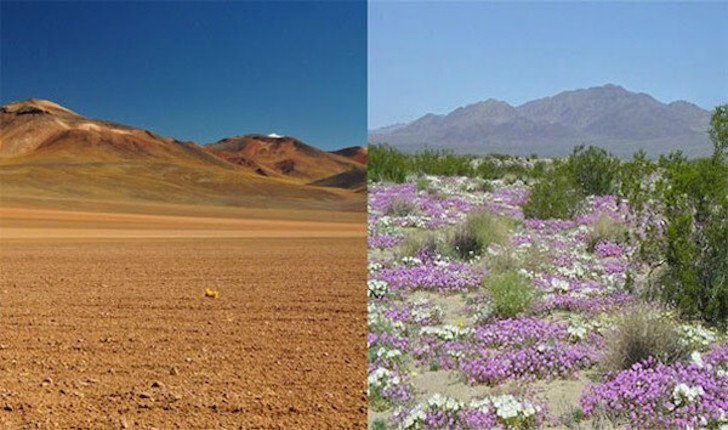
The first half of this psalm sings this prayer of gratitude, looking back at how God had graced these exiles to come home and rebuild the temple and its walls, and the people “were glad”.  The second half is a prayer for restoration of the nation that had been scattered and their land that had laid desolate for 70 years. Now that Zion (verse 1, pointing to the temple and its worship) had been restored, the psalmist prays the nation and its land be revitalized like the annual winter rains transform the arid dessert in the South of Judah (Hebrew “Negev” in verse 4) into a flowery garden bustling with life.

Restoring Joy like SOUTH
Rain transforms the arid desert into a flowery garden bustling with life.

Sowing in tears

Sowing is not a particularly sad or even hard job.  Why then would the psalmist write of “weeping” and sowing “precious seeds”?  The context of the Psalm is of Jews returning to a dilapidated Jerusalem and barren land, to a city and land that have been unoccupied and uncultivated for 70 years. They brought food with them what they were able to carry, but that would not last long.  So they would soon need to live off the land – they needed to sow.  And when you sow the food you want to eat, when you sow the seeds your children hunger for, your sowing is accompanied by tears of anguish.  These are costly seeds that mere money can’t buy – these are “precious seeds” that get its first watering by the tears of the sower

seed-sower-jeremysams
The sower by Jeremy Sams.

How to reap joy

This ancient song teaches us how to cultivate a life of joy amidst suffering – a valuable lesson for each of us.

Firstly, a life of gratitude makes for a glad heart even amidst hardships, as the psalmist teaches: The Lord has done great things for us [and] we are glad.”  In looking back, remembering the good things the Lord has done for you, the hard times in which God has preserved you and later from which he has delivered you, the anguished heart is refreshed with joy, hope and faith.  When you relive joyful times your heart relives the past joy and your faith is stirred by hope as you remember how God has delivered you from similar hardships in the past – he will do the same again.  Indeed, gratitude makes you cheerful, and the cheerful of heart has a continual feast” which no fire can quench (Proverbs 15:15).

Secondly the psalmist says that sowing needs to be continuously, not impulsively or sporadically.  You keep on sowing until you reap a harvest.  Considering the context then the psalmist probably had in mind how his people had been restored to joy from a life of slavery and exile through “sowing in tears” like recorded in the prayers of Daniel (Daniel 9), Nehemiah (Nehemiah 1), Jeremiah (Lamentations 1-4) and some of the Psalms (eg Psalm 137).  These prayers give us a view into the anguish of the exiled Jews, and how they lamented bitterly and continuously petitioned God for return and restoration – a true sowing in tears that resulted in the joy expressed in half of this psalm.

This is a great lesson to never give in to hardship, and never give up because of disappointments.   We continue to sow in tears because of the expected joy in the harvest.  In fact, the great anguish is the great motivator to continue sowing in tears as we long for the great joy.  So do not grow weary while doing good, for in due season we shall reap if we do not lose heart.” (Galatians 6:9).

Thirdly, the sowing of precious seed (KJV) especially results in “shouts of joy”.  And this is the main teaching in this psalm: sowing seeds which makes you weep will ensure a harvest accompanied by shouts of joy.  In other words, a life of selfless sacrifice results in joy.  The giving up of what you deem precious so that there is enough for others to share will result in joy.  This first generation of returned exiles made the big sacrifice to re-cultivate the farmlands from their own meagre food-packs to ensure that there is enough food for other returning exiles and their coming generations. Their sacrifice resulted in joy for all.  The joy is multiplied when the precious seeds you sow results in bundles of sheaves – enough for everyone.

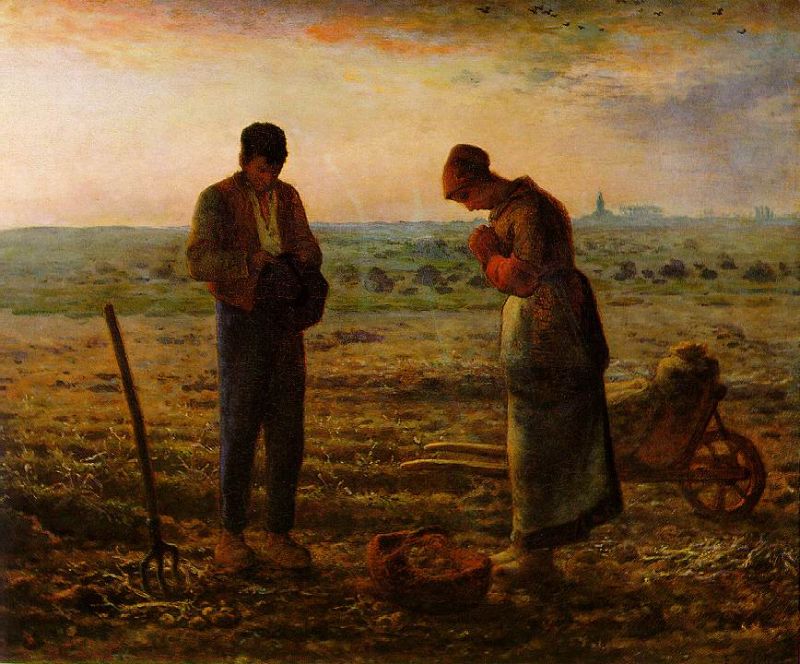
Sowing_Angelus

When the sacrifice is rewarded with breakthrough and the effort was worthwhile – then there is great joy.  But without sacrifice – without the sowing of precious seed – there will be no reaping worthy of great joy. Playing it safe does not result in great joy.  Only sowing in tears results in a harvest of joy.

Lastly, although accompanied by anguish, the sowing is very hopeful.  The farmer knows that for every single seed he sows he is sure to reap thirty, sixty or even a hundred-fold (Matthew 13:8).  His tearful sowing can be done confidently and hopeful, because “he shall doubtless come home with shouts of joy, bringing his sheaves with him.”  And our confidence in sowing is not misplaced!  God himself oversees the principle and process of sowing and reaping: “God is not mocked; for whatever a man sows, that he will also reap.” (Galatians 6:8).  Sowing in tears is never in vain.

The psalmist teaches that persistent, sacrificial and hopeful sowing will result that results in a joyful harvest.

Bringing home the joy

Jump_baloon4

Each of us are in pursuit of happiness. We are all driven by a longing for joy: we run away from things that might cause us harm (fear) and we run towards the things that we belief will bring us pleasure (joy).  But many times we exert effort on what does not produce true delight or lasting joy (Isaiah 55:2).

The wisdom of this world says self-serving efforts (or selfishness) produces joy: “SPEND EFFORT FOR MORE COMFORT AND CARNAL PLEASURES TO INCREASES YOUR JOY.”  Self-serving pleasure is the chief motivator behind most of the marketing campaigns that dominate the media: “Buying [this] – it will give you joy.”  “Living [here] will give you joy.”  “More of [this] will increase your joy.”  “Doing [this] will give you joy.”  This philosophy is the heart behind every temptation that lures us into sin, yet it still leaves us unsatisfied and without lasting joy.

But over against this the psalmist says “Those who sow in tears you will reap with shouts of joy.” In other words, selflessness produces real joy: “THE GREATEST JOY IS FOUND IN THE GIVING OF YOURSELF FOR THE BENEFIT OF OTHERS.”  Just as the endurance athlete gets joy from completing the race, so the self-emptying mother of a disabled child reaps love and joy from any response the child may give. The couple who walked through their dark valley together reaps tremendous joy in their relationship at the end.  But for the one who quits or gives up or gets distracted during hardships, there is no reaping of joy.  If you wish to reap in joy, you need to sow the precious seed in tears.

The context of “sowing in tears” in this psalm as sketched above is to “restore [Judah]” (verses 4-6) – not only for yourself only.  “Shouts of joy” comes when your anguished efforts for another results in an end of their suffering, their hardship.  Ironically your joy overflows when you give of your precious time, share of your precious belongings, and give of your very life for the betterment of another.  It is truly “more blessed to give than to receive” (Acts 20:35; see also Hebrews 12:3).

Reflection

So consider your life, your pursuit, your prayers.

  • Can you recall what you have sacrificed a great deal to achieve or complete, and when it was fulfilled you were joyful, satisfied, ecstatic, and fulfilled?
  • Where are you currently “sowing in tears” – i.e. where are you sacrificing your own comfort for the benefit of another, so that joy may come?
  • Can you remember why?  What do you hope to achieve with this “sowing in tears”?

And as you go out again tomorrow, pouring out of what is precious to you, let this verse encourage you as it did the Jews who first sang when they rebuilt Jerusalem and their nation (400 BC):

He who continuously goes out weeping,
bearing the precious seed for sowing,
shall doubtless come home with shouts of joy, bringing his sheaves with him.”

A call to courage

Our world is scared, and increasingly so. Anxiety disorders are the most common mental illness in the US today according to the National Institute of Mental Health affecting one third of the North American population, with a staggering 37% and 50% increase in occurrence among children (ages 4-10 and 11—19) over the last decade. It is estimated that anxiety disorders cost the U.S. more than $42 billion a year, nearly one third of the country’s total mental health bill.

But the cost of anxiety is not limited to medical bills.  The fear of terrorism has caused an arming 114 percent increase in the US defense budget in the last 13 years, which would total about $586.5 billion in 2016 (by far the greatest in the world). In addition the global security technology and services market which is expected to total $86 billion this year.

Our world is a scary place.  Our society is characterized by a sense of anxiety and vulnerability, daily fueled by images of terror and rumors of impending disaster. But we are not the first generation passing through these shadows of uncertainty, uproars and unrests. Like the generations before us we need to overcome the urge to panic.

This is a call to courage. It’s not the time to be anxious, to be intimidated, to succumb to terror. As we see the climate is changing, the shadows drawing longer, we need to look back and find courage from the accounts of others that have navigated similar moments in history. During Nero’s reign Paul urged the anxious, persecuted believers to look into the the Scriptures for “learning… encouragement… comfort… [and] hope” (Romans 15:4). And what examples of courage does the Scripture not have!

A Call to Courage

Abraham left all he knew for promise from God in his spirit.  Later he pursued five kings with their armies to save his nephew Lot from slavery. Noah, a preacher of righteousness had courage to confront a perverse generation and build the ark amidst their mockery for 120 years. Young David stood up to Goliath the giant.  Joshua and Caleb were not intimidated by the giants in walled cities and trained armies that occupied their Promised Land, patiently waited forty years and in their old age lead the nation to possess this land.  Daniel walked into a den of lions, and his three friends into the fiery oven because they would refused to bow to another god.  He did falter to fear but told Darius straight-up “God found you too light!” Moses confronted the terrifying Pharaoh demanding release of all his slaves, and then led the entire nation into.  Queen Ester risked her life when she approached the Persian king to save her generation from annihilation.  Nehemiah did the same to rebuild the holy city.  Gideon and his small army walked unarmed into a Midianite camp with 15’000 soldiers. Samson single-handedly took on 1’000 Philistine warriors. Jehoshaphat led the whole nation into the dessert against three massive armies. Elisha was besieged by the entire Syrian army but walked right up to them and led them into siege.  Elijah challenged all the Baal prophets to a public showdown asking “Who is the real God?!”  Jonah walked into the most violent city of his day as a foreigner, demanding repentance and submission to his God.  Prophets like Isaiah, Jeremiah, Malachi, Amos, Hosea, Nathan and John the Baptist willingly chose a life of mockery, poverty and pain as they confronted kings, rebuked hypocrisy, and exposed the injustice of the day.

Jesus, son of God, left the comfort of heaven, the honor of the throne, the worship of the angels and the power of divinity to enter a life of pain, poverty and persecution – ultimately to suffer brutally and die shamefully. All because “God so loved the world.”  And his courage set the pattern for his followers, as we see in the first beatings of Peter and John, the first martyr Stephen, the hardships of the Apostle Paul history of the church throughout the ages.

How do we grow in courage?

In Joshua 1:1-9 we see the Lord giving a pep-talk to the new leader called to lead the Hebrews to occupy their land inhabited by Giants in secure cities.  We learn much from this instruction about how to “take heart” when times are tough.[i]

Courage must rise in the face of fear.  There is no need for courage when everything is plain sailing, when all is as it should be.  But in the threat of pain of discomfort, loss or death, when the natural inclination is to hide or run away, that’s the que to take heart!  The Lord told Joshua to be courageous because the situation was terrifying.  A sense of fear must trigger the response to courage.

Courage has a cause.  When there is no need, no urgency, no mandate, there is no need for courage.  When one puts his hand into a lit furnace for no reason he is rightly labelled a fool.  But a woman who runs into a burning house to save her daughter is a hero.  Joshua had to be courageous to fulfill his mandate.  Bravery is called upon when the fight is worth it.  Courage is needed to uphold the righteous purposes of God.

Courage is gained in the knowledge of God.  Joshua was told to not forget “The Book of the Law” which Moses left Israel.  Today we have it as the first five books in our Bible. Why would that help Joshua to grow in courage?  Because it records – from Creation to Exodus – the accounts of God’s wisdom, power and loving faithfulness with his people. Joshua would be “encouraged” every time he reads how faithfully and powerfully God had preserved and delivered his people in desperate times past.  Thus courage is gained as we become convinced and get reminded of God’s power and might – that truly “nothing is impossible with God” (Luke 1:37).  Courage grows as we learn from these accounts who God is: that God is good, righteous, faithful and merciful.  This revelation of God’s power and character is preserved in Scripture as records of his interaction and decrees, so we get to know God and are encouraged as we read these accounts of divine intervention (Romans 15:4).  Indeed, but the people who know their God shall be strong, and carry out great exploits.” (Daniel 11:32)

Courage is gained in the assurance of God’s presence.  The Lord encouraged Joshua with the promises of his personal presence.  More specifically “as I was with Moses” – thus Joshua was promised the same intimacy with the Lord, the same faithfulness in preservation and the same powerful interventions which Moses experienced as he lead these people.  What an encouraging promise!  The Lord made that same promise of companionship his ascension (Matthew 28:20), and that companionship we experience in the empowering presence of His indwelling Spirit (Romans 8:11). We grow in courage as we grow in revelation of the Lord’s personal presence, declaring with David The LORD is on my side; I will not fear. What can man do to me?” (Psalm 118:6)

Courage is infectious. The Lord encouraged Joshua.  Before these words of encouragement Joshua was intimidated and anxious.  But the words of encouragement put the necessary strength into his heart to go on and fulfill his mission. That’s why we are repeatedly called to “encourage one another” (1 Thessalonians 5:11) – literally “put courage and strength into the heart of another”.  We get encouraged through deliberate effort to be built up, but also indirectly as we see others or hear their stories as they continue courageously amidst hardship, thinking “If another can do it, so can I.”  Courage is infectious, as we can see in this video

https://www.youtube.com/watch?v=-sUKoKQlEC4

Read here how to Encourage One Another (https://walklikejesus.net/2015/09/10/encourage-one-another/)

Courage is a choice. The Lord’s repeated commands of courage implies a choice to succumb to fear and intimidation or to take heart and continue with his commission.  We either choose to allow fear to dictate our actions, or we choose to allow courage to reign in our hearts. So Jesus told his disciples – as he is saying to us today “Let not your heart be troubled…believe in me” because “In the world you will have trouble. But TAKE HEART; I have overcome the world.” (John 14:1; 16:33)  These exhortations from the Lord demand a response, a resolve to not allow fearful situations to “trouble your heart” and dictate your actions. So when there’s a choice to fight or flight, choose to fight and persevere.

Add courage to your faith

Life in the kingdom of God is not for the faint-hearted – it never was, it never will be. The kingdom suffers violence” said Jesus (Matthew 11:12). Our world is unfriendly and uncertain. But so it was in the days of Jesus and the Apostles. Their society was oppressed by the Roman army and heavily taxed by Caesar, plagued by perpetual civil unrest and terrorism, divided by extreme classism. For that reason Peter exhorted the church to add to your faith COURAGE (2 Peter 1:5). Mere saving faith does not make you fit or fruitful to fulfill your mandate. Our mandate is clear: peacemakers, Kingdom-bringers, heralds of the Good News.

So “don’t be anxious about tomorrow…” (Matt 6:34), don’t live a life pacified by fear or paralyzed by what can go wrong. Fear steals your joy and taps your strength.  Reflect on this truth: if God is for us, who can be against us!?  Then look up, shape up, sign up and step up. TAKE HEART, finish the job, then we can go Home.

[i] Note the incredible similarity in form of the appeals to courage to complete the divine mandate with assurance of the Lord’s power and presence in the following texts: Solomon’s charge to build the temple (1 Chronicles 28:20), Joshua’s command for conquest (Joshua 1:1-9), the disciple’s commission (Matthew 28:18-20), the angel’s warning about Paul’s shipwreck and appointment with Cesar (Acts 27:24-26) and the Corinthian’s church charge to not fear death but continue in their faith (1 Corinthians 15:57-8).


Enduring Nero’s fire

How to remain true to God amidst suffering.

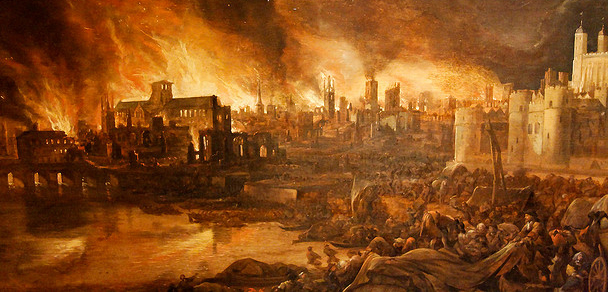
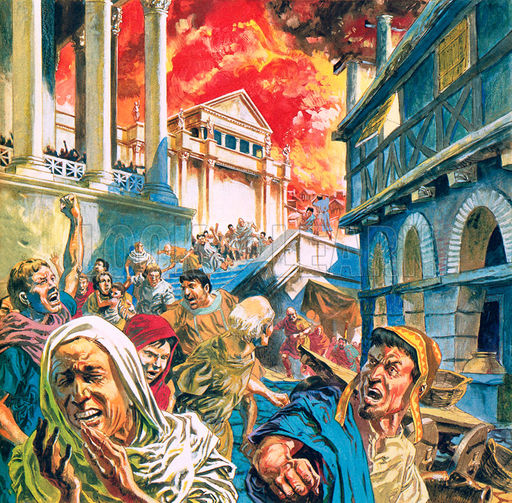
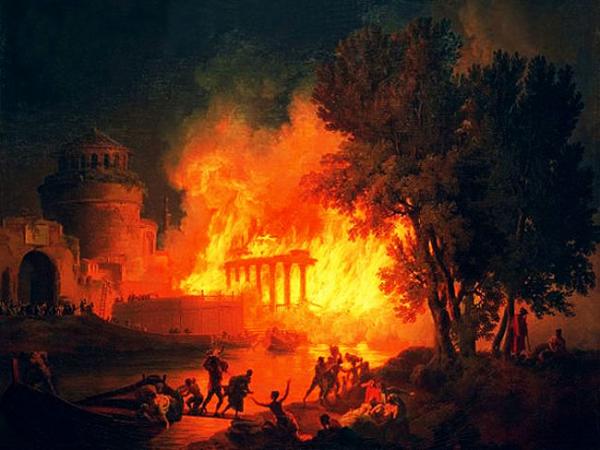
Writing to a congregation of predominantly Jewish Christians in Rome during Nero’s reign, the author of Hebrews repeatedly exhorted believers to not renounce Christ in fear of the mounting persecution.  And that is necessary, because suffering moves one to re-evaluate what you believe.  At some point in life we all walk through the fire – but how do you remain faithful to God amidst suffering? How do you endure the fires of life.

Brief background to and outline of Hebrews

The letter to the Hebrews was written to Jewish believers (1:1 “spoken to our fathers”) probably in Rome (13:24 “those from Italy greet you”).  After hearing the gospel confirmed with signs and miracles (2:4), they were converted (3:16), were baptized and had partaken of the Holy Spirit (6:1-5).  This was a long-established church (5:12) whose members have lived exemplary lives of faith and good works (6:10), and have experienced persecution, imprisonment (13:3) and the loss of property (10:32-33), but have not yet suffered martyrdom (12:4).  The congregation were capable of charity and hospitality (13:2,16), and previously had great teachers and leaders (13:7) who grounded them in foundational Christian teaching in the Jewish Scriptures (6:1-2).

But their faith had been outlawed and these ostracized believers became discontent and discouraged and longed for earthly property and a sense of belonging in their society (13:5, 14).  So they started questioning their beliefs, considering other avenues to God so they could be reintegrated into society; they were on the verge of walking away from their Christian convictions.  In response the author of Hebrews wrote this “word of exhortation” (13:22) to bolster the faith and perseverance of this wavering Christian community, reminding them how to correctly “draw near…” (10:23) to God.

The recipients seems to have been influenced by the first-century philosopher Philo of Alexandria who mixed Judaism with Greek philosophy and wrote that there were several ways for sinful man to approach God.  He mentioned the Logos (elsewhere “the word or reason of God”), Sophia (elsewhere “the wisdom of God”), the angels, Moses, Melchizedek the high priest and the Jewish sacramental system were all avenues (or mediators) to bridge the divide between man and God.  Reading Hebrews, it appears that the first recipients of this letter were considering these alternative avenues to avoid persecution, yet still worship God.[1]  In response to their searching the author writes how Jesus Christ is better than Philo’s Logos and Sophia (1:1-3), better than the angels (1:4-2:18) and Moses (3:1-6), and better than the Aaronic priesthood (7:1-24), presenting a better offering (9:14) in better place (8:2).  Jesus has also secured a better, eternal covenant by his sacrifice “once for all” (10:14) that he can guarantee fulfillment on behalf of both man and God (7:22).  Our author shows this superiority to deter readers from turning to these “alternative mediators” to escape the pressures of persecution and to exhort readers to hold fast to their confession if faith in him amidst difficult times.

rome3

Faithful in the fire

How does this 2000 year old letter to Jewish believers suffering under Nero’s persecution help us today to “hold fast to your confession” (Hebrews 4:14; 10:23) in the midst of our own hardship and suffering? How can we be prepared to remain faithful in the fire and joyfully endure the suffering as these early believers who remained true to Christ through Nero’s fires?

The answer lies in the pivotal point of this letter, Hebrews 10:19, where the author moves from orthodoxy (or correct thinking) to orthopraxy (or correct living)Here the epistle shifts from theory to practice, with the transition Therefore” meaning “based on our argument up to here” and then follows with three powerful exhortations that appeal to the required response of the hearers.  These three exhortations contain the keys that will help the readers through the mounting persecution they feared.  The author encourages readers to “draw near… in faith” (v22), “hold fast to … hope” (v23) and “to stir one another in love” (v24-25).  Then he unpacks real faith in chapter 11, hope for endurance in chapter 12 and love in practice in chapter 13.  Like so many times in the letter he again reminds them that they need to remain faithful to Jesus, because of the coming judgment of Christ (v25-31).

These three exhortations to continue in faith, hope and love apply as much to us during times of hardships today.

rome5

Draw near in faith

These wavering believers were graciously encouraged to “draw near in full assurance of faith” (v22).  Even although they considered renouncing Christ they were encouraged to “have confidence to draw near to the throne of grace through the blood” (4:16; cf 10:19).  God has not written them off!  Amidst their suffering and wavering they can be assured that their confidence before God was not based on their track record, but based on Jesus’ shed blood (v19).  This also implies that their suffering was also not due to their failures.  Rather they were encouraged that Jesus, their perfect High Priest has also “suffered when tempted, [and is therefore] able to help those who are being tempted” (2:18). He “is able to sympathize with our weaknesses” (4:15-16) – so draw near to get help!

Hold on to hope

Poor and pushed aside, mocked and outlawed, their current circumstances were very uncomfortable.  And their immediate future looked even bleaker as the Roman persecution was escalating.  Therefore the author encouraged these fragile believers to hold onto their Lord who promises their share in his eternal inheritance! He is their “forerunner” (6:20) who went to announce their coming and the High Priest who secured their confidence before God (6:20). There is no room for doubt: Jesus secured their access and inheritance in Jesus’ eternal kingdom. And “this hope is the anchor of the soul” (6:19) – it settles the emotions and keeps the believer on course to, not swept away by the circumstance. So the believer is encouraged to endure suffering the way their Lord did – joyfully anticipating his reward (12:1-2).  This hope is the reason to remain faithful amidst the fire; their endurance will be rewarded!

Assemble to grow in love

Thirdly the author exhorts this congregation, fearful of being hurt or ostracized, to not neglect their assemblies (10:25). In effect he tells this fragile congregation “I know that you are afraid of being identified as a Christian, and I know that you will suffer and might even die when you are seen to gather with other believers – but do it!”  Why the urgency?  Why should they assemble?  Could they not practice their faith in private?

The author motivates that their primary purpose of assembly is to “stir one another to love and good works” – to grow in godly character and excel in good works (10:24).  More specifically, each congregant should make it their goal to think about how to help another excel in character and good works.  As he did earlier in the letter he encourages them to continue love and service for the saints (6:10-12).

Enduring the fire today

How do we endure suffering?  What was true for the Hebrew congregation in Rome suffering under Nero’s reign is true for me and you.  First, hold on to your faith: you are loved by God, approved by God, sanctified by God and preserved by God ford God.  Not the suffering nor your doubts or fears can separate you from God’s love in Christ Jesus (Romans 8:35-39).  So boldly approach of throne of grace to receive help in time of need! (Hebrews 4:16).

Second, let hope stir your joy and calm your fears, motivate you to continue in faith, work for your reward and find purpose in all you do.  God rewards faithfulness!

Thirdly, “never walk alone!” Join in the assembly to grow others “in love and good works” (Hebrews 10:24), and see how you are strengthen and encouraged yourself.  Indeed, “it is more blessed to give than to receive!” (Acts 10:35)

References for understanding the letter to the Hebrews

  1. Nash R.H., The Notion of Mediator in Alexandrian Judaism and the Epistle to the Hebrews, Westminster Theological Journal, Vol 40 (1977), p89-115.
  2. Barclay W., The Daily Study Bible, The Letter to the Hebrews (Edinburgh: The Saint Andrews Press, 1998).
  3. Gutrie D., Tyndale New Testament Commentaries Hebrews (Leicester: Inter-Varsity Press, 1993).
  4. Schenck K., Understanding The Book Of Hebrews (Louisville, Kentucky: Westminister John Knox Press, 2003)


Encourage one another

Have you considered what your legacy will be?

What will you be known for one day?

What will your colleagues remember you by?

What will your kids imitate (either intentionally or unintentionally)? Or what are they learning from you now?

What is your influence right now? When you leave the office today, or the dinner party tonight or the Bible study group this evening, what do people say of you after you’re gone?  What are you known by?

I WANT TO BE A BARNABAS

St-Barnabas-cropped
St Barnabas “Son of Encouragement”

Imagine being known and remembered primarily for being an encourager.  I want to be that guy!  Joseph, a Levite of Cyprus, got the nick-name “Encourager” (“Barnabas”) by the apostles and the early church (Acts 4:36-37).    His ability to encourage was so influential that he is still remembered today by that name.  What a legacy!  This Encourager had much influence in the early days of the church and missions.  For instance after the zealous persecutor Saul of Tarsus had his life-altering encounter with the Lord Jesus and became Paul, the Encourager was the one who went to look for him, encouraged him and brought him to the Apostles in Jerusalem (Acts 9:26-28).  When the believers fled from Jerusalem after Stephen’s martyrdom and resulting authority, witnessing as they travelled, they “accidentally” established a big church in Antioch with Gentiles (Acts 11:19-24).  The Encourager was delegated by the Apostles to discover what was going on; he saw God was at work and encouraged them to continue what they were doing.  Afterwards he went to look for Paul, and encouraged him to join him in Antioch and to pursue the ministry he received from the Lord – the ministry among the Gentiles (Acts 11:25-26).   Years later, while the church was praying, the Holy Spirit set apart two people for missions to the Gentiles – Paul and the Encourager (Acts 13:1-3).  Again we read of the Encourager when he and Paul had an argument over John Mark (Acts 15:36-40); Paul considered him to be fickle and untrustworthy, but Barnabas could see God at work in and through him, so he encouraged him and took him along on his ministry trip. It seems whenever there was a new thing or a big change about to happen, God positioned the Encourager right there in the middle of the crisis, to put strength in the hearts of his people so they might press on amidst uncertainty and difficulty.

PUT STRENGTH IN THE HEART

To encourage literally means to PUT STRENGTH INTO THE HEART (en = into, courage = strength).  Fear does the opposite; it takes away the will to fight.  So in times of uncertainty or hardship with much opposition, people lose the will to press and as their hearts close up or cower away.  In times such as this people need to be strengthened in heart, they need to be encouraged to press one.

See how encouragement can produce strength and endurance in a very practical way in “Death Crawl Scene” from Facing the Giants: [https://www.youtube.com/watch?v=-sUKoKQlEC4]

https://www.youtube.com/watch?v=-sUKoKQlEC4

Everyone needs encouragement at times.  And a need for encouragement is not a sign of weakness just a desire for water is not a sign of weakness.

SCRIPTURE AS ENCOURAGEMENT

It is helpful to keep in mind that the Old Testament history, poetry as well as prophesies were written during times of tremendous uncertainty and hardship.  The intent of the writings is to remind the reader of God’s promises, God’s power, God’s proximity and God’s personal commitment to his people.  Every book in the Old Testament is very encouraging.  That’s why Paul referred to it when he said “whatever was written in former days was written for our learning, that through endurance and through the encouragement of the Scriptures we might have hope.” (Romans 15:4)

Bible
The Bible: an encouraging record of God’s power, promises and proximity.

Likewise most of the New Testament was written during the three periods of most severe persecution of the first century (around AD 45, 60 and 92).  Many of these communities also suffered from internal conflict, so understandably the Apostles wrote with the intent to encourage the believers to remain faithful to Christ in their worship, witness and works.

Thus the New Testament is a great place to learn about this skill much-needed ministry skill of encourage.  So how do you encourage another?

  1. DELIBERATE INTENT IN MEETINGS

We come together to encourage on another.

When the author of Hebrews moves from orthodoxy (right belief) to orthopraxis (right practice) in the 10th chapter, he encourages the scattered, persecuted church to maintain “full assurance of faith” (10:22) in Christ while “holding on in hope” of eternal reward (10:23).  These instructions come as no surprise, but he goes on to instruct this fearful group to “not neglect to meet together” (10:25).  These believers may die when they meet together openly in their hostile environment!  Why should they risk the public association as Christians?  He writes says believers should meet together to “consider how to stir up one another to love and good works” (10:25).  He says “think about ways to encourage one another to greater love and more good works!”  Continue to come together so that you may effectively encourage one another!”

  1. VERBAL CULTURE OF UPLIFTMENT

We look for gold within the dust.

Such a deliberateness requires a disciplined community that – amidst personal hardship – have trained itself to only speak words that are encouraging and leads to the edification of another (Ephesians 4:29-31). Therefore there is no room for complaining, criticizing, slander or gossip in their communal verbal culture.  Rather, the tone of conversation is always one of affirmation, thanks, recognition, exhortation – always encouraging, even when correcting.

Our verbal culture is always uplifting.

Notice the way the apostles start and end their New Testament letters with affirmation, thanks and encouragement.  Jesus speaks the same way in Revelations to the seven churches around Ephesus, starting and ending each message to these congregations with affirmation and praise, and ending each letter with hope – a promise of reward.  What an example of verbal encouragement!

  1. ALWAYS LOOKING FOR THE GOOD

The verbal encouragement obviously stems from eyes that have been trained to be “light” and not “dark” as Jesus taught (Matthew 6:22-23), in other words they have trained themselves to recognize whatever is good and godly, and not to fixate on what is negative and evil.  As a pessimist sees the glass “half empty” an optimist sees the same glass “half full”, so one who has trained his eyes to see good can see goodness in great difficulty and thereby become an exceptional encourager when everyone else complains.

We look for gold within the dust.

Eugene Person’s paraphrase of Proverbs 11:27 (MSG) sums up this disciplined attitude well: “if anyone can find the dirt in someone, be the first to find the gold!”  An encourager always seeks what is good and Godly in someone, and when he finds it he praises it, drawing attention to it so others can also see and celebrate it.  Because, as Andy Stanley puts it, “whatever gets celebrated gets repeated!” 

  1. RELAYING GOD’S MESSAGE OF ENCOURAGEMENT THROUGH PROPHESY

New Testament Prophesy is exactly that – a message from the Lord that reveals and affirms what is good and even praiseworthy, meant for “upbuilding and encouragement and consolation” (1 Corinthians 14:4).  Prophetic words from the Lord – whatever the message – communicates to the receiver that “I, the Lord know who you are, what you are going through. I care and I am for you!”  Indeed very uplifting, encouraging and comforting! That’s why Paul encouraged this very charismatic but persecuted church in Corinth to earnestly desire the spiritual gifts, but especially that you may prophesy…” (14:1). Everyone needs encouragement, and the Lord wishes to encourage His church (also) through prophesy!

  1. LET NO-ONE SUFFER ALONE

One of the best ways of encouraging one who goes through hardship is by simply being with them in their times of hardship, and to encourage them to not give up.   Paul wrote to the Galatians that they ought to “bear one another’s burdens” (Galatians 6:2), or more literally to “stake yourself to” the one suffering, using the imagery of strengthening an injured leg, to prevent it from folding under the load.  Whatever the hardship, your presence with one suffering is encouraging and helps preserve the person’s spirit.

We encourage one another by our support.

The affirmation that “you are not alone, you are not forgotten” is an extremely powerful motivator to press on through hardship.  Community, love and a sense of belonging is in itself a reason to live and not give up.  Jesus knows that, and therefore, in various forms we find these words of comfort to persecuted congregations “Behold, I am with you! I will never leave you or forsake you.” (see Hebrews 13:5; Matthew 28:20 etc).   May times our presence and ministry to hard-pressed people reaffirm this encouraging truth: “God knows about you and He is near to you.” 

  1. ENCOURAGED TO PRESS ON THROUGH HOPE

One of the primary ways in which believers are encouraged within the New Testament writings is through hope – the certain promise of reward that give sense and meaning to the current suffering.  As for the athlete, the student, the pregnant mother and fighting soldier, anyone who undergoes suffering will hold on if they know that what they go through is rewarded in some way.  Like Paul says “these light afflictions do not compare with the glory that awaits us” (2 Corinthians 4:17).

Encourage through hope to press on.

The most common hopeful encouragement in the New Testament is the promise of rewards on “the Day of the Lord” – Judgment Day or the Return of Jesus, where the Lord will reward faithfulness and obedience amidst suffering, and judge the wicked. (See 1 Thessalonians 5:2-14 as example).  But even temporal hope is a strong encouragement, and the Bible abounds with examples of encouragement to push on with the promise of reward in this life, such as David’s prayer “I would have lost heart unless I had believed that I would see the goodness of the Lord in the land of the living.  Wait on the Lord; be of good courage, and He shall strengthen [encourage] your heart; wait, I say, on the Lord!” (Psalm 27:13-14) 

THE GOD OF ENCOURAGEMENT

Just as long-distance runners need water and cheers throughout the race, so the people around you need encouragement to go on.  God is “the God of Endurance and Encouragement” (Romans 15:5) who wishes to encourage his children, cheering them on as they do good, comforting them with his presence, promising that their efforts are worth it.

You and I have the privilege to imitate this loving, encouraging God who cheers his children on.  You and I have the privilege to put strength into the hearts of fatigued, faithless and fearful people.  And for that, you will also have your reward!

So look up.  Chances are the first person you meet now will need a cool cup of encouragement.  Be ready!