
With this last chapter of Revelation, John focuses again on Jesus and his centrality to all of God’s creation and redemption. A recording of this post is available on the Shofar Durbanville YouTube channel.
The Bible begins and ends with the description of a paradise garden in which there is a tree of life and a life-giving river. In this last chapter of John’s Apocalypse, John shows how God’s restoration and renewal of all things are brought to completion. In this final vision of the Revelation of Jesus Christ (1:1), we see the Gospel of God beautifully painted.
Jesus is life (22:1-5). Continuing with the scene of the New Jerusalem (Revelation 21), John describes the River of Life flowing from the throne room of God and the Lamb. The picture of the life-giving river alludes to Eden (Genesis 2:7-10) and Ezekiel’s vision (Ezekiel 47:1-12). This River of Life flows in the middle of the street of this Holy City. On its banks is the Tree of Life, bearing fruit all year long, with “its leaves for the healing of nations” (22:2; Ezekiel 47:7,12).

After Adam and Eve rebelled and ate of the tree of the knowledge of good and evil, God removed them from the Garden “lest [they] stretch out [their] hand, and take also from the tree of life, and eat, and live forever” in their fallen state (Genesis 3:22-24). But access to the Tree of Life is a sign that there is no more sin, no more darkness, “for the Lord God will be their light” (22:5), and those who dwell therein will forever reign. This garden image is a compelling picture of Christ’s full redemption and restoration of mankind, where mankind will live in communion with God, share in his life, and reign over his creation with goodness (Genesis 1:26-27). Here, life is as it always should have been.
The symbolism is beautiful and meant to be both hope-giving and instructive to the readers. Christ is the source of all light and life (John 1:4-5; 11:25; 14:6). The Life-giving River “which make glad the city of our God” (Psalm 36:8; 46:4) depicts the nature and work of the Holy Spirit – the “Spirit of Life” (Romans 8:2, 11) who satisfy believers to “never thirst again” (John 4:13; Isaiah 55:1), even to overflow with “rivers of living water” (John 7:38-39). The street in the Holy City is “the Highway of Holiness” (Isaiah 35:8), “the Way” of life Jesus taught of and made possible by his blood (Acts 24:14,22, Hebrews 10:19-20). The Tree of Life is the church, God’s redeemed creation, who in turn is God’s redemptive gift to the world. It is the tree that grows from the Gospel seed (Matthew 13:31-32), that is planted next to the River of Life and therefore “yields its fruit in its season, and its leaf does not wither” (Psalm 1:3; Jeremiah 17:7-8). Through the reigning of the Lamb and the nourishing of his Spirit, the church now and forever reign (Revelation 5:9-10; Romans 5:17).
Put together, the church is those renewed and sustained by the Spirit of God, who walks in the Way of Holiness as they submit to the reign of God and the Lamb. By drawing from the water of the Spirit, the church bears fruit that gives life and healing to the nations, displacing evil. This is as much a picture of the church today as it points to Christ’s coming kingdom.
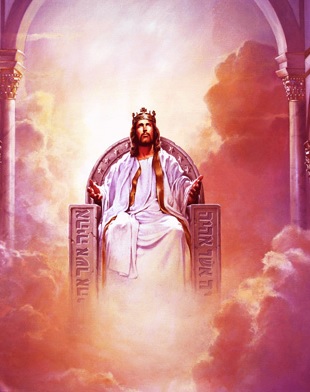
Jesus is the judge (22:12). Four times in this chapter, John records the words that Jesus’ return is “soon”, and hears Christ’s admonition to “hear the words of this prophesy and keep it.” (22:7). The angelic warning about the end on the river-bank pictures a strong allusion to Daniel 12. But in contrast to Daniel, who was told to “seal up” and “shut up” the prophecy “until the last days”, John is now instructed to “not seal up the prophecy, for the time is near” – implying the Day of the Lord, the Day of Judgment is near (22:10; Daniel 12:4, 9). Alluding to Daniel’s vision (22:10; Daniel 12:10) the angel says:
“Let the evildoer still do evil, and the filthy still be filthy,
[let] the righteous still do right, and the holy still be holy.”
This does not imply that the time of grace is over. John writes that doing proceeds from being. In keeping with the rest of the prophecy to the seven churches, John urges believers, if indeed they have been redeemed and sanctified by the Blood of the Lamb (5:9-10), that they then act in accordance with their standing. Since you are holy, do righteous deeds! Do not live in the filthy ways of Babylon because Jesus is coming soon as the judge “to repay each one for what he has done” (22:12; Isaiah 40:10).
Jesus is the goal (22:13). [Read the full commentary of Revelation in Faithful to the End]

Quick links to full THE END Revelation Series posts
1 2 3 4 5 6 7 8 9 10 11 12 13 14 15 16 17 18 19 20 21 22 23 24 25 26


 walklikejesus