Finding God in the dark

On the way home after church one morning, a little girl asked,
“Mommy, why does the preacher always pray before preaching?”
“He asks God to help him, honey,” her mother replied.
The little girl frowned and asked,
“But why does God not answer his prayer?”

Why does God not answer his prayer?

Although “praises” and “psalms” go hand-in-hand, more than a third of the psalms in the Bible are songs of lament. These songs of sorrow teach believers to pray through seasons of hardship as we wait for help from Heaven. While most of these laments have glimmers of hope, Psalm 88  has no resolution and no happy ending – the closing line reads, “My closest friend is darkness is.” Often called The Darkest Psalm, its tone is death, difficulty, desertion and darkness. The Psalm is a maskil, a teaching that has helped believers pray through the darkest seasons when God feels distant or disinterested. For the past 3000 years, believers have found comfort in this poem. In their times of distress and disillusionment, they saw another one who felt what they felt – abandoned in their pain and frustration, with no hope. Yet God honoured his prayer and preserved it in the Bible as an example.

The Darkest Psalm

The 88th Psalm is attributed to Heman the Ezrahite, a prophet like his grandfather Samuel and a worship leader appointed by King David (1 Chronicles 6:33; 25:1-6; 2 Chronicles 5:12).  He directs his prayer to YAHWEH —the God who bound himself by covenant to the descendants of Abraham. Based on this bond, Heman appealed to God for help. His prayer is preserved between Psalms 87 and 89, songs praising YAHWEH for his covenantal faithfulness to Israel, David, and his descendants. This shows us that God is the God of Israel in his glory, of David in his kingship, but also the God of Heman and any other believer who feels abandoned and ignored by him. God remains faithful.

I can pray this way!

Psalm 88 comforts believers who suffer from anxiety, depression and hopelessness. Here, we find a prayer by a spiritual leader in Israel—a well-respected priest, worship leader, and prophet who has felt “terrors and dispair… since my youth.” This godly leader did not pray a pious prayer with pretty words. His prayer is overflowing with anger and frustration, depression and despair, loneliness and abandonment, anxiety and fears. This is a prayer that many of us can relate to, a prayer that echoes our own struggles and fears.

God honoured Heman’s raw, honest prayer by preserving it in the Bible, between two beautiful prayers declaring God’s faithfulness. This invites us to pray authentically, to bring our true feelings and struggles before God.

This psalm gives me hope.

There are four ways in which this raw, unresolved psalm gives me hope.
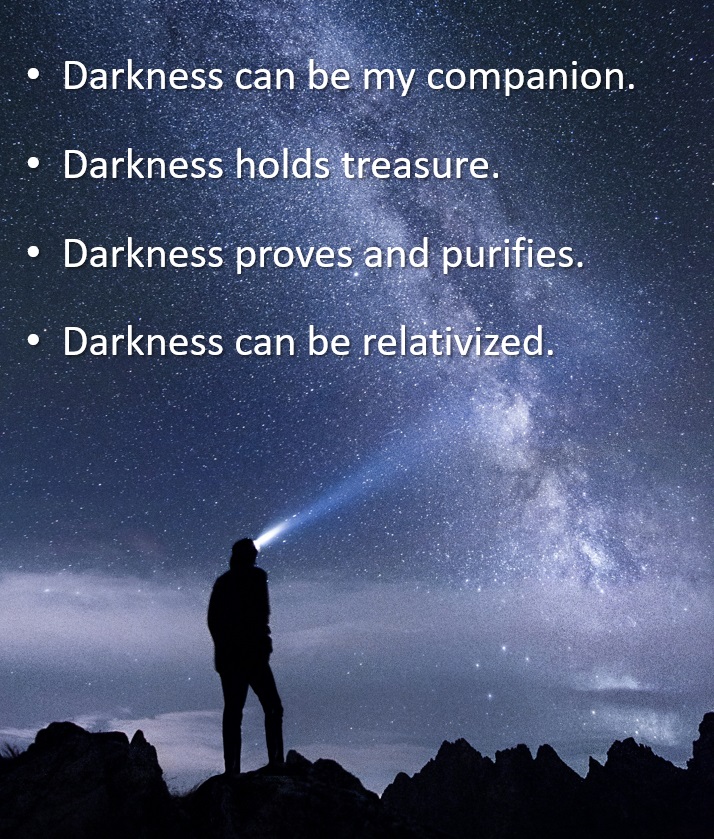
The psalm shows me that darkness can be my companion for a long time. Heman complains about difficulties, depression and despair that had been part of his life “since his youth.” Every morning, he prays to God; this looming darkness stays with him “all day long”. Michael Wilcock writes in his commentary on Psalm 88:

“This darkness can happen to a believer, this Psalm says. It doesn’t mean you’re lost. This darkness can happen to someone who does not deserve it, after all it happened to Jesus. This doesn’t mean you’ve strayed. This darkness can happen at any time as long as this world lasts because only in the next world will such things be done away with. This darkness can happen without you knowing why, but there are answers, there is a purpose, and eventually you will know it.”

Feeling this way does not mean God has abandoned you. Moreover, feeling depressed or deserted by God does not mean having no faith. Christians will not always escape disappointment, disease, disaster, dread and death. “In this world, we will have trouble,” Jesus said. These experiences and emotions lay heavy on the human soul – as they should. (Remember Jesus at the death of his friend Lazarus or before his trial?) It is comforting to know that God is with us in our struggles, that our faith is not in vain. The Darkest Psalm assures us that God hears our prayers in distress and honours our faith (trust) in him.

Scripture (and our experience) show us that darkness holds treasures. During seasons of hardship, we get to know God in a new way, see our motivations, strengths, and weaknesses, and understand how God has ordered the world. We come out of darkness more sober and wiser than we entered it.

Seasons of darkness prove and purify my faith. The book of Job shows that Job’s troubles tested whether his worship of God was sincere: Would he worship and trust in God without the benefits? In Job’s darkness, his faith was verified—he did not turn his back on God but rather wrestled with God.

Job’s faith was also purified in his season of darkness. Job’s hardships revealed his convictions and challenged him to reconsider who God is and how God relates to us and the world. Like precious metals, Job’s faith was purified in the fire as he saw a side of God that was hidden before.

My darkness can also be relativized. In his notes on Psalm 88, Timothy Keller points to the darkness Jesus experienced on the cross. During his darkest hours on the cross, where he felt God had forsaken and forgotten him, Jesus did not forsake or forget us. “For the joy (of our salvation) he endured the cross and despised the shame…” the apostle wrote (Hebrews 12:2). When he felt forsaken from God on the cross, Jesus cried out from Psalm 22:1-2

My God, my God, why have you forsaken me?
Why are you so far from saving me,
so far from my cries of anguish?
My God, I cry out by day,
but you do not answer,
by night, but I find no rest.

In all his anguish and pain, Jesus did not forsake us. We can be confident that Jesus will not forsake us in our moment of darkness. Moreover, in our greatest darkness, we will never suffer the darkness Jesus suffered. The Father turned his face from Jesus as he bore my sins so that the Father may never turn his face from me. I will never be alone in my darkness; I am reconciled to God in Christ. What a comfort!

The invitation in this Psalm.

Heman’s prayer invites me to be honest with God in my suffering and pray without pretence. All the psalms of lament teach us to pray for our fears, pain, disappointments, and shame. If it’s too difficult to say it out loud, learn from Heman and write a poem or journal, then cast your burdens on the Lord, and he will sustain you through. (Psalm 55:22)

Heman’s prayer reminds us that our experiences don’t always reflect reality. Despite being a worship leader, prophet, and priest who had enjoyed God’s glory and friendship for years, he prayed that he had never felt joy and companionship. It’s important to remember God’s goodness and moments of joy, to remind ourselves that life has been good and will be good again. Like the shepherd who “leads us through the valley of the shadows of death,” this difficult time will also pass.

Lastly, in my moments of darkness, I am reminded that I have my Friend on the cross. When I feel forgotten and forsaken by God, I am comforted that Jesus has felt what I am feeling. I know that he has been there, and I can draw grace from him (Hebrews 2:15; 4:16). He promised to never leave me, and he will lead me through (Psalm 23:4).

There will be seasons when I feel “God does not hear, God does not care.” This feeling does not mean I am fickle or faithless – Job, Jesus, David and Heman felt this way. Heman’s poem is a powerful prayer to find God in the dark and draw grace from him for today.


Ready for (another) Roller-Coaster Year?

Oh, how we wished that the pandemic and all its problems would burn with our 2020 calendars. Alas, it followed us into 2021, promising another roller-coaster year. How do you buckle up and ready your heart?

Most of us enjoy a good roller-coaster.  The ride starts with a slow climb, followed by a sudden drop and quick turns at high speed. As you feel the wind in your hair and hear the passengers’ screams, your veins flood with adrenaline and dopamine, leaving your hands shaking and legs jittery.  One group shouts “Let’s go again!” while another cries “Never again!”

Roller coasters leaves you either ecstatic or terrified.

What causes these two groups of people to have vastly different experiences in the same roller coaster cart? It comes down to a sense of security: the ability to trust in the ride designer and the system’s integrity. The ones who trust in the integrity of the seat belt or harness don’t fear for their safety.  These passengers have peace on the track and enjoy the thrill of the ride.

The second or third round on a roller coaster is often even more enjoyable, precisely because you have come to know that you will not fall from the cart. With arms high in the air and eyes closed, you can smile wide and laugh loudly through the tight turns – once you trust the carriage and the rest in the seat belt.

2021 will be our 2nd ride in the Corona Coaster. We would have preferred a more docile track, but this is our ride for the year. How do you prepare yourself to push out the panic and enjoy the thrill that 2021 brings? Is there a harness we can strap ourselves into, to lend the sense of security we need for the months ahead?

A short phrase penned by a Jewish prophet gives us a plan. Isaiah warned the Jews that the Babylonians would lay siege and destroy Jerusalem, taking its people into exile. He promised a rough time ahead for them.  The Babylonians would rip them from everything gave them a sense of belonging and security. Yet the Lord comforted the Jews with this beautiful promise – a phrase that instils comfort, safety and hope in everyone who believes.

Isaiah 54:10

For the mountains may depart and the hills be removed,
but my steadfast love shall not depart from you, and my covenant of peace shall not be removed,” says the Lord, who has compassion on you.

Isaiah 54:10

“For the mountains may depart, and the hills be removed”

The Lord warned the Judeans of catastrophic changes – both sudden and permanent. They would suffer loss. Mountains speak of safety, security and a sense of permanency. Hills bring a sense of familiarity, normality, and a sense of belonging. These significant changes create anxiety, and the sudden onset thereof brings a panic.

“my steadfast love shall not depart from you, and my covenant of peace shall not be removed”

In contrast, the Lord assures them that His constant, loving nature and reliable character do not change. His steadfast love “never ceases” and is always “abounding.” (Lamentation 3:23; Psalm 145) 

In particular, God’s covenantal commitment towards Judah does not change either. It cannot be removed (Numbers 21:12) and is stronger than the bond that draws a mother to her nursing child (Isaiah 49:15).

While these sudden changes create a sense of vulnerability and insecurity, the Lord assures them that His character and commitment towards them for their welfare (shalom) will never change. He is good and promised to do them good, always. Yes, even these sudden changes will work out for their welfare. (compare Romans 8:28)

“says the Lord”

The One who makes this pledge of partnership is indeed trustworthy. He is the LORD, Yahweh – “I AM THAT I AM” – the eternally existing God who never changes (Exodus 3:14; Malachi 3:6).  He is all-powerful yet very personal (Isaiah 40:28-29; Psalm 113).

While everything around them changes, they the Lord invites them to rest in the truth that He does not change, nor his loving nature and covenant with them.  Indeed, Yahweh has shown his goodness and faithfulness to them for generations since He first bound Himself to Abraham by covenant. Israel’s covenant God is trustworthy because of his character and power.

“who has compassion on you.”

God Almighty knows that the coming catastrophic changes would bring pain and panic. Moreover, God cares about them!  Their situation moves Him with compassion so that He would show them kindness. (Compare with Christ Matthew 9:36; 14:14; Mark 1:41 etc.)  What comfort these words must have brought to the vulnerable and fearful Judeans who were plucked from their familiar homelands!

a MIRROR to our society

Isaiah depicts Judah’s calamitous change as “mountains disappearing and hills being removed.” Our generation can easily identify with his passionate poetry. For years we have experienced the stormy disruptions in our social fibre, and local economies and political harmony caused by the tsunamis of globalization, technological advancement and climate change. Now, on top of that, the Covid-19 pandemic is accelerating social changes, affecting economies and governments at an unparalleled pace.

These rapid changes make us feel unsafe, like foreigners in our own homeland. Like the Judeans hearing Isaiah’s words for the first time, we too need of hope, some assurance that good may come, a reason to march on and direction for the future.  

a WINDOW into God’s Heart

Isaiah’s prophesy reminds us that God knows that big changes leave us vulnerable and insecure. These words reveal God’s compassion for us; his heart is moved because he identifies with us in our suffering.

A reporter asked John and Charles Wesley’s ageing mother, which of her children she loved best.  She replied, “the one who needed it most at that time”. Her compassionate heart was moved with kindness to help the one who was struggling at that time. David says God’s paternal love is the same: “As a father shows compassion to his children… for he knows our frame… he remembers that we are dust.” (Psalm 103:13-14). God does not love us less because we struggle in our turmoil or temptation; instead, God’s fatherly love (compassion) is activated by our weakness, urging him to show us kindness. The Lord “is able to have compassion with our weaknesses… so let us boldly draw near to his throne room to receive grace [help]” (Hebrews 4:15).

Isaiah reminds us that God’s steadfast love (character) and covenant of peace (commitment for our good) is unchanging. Through all these changes, God is working out his redemptive purposes work for our good and his glory. This window into God’s heart and plans brings us much comfort.

a DOOR into God’s Kingdom

Isaiah’s prophesy acknowledged the first readers’ uncertainty and invited themto walk with God into their new world. Likewise, this prophesy shows the door into the stable and peaceful world our overwhelmed generation longs for.  The Lord assures us that He is unchanging and his covenant unshakeable. Drawing close to him brings the security and familiarity that is fading in our rapidly changing context.

How do we strap ourselves in to feel safe in the 2021 roller coaster ride?

To cognitively know that “the God of the Bible is loving and does not change” does not bring the deep, lasting peace we pursue.  Instead, recognising and reflecting on God’s loving-kindness and reliability in my own life (and those around me) brings the security and hope I need in this changing world. This text invites me to remember and reflect on God’s steadfast love that I have experienced and how he has faithfully intervened on my life in the past. In a rapidly changing world, I feel safe to the degree that I am rooted and grounded in God’s love and commitment to me (Ephesians 3:14-17).

My friend, strap yourself in for the thrill-ride of 2021. Throw those hands in the air and let out a shout. God is up to something great, and it will work out for your good!

The End? Do not fear

This is our second post in our journey through Revelation.

The letter of Revelation was a message of hope and comfort to help and correct the early church in its struggle with evil – to endure both trials and temptation in faithful witness of Christ’s coming kingdom.  Although this prophecy was written for them, it is preserved for us.  Therefore, everyone who reads these holy words today and hears its invitation to “behold!” will also see how Christ is near to us, is moving in us, through us and for us his Church to accomplish the culmination of his glorious kingdom.  This revelation of Christ’s victory over evil in this world brings comfort and strength to endure until The End.

A note on my approach towards Revelation: In this discovery through Revelation, I will not write scholarly or critical, but rather devotional and encouraging.  The posts will be like all my other posts: an attempt to read the text from the view of the first readers.  How did these seven congregations make sense of this apocalyptic prophecy from their imprisoned apostle?  What was the message of hope to them?  For this, I will keep to the explicit nature of the book: Revelation is an apostolic letter to seven congregations in Asia Minor (1:4,11), which contained a prophecy from the Lord (1:3), in the apocalyptic genre (1:1) which is rich in symbolic images and numbers, rooted in (a) their first-century geopolitical context, and (b) Old Testament literature.  If we stick with these principles, the symbolism in this remarkable book becomes alive and life-giving. (I expounded more on this in the first post in this series).


Greeting and blessing (Revelation 1:4-8)

This short greeting by John is a masterful introduction and succinct overview of the book’s message.  He blesses his readers (and hearers) with grace (divine help) and peace (wellness) from the Triune God.  His name for the Father “(He) who is and who was and who is to come” (1:4) takes the readers back to God’s self-revelation to Moses (Exodus 3:14) before His great deliverance from Egypt.  The Spirit is titled “Seven Spirits” (1:4) from Isaiah 11:2 in that great chapter that speaks of the Messiah’s divine wisdom and righteousness by which he will destroy the oppressive nations and restore all of creation in peace. Here John says “God had delivered his people before from the tyranny you suffer, and He has promised to end this violence once for all!

Next, John answers the question “Can Jesus save us?” with a loud “Yes, he can, and he will!”  Jesus is first introduced as the “Christ” (1:5) – the long-awaited Messiah who will restore the righteous rule of God on earth.  Then Jesus is hailed “the faithful witness” to a church struggling to maintain their faithful witness under brutal persecution and the seduction of a perverse society.  He is held as their example who faithfully proclaimed and demonstrated God’s kingdom and eventually accomplished it by His vicarious death and resurrection: the ultimate witness of God’s Kingdom coming to earth is Jesus’ rank “Firstborn from (or over) death” (1:5).  Not only does Jesus have authority over every spirit, even death, he is also “Ruler over the kings of the earth” (1:5) – good news to the readers oppressed by Emperor Domitian!  These titles stirred flickers of hope to those battered congregations wondering whether Jesus is indeed the Christ who will bring righteousness and peace to the earth.

The next portion answers the question in the heart of every suffering believer: Does God care about me?”  John writes YES HE DOES!  Jesus is called “Him who loved us and loves us and frees us from our sin by His own blood” (1:5). This phrase, a reference to the Cross, is a clear allusion to the Passover lambs slaughtered to deliver God’s covenant people from Egypt by judging the oppressors and preserving the Israelites (Exodus 12:21 ff).  And as God adopted and honoured the delivered Hebrew slaves, these battered believers were called “kings and priests to God” (1:6, compare Exodus 19:6), sharing in his eternal reign.

“But does God not see how we suffer by the hand of our oppressors?” Yes, he does, and his Day of Judgment will come!  Alluding to Zechariah 12:8-10, John writes how the Christ will defend and deliver his covenant people from their oppressors, and how he will reveal Himself in glory to those oppressors so that they will weep at his fierce judgment (1:8).

As the nature of the letter is prophecy, the greeting ends with Jesus introducing himself as “the Alpha and the Omega, the Beginning and the End who is and who was and who is to come” (1:8).  For the contemporary reader of the day, the Greek alphabet was known to have each letter attributed to a major Greek god.  Thus, Jesus’ self-revelation comforted his hopeless church “I am the All-powerful, Ever-living One – your covenant God and Saviour. Do not despair!”

Section 1: Christ among the Lampstands (Revelation 1:4-3:22)


Want to learn more about Revelation? Click on the link for the book.

Quick links to full THE END Revelation Series posts

1  2  3  4  5  6  7  8  9  10  11  12  13  14  15  16  17  18  19  20  21  22  23  24  25  26