
The renewal of all things: this is the message of Revelation 21, our 25th study in the encouraging book. A recording of this study is available on the Shofar Youtube channel.
What do you deeply desire for the future, your future? What is your ultimate hope? If every problem is fixed, every desire is met, and once all things are restored again, what will your reality be like? How confident are you that this will happen?
This hope for God’s renewal of all things is the focus of John’s vision Revelation 21. His only invitation to the reader is to “behold”, to picture the beauty of God’s renewed creation.
A physical future. We are often tempted to think of life after this as only spiritual, eternally living a disembodied existence. We imagine floating on the clouds, enjoying the bliss of an unending spa while singing praises with the angels. We think that when Jesus returns, we will once and for all be rid of our sensual bodies and the earth, as though this material world is the root of the problem.
The idea that matter is inherently corrupted or “lesser than spiritual” comes from Greek philosophy. Yet the Bible teaches that God is the creator of our material world and that everything he made “was good”. Mankind he made with body and soul, breathing His very spirit into them, and affirmed them as “very good”. Then came the fall and the corruption of sin. Still, we are called to “glorify God in our bodies”, even in the most mundane things like “eating or drinking” (1 Corinthians 6:20, 10:31). God is the one who gives us these material things to enjoy (1 Timothy 6:17). Our material world is not inherently the problem – the corruption of sin is, and that affects both our earthly and heavenly realms.

The first thing John notices of God’s great renewal is the continuity of our lives as we know it – that our eternal existence will be both physical and spiritual, lived out in “a new heaven and a new earth” (21:1; compare Isaiah 65:17-25). God’s promise is the renewal of our physical and spiritual existence. So Paul’s cry for deliverance “from this [wretched] body of death?” (Romans 7:24-25) is not answered by being eternally free of a body. No, “when we see [Christ], we’ll be like him” – having the same resurrected body as he has. We don’t know much, just that our resurrected bodies will be “imperishable”, “glorious” and “powerful” (1 Corinthians 15:42-43). Eternally free of corruption and at peace – as it was in the Garden.
Free of fear and flaw. The next thing John notices of this renewed creation is that “the sea was no more” (21:1). In this apocalyptic genre, John is not trying to say that the new earth will be one big continent without oceans. (Do I hear the surfers and divers sighing in relief?) As mentioned in a previous post, the sea in ancient literature represents everything mysterious and dangerous, all the hidden forces of evil. In stating that the “sea was no more,” John sees a world where there is no more evil, and therefore, there is no need to fear. It speaks of a life without terror, loss, and lack. John clarifies this by writing, “Death shall be no more, neither shall there be mourning, nor crying, nor pain anymore, for the former things have passed away.” (21:4) O, what peace awaits us!
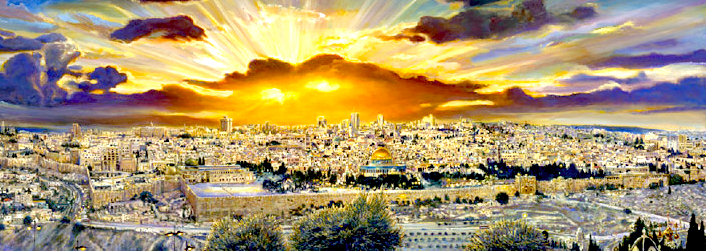
A glorious city. [Read the full commentary of Revelation in Faithful to the End]

Quick links to full THE END Revelation Series posts
1 2 3 4 5 6 7 8 9 10 11 12 13 14 15 16 17 18 19 20 21 22 23 24 25 26
 walklikejesus
24 thoughts on “The End? All things new”