
This post is the third stop in our reflective journey through the book of Revelation, bringing us to the letter to the Ephesian church (2:1-7). For a brief video recording of this post, click here or on the image below.
Remember that song “You’ve lost that Lovin’ Feeling” from the Righteous Brothers, popularized by the original Top Gun movie (1986)? It gets to the heart of Jesus’ first letter to the churches, the church in Ephesus.
Ephesus was a prominent port city in the Aegean Sea, on the Western shore of modern-day Turkey, about 80 km south of Izmir, rich in archaeological discoveries.

Ephesus became the provincial seat of Roman government into Asia. It was renowned for its scholarship, housing Heraclitus’ first university and the Great Library of Celsus (top left). The city was a cultural hub as witnessed in the well-preserved great Amphitheatre (bottom right). The city was a religious centre, most notably because of the temple (top right) of Artemis (Greek, central image) or Diana (Roman), and later because of the Christian influence. In contrast, Ephesus was also known for its “sin industry” through the sailors frequenting its busy seaport. Its unique setting and well-developed harbour (bottom left) made it a trade hub into Asia and Greece – notably the Silk Trade Route.
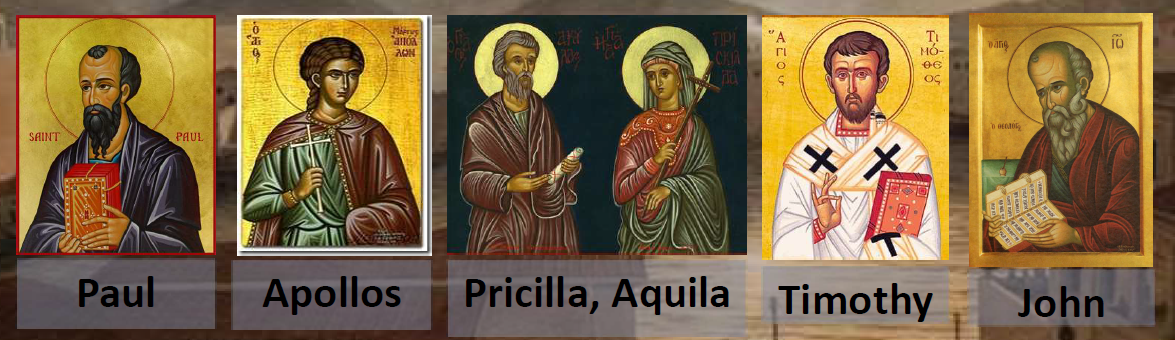
These political, religious, educational, cultural and trade hubs made Ephesus very influential in the region. No wonder Paul stopped and spent more than 2 years there (Acts 19). It is fair to say that, after Antioch, Ephesus was the most prominent church in the New Testament. Other big apostolic leaders made Ephesus their headquarters, including Apollos, Priscilla and Aquila, Timothy and John. In some way, the church in Ephesus still has the greatest influence in the church today because many of the New Testament letters were written either from or to the church in Ephesus.
It is therefore not strange that the first church Christ addresses in his letters is the church in Ephesus. By the time John penned these words of Jesus the Ephesian church was more than 50 years old – a second-generation church that had grown significantly and endured a few waves of severe persecution from various emperors.
Keep in mind that this short, personal letter to the Ephesian believers is part of a circular letter to the seven congregations (1:11) with the aim to comfort the persecuted believers and to correct their perspective in their struggle against evil. As with each of these seven letters, this letter starts with a unique revelation of Christ, followed by a commendation, a condemnation, a charge, then a warning and finally a promise of reward.
[Read the full commentary of Revelation in Faithful to the End]
Quick links to full THE END Revelation Series posts
1 2 3 4 5 6 7 8 9 10 11 12 13 14 15 16 17 18 19 20 21 22 23 24 25 26
 walklikejesus
25 thoughts on “The End? Living from the heart.”