
This simple practice changed my prayer life. It transformed my quiet time from duty to delight, enlightenment to encounter. So simple, yet so profound.
Noticing the God Who Sees Me
Hagar had this experience when she fled from Sarai for the first time (Genesis 16:1-14). She was a young Egyptian slave, far from the land and her people. As Sarai’s property, she became the incubator for Abram’s descendants when her mistress could not conceive. She was given to Abram until she was pregnant. Her life was not her own, her body was not her own, and now even the baby in her womb was not her own. She was a nobody; Abram and Saria never called her by her name – she was just a nameless “servant” and not regarded as someone with feelings, thoughts, dreams and desires. This injustice made Hagar furious.
Her contempt towards her mistress resulted in harsh treatment. Hopeless, Hagar ran away into the desert – a decision akin to suicide. Exhausted, she found a well and sat down. Hagar was angry and alone, hungry and without hope. Then she encountered the Lord, “the God who sees me” (16:13). For the first time, she noticed Him, who has been watching her all along. She was unaware of the God whose loving gaze was on her all this time.
Hagar was shocked to discover that the Lord was intimately aware of her. He knew her name, her situation, her pain and anger, and her deepest desires. Beside that well, Hagar met a personal God who was present and attentive to her. This meeting changed everything for her. She was no longer alone and left to fend for herself in a hostile world. She was beloved and known. Hagar named him “El Roi – the God who sees me.”
Spiritual Autism

Robert R. Marsh writes that small children cannot imagine other people having independent minds. Likewise, people with severe autism do not treat other persons as though they see, think or feel differently than themselves. This is often referred to as mind-blindness – to live ignorant of the thoughts, feelings and desires of others. Marsh observes that this is how people habitually approach God – more as an object than a person with unique thoughts, feelings and desires. As such, we speak about God or to God rather than converse with him. We acknowledge his presence but don’t consider his opinions or feelings. Marsh concludes that “Spiritual autism is a pathology of our times.”
How often does this describe personal or public meetings with God? We may enter a worship service or prayer meeting and go about our discipline, not once stopping to notice the Lord’s demeanour. The result is a dull duty without any dazzle or delight.
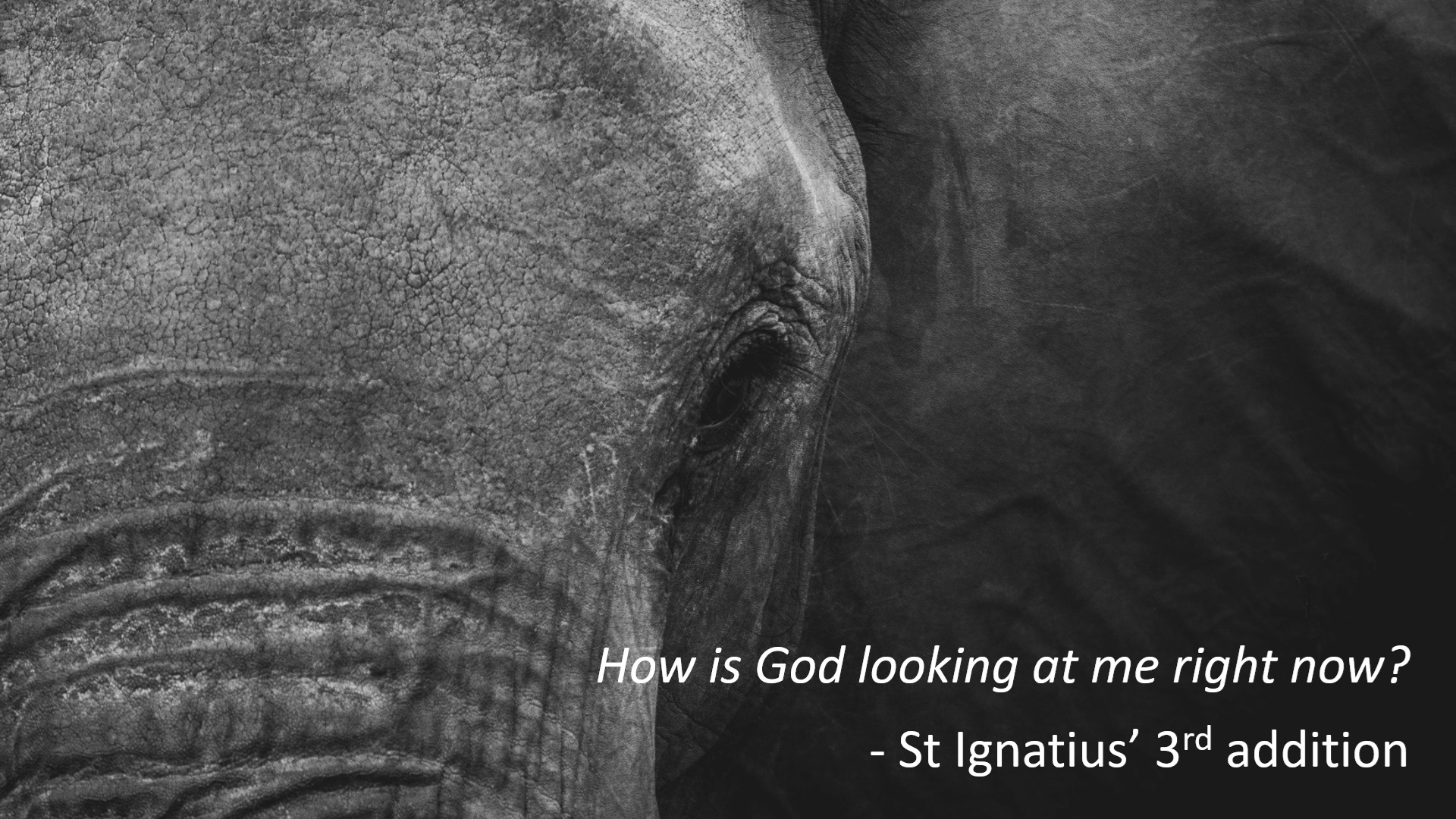
How is God looking at me right now?
The Spanish priest Ignatius of Loyola knew the danger of discipline without intimacy. At the back of his spiritual exercises, he suggested this simple practice that ensures his prayer time remains a personal encounter rather than a principled exercise: “A step or two before the place where I stand or kneel to pray, I pause for the length of an Our Father (45 seconds?)… considering how God our Lord is looking at me”..” (Ignatius, Spiritual Exercises, 3rd Addition)
This practice transformed my prayer life and deepened my relationship with God. Every time I start my prayer time with this simple habit, it becomes a delightful encounter with God himself. As I become aware of the Lord’s presence and posture, my prayer becomes a conversation, not a petition that I raise to some distant domain. This turns my prayer time from cold and transactional to intimate and transformational.
When alone, I set the agenda and steer the activity; there is no place for surprise. Yet every time I start my prayer time with the awareness of how God is looking at me, my prayer time begins with surprise.
Naming our Well
Hagar met “the God who sees me”. Moreover, Hagar was wise to memorialise this life-changing encounter by (re)naming the well Beer-lahai-roi (which means “well of the Living One who sees me” (16:14). Memorialising this meeting with God served as a reminder that there was a time and place where I encountered God; this is what he is like and what he said to me. The memory encouraged Hagar (and still inspires us four thousand years later) that God is immanent and intimate.
Take God’s presence seriously
I’ve learned from Hagar to take God’s presence seriously and expect encounters with the Living Lord. Moreover, I record these encounters in a journal as reminders that God is near. I start my prayer times by paying attention to God, who is present, and noting how he is towards me. (This is often more of a sense than an open vision). Then, I start by telling God what I notice and how that makes me feel.
One evening, I was deeply upset by a conversation I had during the day. As Ignatius taught me, I retreated into an empty room to meet with God and paused to discern God’s presence and posture. Immediately, I saw a big desert elephant, strong and peaceful, looking into my soul with his big, reassuring eyes. I had a Hagar moment: I perceived that the Lord was here, strong, and in control, and he knew about my frustrations and concerns. In that moment, His peace became my peace. My time of prayer did not require many words that evening.
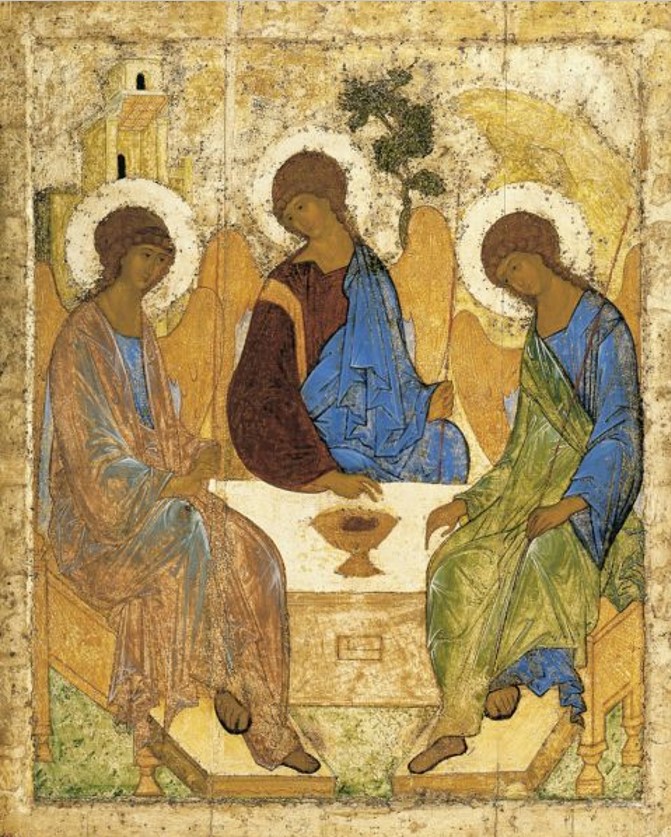
Another profound encounter happened early one morning on a beach. Until then, I often felt a sense of “performance pressure” when I met with God—the feeling that I had to make this encounter happen. (Can you relate?) Yet, as I paused to notice how God was looking at me, I suddenly found myself at a table with God the Father, the Son and the Holy Spirit. Their fellowship was so vibrant and joyful! I was welcomed into their warm fellowship. At once, the pressure to make something happen or to perform before God was gone. I experienced the joyful fellowship of the Triune God. I saw what Daniel Migliore meant when he wrote, “God is eternally self-giving, other-regarding, community-forming love.”
That day, I experienced what Rublev painted in his famous picture of God’s visit to Abraham (Genesis 18): the Triune God sits at a square table and welcomes us to join his fellowship. There is a joyful fellowship I don’t have to initiate – but I am always welcome to join. I am simply invited to see and join Him, who has been watching me all along.
 walklikejesus