unLimited – embracing the gift of limits

Have you felt stretched too thin lately? Worn out or burnt out? You are not alone. Our culture fights against limits and pushes against the boundaries that frame our lives. We don’t want to miss out. “More is better”, we believe, so we try harder to experience more to get more. Yet, there is always more. This leaves us unsatisfied, angry and exhausted.

Our marketing memes show our belief that “more is better.” Just add the word “unlimited,” and customers will buy whatever you sell. Because we believe the good life is found beyond our boundaries, we always strive for more. We war against the boundaries of our lives but end up fatigued, frustrated, fearful, and flat—in a word, lifeless. How is it that “more” leaves me feeling “empty”?

In a world where limitless is life, we fantasise about superheroes. Yet we are creatures, not gods. We are limited beings, blessed to thrive within our boundaries. Pete Scazzero lists some limits that we all can relate to. My life on this earth is a blessing, but it is brief; I can’t escape death. My mind has its limits, regardless of my learning. My personality or temperament has its strengths and weaknesses in every situation. My gifts are great, but it has their limits. My family or origin gifts me within a particular cultural, financial and social context; this is a blessing, but it holds its limits. Whether I am rich or poor, black or white, male or female – each attribute empowers and impedes me in life. Likewise, my own past (actions and experiences) holds great treasures, but with its limiting consequences. Each season of life has its gifts and limitations; we can’t change that – only embrace the season with its invitation and limitation.

The Apostle Paul also wrestled with his human limitations. In 2 Corinthians 12:7-10, he recounts a life-altering meeting with Jesus that changed his perspective on limits. “…I have received such wonderful revelations from God. So, to keep me from becoming proud, I was given a thorn in my flesh, a messenger from Satan to torment me and keep me from becoming proud. Three different times I begged the Lord to take it away. Each time he said, “My grace is all you need. My power works best in weakness.” So now I am glad to boast about my weaknesses so that the power of Christ can work through me. 10 That’s why I take pleasure in my weaknesses, and in the insults, hardships, persecutions, and troubles that I suffer for Christ. For when I am weak, then I am strong.”

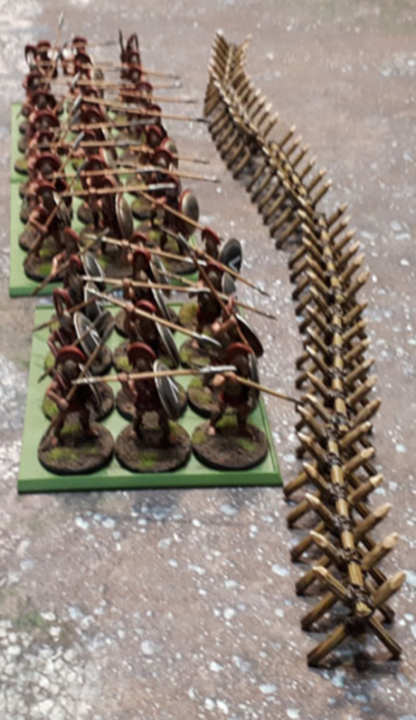
Paul’s reference to “a thorn in the flesh” is often misunderstood as a slight pinch in the foot. But, Pete Scazzero explains that the original language referred to a pike-like military defensive barrier (see image below). Today, Paul might have used “a sharp palisade fences or barb-wire in my flesh.” Pressing against this barrier caused him anguishing pain and left him feeling frustrated (angry and powerless).
Many have speculated about this “thorn in the flesh” in Paul’s letter. Some read Paul’s “thorn in the flesh” as a painful or shameful bodily obstacle that inhibited his life or mission. It might have been a speech impediment, like Peter’s lisp (Matthew 26:72-73) or Moses’ stuttor (Exodus 4:10). Others think Paul lived with a painful and debilitating eye infection (see Galatians 4:13-15, 6:11). Some sceptics believed Paul suffered from episodes of epilepsy (because of his disabling visions, as in Acts 9:3-9 and 2 Corinthians 12:7. Yet, others argue that Paul used the phrase “thorn in flesh” metaphorically to refer to emotional pain caused by his loneliness or the ongoing opposition by the Judaizers who constantly discredited his message and character. A last group believed that Paul’s torment was only spiritual, caused by some demonic “messenger from Satan”.

Whatever it was, we know that this “thorn in the flesh” was painful and limiting. Paul suffered from it and could not fix the problem himself. His prayers were not answered either – the Lord did not relieve him of this burden either.

Our culture does not readily accept the limits of “no.” Our culture believes you can do anything and everything if you put your mind to it. Not accepting limits or “no” leaves us exhausted, angry, and inhibited. What can we learn from Paul’s message?

Flourishing within limits

The Bible includes examples of people who served God with tremendous freedom despite their limitations. These limits did not hamper the ministry or legacy of these faith heroes; instead, these faith heroes flourished within these limits, often because of these limits. Jesus taught that “blessed are the meek, for theirs is the kingdom of heaven.” Meekness means submission to restraints as a horse submits to the saddle and bridle of a rider. We are blessed (better off) when we learn to rest within our constraints and trust that God can and will give us goodness here where we find ourselves.

Moses’ life-long speech impediment did not prevent him from fulfilling his call. It seems ironic that, despite all the miracles performed through Moses, the Almighty did not heal him of his stutter. God chose to appoint a man with a speech impediment as his spokesman. In his weakness, God’s power was made known.

David was small, the youngest and most neglected member of his family. Yet God chose this insignificant shepherd boy to deliver his people from the Philistine giant and unite them in one glorious kingdom.

Daniel and his friends were enslaved, yet his God’s sovereignty was made known through these young Hebrews as they faithfully served their captors in the palace.

John the Apostle was a political prisoner on the Island of Patmos, far removed from the oppressed churches under his care. Yet here, God revealed powerful visions with messages of hope that have served the church for millennia.

Likewise, Paul’s most potent and lasting ministry was from within a Roman prison, as he learned to rely on God’s grace. He discovered that these impediments taught him not to become proud (happy, independent, or self-reliant) but rather to rely on God’s grace. “My grace is all you need. My power works best in weakness.” 

Jesus Christ is God in the flesh, living as a poor Jewish boy raised in an insignificant rural village while the mighty Roman Empire ruled his people. This God suffered hunger, ridicule, shame, betrayal, torture and violent death. Through this, God restored his kingdom and delivered all who trusted in him from death.

My limitations as gifts

Paul discovered that the “thorn in his flesh” did not diminish his life; his life and legacy expanded as he embraced his limitations.

  • Paul’s limitation taught him humility – a life that relies on God’s grace, not his own strength and wisdom.
  • Resting in his limitation gives him a revelation of God’s nearness and grace.
  • His limits were the means to intimacy, the reason to draw near to God and trust him more.
  • Paul’s limiting imprisonment was the door to his most significant legacy — the letters that became the blueprint for every Christian church in history.

Paul’s message to the Corinthians invites me to see my limitations as gifts from God to keep me humble and dependent on Christ. It reminds me that these impediments drive me to draw daily strength from Christ. These limitations are the windows that witness the power of Christ in a world filled with weakness. Paul invites me to see my impediments not as limitations to my life, but as a door to my most significant legacy.

We are limited beings invited to live flourishing lives under the care of our compassionate creator. We will do well to learn the secret of being content in every situation (Phil. 4:11-13). Then, our weakness will become our strength.
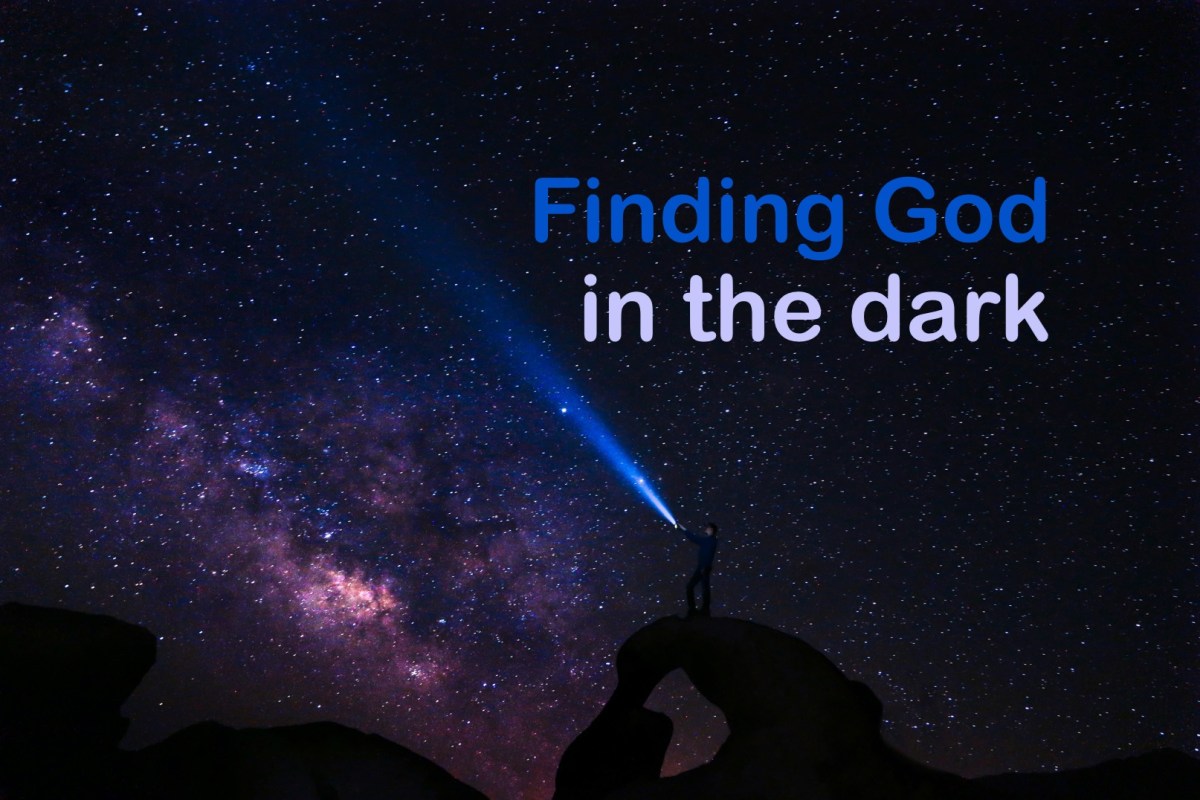
Finding God in the dark

On the way home after church one morning, a little girl asked,
“Mommy, why does the preacher always pray before preaching?”
“He asks God to help him, honey,” her mother replied.
The little girl frowned and asked,
“But why does God not answer his prayer?”

Why does God not answer his prayer?

Although “praises” and “psalms” go hand-in-hand, more than a third of the psalms in the Bible are songs of lament. These songs of sorrow teach believers to pray through seasons of hardship as we wait for help from Heaven. While most of these laments have glimmers of hope, Psalm 88  has no resolution and no happy ending – the closing line reads, “My closest friend is darkness is.” Often called The Darkest Psalm, its tone is death, difficulty, desertion and darkness. The Psalm is a maskil, a teaching that has helped believers pray through the darkest seasons when God feels distant or disinterested. For the past 3000 years, believers have found comfort in this poem. In their times of distress and disillusionment, they saw another one who felt what they felt – abandoned in their pain and frustration, with no hope. Yet God honoured his prayer and preserved it in the Bible as an example.

The Darkest Psalm

The 88th Psalm is attributed to Heman the Ezrahite, a prophet like his grandfather Samuel and a worship leader appointed by King David (1 Chronicles 6:33; 25:1-6; 2 Chronicles 5:12).  He directs his prayer to YAHWEH —the God who bound himself by covenant to the descendants of Abraham. Based on this bond, Heman appealed to God for help. His prayer is preserved between Psalms 87 and 89, songs praising YAHWEH for his covenantal faithfulness to Israel, David, and his descendants. This shows us that God is the God of Israel in his glory, of David in his kingship, but also the God of Heman and any other believer who feels abandoned and ignored by him. God remains faithful.

I can pray this way!

Psalm 88 comforts believers who suffer from anxiety, depression and hopelessness. Here, we find a prayer by a spiritual leader in Israel—a well-respected priest, worship leader, and prophet who has felt “terrors and dispair… since my youth.” This godly leader did not pray a pious prayer with pretty words. His prayer is overflowing with anger and frustration, depression and despair, loneliness and abandonment, anxiety and fears. This is a prayer that many of us can relate to, a prayer that echoes our own struggles and fears.

God honoured Heman’s raw, honest prayer by preserving it in the Bible, between two beautiful prayers declaring God’s faithfulness. This invites us to pray authentically, to bring our true feelings and struggles before God.

This psalm gives me hope.

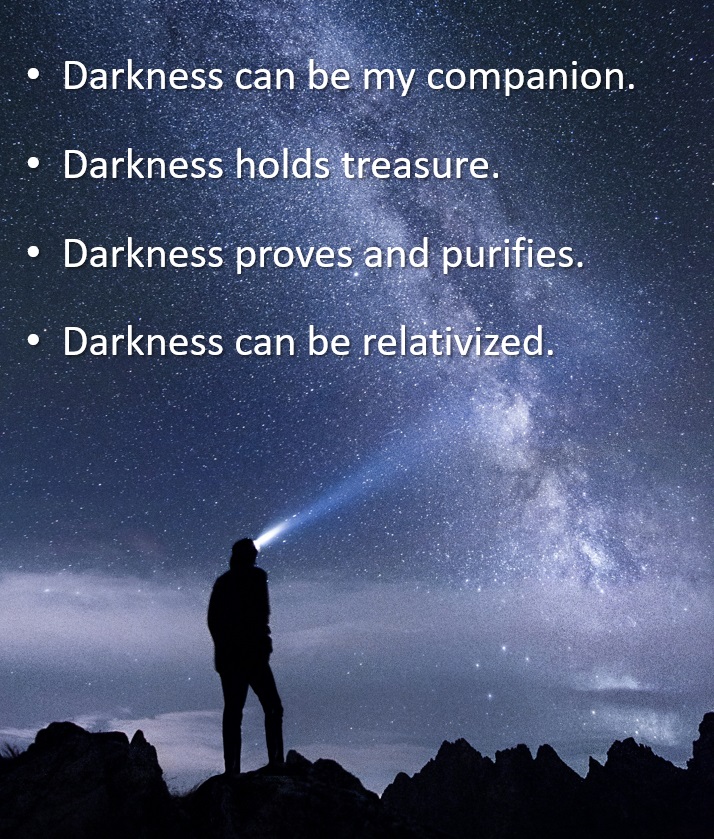
There are four ways in which this raw, unresolved psalm gives me hope.

The psalm shows me that darkness can be my companion for a long time. Heman complains about difficulties, depression and despair that had been part of his life “since his youth.” Every morning, he prays to God; this looming darkness stays with him “all day long”. Michael Wilcock writes in his commentary on Psalm 88:

“This darkness can happen to a believer, this Psalm says. It doesn’t mean you’re lost. This darkness can happen to someone who does not deserve it, after all it happened to Jesus. This doesn’t mean you’ve strayed. This darkness can happen at any time as long as this world lasts because only in the next world will such things be done away with. This darkness can happen without you knowing why, but there are answers, there is a purpose, and eventually you will know it.”

Feeling this way does not mean God has abandoned you. Moreover, feeling depressed or deserted by God does not mean having no faith. Christians will not always escape disappointment, disease, disaster, dread and death. “In this world, we will have trouble,” Jesus said. These experiences and emotions lay heavy on the human soul – as they should. (Remember Jesus at the death of his friend Lazarus or before his trial?) It is comforting to know that God is with us in our struggles, that our faith is not in vain. The Darkest Psalm assures us that God hears our prayers in distress and honours our faith (trust) in him.

Scripture (and our experience) show us that darkness holds treasures. During seasons of hardship, we get to know God in a new way, see our motivations, strengths, and weaknesses, and understand how God has ordered the world. We come out of darkness more sober and wiser than we entered it.

Seasons of darkness prove and purify my faith. The book of Job shows that Job’s troubles tested whether his worship of God was sincere: Would he worship and trust in God without the benefits? In Job’s darkness, his faith was verified—he did not turn his back on God but rather wrestled with God.

Job’s faith was also purified in his season of darkness. Job’s hardships revealed his convictions and challenged him to reconsider who God is and how God relates to us and the world. Like precious metals, Job’s faith was purified in the fire as he saw a side of God that was hidden before.

My darkness can also be relativized. In his notes on Psalm 88, Timothy Keller points to the darkness Jesus experienced on the cross. During his darkest hours on the cross, where he felt God had forsaken and forgotten him, Jesus did not forsake or forget us. “For the joy (of our salvation) he endured the cross and despised the shame…” the apostle wrote (Hebrews 12:2). When he felt forsaken from God on the cross, Jesus cried out from Psalm 22:1-2

My God, my God, why have you forsaken me?
Why are you so far from saving me,
so far from my cries of anguish?
My God, I cry out by day,
but you do not answer,
by night, but I find no rest.

In all his anguish and pain, Jesus did not forsake us. We can be confident that Jesus will not forsake us in our moment of darkness. Moreover, in our greatest darkness, we will never suffer the darkness Jesus suffered. The Father turned his face from Jesus as he bore my sins so that the Father may never turn his face from me. I will never be alone in my darkness; I am reconciled to God in Christ. What a comfort!

The invitation in this Psalm.

Heman’s prayer invites me to be honest with God in my suffering and pray without pretence. All the psalms of lament teach us to pray for our fears, pain, disappointments, and shame. If it’s too difficult to say it out loud, learn from Heman and write a poem or journal, then cast your burdens on the Lord, and he will sustain you through. (Psalm 55:22)

Heman’s prayer reminds us that our experiences don’t always reflect reality. Despite being a worship leader, prophet, and priest who had enjoyed God’s glory and friendship for years, he prayed that he had never felt joy and companionship. It’s important to remember God’s goodness and moments of joy, to remind ourselves that life has been good and will be good again. Like the shepherd who “leads us through the valley of the shadows of death,” this difficult time will also pass.

Lastly, in my moments of darkness, I am reminded that I have my Friend on the cross. When I feel forgotten and forsaken by God, I am comforted that Jesus has felt what I am feeling. I know that he has been there, and I can draw grace from him (Hebrews 2:15; 4:16). He promised to never leave me, and he will lead me through (Psalm 23:4).

There will be seasons when I feel “God does not hear, God does not care.” This feeling does not mean I am fickle or faithless – Job, Jesus, David and Heman felt this way. Heman’s poem is a powerful prayer to find God in the dark and draw grace from him for today.

Seeing Him who sees me

This simple practice changed my prayer life. It transformed my quiet time from duty to delight, enlightenment to encounter. So simple, yet so profound.

Noticing the God Who Sees Me

Hagar had this experience when she fled from Sarai for the first time (Genesis 16:1-14). She was a young Egyptian slave, far from the land and her people. As Sarai’s property, she became the incubator for Abram’s descendants when her mistress could not conceive. She was given to Abram until she was pregnant. Her life was not her own, her body was not her own, and now even the baby in her womb was not her own. She was a nobody; Abram and Saria never called her by her name – she was just a nameless “servant” and not regarded as someone with feelings, thoughts, dreams and desires. This injustice made Hagar furious.

Her contempt towards her mistress resulted in harsh treatment. Hopeless, Hagar ran away into the desert – a decision akin to suicide. Exhausted, she found a well and sat down. Hagar was angry and alone, hungry and without hope. Then she encountered the Lord, “the God who sees me” (16:13). For the first time, she noticed Him, who has been watching her all along. She was unaware of the God whose loving gaze was on her all this time. 

Hagar was shocked to discover that the Lord was intimately aware of her. He knew her name, her situation, her pain and anger, and her deepest desires. Beside that well, Hagar met a personal God who was present and attentive to her. This meeting changed everything for her. She was no longer alone and left to fend for herself in a hostile world. She was beloved and known. Hagar named him “El Roi – the God who sees me.”

Spiritual Autism

Robert R. Marsh writes that small children cannot imagine other people having independent minds. Likewise, people with severe autism do not treat other persons as though they see, think or feel differently than themselves. This is often referred to as mind-blindness – to live ignorant of the thoughts, feelings and desires of others. Marsh observes that this is how people habitually approach God – more as an object than a person with unique thoughts, feelings and desires. As such, we speak about God or to God rather than converse with him. We acknowledge his presence but don’t consider his opinions or feelings. Marsh concludes that “Spiritual autism is a pathology of our times.” 

How often does this describe personal or public meetings with God? We may enter a worship service or prayer meeting and go about our discipline, not once stopping to notice the Lord’s demeanour. The result is a dull duty without any dazzle or delight.

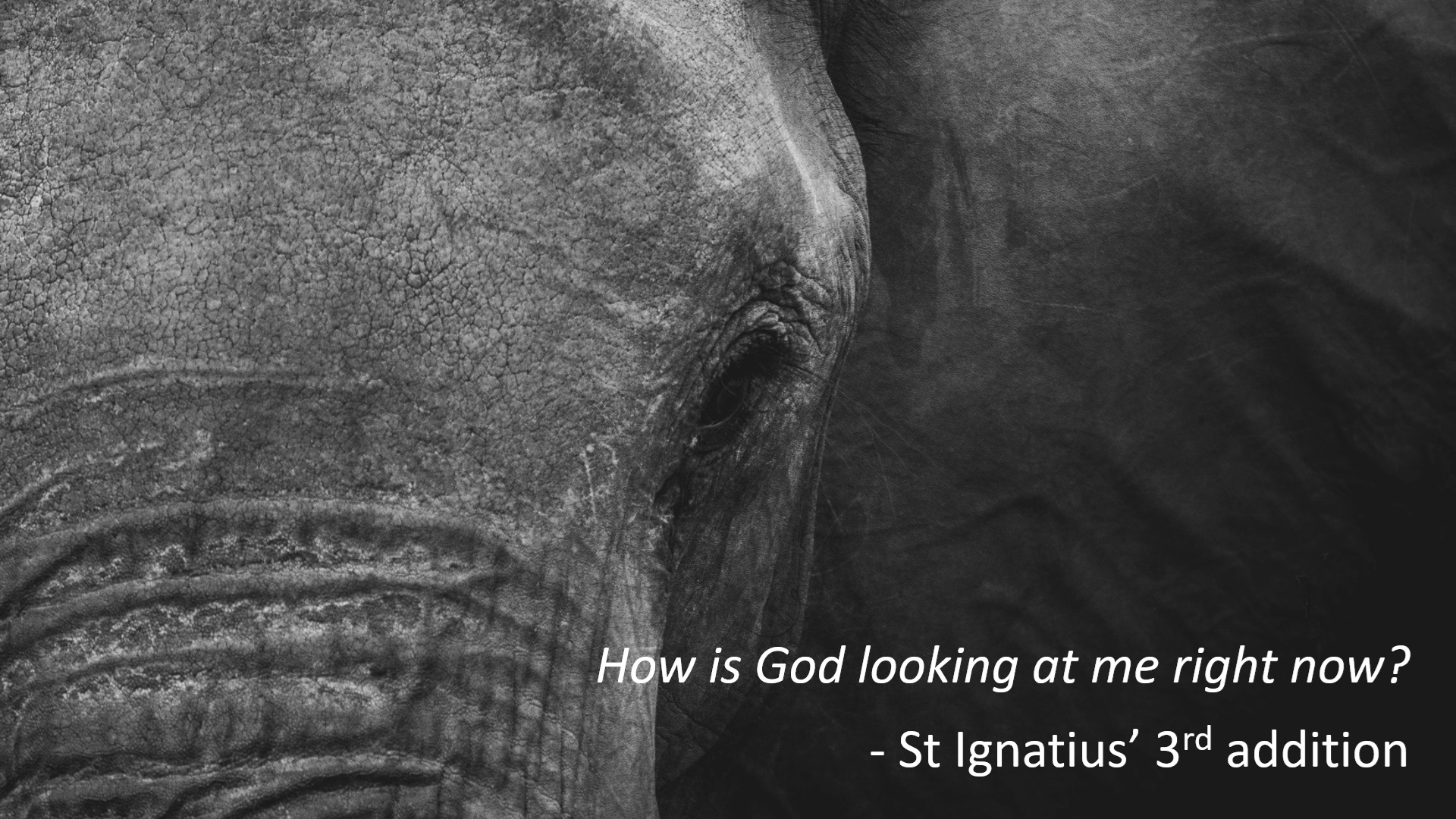
How is God looking at me right now?

The Spanish priest Ignatius of Loyola knew the danger of discipline without intimacy. At the back of his spiritual exercises, he suggested this simple practice that ensures his prayer time remains a personal encounter rather than a principled exercise: “A step or two before the place where I stand or kneel to pray, I pause for the length of an Our Father (45 seconds?)… considering how God our Lord is looking at me”..” (Ignatius, Spiritual Exercises, 3rd Addition)

This practice transformed my prayer life and deepened my relationship with God. Every time I start my prayer time with this simple habit, it becomes a delightful encounter with God himself. As I become aware of the Lord’s presence and posture, my prayer becomes a conversation, not a petition that I raise to some distant domain. This turns my prayer time from cold and transactional to intimate and transformational.

When alone, I set the agenda and steer the activity; there is no place for surprise. Yet every time I start my prayer time with the awareness of how God is looking at me, my prayer time begins with surprise.

Naming our Well

Hagar met “the God who sees me”.   Moreover, Hagar was wise to memorialise this life-changing encounter by (re)naming the well Beer-lahai-roi (which means “well of the Living One who sees me” (16:14). Memorialising this meeting with God served as a reminder that there was a time and place where I encountered God; this is what he is like and what he said to me. The memory encouraged Hagar (and still inspires us four thousand years later) that God is immanent and intimate.

Take God’s presence seriously

I’ve learned from Hagar to take God’s presence seriously and expect encounters with the Living Lord. Moreover, I record these encounters in a journal as reminders that God is near. I start my prayer times by paying attention to God, who is present, and noting how he is towards me. (This is often more of a sense than an open vision). Then, I start by telling God what I notice and how that makes me feel.

One evening, I was deeply upset by a conversation I had during the day. As Ignatius taught me, I retreated into an empty room to meet with God and paused to discern God’s presence and posture. Immediately, I saw a big desert elephant, strong and peaceful, looking into my soul with his big, reassuring eyes. I had a Hagar moment: I perceived that the Lord was here, strong, and in control, and he knew about my frustrations and concerns. In that moment, His peace became my peace. My time of prayer did not require many words that evening.

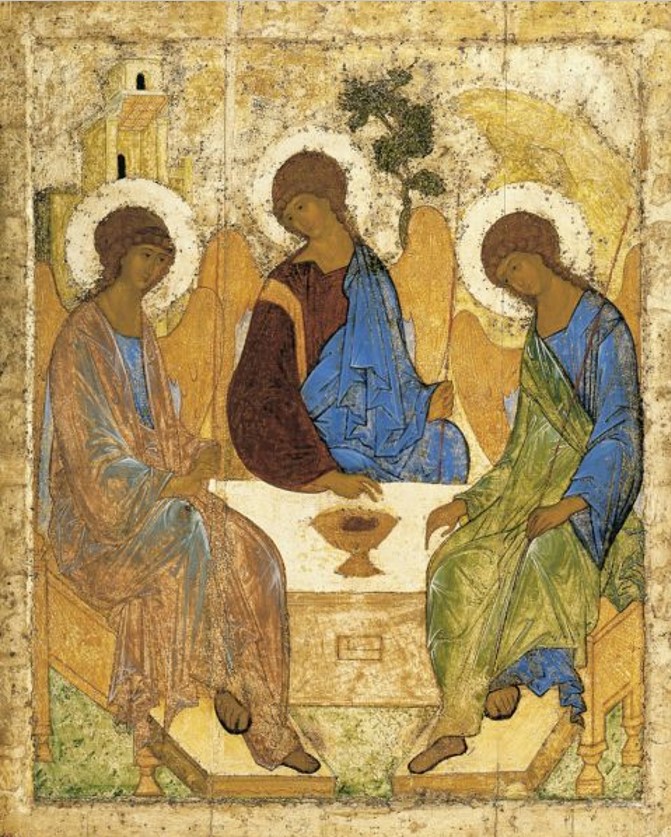
Another profound encounter happened early one morning on a beach. Until then, I often felt a sense of “performance pressure” when I met with God—the feeling that I had to make this encounter happen. (Can you relate?)  Yet, as I paused to notice how God was looking at me, I suddenly found myself at a table with God the Father, the Son and the Holy Spirit. Their fellowship was so vibrant and joyful! I was welcomed into their warm fellowship. At once, the pressure to make something happen or to perform before God was gone. I experienced the joyful fellowship of the Triune God. I saw what Daniel Migliore meant when he wrote, “God is eternally self-giving, other-regarding, community-forming love.”

That day, I experienced what Rublev painted in his famous picture of God’s visit to Abraham (Genesis 18): the Triune God sits at a square table and welcomes us to join his fellowship. There is a joyful fellowship I don’t have to initiate – but I am always welcome to join. I am simply invited to see and join Him, who has been watching me all along.

Marching on – joining God’s restoration

If there was ever a time to “rebuild, restore, repair” (Isaiah 61:4) a nation, the time is now. Covid-19 hit South Africa hard in a time during which it was reeling from the blows of post-Apartheid tensions, wide-spread corruption, a series of droughts and ongoing political instability.  Today, unemployment is at an all-time high and our economy has shrunk by 50%.  Racial and socio-economic polarization is ever widening and social unrest is a common occurance.  The education system is struggling to meet the need.  Infrastructure is deteriorating.  The social fibre of families and communities are fractured, resulting in lower morals, violence and a general sense of hopelessness.  The “rainbow nation” dream we embarked on 25 years ago seems as evasive as the pot of gold grounding this colourful symbol of hope to our land.

In this dire situation, there is a call for the courageous ones to lead the charge.  But rather than courage I see even faith-filled people disengaged from God’s invitation to “rebuild up the ancient ruins; raise the former devastations; repair the ruined cities”.  The waves of devastation persuade many to defect from God’s Kingdom quest to renew all things.[1]  Others seem distracted from the call to rebuild by their pursuits of security and comfort.[2]  Many will admit that they are dismayed – pacified from terror by scale decay and destruction. Sadly, the majority of faithful, courageous Kingdom veterans seem disheartened, weary from the repeated efforts to reconcile, rebuild and restore a nation in pain; They have lost confidence in their ability to make a lasting impact and are tired of trying. 

Can you identify with one of these groups?  Because if you can, the historical account of Jonathan and his armour bearer will speak not just into our contemporary context, but also into your heart.

1 Samuel 13 opens with the newly crowned King Saul and his son Jonathan leading the oppressed tribes of Israel in combat against the Philistines strongholds in Gibeah.  By God’s grace, they had success in these two battles, and 30’000 men joined King Saul’s army.  However, the Philistines responded by marching an innumerable mass of foot soldiers, 30’000 chariots and 6’000 horseback riders. The Israelites were terrified, knowing that they were not only outnumbered but also outclassed by Philistines technology – they had no blacksmiths who could produce iron weapons like their enemies.

These overwhelming odds left Saul’s army intimidated.  After one week 24’000 defectors, dismayed, and distracted soldiers abandoned the quest to liberate Israel from its oppressors. And the 600 who were left were dismayed, hiding out in a spot where the Benjamites also fortified themselves for four months a few years earlier.[3]  However, 1 Samuel 14 shows how two men’s faith in God not only brought about a great victory but revived the hearts of the soldiers to trust in God and fight for the restoration of Israel again.  

This account was recorded as an encouragement and example for God’s people facing similar overwhelming odds.[4]  What can we, facing equally devastating challenges, learn from this inspiring story?

Lessons from Jonathan’s quest

The contrast between King Saul and his son Jonathan is striking: while the king and his army were “taking it easy” (14:2 MSG) in their hideout, Jonathan remembered that there is a cause. Yes, he could play it safe and enjoy his status and comfort, but Jonathan’s conviction persuaded him the crisis called him to act in courage.  In a similar situation, three chapters later, his future friend David challenged the cowering soldiers’ passivity: “Is there not a cause?”[5]  Jonathan was compelled to act on his conviction.  Yes, it is safer and more comfortable to secure yourself, to stay away from the destructive forces and maintain the status quo, but there is a cause that calls for courage.

Jonathan’s courage would make Brene Brown very proud: he planned to be vulnerable and show up in the face of fear, and trust in God.  Outnumbered, with only one sword, in an exposed, defenceless position at the bottom of the ravine, he tested his conviction to check whether indeed was with him in this endeavour.  He acted in humble faith, not arrogant presumption.  Jonathan knew that Israel’s covenant God had delivered his people from even greater dangers in the past and that He was faithful and able to save them from this situation.  But he did not pressure that his plan was indeed Israel’s plan, and therefore he checked with God before climbing the cliff face into combat.

Once his check confirmed his conviction that God is indeed calling him into this conflict, Jonathan was confident to climb into combat.  But he was not alone – the prince was comforted by the companionship of his dedicated armour bearer’s vow “I’m with you all the way.” And where two of more agrees about anything, there the Lord is present, commanding a blessing.   The Lord’s cooperation in their fight was more than their strength in combat: the Lord himself was fighting for the liberation of his people from oppression, “the ground itself quaking”.  He did not send Jonathan into battle on his behalf – he was inviting Jonathan to join him in the liberation of his people.

The chaos of combat attracted the attention of the look-outs above king Saul’s hideout. Learning that the cries came from his son’s charge against the Philistine garrison, Saul called the priest closer to inquire the will of God (through some ritual).  But the noise of combat became so loud that he got the army to combat.  God was in the move, calling Israel to join the deliverance! 

Courage is contagious, as we see in this account. The disheartened regained strength, the defectors returned to Israel’s army, the dismayed reemerged from their hideouts, and the distracted rejoined the quest to rid the land of evil.  And therein is the hope for our day: one believer who responds to God’s invitation to join him or her in his quest to rebuild, repair and restore will instil the courage to those disengaged from God’s Kingdom mission to renew the land.

A call for our day

It is tempting to flee from the devastation that is sweeping over the country.  It is comforting to gather with God’s people for safety and avoid the dangers and oppression in the world around us.  It is easier to focus on personal security and comfort of our homes.  But ignoring the pain and destructive forces will only embed the ruin for coming generations. Like Jonathan, the Lord of Liberty and Life is calling him to join him as he tackles the evils that enslave the nation. 

Landa Cope writes of research into “the most Christian city in America” where Dallas, Texas boasts the most active Christian Church attendance and giving in the nation.  The sobering outcome of the study reveals that mere devotion to God and church activities has seemly no impact on the wellbeing (peace) of the city.  If the charge on the church could be summed in the phrase “Let God’s Kingdom Come”, or “seek the peace of the city”[6], then this research suggests that mere church attendance and ministry among the members utterly fails the mandate of the church.  We are called to get out of the safe spaces and engage the enemies of God’s kingdom with the Lord of Hosts.

And like Jonathan learned, this text shows us that God is on the march with those who dare, and all barriers bow in his presence among his people.    

“What ails you, O sea, that you flee?
    O Jordan, that you turn back?
O mountains, that you skip like rams?
    O hills, like lambs?

Tremble, O earth, at the presence of the Lord,
    at the presence of the God of Jacob”

Psalm 114

This account is both comforting and inspirational to me. An oppressed and divided nation, led by a cowardice ruler and self-preserving security force was captured by a hoard of coordinated, brutal plunderers. One man had it in his heart to risk his comfort for the cause, confident of God’s power and faithfulness.  He did more than recapture that piece of land; his charge inspired the confidence of Israel’s fighting men.   Imitating Jonathan’s trust in God will be rewarded by God’s cooperation, as well as the spreading of contagious courage. 

This text calls me to quiet down and consider where God calls me to join him in his work of restoration and reconciliation.  Which “garrison” of evil we would love to see demolished first.  What cause is close to us, always in our mind and on our heart?  Which companion will join us in this charge?  But before we move, we need to check whether this is charge is something the Lord is inviting you into, at this time.


[1] Revelation 21:5; Matthew 19:28-30

[2] “A soldier refrains from entangling himself with the affairs of this world” (2 Timothy 2:4)

[3] Compare 1 Samuel 14:1-4 with Judges 20:47.

[4] Romans 15:4

[5] 1 Samuel 17:29

[6] Jeremiah 29:7

Known by my scars

This week I got a new scar.  The doctor says its not going to be a pretty one.  It’s on my calve, so I’m not too bothered about the mark.   Ironically, this scar fills me with gratitude and joy because it reminds me of what could have been – of what I was saved from.

I have another scar on my arm.  This one always brings a smile to my face as it reminds me of the night I got it.  I was was sixteen years old.   Me and my brothers were doing dishes.  I splashed oily water and Conrad ducked away, “accidently” stabbing me in the arm with the steak knife he was drying. There was a lot of blood and screaming. We all got a big fright! But a few stitches and cleaning up restored the peace.  This was thirty years ago; Conrad passed away two years ago.  I’m fond of the scar on my arm, because it reminds me of the love and the friendship we shared.  The sudden loss of my brother left an unseen scar, and somehow this old knife wound represents the loss I feel.

Just like the marks on a tree, our scars bear testimony to the things we lived through.  They give shape to and character to our lives.  The scars can never fully reveal the trauma we encountered, but like the marks in a tree trunk, our scars reveal our growth response to these events. our scars are evidence of how we healed.  As such, our scars tell the story of our resilience – what we endured and survived.

People tend to hide their scars, ashamed of the imperfections and afraid of the painful memories.  In contrast, the apostle Paul boasted in his scars[i] and listed the events which caused these scars (inside and outside) with gratitude and dignity, claiming that his scars are something to be cherished, even honoured. [ii]  How could our scars be something to be thankful for, something to be cherished and even paraded?  What can we learn from Paul about our scars and the trauma which caused it?

Firstly, each scars is a witness to my weakness, and therefore a tangible signs of grace.  We get scars because we are not bullet-proof.  Our scars are a testament to our vulnerability, our frailty.  Paul boasted in this weakness[iii] – his limitations or the end of his ability – because that’s where he experienced grace: the help and intervention from God.  The traumatic events Paul listed scarred his body, soul and spirit.  Violence and disasters left marks on his body; betrayal and abandonment wounded his soul; accusations and demonic torments injured his spirit.  Yet Paul cherished each scar – visible and invisible – as a reminder of God’s sustaining grace.  Without God’s grace Paul would have died, given up, or turned back from the call for his life.

One evening in our high school years, my brother Conrad took a test drive with a friend’s motorcycle – without a helmet.  Somewhere in the ride he accidently switched off the headlights. As he approached our house, another vehicle – who did not see him – turned in front of him without indicating.  Conrad crashed into the car, was flung in the air and landed headfirst on the tar.  We though he was dead, but God showed him grace.  He had a scar above his right eye as a daily reminder of the grace of God.

Likewise, my own scars are reminders of what I was saved from, and how I was restored.  They testify of God’s presence, providence and power at work in every situation that threatened my life.  The scar says “If it had not been for the Lord,[iv] this would have been my end… but God carried me through and restored me!”   As such these scars bring me daily comfort that God is always with me, and will turn everything I face today for my good.[v]  My strength may fail, but His strength will not.[vi]  When fear wants to overwhelm me, my scars remind me that “stronger is He that is in me” than what I may face in the world today.[vii]  I never face anything alone.[viii]

Scars - faith
This fireman has felt the sting of fire.

Secondly, my scars are witness to the tests I have passed.  Each scar – whether visible or invisible – tells a story of pain that I endured, of hardship that I was not spared. And therefore, as a believer in Christ, these scars are signs of faith that remind me that I was tested and purified as through fire.[ix]  Like Job, I kept on believing in the goodness and power of God in spite of the troubles I endured.[x] Through the pain, loss, or shame I kept on trusting in Jesus, believing that he has overcome the world.[xi]  As I walked through the fire of testing, my faith was proven and found to be real because I have come to trust God’s character more than my experience.

Looking at my scars as marks of faith bring me daily confidence.  My scars remind me that “nothing can separate me from God’s love” and that in every hardship I endure “I am more than a conqueror through Christ who gives me strength.”[xii]  In this sense each scar is an affirmation of my faith, adding confidence in the face of adversity.

Scars - hope
This Nigerian Christian faced the brutal hatred of this world. One day this will end.

Thirdly, my scars are witness to a fading, fallible world.   We only get scars on earth because the rule of sin and its decaying effect is limited to this fallen world of ours.  Our scars are caused by things like violence, sickness, calamity – and these have temporal power here.  The driving forces that bring us pain and leave us scars are often hatred, jealousy, greed, betrayal, or abuse – and these are only at work in this age.  But when Christ returns to reign there will be no more pain, no more sickness, no more calamity[xiii] – there will be no new scars in heaven.

Every scar reminds me that our world is fallen, and that this is why Jesus came to earth.  Seeing scars stirs my longing for the day when Christ will come to make all things new.[xiv]  As such our scars are signs of hope, reminders that Christ will bring an end to sin and suffering and establish His universal reign of peace. Looking at my scars in this light brings me joyful endurance, knowing that whatever I might face today is temporal; it cannot compare to the eternal glory that awaits me.[xv]

Lastly, my scars are reminders of Christ’s scars on his body. Jesus has scars on his body because he came to identify with me in my sin and suffering. Moved by love the Eternal Perfect One exchanged his pain-free heaven for our pain-stricken existence.  He willingly embraced our suffering to redeem us to Himself.[xvi]  This sacrificial love left the Eternal Perfect One scarred forever – as a Lamb having been slain.[xvii]

Our scars point us to His scars, a tangible reminder that we are greatly loved.  As such, my scars are signs of love.  He was marred in body, soul and spirit for our healing, peace and forgiveness.[xviii]  In this – His scars – His love for us is proven.[xix]  Looking at my scars in this way stirs my gratitude and devotion to Christ.

What scars do you carry in your body?  Ask yourself: How does this scar remind me of God’s sustaining grace? Can I see this mark as affirmation of my proven faith? How does this injury stir my hope in Christ’s return? And does this healed wound remind me of God’s immense love for me?

Now we can look at your scars and say with Paul: “We do not lose heart. Even though our outward man is perishing, yet the inward man is being renewed day by day. These light afflictions, which is but for a moment, is working for us a far more exceeding and eternal weight of glory…” [xxi]

[i] Galatians 6:17.

[ii] 2 Corinthians 11:23-33, 12:8-10.

[iii] See above.

[iv] Psalm 124:1.

[v] Romans 8:28.

[vi] 2 Corinthians 12:8-10.

[vii] 1 John 4:4.

[viii] Isaiah 43:2.

[ix] 1 Peter 1:6-7.

[x] Hebrews 11:6.

[xi] John 16:33.

[xii] Romans 8:35-37.

[xiii] Revelation 21:4.

[xiv] Revelation 21:5.

[xv] 2 Corinthians 4:17.

[xvi] Revelation 5:9.

[xvii] Revelation 5:6.

[xviii] Isaiah 53:4-6.

[xix] Romans 5:8.

[xx] If you read ‘spirit’ in this sense, it is helpful to think of identity, as well as your relational ability to love, hope and trust.

[xxi] 2 Corinthians 4:16-17.

A walk of faith – life with God

Indeed, we live in a very spiritual world!  We sing songs, write poems and make movies about faith.  George Michael urges “you gotta have faith”, Bon Jovi calls us to “keep the faith”, Shrek’s donkey confesses “I’m a believer!” and no doubt many of his swamp-friends are Beliebers too!  We live in a faith-filled world!

Images_Faith

But as often happens with the overuse of a word, the meaning goes missing.  Faith becomes some mysterious wishing power that gives is a warm feeling of hope on the inside and keeps us bearing forward.

But that is not Biblical faith.  And if you read the Bible thinking faith is this, you will miss the bliss of its promise.

What does it mean to have faith?

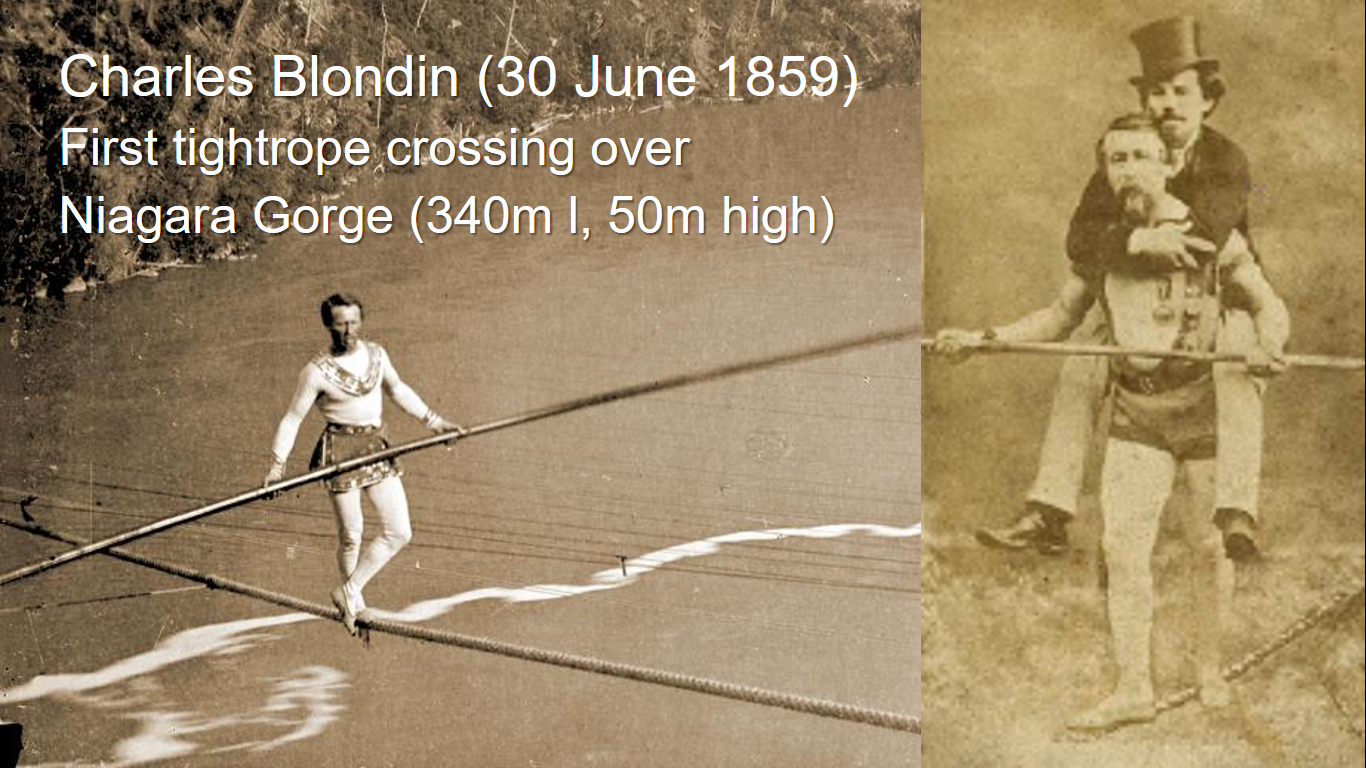
On June 30 1859 Charles Blondin “the Great” became the first person to cross over the 340m wide Niagara Falls Gorge tightrope, expended 50 meter above the river where about 1million cubic meters of raging waters rushed by every second. To gt a feel for the risk he took, watch this stunt as Nik Wallanda crossed over these falls in June 2012.

Blondin repeated this stunt several times with variation: he crossed over the rope (8cm in diameter) on stilts; he did it blindfolded; he did it in a sack; he pushed a wheelbarrow over; he carried a chair, stopping half-way to stand with one leg of the chair balancing on the rope.  Once he even sat down in the middle and cooked an omelette, enjoyed his breakfast, and only then walked on!

One of his most memorable moments was when, after another crossing on September 15 1860, he asked the crowd whether they believed he could cross the falls again.  “Yes!” was the confident cheer.  “Do you believe I could cross the falls carrying a man on my back?”  After witnessing his previous stunts, they cheered expectantly “Yes!” Blondin leaned in, asking “Who will volunteer?”  Silence.  After a moment Blondin pointed to an onlooker “Will you trust me?”  “No!  I can’t risk my life like that!”  No one would volunteered, so Blondin turned to his manager Harry Colcord.  “Harry, do you believe I can carry you across?”  “Yes”, said Harry, “I know you can.”  “Then climb on!”  And Harry became the only man who was ever carried across the raging Niagara falls by his friend since he was the only man with real faith in Blondin.

Charles_blondin

This is a good example of what real faith is – to entrust your life without reserve in something or someone.

So in who or what do you put your faith?

To simply say “I have faith” is meaningless. Faith in what, or faith in who?  A google search on faith reveals various religions, some more plausible than others, and others totally bizarre.  But the most common themes are “belief in science”, “belief in yourself” and “I belief in God.”

I-Believe-COMPOLATION2

If you say you have faith in God and put your future confidently in His providence and justice, you are in a great company: 5.8 billion people still believe in (a) god (84% of the world population), a third of these are Christian. Do we all believe in the same god, worshiping him with different names?  Or what distinguishes Christians from these believers in God?

The God Christians believe in is the triune God: the Father, the Son and the Holy Spirit. One God in three persons. He is the living God, and his nature is holy and loving.   The doctrine of the Trinity is sometimes regarded as obscure, at times disregarded as unimportant or unnecessarily stumbling block to faith.  But this truth is what originally distinguished Christianity from Judaism, something that was only revealed in the incarnation, when Jesus was born and started declaring that he is the Son of God.  To be more accurate, the doctrine of the Trinity is grounded in the crucifixion and resurrection of Jesus Christ – the foundation of the Christian faith.

We know God to be triune because of his redemptive mission of the world in the giving of his Son and Spirit – and in that we know is true nature.  It is because of Jesus’ birth, ministry, death and the resurrection that we have come to know the 3-person nature of God. Migliori (Faith seeking Understanding, 2014) writes that the trinitarian nature reveals God as “self-expending, other-regarding, community-forming love.”  It is primarily in the giving of himself in Jesus and the Spirit that we know God’s nature is self-expending love.  In the life example of Christ and the deferring relationship of the Godhead we know God as other-regarding.  It is in the giving of the Son and Spirit that we come to know God’s heart for community, and that his love is always community-forming.  The Christian God is Trinitarian and his nature is loving.

And that is the foundation of our Christian Faith – a living, everyday reliance upon the triune God, and not merely a belief in a distant creator-God who might grant an eternal life of bliss when all this is over.  Faith is for today.

Why am I so confident to trust this triune God?

Christian ethics and morality is not so much different from many other religions; the description of a “good or godly person” in the New Testament is not altogether different from other codes of ethics. And the Greco-Roman world in which the church was birthed was a whirlpool of such religious ideas and ideals!  Why then was the gospel of the early church so compelling and urgent, and why did the Christian faith grow with so much vigour then, and ever since?

Because the Christian gospel is not good advice on morality, but good news of a life that is possible!  For the first time ever the ideals of ethics and morality was not only preached as necessity for a blessed human life – but news that the the proof of the resurrection of Jesus Christ and outpouring of his Spirit showed that the teachings of God’s Kingdom Life was indeed possible for individuals and communities at large!  Yes, the resurrection shows that death was not the end of life anymore, but more! The eternal life of God was now available to recreate what was dead and decaying in this life.

The problems that plagued humanity since the fall, known pride, envy, wrath, fear, deceit and divisiveness, sensuality and covetousness, could for the first time not only be identified and managed, but overcome!  Paul gloried in this truth in his letter to the Romans 8:11: “If the Spirit of him who raised Jesus from the dead dwells in you, he who raised Christ Jesus from the dead will also give life to your mortal bodies through his Spirit who dwells in you.” (read Romans 8:9-11 for context).  A life of peace and goodness was now are reality, visible in the communities of the early church.

The verse in its context shows that having faith in the triune God is lifegiving:

  • We can confidently believe in and trust GOD THE FATHER because he is good and loving, generously giving the Son and the Spirit to accomplish the redemption and reconciliation of fallen man. He is indeed the Creator and gracious Sustainer who cares for all his creatures (see Matthew 5:45 and 6:26).
  • We can confidently believe in and trust JESUS, THE SON OF GOD who is the Saviour and Lord of all. He left his heavenly throne to become man, to show God’s love, vicariously pay the price for sin and death, resurrecting as sign that sin and death no longer have hold on all those who trust in Him.  By dealing with rebellion and sin he rightly became legitimate Lord of all the earth. Now we can confidently trust in him as Mediator between man and God, because he knows human temptations and struggles, freely distributing grace for everyday life (Hebrews 2:18 and 4:14-16).
  • We can confidently believe and trust in GOD THE HOLY SPIRIT, the Wisdom, Power and Communion of God. Through the indwelling Spirit we enjoy the living fellowship with Father and Son (John 14:20-23 and 17:20-23), sharing in his eternal life today. Through the indwelling Spirit we are made new (2 Corinthians 5:17) through the life-transforming power of God who gives life that actually transforms our sinful natures, giving us the grace to share in the life of God (Romans 8:11), guiding us in his will.

I find it very easy to believe in, to confidently trust in this God!

Faith for today

Yes, for life in this earth “you gotta have faith!”  Faith in God who transforms our sinful nature, breathes life in decaying relationships, recreates hopes that are dead and makes possible that which seems impossible.  But this life with God requires faith – a living trust in God’s character and ability to do that which is impossible for me (Romans 4:21).

What does this promise of the God of the resurrection mean for you today?  What transformation in your nature, in your body, in your relationships, in your business or in your community is possible?  If indeed the triune God lives with you through his indwelling Spirit, what is too big to face?  What could be possible through faith?

walk_by_faith3


To walk by faith

The Apostle’s Creed starts with the words “I believe in God.”  This is probably the boldest statement one can make, with the greatest consequence.  It sets believers aside from non-believers, and distinguishes between those who live with God and hope, and those “without hope and without God in this world” (Ephesians 2:12).  This statement makes all the difference – in this life and the next.

In the New Testament the church is called a “household of faith” (Galatians 6:1) comprised of “believers” (Acts 5:14) or more specifically “believers in God” (1 Peter 1:21), those who have been “justified by faith” (Romans 3:28).  The writing of the apostles urge the church to “walk by faith, not by sight” (2 Corinthians 5:7), to “live by faith” (Habakkuk 2:4, quoted 5x in New Testament), to “have faith in God” (Mark 11:22), to “believe in God” (John 14:1) or “trust in the Lord” (Philippians 2:24, 8x in Psalms).  Throughout the New Testament, we read the many promises of faith including “all things are possible to him who believes” (Mark 9:23) and also that every faith-filled decree will be accomplished and every faith-filled prayer will be answered (Mark 11:23-24).

The Gospel writers record a few unsuspecting individuals whom Jesus commended for having “great faith”: the Canaanite woman whose daughter were possessed (Matthew 15:28), the men who lowered their paralytic friend to Jesus through the roof (Matthew 9:2) as well as the Roman Centurion whose servant was ill (Matthew 8:10).

In contrast, the Gospels writers frequently emphasized the failures of the disciples due to their “little faith” (which became their nick-name of sorts).  For instance, related to their fear of poverty (Matthew 6:30), when Jesus calmed the storm (Matthew 8:26), when the disciples could not drive out a demon from a young boy (Matthew 17:20), and when Peter started drowning after initially walking on water (Matthew 14:31).

What does it mean to “have faith in God”?

The term "faith" has very little to do with God in our contemporary world.
The term “faith” has very little to do with God in our contemporary world.

In our secular world, the word “faith” is used frequently in songs, writings and conversation, but it rarely has any reference to God.  This creates confusion regarding the Biblical use of the term faith. So what is Biblical faith?  And what is it not?

Faith is not mental ascent, or mere human knowledge.  James challenged the church that mere agreement with the truth of is God is insufficient for saving faith – “even the demons believe that, and they shudder!” (James 2:19)  That faith does not save, as it is merely mental ascent, just cognitive in nature (James 2:14).  Similarly, to merely agree with the historical truth that Jesus lived, was crucified, died, resurrected and ascended to heaven is not salvific in nature either.  The fact that you “know” and “agree” with truth does not save you, just like agreeing a parachute will save you from a certain death in a falling aircraft – you have to put it on yourself.

For faith to be saving faith, one needs to believe that Christ’s life, death and resurrection was a substitution for ours (or a “propitiation”, Romans 3:25, Hebrews 2:17, 1 John 1:2, 4:10).  Saving faith requires you to trust that Christ became “sin for [me] so that [I] might become the righteousness for God in Christ Jesus” (2 Corinthians 5:21).  Saving faith is personal.  One receives the gift of salvation “by grace” (Ephesians 2:8-9) through personal trust in Christ – that his life, death and resurrection was enough for me.  One trusts him so much that – if you are wrong or if he is not enough – you will perish without him.  It means you bank on Christ only; there is nothing you can add or take away from the completed work of Christ.  Your human effort is useless in this regard.  Christ is your only hope (Colossians 1:27; cf Ephesians 2:12).

A good example of saving faith

Charles Blondin - French tightrope walker famous for crossing the Niagara Falls first on 30 June 1859.
Charles Blondin – French tightrope walker famous for crossing the Niagara Falls first on 30 June 1859.

On June 30 1859 Charles Blondin (born Jean François Gravelet) became the first person to cross over the Niagara Falls on a tightrope.  The 340m walk was witnessed by 25’000 awestruck (paying) spectators.  The stunt took 42 minutes, elevating him 49m above the raging waters where about 1million m3 rushed by every second.

To understand the risk he took, watch this short video of Nik Wallanda who crossed over the same falls in June 2012.

Over the next few months Blondin repeated the stunt several times with variation: he crossed over the rope (8cm in diameter) on stilts; he did it blindfolded; he did it in a sack; he pushed a wheelbarrow over; he carried a chair, stopping half-way to stand with one leg of the chair balancing on the rope.  Once he even sat down in the middle and cooked an omelet, enjoyed his breakfast, and only then walked on!

One of his most memorable moments was when, after another crossing on September 15 1860, he asked the crowd whether they believed he could cross the falls again.  “Yes!” was the confident cheer.  “Do you believe I could cross the falls carrying a man on my back?”  After witnessing his previous stunts, they cheered expectantly “Yes!” Blondin leaned in, asking “Who will volunteer?”  Silence.  After a moment Blondin pointed to an onlooker “Will you trust me?”  “No!  I can’t risk my life like that!”  No one would volunteered, so Blondin turned to his manager Harry Colcord.  “Harry, do you believe I can carry you across?”  “Yes”, said Harry, “I know you can.”  “Then climb on!”  And Harry became the only man who was ever carried across the raging Niagara falls by his friend since he was the only man with real faith in Blondin.

Charles Blondin carrying his manager Mark C accross the Niagara Falls on a tightrope.  An image of real faith.
Charles Blondin carrying his manager Harry Colcord across the Niagara Falls on a tightrope. An image of real faith.

Faith in action

Our faith here on earth is not only effective to secure our eternal salvation, although that conversion is primary (John 11:26).   The eleventh chapter of Hebrew recalls a few momentous instances of faith in Jewish history, and therein we learn of what faith can do on earth: it leads to our obedience by which we can escape dangers on earth (v7) or secure an inheritance (v8-9).  Through faith we receive power to do the impossible (v10), we speak powerful blessings (v21) and future prophesies (v22).  Faith prevents us from giving in to fear (v23) or temptation (v24), and gives protection from death and destruction (v28,31).  Through faith we can to do the impossible (v29-30), “conquer kingdoms, enforce justice, obtain promises, stop the mouths of lions, quench the power of fire, escape the edge of the sword, [be] made strong out of weakness, [become] mighty in war, put foreign armies to flight… receive [children] back their dead by resurrection…” (v33-35).  This list is a recording of what believers had accomplished in faith in the past – you can do the same, and more.  Indeed, Jesus promised that “those who believe in [him] will do greater works” than what he had done (John 14:12).

How do we put our faith to work?

keep-calm-and-believe-god-8

Firstly, our faith is in God, not in our faithGod is the object of our faith; we trust in him to do that which we cannot do. He has the Divine power to do what we cannot do, and the Fatherly goodness and generosity to do it for us.  Thus our trust in not in our powerful faith or skillful prayer to conjure up appropriate faith for the need.  No, the burden is off our shoulders – we trust in God, not our ability.  When we say we “believe in God”, we mean to say that we trust God’s power to do what we cannot do, we trust in God’s person (his benevolent, faithful character) to help us in our weakness, and we trust in God’s promises (the reliability of his word – both written and spoken to us) to be true and certain.  That is the faith that Abraham had (Romans 4:18-22).

God's promise to Abraham was very tangible: every day he felt the sand beneath his feet, and every night he saw the stars in the sky above. His hope was kept alive daily.
God’s promise to Abraham was very tangible: every day he felt the sand beneath his feet, and every night he saw the stars in the sky above. His hope was kept alive daily.

Secondly, faith in action requires a goal, or in the definition of the author of Hebrews “faith is the subject of things hoped for (Hebrews 11:1).  Elsewhere Paul writes that “our faith rests in the hope of eternal life…” (Titus 1:2).  In other words, hope is the subject of our faith.  Faith follows the hope we have, as Abraham’s tangible promise of “offspring as many as the stars in the sky and grains of sand beneath your feet” illustrate (see Genesis 15:5).  For you to wield your faith, there must be some hope, some definable, clear, certain outcome.  Something you can work towards and can hold onto.  This can be a promise of God, a dream, a goal.  And the more certain and more defined your hope, the stronger the faith which you work to make this hope a reality.

Faith is from the mouth.

Thirdly, our faith is from the heart, through the mouthLuke records how Jesus’ disciples woke him in the night, afraid to drown in the stormy sea.  “[Jesus] awoke and rebuked the wind and the raging waves, and they ceased, and there was a calm. He said to them, ‘Where is your faith?’” (Luke 8:22-25).  By implication Jesus said “My faith has effect when I speak it – why did you not do it?”  In another instance he taught the same principle, after cursing the fig tree (Mark 11:14).  When Peter was amazed the following day by the effect of Jesus’ words, the Master replied “Have faith in God. Truly, I say to you, whoever says to this mountain, ‘Be taken up and thrown into the sea,’ and does not doubt in his heart, but believes that what he says will come to pass, it will be done for him.  Therefore I tell you, whatever you ask in prayer, believe that you have received it, and it will be yours.” (Mark 11:23-24).  The principle is clear: for faith to have effect, it has to be spoken. For the impossible obstacles (“mountains”) to be removed, or the unwanted things to die in our hearts and lives (“fig tree”) the words of faith must be decreed, or the prayer by faith must be prayed “not doubting” (James 1:6-8).  After all, “The power of life and death in in the tongue” and those who live by it will profit from it (Proverbs 18:20-21).

Obedience is faith in action.

Lastly, our faith require action, or obedience.  If hope is the house-plan we desire, faith is the progressive activities to realize that plan.  Therefore James wrote “faith without works is dead” (James 2:26).  Noah’s hope was being preserved from the flood, so in faith he chopped the wood, assembled the ark and loaded his family and animals and all the while warned the people of the coming flood.  Joseph’s hope was the preservation from the great famine, so in faith he constructed silos to store the coming abundance.  Moses’ hope was the deliverance of God’s people from slavery and secure in their Promised Land; his faith was standing before mighty Pharaoh saying “Let God’s people go!” and announcing the ten plagues, and later leading the people Home.   David’s hope was deliverance from the Philistine oppression, specifically Goliath; his faith was picking up five stones and standing before the giant, announcing his immanent death and scattering of the Philistine army.  Hope is the goal; faith is the (inadequate) effort we take while expecting God’s miraculous intervention.

We are believers, called to be a household of faith, those who live by faith and are called to walk by faith.  We have Jesus’ promises that “nothing is impossible for those who believe”.  So what do you believe?  How do you exercise your faith?  Write your hope today.  Speak it today.  Take certain steps towards it today – while you trust in God today.