
On the way home after church one morning, a little girl asked,
“Mommy, why does the preacher always pray before preaching?”
“He asks God to help him, honey,” her mother replied.
The little girl frowned and asked,
“But why does God not answer his prayer?”
Why does God not answer his prayer?
Although “praises” and “psalms” go hand-in-hand, more than a third of the psalms in the Bible are songs of lament. These songs of sorrow teach believers to pray through seasons of hardship as we wait for help from Heaven. While most of these laments have glimmers of hope, Psalm 88 has no resolution and no happy ending – the closing line reads, “My closest friend is darkness is.” Often called The Darkest Psalm, its tone is death, difficulty, desertion and darkness. The Psalm is a maskil, a teaching that has helped believers pray through the darkest seasons when God feels distant or disinterested. For the past 3000 years, believers have found comfort in this poem. In their times of distress and disillusionment, they saw another one who felt what they felt – abandoned in their pain and frustration, with no hope. Yet God honoured his prayer and preserved it in the Bible as an example.
The Darkest Psalm
The 88th Psalm is attributed to Heman the Ezrahite, a prophet like his grandfather Samuel and a worship leader appointed by King David (1 Chronicles 6:33; 25:1-6; 2 Chronicles 5:12). He directs his prayer to YAHWEH —the God who bound himself by covenant to the descendants of Abraham. Based on this bond, Heman appealed to God for help. His prayer is preserved between Psalms 87 and 89, songs praising YAHWEH for his covenantal faithfulness to Israel, David, and his descendants. This shows us that God is the God of Israel in his glory, of David in his kingship, but also the God of Heman and any other believer who feels abandoned and ignored by him. God remains faithful.
I can pray this way!
Psalm 88 comforts believers who suffer from anxiety, depression and hopelessness. Here, we find a prayer by a spiritual leader in Israel—a well-respected priest, worship leader, and prophet who has felt “terrors and dispair… since my youth.” This godly leader did not pray a pious prayer with pretty words. His prayer is overflowing with anger and frustration, depression and despair, loneliness and abandonment, anxiety and fears. This is a prayer that many of us can relate to, a prayer that echoes our own struggles and fears.
God honoured Heman’s raw, honest prayer by preserving it in the Bible, between two beautiful prayers declaring God’s faithfulness. This invites us to pray authentically, to bring our true feelings and struggles before God.
This psalm gives me hope.
There are four ways in which this raw, unresolved psalm gives me hope.
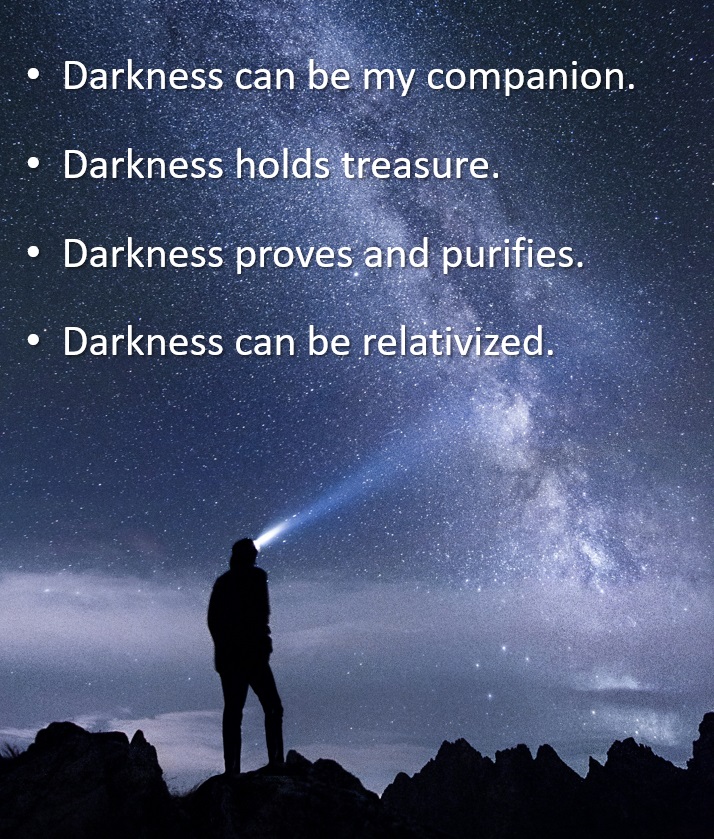
The psalm shows me that darkness can be my companion for a long time. Heman complains about difficulties, depression and despair that had been part of his life “since his youth.” Every morning, he prays to God; this looming darkness stays with him “all day long”. Michael Wilcock writes in his commentary on Psalm 88:
“This darkness can happen to a believer, this Psalm says. It doesn’t mean you’re lost. This darkness can happen to someone who does not deserve it, after all it happened to Jesus. This doesn’t mean you’ve strayed. This darkness can happen at any time as long as this world lasts because only in the next world will such things be done away with. This darkness can happen without you knowing why, but there are answers, there is a purpose, and eventually you will know it.”
Feeling this way does not mean God has abandoned you. Moreover, feeling depressed or deserted by God does not mean having no faith. Christians will not always escape disappointment, disease, disaster, dread and death. “In this world, we will have trouble,” Jesus said. These experiences and emotions lay heavy on the human soul – as they should. (Remember Jesus at the death of his friend Lazarus or before his trial?) It is comforting to know that God is with us in our struggles, that our faith is not in vain. The Darkest Psalm assures us that God hears our prayers in distress and honours our faith (trust) in him.
Scripture (and our experience) show us that darkness holds treasures. During seasons of hardship, we get to know God in a new way, see our motivations, strengths, and weaknesses, and understand how God has ordered the world. We come out of darkness more sober and wiser than we entered it.
Seasons of darkness prove and purify my faith. The book of Job shows that Job’s troubles tested whether his worship of God was sincere: Would he worship and trust in God without the benefits? In Job’s darkness, his faith was verified—he did not turn his back on God but rather wrestled with God.
Job’s faith was also purified in his season of darkness. Job’s hardships revealed his convictions and challenged him to reconsider who God is and how God relates to us and the world. Like precious metals, Job’s faith was purified in the fire as he saw a side of God that was hidden before.
My darkness can also be relativized. In his notes on Psalm 88, Timothy Keller points to the darkness Jesus experienced on the cross. During his darkest hours on the cross, where he felt God had forsaken and forgotten him, Jesus did not forsake or forget us. “For the joy (of our salvation) he endured the cross and despised the shame…” the apostle wrote (Hebrews 12:2). When he felt forsaken from God on the cross, Jesus cried out from Psalm 22:1-2
My God, my God, why have you forsaken me?
Why are you so far from saving me,
so far from my cries of anguish?
My God, I cry out by day,
but you do not answer,
by night, but I find no rest.
In all his anguish and pain, Jesus did not forsake us. We can be confident that Jesus will not forsake us in our moment of darkness. Moreover, in our greatest darkness, we will never suffer the darkness Jesus suffered. The Father turned his face from Jesus as he bore my sins so that the Father may never turn his face from me. I will never be alone in my darkness; I am reconciled to God in Christ. What a comfort!
The invitation in this Psalm.
Heman’s prayer invites me to be honest with God in my suffering and pray without pretence. All the psalms of lament teach us to pray for our fears, pain, disappointments, and shame. If it’s too difficult to say it out loud, learn from Heman and write a poem or journal, then cast your burdens on the Lord, and he will sustain you through. (Psalm 55:22)
Heman’s prayer reminds us that our experiences don’t always reflect reality. Despite being a worship leader, prophet, and priest who had enjoyed God’s glory and friendship for years, he prayed that he had never felt joy and companionship. It’s important to remember God’s goodness and moments of joy, to remind ourselves that life has been good and will be good again. Like the shepherd who “leads us through the valley of the shadows of death,” this difficult time will also pass.
Lastly, in my moments of darkness, I am reminded that I have my Friend on the cross. When I feel forgotten and forsaken by God, I am comforted that Jesus has felt what I am feeling. I know that he has been there, and I can draw grace from him (Hebrews 2:15; 4:16). He promised to never leave me, and he will lead me through (Psalm 23:4).
There will be seasons when I feel “God does not hear, God does not care.” This feeling does not mean I am fickle or faithless – Job, Jesus, David and Heman felt this way. Heman’s poem is a powerful prayer to find God in the dark and draw grace from him for today.
 walklikejesus