Another year is over. Another year in which we have experienced the goodness and faithfulness of God. We have been preserved, blessed and even enriched in so many ways. This is indeed reason to stop, to gather everyone and celebrate. It’s a time to set up a memorial stone and exclaim with Samuel “Thus far the Lord has helped us!” (1 Samuel 7:12).
A time for recreation.
Celebration is a time of rejoicing – a time to look at the good and cherish it.It isa time where we celebrate and exult. A time of laughter, music and dancing, a time forrelaxingas we deliberately free ourselves of cares and work. It is a time for joyful recreation and playful interaction. It is a time away from the ordinary and mundane routine of working and earning so that we can have a time of resting with the intent of restoring and recharging. It is a time to “wait on the Lord [to] renew your strength” (Isaiah 40:31).
A time to reflect and consider how you have grown or waned.
Celebration is a time of reflection – a time to look in the mirror and with honesty consider the person you have become. It’s a time to take stock of your life as you consider how you have grown or how you have waned. In moments like these we review the stewardship of what have been entrusted to us (opportunities, relationships, time and resources) in the light of eternal perspective. This gives opportunity to reprioritize your time and resources in respect to God the Judge of all (Ecclesiastes 12:13-14).
A time to remember.
Celebration is a time to remember where you have come from, where you have been and where you are heading. It’s a time to look back cherish your legacy, and look ahead to embrace your destiny anew. It’s a time where you look back on the road of life with thankfulness and a time to remember the lessons you have learned. It’s a time to relive the faithfulness of God in being Emanuel, God with us. This leads to a time of and realigning the path of your life as you follow the Lord your the Shepherd (Psalm 23:1-4).
A time to reconnect.
Celebration is a time for relating – a time to look around you and enjoy the fact that you are not alone in this journey of life. It’s a time where your identity is not found in your work, your failure or your success, but in your belonging. You are accepted for being you, celebrated as a gift from God. This leads to a time of reconnecting hearts around the table of God our Father (Ephesians 3:14-17).
A time for recognition.
Celebration is a time for recognition –where we look at the people around us with gratitude and humble regard for their contributions and efforts. A time we “give honor to whom it is due” (Romans 12:7). It is a time where we reaffirm the value and relationships of those among which the Lord has placed us.
A time for reverence.
Celebration is a time for reverence – a time to look up and render yourself in worship to God as the source of all goodness and necessary grace. It’s also a time of yielding yourself in serving the God who created you for his pleasure. A time where you resign yourself to the purpose, position and path that God has assigned for you; “this is your reasonable service to God” (Romans 12:1-2).
Invite family, friends and neighbors to celebrate with you!
So do as our Biblical example encourage us – regardless of our circumstances or emotions – lets’s celebrate! Invite your family, friends and neighbors, saying “Rejoice with me!” (Luke 15:6,9) Gather, feast with music and food and dancing and the exchanging of gifts as we celebrate and display the goodness and faithfulness of God our Savior. So let us rejoice and be glad – this is the season of celebration! (Refer Psalm 118:24; Revelations 19:7; 1 Chronicles 16:1-3; Esther 9:16-19; Nehemiah 8:9-12).
It appears as though the use of anti-depressants have doubled in most countries since the turn of the century according to a report in November 2013. Commenting on the report in a Harvard Health article Peter Wehrein states that most medical practitioners agree depression has been under-diagnosed for long, and the rise in anti-depressant use could be ascribed to more accurate diagnoses of those suffering from depression. To give perspective to the commonality of clinical depression, anti-depressants are the third-most prescribed, and most used drug in the USA. The number of Americans using anti-depressant have increased by 400% between 1994 and 2008. One in ten people in Iceland use anti-depressants. In South Africa, almost 1 in 5 people suffer from mental illness such as depression, anxiety, etc. It is fair to say that our world is generally depressed and anxious, and people are living in a state of hopelessness – as Paul put it “having no hope and without God in the world” (Ephesians 2:12).
This is in stark contrast from the “life more abundantly” which Christ came to offer us (John 10:10). For the Christian, life is a gift which is celebrated now, not dreaded or endured until we are delivered from this earth. The Psalmist sings “this is the day that the Lord has made – let us rejoice and be glad in it!” (Psalm 118:24). Life – here and now – ought to be celebrated and enjoyed as a gift from God.
Celebration does not come naturally to us. Sadly, depression, anxiety and hopelessness comes naturally in this fallen world – the stats mentioned above serves as evidence that humanity’s natural drive is towards passivity and cynicism. So how do we learn the art of celebration? What does the Bible say about it?
My favorite CD this year is The Art of Celebration from Rend Collective; I can’t get enough of the message in the music; it stirs such thankfulness and joy in my heart towards God the giver of life and giver of hope. Take a look at the story behind the album for a motive and message behind the recording. This album has done a work of God in me to deliberately celebrate life with God.
Celebration is a major theme in the Bible. Frequently we are called by the Psalmists and prophets to celebrate the works of God (including God’s creation, salvation and wonders). Celebration is prominent from the Mosaic Law and through the history books. Jesus’ first miracle was to prolong the celebration of a local wedding, and many of his prominent teachings were during the annual feasts of Israel, including the promise of the Great Celebration of his wedding when he returns. It is evident that God created life to be celebrated – he is a God who loves joyful festivity!
The Annual Feasts of Israel
The Jewish calendar is marked by 8 major festivals every year. Each of these feasts are special Sabbaths and therefore regarded as “holy days” (from there our word ‘holidays’) with the command to rest. The weekly Sabbaths were celebrating as perpetual reminder Israel’s covenant with God (Deuteronomy 5:15); they were redeemed from insignificant slaves to “a holy people to the Lord… chosen for himself… a special treasure” (Deuteronomy 7:6; 14:2). And subsequently each annual “holy day” reinforces an aspect of this truth of the Jew’s legacy – their identity as covenant people of God with a destiny in God’s eternal plan.
During Passover every family had to prepare – and finish – “a lamb for every household”. Nothing may be left for the next day. What a feast!
The original seven feasts took place in two seasons of the year – four in spring and three in autumn (Leviticus 23 and Deuteronomy 16). The first feast was Passover (Leviticus 23:5) commemorating the deliverance of the Israelites from Egyptian slavery when the Angel of Death “passed over” homes where the blood of a lamb was applied to door posts (Exodus 12:5). This is the only festival that ought to be celebrated with the family wherever Jews find themselves, with their families. The celebration remembers God’s great deliverance of their nation, reinforcing their identity as God’s covenant people, no longer slaves, as well as within their families.
The second feast begins the next day, lasting a week: the feast of Unleavened Bread (Leviticus 23:6) where for one whole week no bread with leaven (yeast) may be eaten. As in most instances in the Bible “leaven” is a symbol for sin, so eating unleavened bread for a week is a reminder that our lives should be holy, blameless. Typically Jewish homes get “spring cleaned” the week before Passover so that no trace of yeast could be found in the home (it becomes a game for the children to find some). This cleaning is a powerful symbolic act that serves as a time of introspection and sanctification for the adults and a time of instruction for the young ones – while remaining a joyful celebration as families come together and the nation stop to consider God.
First-fruits of Barley harvest being sifted.
The third feast, the feast of First Fruits (Leviticus 23:11) takes place the “morning after the Sabbath” of Unleavened bread – commemorating the fruitfulness of the land the Lord gave Israel by bringing an offering of the first-fruits of the Barley (or Spring) harvest to the Lord. The festival celebrates God’s provision faithfulness to Israel as a nation. The Modern church calls this feast Easter after Ishtar, the Babylonian goddess of fertility). Still today the feast is associated with symbols of fertility such as rabbits and eggs.
First fruits of the wheat harvest, a summer crop.
Fifty days later the Jews celebrate Pentecost (Leviticus 23:16) to consecrate the wheat harvest (or summer crops) to Lord as a time of thanksgiving and devotion to God.
These four Spring Feasts begin with Passover and end with Pentecost, but it is seen as one time of celebration.
Blowing of the ram’s horn – a shofar (translated “trumpet” in most Bibles)
The autumn season of celebration begins with the Feast of the Trumpets (Leviticus 23:24) ushering in the Sabbatical month in the Jewish calendar. The blowing of the trumpets “proclaim liberty throughout the land” (Leviticus 25:8-10). It is a time of joyful singing and dancing.
A lamb was slaughtered as substitute for the sins of the nations once a year, to make atonement for the sins of the people.
Ten days later was the holiest of days, the Feast of Atonement (Leviticus 23:27) – a day where the high priest enters into the temple to confess and atone for the sins of the nation over past year. It is a solemn day of fasting followed by joyful celebration of reconciliation and peace with God.
During the Feast of Tabernacles all the Israelites stayed in booths or tents to remember God’s protection and provision during their wilderness journey from Egypt to Canaan.
The last of the seven feasts in the Law of Moses is the Feast of Tabernacles (Leviticus 23:34) where the whole nation lives in booths (or tents), reliving the nomadic journey of Israel through the Wilderness for forty years, celebrating God’s faithful provision and protection during their ancestors’ journey. Again, this feast serves as time of reflection on God’s faithfulness to them as God’s elect people, a time of worship and instruction for the young ones as they participate.
During Purim – and other Jewish feasts – the Jews enjoy and share great food and gifts with all they celebrate the life of protection and abundance God blessed them with.
Another annual feast was added later to the Jewish calendar: the Feast of Purim instituted by Queen Eshter during the Persian exile under King Ahasarus. It is celebrated annually on the 14th and 15th of Adar “as the days on which the Jews got relief from their enemies, and as the month that had been turned for them from sorrow into gladness and from mourning into a holiday; that they should make them days of feasting and gladness, days for sending gifts of food to one another and gifts to the poor” (Ester 9:22).
How do we celebrate?
Typically, the Jews celebrated as most cultures feast throughout the world: with music and dancing and ceremony, with reenactment and story-telling and worship to God, as well as gifts to one-another and to the poor. The main elements of Biblical celebration is remembrance and retelling, leading to worship and witness.
In celebration the Jews remembered and even reenacted the great works of God for reflection and retelling (education of the younger generation). This was done to reinforce and pass on faith in God and their identity as God’s covenant people. The remembrance and retelling lead to worship of God for the great things he has done to them, and also as witness to onlookers, telling them of the works of Yahweh, the Great God of Israel.
A Filipino painitng of Jesus breaking bread with children.
Our celebration should be the same: remember and retell, leading to worship and witness. Take the Lord’s Communion as an example:
“For I received from the Lord that which I also delivered to you: that the Lord Jesus on the same night in which He was betrayed took bread; and when He had given thanks, He broke it and said, ‘Take, eat; this is My body which is broken for you; do this in remembrance of Me.’ In the same manner He also took the cup after supper, saying, ‘This cup is the new covenant in My blood. This do, as often as you drink it, in remembrance of Me.’ For as often as you eat this bread and drink this cup, you proclaim the Lord’s death till He comes.” (1 Corinthians 11:23-26)
We remember the Lord’s death and resurrection, we retell it to one another and the young believers. Then we worship the Lord for his selfless love and we witness of his death, resurrection and return to those around us.
What does celebration do for us?
1. Celebration creates memorials for us and coming generations. These are powerful reminders for us and our children of the works of God, teaching them to fear God and to trust God.
“I will [tell of the] things that we have heard and known, that our fathers have told us. We will not hide them from their children, but tell to the coming generation the glorious deeds of the LORD… that the next generation might know [God’s laws], the children yet unborn, so that they may arise and tell them to their children …so that they should set their hope in God and not forget the works of God, but keep his commandments; and that they should not be like their fathers, a stubborn and rebellious generation, a generation whose heart was not steadfast, whose spirit was not faithful to God.” (Psalm 78:2-8)
These acts of God must be retold so that we and our children may have faith in the Living, Mighty God who lives and works in and among us. That is the reason why so many of the Psalms are a retelling of some portion of the history of Israel (see Psalms 104-107, 136, etc).
These memorials also serve as vivid life lessons on which the individual and nation can build and add in their relationship with God. For instance, celebrating the Sabbath reminded Jews that they were slaves which cried out to God and now they are his covenant people. Likewise celebrating the first day of the week reminds Christians that Jesus rose from the grave on this day, and so will we. Celebration reinforces key Biblical truths.
Most national festivals has as its aim to reinforce cultural identity and pride.
2. Celebration reinforces legacy – both the identity and destiny of the descendants. These festive celebrations reinforce the belonging of the individuals into the family and nation that they are part of. It give pride in a shared history in which God has grafted this life, and also shares the purpose and destiny of this family and nation. More than the family name, the feasts are in themselves meetings with God which serve as opportunities where we meet with God, securing our identities as “a people of God”. Furthermore, our celebrations highlight the core values that make us a unique family and nations, reinforcing our identity in practical ways to be remembered and emulated.
Jesus ensured joy at this wedding.
3. Celebration brings joy in a practical sense. Celebration make life pleasant as we stop and abstain from everyday work. Instead we laugh, play, dance, eat, make music and simply enjoy and share the fullness of life and gifts of relationships. Jesus’ first miracle was at a wedding celebration (John 2:1-11). The wine ran out, and Jesus did a miracle to make sure the party does not end prematurely (he made about 680 additional liters of excellent wine!). Apart from the practical miracle to ensure a full-term wedding celebration, wine is a Jewish symbol of joy; Jesus’s first miracle was done to endure that he gives full, lasting joy. He intents for celebration to be joyful, and does the miracle to make ensure it!
4. Celebration trains us to see and appreciate the good. By stopping to remembering and thank God for his intervention in our lives and the lives of his people, celebration reinforces the truth that God is at work and among and through us. God is here and God is at work. In this way celebration stirs our faith and hope, and helps us anticipate and recognize the works of God. Jesus taught that the eye is either “light” (hopeful) or “dark” (skeptical) (Matthew 6:22-23) – celebration makes our eyes “light” – it trains us to look for the hand of God in our lives.
Celebration helps us include others in our lives.
5. Celebration helps us include others into our lives. As we celebrate, we acknowledge a shared legacy – thus a shared history and a shared future with others following God. Celebration helps us move from the isolation of contemporary individualism towards the interdependence of Biblical community. As we celebrate we recognize that we are the people of God among and through whom he works. We see that God not only has a saving plan for me, but for us. We learn that God is not only my Father, but rather he is our Father. In our celebration together we learn that our struggles and pain is also shared in a real way. Our celebration is the stepping stone into true unity. It is as we celebrate together that we grow to become the community of which Jesus said “by your love will they know you are my disciples” (John 13:34).
Celebration is a choice
Celebration is not a matter of feeling but of choice. God made sure of that when he made the Jewish feasts annual calendar entries dates. Regardless of the current political situation or economic state the Jews stopped all work (and warfare) and gathered to remember and retell, to worship and witness of the works of the Lord. During Nehemiah’s rebuilding and spiritual reformation (around 530 BC) the returned exiles celebrated for the first time the Feats of Tabernacles and wept as they heard the words of the Law explained by Ezra. But they were rebuked by Nehemiah and Ezra, and told to celebrate the memory of the God’s faithful protection and provision during the wilderness wandering of the ancestors:
“And Nehemiah, who was the governor, and Ezra the priest and scribe, and the Levites who taught the people said to all the people, “This day is holy to the LORD your God; do not mourn or weep.” For all the people wept as they heard the words of the Law. Then he said to them, “Go your way. Eat the fat and drink sweet wine and send portions to anyone who has nothing ready, for this day is holy to our Lord. And do not be grieved, for the joy of the LORD is your strength.” So the Levites calmed all the people, saying, “Be quiet, for this day is holy; do not be grieved.” And all the people went their way to eat and drink and to send portions and to make great rejoicing, because they had understood the words that were declared to them.” (Nehemiah 8:9-11)
Their identity as Gods’ elect, holy and treasured people were reinforced through corporate celebration. Their feasts informed their circumstances that there is “a God who acts for the one who waits on Him” (Isaiah 64:3-4).
Israel’s annual celebrations declared their faith in a God who saves from slavery and brings into a land of plenty in every season. He is also a God who demands holiness. This God brings liberty and makes atonement on your behalf, and protects you when you are vulnerable.
What does your lifestyle of celebration say to you and others? Have you learned the art of celebration?
God hears. God: transcendent, all-mighty, all-knowing, ever-living, ever-present, unchanging, so different from us. Yet this same big God is immanent, relational, approachable, and actively involved in our everyday lives – he knows your voice and listens to you. God hears you.
Hagar and Ismael seeking water (Hermine F. Schäfer, 1964)
Most of the Old Testament accounts have as basis “the people cried out in their suffering… God heard their cries” and then God saved them. One such account is of Hagar, the servant of Abraham’s wife Sarah. Since Sarah was barren she offered Hagar to bear a child for Abraham, but afterwards became resentful and mistreated Hagar. The servant fled but was met by God who said “Return to your mistress… name the child Ishmael (meaning ‘God hears’) because the Lord has listened to your affliction” (Genesis 16:11). Years later Sarah had a son and the jealous contention drove Sarah to send the servant and her son away. Hagar and Ishmael ran out of water; she put the child to rest under a shrub and sat some distance away, not being able to watch her child die of thirst. The Bible records “God heard the voice of the boy” (Genesis 21:17) and saved them from their immanent death by providing a well.
God hears and saves. God saved the the Hebrews slaves from Egyptian slavery and oppression because he heard them – “When we cried out to the LORD, He heard our voice and sent the Angel and brought us up out of Egypt…” (Numbers 20:16). Years later in their Promised Land they forgot God and repeatedly fell subject to foreign domination, but “when the children of Israel cried out to the LORD, the LORD raised up a deliverer” (Judges 3:9) “for the LORD was moved to pity by their groaning” (Judges 2:18). More than ten times in the book of Judges the phrase “cried out” occurs in this book, and then God hears, has pity and sends a deliverer such as Gideon, Samson, Deborah, etc. The people cry out, God hears and God saves.
In the psalms God is revered as “You Who hear prayer” (Psalm 65:2), and he invites his people to “call on Me in the day of trouble; and I will rescue you…” (Psalm 50:15; cf Ps 91:15). Many of the psalms were written in celebration of God’s answer to their prayers, with a familiar refrain in these songs “then they cried out to the LORD in their trouble, and He saved them out of their distresses” of Psalm 107. A few sample texts will illustrate:
Psalms 40:1-3 “I waited patiently for the LORD; And He inclined to me, And heard my cry. He also brought me up out of a horrible pit, Out of the miry clay, And set my feet upon a rock, And established my steps. He has put a new song in my mouth– Praise to our God; Many will see it and fear, And will trust in the LORD.”
Psalms 18:6-16 “In my distress I called upon the LORD, And cried out to my God; He heard my voice from His temple, And my cry came before Him, even to His ears. Then the earth shook and trembled; The foundations of the hills also quaked and were shaken… He sent from above, He took me; He drew me out of many waters.”
Psalms 66:17-20 “I cried to Him with my mouth… certainly God has heard me; He has attended to the voice of my prayer. Blessed be God, Who has not turned away my prayer, Nor His mercy from me!”
The psalmists sing that God hears and heals (30:2), he hears and saves from distress (18:6), shame and entrapment (31:22), from troubles (34:6), from “miry clay” (40:1-3). God answers by giving strength and courage (138:3). Certainly, “The Lord is near to all who call upon Him” (Psalm 145:18), therefore one should “Wait for the LORD, and He will save you” (Proverbs 20:22; compare Psalm 27:14).
Much of the history books retell the intervention and deliverance from God who hears and responds to the cries of his people. He intervened when soldiers cried out to him from the battle ground (2 Chronicles 13:14-16; 14:10-14; 20:1-28). When Elijah“cried out to the LORD” to resurrect a widow’s son, “the LORD heard the voice of Elijah; and the soul of the child came back to him, and he revived.” (1 Kings 17:22). When king Hezekiah was sick and dying, Isaiah “cried out to the Lord” for his healing and God responded with a sign – the sun moved back 15 degrees on the sun dial (2 Kings 20:5, 11). Even when Solomon consecrated the temple God made this well-known promise: “If my people who are called by my name humble themselves, and pray and seek my face and turn from their wicked ways, then I will hear from heaven and will forgive their sin and heal their land” (2 Chronicles 7:14). Therefore Hosea, years later, called unfaithful Israel to repentance saying “take words with you” (Hosea 14:2) with this promise from God “I will heal their backsliding, I will love them freely” (v4). God hears and responds to the prayers of his people.
God saved the sailors in the boat Jonah traveled in.
But God does not only hear the prayers of the righteous or of the Jews – the promise is that “whoever calls on the name of the Lord shall be saved” (Joel 2:32 quoted in Acts 2:21, Romans 10:13). God hears everyone. The Old Testament book of Jonah reveals this truth as God saved the pagan fishermen from drowning because they called on him (Jonah 1:14), the rebellious prophet from drowning by sending a big fish (Jonah 2:2), as well as the inhabitants of Nineveh from impending judgment because they repented in fasting (Jonah 3:4-10). God is merciful – he saves all who call on him.
The Bible clearly shows that God hears and saves all who calls on him. How does this truth change our lives?
1. Secure in God’s intimate awareness
Firstly, I rest in the knowledge that God is intimately aware of me and hears my prayers as he heard Jesus’ desperate cries (Hebrews 5:7). But God hears more than our prayers. In Hagar’s account we see the Lord is a God who listened to the unjust treatment of the pregnant servant girl as well as a God who hears the cries of a thirsty boy and provides an outcome (Genesis 16:11, 21:17). He is a God who took note of the Egyptians’ oppression of the Hebrew slaves and heard their groaning (Exodus 2:23-25) and their cries (Exodus 3:16). The Lord took note of Leah’s desperate desire to be loved and have children and gave her first two sons: Reuben (literally “the Lord sees”) and Simeon (literally “the Lord hears”) (Genesis 29:32-33).
God listens to the conversations (and complaints!) of his righteous people.
God also takes note of conversations among each other: he listens when the righteous talk to one another (Malachi 3:16) and he God records it in a book, but also hears complaints and murmuring (Numbers 11:1, 12:2). In another incident we read that God heard the threats of the Syrian military commander against Israel and responded by saving his people (2 Kings 19:6-8). God is near; he hears and responds.
2. You have not because you ask not
Secondly, I am aware that God ordained our relationship with him in such a way that he gives us what we ask in prayer. Jesus taught us “ask, and you will receive!” (Matthew 7:7). He taught us to ask for everything, from your daily bread and forgiveness (Matthew 6:8-10) to peace of for your city (Psalm 122:6 and Jeremiah 29:7). Years later the apostle John wrote: “This is the confidence we have in approaching God: that if we ask anything according to his will, he hearsus” (1 John 5:14).
Oliver Twist was brave enough to ask “Please sir, can I have some more…?” (Movie from book by Charles Dickens)
God gives us what we ask. I find that we tend to rely on our own efforts to satisfy our desires and needs, and do not ask God Our Father for these things. James wrote to a frustrated church in Jerusalem “You lust and do not have… Yet you do not have because you do not ask” (James 4:2). We live life in relationship with God. Our heavenly Father knows what we need (Matthew 6:32). So ask – God hears you! You will receive.
3. God does not get tired of your prayers – he invites it
Sometimes we tire of asking God for the same things over and again, thinking God gets annoyed by our asking. Yet God does not get tired of hearing our pleas – rather he encourages it. Using two parables Jesus taught his disciples that persistence is necessary in prayer. The first is of a man who knocks and asks for bread in the middle of the night until his friends gets up and gives him what he asks (Luke 11:5-13), and the second of a widow who pleads for intervention from a judge on behalf of her two sons until he gives justice (Luke 18:1-8). In both teachings Jesus taught that his disciples should persist and persevere in prayer until God the Father responds in answer. Do not stop asking – God does is not worn out by your asking!
Watchmen awake at night
In another place God said: “I have set watchmen on your walls; all the day and all the night they shall never be silent… give him no rest until he establishes Jerusalem and makes it a praise in the earth” (Isaiah 62:6-7). Are some of your prayers unanswered? Have you given up praying about finding a life partner, or your marriage, your financial situation or the will of God for your life? Then you have need of endurance! God would say to you today “Persist in prayer. Do not stop asking!” – God hears and he will respond.
4. Come closer
The Almighty God invites me and you to approach him with our needs and desires, to “boldly approach the throne of grace that we may receive mercy and find grace to help in time of need” (Hebrews 4:16). Do not keep silent but “let your request be known to God” (Philippians 4:6).
You can pray with the confidence that God does hear you and he will respond with compassion and power. So close the door, switch off your phone and talk to your Father in secret who will hear and reward you openly (Matthew 6:6). As you start praying let this last Scripture be an inspiration to talk to God Who Hears.
Isaiah 64:3-4 “you came down, the mountains quaked at your presence… for since the beginning of the world Men have not heard nor perceived by the ear, nor has the eye seen any God besides You, Who acts for the one who waits for Him.”
God responds powerfully on behalf of those who pray to him (Isaiah 64:1-4).
I admire Paul’s devotion to please God and walk as Jesus did (1 Thessalonians 4:1). He is an example whom I gladly imitate (1 Corinthians 11:1), and thankfully his letters in the New Testament left clear trace of his thoughts and life to follow after. Of all his letters I cherish Philippians most, because therein I see clearly Paul’s courageous devotion, selfless humility and heartfelt desire for Christ his Lord. Here also I his sincere concern for the he ministered to.
We know that when Paul wrote this letter he was a prisoner of Rome and responded to a gift and some news from a congregation in Philippi. They were praying for Paul’s release, and he replied that he is confident of his release on account of their prayers. He rejoices to see his imprisonment has furthered the gospel both in Rome and in Philippi. He states that he would rather the Romans execute him so that he could be with his Lord, but he knows it would be better for them if he be restored to them. Then Paul penned this well-known phrase “For to me to live is Christ, and to die is gain” (Philippians 1: 21). This phrase is the anthem of Paul’s life, visible throughout his letters. In a sense it is his live view. And I desire it to be mine.
So I ask myself “How does ‘to live is Christ’ look like in my everyday life?” And with that question I read through Paul’s letters in found these five practical ways in which Paul expressed “to live is Christ” in his everyday life.
I live to serve Christ
Paul lived to serve Christ.
The first thing we read about Paul in most of his letter is this phrase: “Paul, a servant of Christ Jesus”; on a number of other occasions he mentions “I serve God” (see 2 Timothy 1:3 and Romans 1:9). Paul literally saw himself as a servant of Christ and a servant of God that were happy to do whatever his Lord desires. After his conversion-meeting with the Christ (Acts 9; Galatians 1:13-24), Paul received a commission from Jesus his Lord, determining the course for the rest of his life as one who is sent by Christ (aka apostle), a course he stayed on until his execution. Near the end of his life he shared these words with the leaders of the churches in Ephesus: “I do not account my life of any value nor as precious to myself, if only I may finish my course and the ministry that I received from the Lord Jesus, to testify to the gospel of the grace of God” (Acts 20:24).
Paul served Christ in this mandate willingly and cheerfully amidst the many beatings, whipping, imprisonment and other suffering (2 Corinthians 6:4-10). He took his commission serious, and served the Lord and His people gladly and selflessly (Acts 20:17-19) not for a reward or praise from man. Paul only had in mind to please Christ his Lord (refer Ephesians 6:6 and Colossians 3:22). . In a like manner he encouraged the churches to serve the Lord (Romans 12:11) and also to serve one another in the manner Jesus served: in love (Galatians 5:13) and in humility “taking the form of a servant… becoming obedient to the point of death” (Philippians 2:5-8).
I live to know Christ
Grow in knowledge of Jesus.
Paul had an all-consuming passion to “know Christ Jesus my Lord” (Philippians 3:7), and stated that this intimate knowledge of Christ was more important than anything else in life – costing him the loss of everything else in life. Paul yearned to “know him and the power of his resurrection, and may share his sufferings, becoming like him in his death, that by any means possible I may attain the resurrection from the dead” (Philippians 3:14). Living to know Christ was not an academic pursuit; Paul knew Christ in communion with Christ (prayer and worship, see 1 Corinthians 3:17-18) as well as copying Jesus’s life of obedience to His Father – even if it meant suffering unjustly (Philippians 3:14).
I live to glorify Christ
On two occasions Paul referred to his life as “being poured out as a drink offering” (Philippians 2:17; 2 Timothy 4:6) to the Lord – a reference to a Levitical worship ceremony. By calling his life a “drink offering” Paul meant that his life was lived for and consumed by his service to Christ, as an act of worship to God. He existed to glorify Christ, to make Christ look great and to make his Lord famous.
Using another worship metaphor Paul implored the church in Rome “to present your bodies as a living sacrifice, holy and acceptable to God, which is your spiritual worship” (Romans 12:1). He called on them to use their bodies as worship to God so that “whether you eat or drink, or whatever you do, do all to the glory of God” (1 Corinthians 10:31). The “glory” he writes of here has to do with the fame and renown of God – that everyone may know of God: his great name, power and his great works.
Paul lived to worship God in everything he did and appealed the churches to do the same. Thus worship was not removed from everyday life activities – rather, everyday activities was the means by which he glorified Christ. For instance, he wrote that work was meant to be worship to the Lord (Colossians 3:23), marital relations ought to represent Christ (Ephesians 5:23-27), church relations ought to represent Christ (Ephesians 5:22; cf John 13:34-25), as well as how we manage our money (Philippians 4:12-13; 1 Timothy 6:6-11). Literally everything Paul did, he did for Christ, so that in reality he lived for Christ.
I live to reveal Christ
As a servant sent by Christ (aka apostle) Paul saw himself as an ambassador (Ephesians 6:20) – one representing Christ and His Kingdom. Thus it was important for Paul to not only bear the message of the gospel of Christ, but also to represent the righteous, loving nature of Christ his King in the way he lived. Paul knew that as one bearing the name of Christ (i.e. Christian) his life was a reflection of the Kingdom he represented as ambassador and proclaimed. That is why Paul also appealed to the churches to walk “worthy of the gospel of Christ” (Philippians 1:27, Ephesians 4:1).
For Paul, “to live is Christ” meant living to present the glory of his King and the nature of Christ’s Kingdom.
I live to preach Christ
Paul preaching in Athens.
As Paul was about to embark on his journey to Jerusalem at the end of his third missionary journey, Paul stated that he knows great troubles await him there, “but I do not account my life of any value nor as precious to myself, if only I may finish my course and the ministry that I received from the Lord Jesus, to testify to the gospel of the grace of God” (Acts 20:24). As long as Paul had breath he would preach Christ, as he wrote elsewhere “Woe to me if I do not preach the gospel!” (1 Corinthians 9:16).
When he wrote “for me to live is Christ” Paul definitely thought of preaching Christ as well.
An example to follow after
Paul encountered Christ on the road to Damascus and his life was forever transformed. He saw Jesus and met him as his Lord. From that day onward his life motto was “for me to live is Christ, to die is gain.” From that day onward he gave himself to serve Christ. He was consumed with the desire to know Christ, and his greatest ambition was to glorify Christ in everything he does. His life purpose was to preach Christ and therefore he also resolved to represent Christ well as an ambassador of this great King.
He challenged the Corinthians church to live for Christ as he does, arguing “that [Christ] has died for all, …so that those who live might no longer live for themselves but for Him who for their sake died and was raised.” We have no choice but to live for Christ! This is symbolism which we enact in baptism (Romans 6:3-13) – our life is no longer for our benefit, but for Christ’s who saved us and made us his own.
Does Paul’s devotion to Christ inspire you too? How will you respond to his life motto “for me, to live is Christ.”
We’ve all attended a Christian fellowship meeting where boredom drives us to count the cracks in the tiles and we end up feeling feel guilty for wondering whether this was a waste of precious time. At other times we walk away from lively discussion with laughter or tears, yet feeling empty, wondering if Jesus was at this meeting. But we go back because we know it’s right, and because we remember and yearn for those powerful life-changing encounters with God in a loving community. How do we prepare for those meetings? What did the Christian fellowships look like to result in such life-giving communities?
The word “fellowship” is used very loosely in Christian circles these days for anything from formal Sunday worship services to conversation over coffee to prayer meetings at work. Interestingly enough, none of these references are improper when compared to the New Testament use. Hampton Keathley did a very helpful study of fellowship in the New Testament, showing how it the concepts of “having together” or “sharing” is used in reference to our relationship with God and one another, the various ways in which companionship takes place, or for the sharing of resources to meet one another’s needs, as well as partnership in ministry. Christian fellowship is a wide study, and perhaps that is one reason why at times “fellowship groups” fail in being productive and life-giving.
Conversation in Christian fellowship should should grow towards being loving, genuine and truthful.
Before we get handles on what to focus on in Christian fellowship groups, let’s first consider our communication within the fellowship. It is widely considered (and helpful) to look at five levels in communication: Hallway Talk is that shallow conversations we do in showing courtesy – the “hello!” and “lovely day, isn’t it?” exchanges as we pass by. Then we have Reporter Talk where we relay facts or experiences; in a Christian group this is typically a teaching or an update. Next we move to Intellectual Talk as we add personal depth by sharing our thoughts, understanding or opinions on the subject at hand. Many Christian groups only progress to here, limiting the fellowship to intellectual debate or lecture – the reason for the lifeless feeling in fellowship. From here the talk should move to making it even more personal – Emotional Talk – where one’s feelings towards the subject is discussed: “How do you feel when you read ‘God so loved the world…’?” or “How does the statement ‘God will judge every work…’ move you?” But Christian fellowship should not climax with emotive response alone – the aim to evaluate yourself soberly in light of the Word and then present your shortcomings vulnerable for the Lord in the ministry of the fellowship (1 John 1: 7-9; James 5:16). Communication in Christian fellowship should be Loving, Genuine Truthful Talk. This level of communication is very honest and transparent and requires an environment of patient love and safe trust. But this is the environment where the Spirit of God works with great power and delicate precision. Here there is LIFE that shows in healthy growth and miraculous transformation.
The elements of true Christian fellowship
Now that we know the conversational environment wherein Christian fellowship should take place, what are the necessary elements for healthy Christian fellowship? With fellowship meaning “sharing” – what do we “share” when we come together?
Christian fellowship should first of all be communion with God.
Firstly, as Christians we come together to fellowship with God in Christ(1 John 1:3, Colossians 1:27). We share in God as we share in Christ – this is firstly an objective reality, since God lives in and we live in God through Christ. In a literal sense we “share” or “hold onto” God himself – this is true regardless of share activities. God has us together and we have God together.
But fellowship with God is also subjective experience and deliberate activity as we commune with him about anything and everything in prayer. We come together to meet with God and converse with God. This includes the giving of thanks for his goodness in our lives, praising him for who he is and surrendering ourselves to him in worship. Fellowship with God must always be the central focus of Christian fellowship, otherwise it becomes a human social interest club. We meet with God as God’s family around Our Father’s table.
Christian fellowship involves encouraging, supporting, caring and also correcting one another.
Secondly, we fellowship is with one another (Acts 2:42; Hebrews 10:25; 1 John 1:3,7-9). It sounds silly to say it, but the second focus of coming together is to be with one another and “stir one another to love and good works” (Hebrews 10:24-25). The focus of gathering is the well-being and growth of the others, placing the needs of others above their own (Philippians 2:3-4). An enlightening study is to search through the New Testament and take note of the many instructions to “one another” and “each other” as it gives a healthy perspective of the practice of early Christian fellowship that characterized by love for one another. The complete list of “one another” –instructions is long, but the essentials in my view for every meeting is to “encourage each other” one another (1 Thessalonians 4:18, 5:11) and “build each other up” (Hebrews 3:13) in our walk with Christ, to support and care for each other (Galatians 6:2; 2 Corinthians 13:11; 1 Corinthians 12:25-26) through struggles and hardships, to correct and warn one another of harmful attitudes and sinful behaviour (Romans 15:14; Colossians 3:16) as we hold one another accountable before Christ.
Christian fellowship should be centered in the Word.
Thirdly, we fellowship in Word the Scriptures are the basis of our conversation and reflection whether in instruction (Romans 15:14; 2 Timothy 2:2) or edification and correction (Ephesians 5:19; Colossians 3:16) the Biblical Text is the basis of our communion. Too often our conversation centers on our opinions, resulting in worldly advice or cheap Hall-Mark card encouragement. In Christian fellowship the Bible is central. We gather around the word of God as we seek God and his will for our lives, remembering the words of Peter to our Lord: “Lord, you alone have the words of life” (John 6:68).
Christian fellowship should be Spirit-directed. “The wind blows where it pleases… so is everyone who is born of the Spirit.” (John 3:8)
Fourthly, we fellowship in Spirit (Philippians 2:1). As mentioned above our fellowship is not mere intellectual engagement or emotional interchange, but spirit-to-spirit ministry. We already “share in the Spirit” since we all immersed in the Spirit (1 Corinthians 12:12), and therefore our interaction should be spiritual. This includes prayerful waiting on the direction of the Spirit for empowered ministry as we “serve one another with the gifts each one has received” (1 Peter 4:10; 1 Corinthians 12:6-11). We must remind ourselves to stop and listen to the promptings of the Spirit, and in faith obey. Our fellowship is in the Holy Spirit.
“Fellows in a ship” working together for a common goal – a good image of Fellowship in the Gospel’
Lastly, we fellowship in Gospel (Philippians 1:5, 7 27). Objectively this means we have become “partakers of the gospel” (Ephesians 3:6) – those who have received and hold on to the promise of redemption in Christ’s substation and grace. When we come together this is evident as we testify of our experience of Christ’s continual saving work in us. But to “fellowship in the gospel” (Philippians 1:5) also means to partner with one another in the work of the gospel – the spreading of the good news of God’s reign and Christ’s saving work. We fellowship as we take hands, or “yoke together”, to work diligently and strategically in sharing the gospel and showing God’s love with those close and those far away.
Thus Christian fellowship is centered in our worship of God and overflows to our communion with one another. This fellowship is centered in the Word and directed by the Spirit and results in partnership in spreading the gospel of Christ. Christian fellowship fails when its aim is mere intellectual enlightenment or emotional support; the goal of Christian fellowship is the discovery of God and his truth followed by a conviction and transparent confession of who I am, so that God through his grace may do his transforming work in me, within and through this loving community.
During a relationship seminar some time ago, my wife was asked why she felt safe to marry me. She answered that my close friends gave her assurance for two reasons: I had the ability to maintain long-term relationships, and secondly she felt safe because if I lose my mind one day, she knows my friends will bring me back on track – she is not alone in our marriage. I smiled that day realizing that my friendship with these men will not only preserve my marriage, but also my faith, character and reputation since they will call me to account to my promises, beliefs and values.
Accountability friendships acts as an anchor for a ship, preventing one from drifting slowly with the current of sensuality or heresy by keeping you on course, or like that voice in your car’s GPS that tells you have missed a turn and helps you to recalculate a route to your original destination. Like that voice, accountability friends will not keep quite until you return to the original path. But accountability relationships can do much more than that voice.
An accountability friendship acts as a GPS, keeping you on route.
I cherish accountability. Being in ministry for more than 12 years I learned of so many godly, anointed people who fall into sin or go astray in some strange path or get derailed because of some immorality or harness of heart, having no-one to call them to account. On the contrary, I have also seen marriages on the brink of divorce turned around because friends intervened – holding the couple not only accountable their vows but also to their hope, faith and values. And this intervention is necessary every so often since both seduction and pain make one act hastily and irresponsible, steering one of course. Adam and Eve, our perfect parents, show us that no-one is immune to seduction or deception – we all need someone to speak into our lives.
Sadly, accountability is not popular or easy in our intensely individualistic society. We value autonomy and cherish privacy and the freedom of choice above everything else. “It is none of your business!” and “I have the right to be happy!” are the creeds of our time. To make matters worse our society also values tolerance and therefore have a distaste for confrontation. Thus we tend to keep quiet about matters that might ruin our friends’ lives.
What does it mean to be accountable? It literally means “to give account” like an income and expense statement, or to be answerable for what was entrusted to you. Phrases such as “bring into the light” or simply “to make known” are synonymous to accountability.
Accountability is not a strange concept in our society.
The concept of accountability is not foreign to our society. For example, someone will willingly submit himself to an alcohol rehabilitation center makes himself answerable to the staff of the facility for the professed desire to be free from the substance and it’s destructive effects on his life. How? He gives permission for the staff of the facility to do random and scheduled urine tests and inspections, and invites accountability questions in the hope to be delivered from the addiction. Or one who signs up for WeighLess receives a prescribed diet and is answerable for compliance to the diet, while progress is measured with scheduled weighing. An athlete must give account to her coach for her adherence to a summer exercise program and performance is periodically measured in accordance to her goals for the season. Students who enroll for a course get tested academically in exams. The store manager, human resource manager and finance manager give account of what is entrusted to them both formally in audits, and informally in meetings. In these spheres our society know the value of accountability; it is not a strange concept for us.
For the Christian, at conversion (and more specifically at baptism and public confession of our faith) we sign up for a life of allegiance to Christ our Lord. This is called a life of discipleship: a commitment to be trained in and live a life based on the teachings of Jesus, as well as participation in his mission in this world. On of this we must give account – today, as Paul demonstrated when he confronted Peter for “not acting in line with truth of the Gospel” (Galatians 2:12-14) and when Christ returns to judge the world. And to that end accountability relationships must keep us on track.
Accountability in practice
Ultimately, “each of us will give an account of himself before God” (Romans 14:12). This includes both our public actions and personal thoughts and desires (Ecclesiastes 12:13-14). The result will be rewards for the good and punishment for the wicked (Revelation 22:12). We cannot escape this Day of Accountability (or Judgment) – our actions and inner thoughts and motives will be clear to all. It is with this Day in mind that the apostles urge us to “work out [our]own salvation with fear and trembling” (Philippians 2:12) and “exhort one another every day, as long as it is called “today,” that none of you may be hardened by the deceitfulness of sin” (Hebrews 3:13).
God appoints leaders to whom we must give account (Romans 13:1-2; Hebrews 4:13) – this includes parents of children (Psalm 127:3-5). These leaders must also give account of your soul to God (Hebrews 13:17) as Jesus did at the night of his arrest saying: “while I was with them, I kept them in your name… I have guarded them, and not one of them has been lost except [Judas]” (John 17:11-12).
But this concerned accountability of one another is not only the responsibility of leaders. Each of us should willingly give an account to one another – to “walk in the light” (1 John 1:7). We do so because we “we all stumble in many ways” (James 3:2, 5:16-20). Therefore accountability requires honestyconfession (1 John 1:6-9; James 5:15-20; see also Colossians 3:9; Ephesians 4:25) – an honest revealing of our thoughts, desires, habits and behavior, including confession of sins and failure (James 5:15). The response of the hearer must be loving correction and support in restoration of the ones who are caught in sin (Galatians 6:1-2).
Similarly, each of us are tasked to be your “brother’s keeper” (Genesis 4:9) – meaning to hold one another accountable for our behavior seeing as we ought to “be doers of the word” (James 1:22) and “walk worthy of the Lord” (Colossians 1:10; compare Ephesians 4:1), meaning to representing Him well. We do this to help one another walk in integrity – to ensure our confession and actions line up.
Accountability requires encouragement and exhortation (1 Thessalonians 5:11, Hebrews 3:13) to stay faithful to Christ in allegiance to him and not drift away (Hebrews 2:1-4), to continue to grow spiritually (Hebrews 6:1-2) and to faithfully continue doing what the Lord had commanded (2 Timothy 4:2,5). We are instructed to “consider how to spur one another to love and good works” (Hebrews 10:24). From this text it is clear that we focus not on sins, but on growth in Christ-like love and goodness. And this takes creative thoughts.
Accountability also requires admonishing and correcting one another (Colossians 3:16) where there is a sin or character weakness to “shape the face [read character] of a friend” (Proverbs 27:17). This must be done in wisdom (Jude 1:23), “in gentleness” (Galatians 6:1-2) and “in love so we all can grow up in every way into …Christ” (Ephesians 4:15). But is must be done! Do not avoid speaking of the sins.
Elements of accountability friendship
An accountability road map (or framework).
A lifestyle of accountability requires a loving, trusting relationship. This does not need to be a “fuzzy warm friendship” – simply a relationship where two (or more) friends agree to pursue Christ-likeness and agree to walk together (Amos 3:3). This leads to a discipline of confession and a culture where we ask each other what the Lord is doing in one another’s life or what is the state of our finances, calendar, heart, mind, and relationships. A commitment to transparent and truthful conversations. These conversations will result in applauding, admonishing and affirmation, or said in another way complimenting, comforting and correcting. The most difficult of these three is the humility for correction. Being open to receive correction means we must maintain a humble, teachable mind (1 Peter 3:8), not despising corrective counsel (Proverbs 25:12). But this must always be coupled with encouragement. The aim is always to help one another grow in the likeness, knowledge and obedience of Christ our Lord.
Suggested accountability questions
In closing I suggest some questions to use in your accountability friendships. Use them, tweak them, add or replace according to the needs in the relationship.
Devotions: “Did you pray daily and read your Bible daily this week? What is God saying?”
Thoughts: “What habitual thoughts are worrisome to you? Tell me about your day-dreams.”
Conduct: “In the last week, was your behavior in any way not worthy of the Lord?”
Obedience: “What has the Lord commanded you to do? When will you obey Him in this command?”
Temptations: “In which areas are you being tempted most these days? Let’s pray for you.”
Witness: “To whom have you shared your testimony this week? Tell me about it! Who did you invite to church or small group?”
Relationships: “Tell me about your key relationships – in which ways are your growing?”
Fellowship: “What did you experience during your Church and cell attendance this week?”
Find a friend (of the same gender preferably) and invite him or her to ask you these questions, and see how the relationship grows in purpose and godly intimacy.
One last thought: who would the Lord ask you about like when he asked Cain “Where is you brother/ sister…?” (Genesis 4:9). Who will call you “brothers-keeper?”
It took ten plagues for God to deliver the Hebrews out of Egypt. I remind myself of this truth often. Imagine with me: Moses meets God at the burning bush, takes off his shoes and falls on his face in fear of this Great I Am. God sends him to Pharaoh to command the release of his people (he tries to get out of the job, unsuccessfully). (See Exodus 4, 7)
Moses walks into Pharaoh’s palace (where he grew up and from where he fled some 40 years earlier) and stands face to face with the ruler of Egypt who believes he is a god; Moses’ confidence is in Aaron his spokesperson and the two wondrous signs in his hands, given by God. “Let God’s people go!” says Moses. As a sign that he is sent by the One True Living God, he throws his shepherd-staff on the ground and it becomes a snake. But then the court magicians did exactly the same with their sticks – what an unexpected surprise! The magicians could do the same sign God gave as proof of His divinity and supremacy!
When Pharaoh did not let God’s people go to worship the Lord, Moses performed the first plague by turning all the water in Egypt to blood (Exodus 7:20-21). Yet Pharaoh’s heart was hardened and unwilling to let God’s people go.
We know the history. It took nine more signs before Pharaoh let the Hebrew slaves go. The one sign was not enough. Two plagues could not do the job either. Did Moses miss God when he turned the water into blood and Pharaoh did not release the slaves? No. Did he do something wrong that caused the hardening of Pharaoh’s heart? No. Moses had to go to Pharaoh ten time and instruct him to release the slaves ten times and call down ten plagues upon the Egyptians. It simply took ten plagues for Israel to be delivered from Egypt – Moses needed to be persistent in obeying God. There is a need for endurance.
This Biblical account is not unique in illustrating our need for persistence. During Israel’s battle with the Amalekites they had the militant advantage for as long as Moses kept his hands in the air (Exodus 17:11). Noah was persistent in obeying God to build an ark for 120 years and preach repentance to his generation, yet only his household was saved (Genesis 6:22; 2 Peter 2:5). Abraham’s persistent faith for an heir is commended by God, so that he was called “friend of God” (Genesis 22:18; Romans 4:17).
More contemporary examples of persistence, its needs and rewards are captured in the memories and legacies of William Wilberforce who dedicated his life to the abolition of the British slave trade, and Thomas Edison for his persistence in the design of the light bulb. Persistence pays off!
The Bible has much to teach us on a need for persistence. It is fueled in prayer before God and results in faithful acts of obedience.
Persist in prayer
I have heard many people teach and encouraged demotivated individuals to pray once, believe and “leave it with God”? Yet the Biblical text is full of examples and instructions regarding persistence prayer. Jesus himself once prayed for a blind man, but afterward he could not see clearly. So Jesus persisted in prayer and the man’s sight was fully restored (Mark 8:23-25). He instructed and encouraged his disciples likewise to persist in prayer, saying that they “always ought to pray and not lose heart” (Luke 18:1). He taught them “ask, and it will be given to you; seek, and you will find; knock, and it will be opened to you” (Luke 11:9). Although less clear in the English, this instruction in petitioning, acting and persevering for a desired outcome is given, implying persistence until the desired outcome is achieved. His own life was one of persistent, passionate prayerfulness (Hebrews 5:7; ). The disciples followed Jesus’ example of persistent prayer and modeled it to the early church (Acts 1:14; 2:42), also instructing them to “persevere in prayer” (Ephesians 6:18), “be steadfast in prayer” (Romans 12:12) and to “pray without ceasing” (1 Thessalonians 5:17).
Examples of persistent prayer also abound in the Old Testament. Abraham persisted in prayer for Sodom and Gomorrah (Genesis 18:23-33). Jacob’s persistence in wrestling with the Angel of the Lord secured him with the blessing of God and a changed identity (Genesis 32:24-31). Moses persisted in prayer on behalf of God’s grumbling, unthankful people for forty days so that they were spared (Deuteronomy 9:25). Hannah was shamelessly persistent in her petitions for a son, and Samuel was born (1 Samuel 1:10-12). Likewise Zacharias’ and Elizabeth’s persistent prayers were heard, and John the Baptist was born (Luke 1:12). Simeon persisted in prayer for Israel’s Savior and he was rewarded to lay his eyes on Jesus before his death (Luke 2:25-32). Elijah persisted in prayer and the draught over Israel was broken (1 Kings 18:42-45). Daniel had a disciplined prayer life (Daniel 6:10-11) and persisted in prayer for the restoration of his nation until he was heard (Daniel 9:1-3; 10:2-3, 11-12).
But persistent prayer must be accompanied by persistent faith in action. In the Psalms and elsewhere in Scripture, “waiting on God” and “hoping in God” are typically used as synonyms for persistence in prayer and obedience while waiting for God’s intervention (e.g. Psalms 88 and 130; Isaiah 26:8 and 40:30-31). There is a need for persisting in doing good as well.
Persist in doing good
Persistence in doing the will of God
Jesus’ life is the perfect example of persistence in doing good (Acts 10:38), of doing the Father’s will (Matthew 26:36-45; Philippians 2:5-8). His disciples followed his example and instructed the church to do the same, and “not grow weary of doing good” (Galatians 6:9; 2 Thessalonians 3:13) but remain “steadfast, unmoveable, always abounding in the work of the Lord” (1 Corinthians 15:58)
Joseph’s life is an example of someone who persisted in doing good, even though he was victim to much betrayal an suffering. (Genesis 41:43, 44) Although he suffered unjustly at the hands of his brother and as slave to Potiphar and as prisoner in jail, he persisted in doing good, and God continued to bless him, until later he was appointed as ruler in Egypt. (Genesis 39:10, 12, 23). Because of his persistence and faith God entrusted much to him.
Nehemiah’s life is one of persistence and faithful endurance. Amidst great resistance from without and within (Nehemiah 2:19-20), even in the face of war (Nehemiah 4:7-9), he obeyed the burden of God to rebuild the walls of Jerusalem, to remove the shame of his people and to restore true worship in Israel (Nehemiah 8:1-3). Likewise, the lives of the David, prophets like Isaiah, Jeremiah, Amos, and Hosea as well as the early church serve as inspiration to us of persistent faithfulness to God, suffering ridicule and rejection, imprisonment, beatings and even fatal martyrdom in faithful obedience to God.
Is there something you are “waiting” or “hoping” for in God? Have you tried but failed, even though you did what God commanded you? Then remember: it took ten plagues to deliver the slaves from Egypt. Don’t give up!
So what are you trusting for? Do you have unfulfilled dreams or unanswered prayers? God has not forgotten you – he cannot (Isaiah 49:15). He hears your prayers and is willing and able to intervene (Isaiah 59:1), but you have need for persistence, so pray and work until your bucket is full (Revelations 8:4-5).
Follow the example of our Biblical heroes. Remain determined in your dream. Do not wobble due to residence, do not yield to pressure. Be not spineless in the face of the impossible nor waver when the wait is long. Are you weak or battle-worn? Then “Wait for the LORD; be strong, and let your heart take courage; wait for the Lord!” (Psalm 27:14; see Isaiah 40:31)
But be steadfast in your faith, tenacious in your pursuit, unshakeable on your course. Be relentless in your prayers and unremitting in doing good. God honors persistence!
In the book of Numbers, four chapters are devoted to the history of a prophet who had a profound impact on God’s people during their conquest of the Promised Land. This prophet was not a Jewish man, but a seer who dwelt in Pethor: Balaam son of Beor. In 1967 archeological evidence was discovered with the inscription of “Baalam son of Beor” prophet of “El Shaddai” – the Almighty God as he was known to the Israelites in the days of Moses. This archeological evidence adds tremendous historic weight this account in the Bible.
Image of wall tiles inscribed by “Balaam son of Peor, Prophet of El Shaddai” found at Tell Deir Alla, Succoth (dated to 1406/750 BC). See http://www.bible.ca/archeology/
The reason why this account of a foreign prophet speaking to ancient Israel is important to contemporary believers is highlighted by the numerous New Testament references to Balaam. All of these references of Balaam are warnings: Peter warns the church of false prophets who “have gone astray… in the way of Balaam…” (2 Peter 2:15). Jude warns of “ungodly people… [who] abandoned themselves for the sake of gain to Balaam’s error” (Jude 1:1, 11). John wrote of those in the church in Pergamum “who hold to theteachings of Balaam.” (Revelations 2:14). In each of the three texts the prophet Balaam is used as reference or type of ungodly lifestyles and doctrinal error of believers that is condemnable. But what is this dangerous “error”, “way” or “doctrine”?
Reading through the historic account of Balaam’s dealings with Israel (Numbers 22:1-25:10, 31:8,16), one has to acknowledge his absolute commitment to relay only what God says: “Though Balak were to give me his house full of silver and gold, I could not go beyond the command of the LORD my God to do less or more” (22:18). Throughout these three chapters he maintains this stance, repeating his commitment to speak only the words of God another five times (22:38; 23:8, 12, 26; 24:13). In the end, Balaam’s loyalty to prophesy in truth as God revealed cost him his wages which Balak promised (24:11). Thus Balaam is an accurate prophet, true to delivering God’s message, not yielding to pressure or bribe to speak falsely.
So why the negative connotations with Balaam? Numbers 25 records a shameful time in Israel’s travels as they camped on the Eastern side of the Jordan river and started living like the Moabite people. Swaying under the power of cultural seduction to sexual immorality and idol worship, the Israelites came under the wrath of God through as a plague that killed 24’000 Israelites (Numbers 25:1-9). This moral decay is attributed to Balaam (Numbers 31:16). Although he was extremely gifted and graced by God to hear and speak accurately the pure words of God, he himself was an immoral man whose way of life was corrupted with sin (“way of Balaam” 2 Peter 2:15; ““error” Jude 1: 11) and his teachings deceptive (Numbers 31:16). His lifestyle and teachings were not to be followed, admired or trusted. In fact, Balaam was executed along with the Midianites under the wrath of God (Numbers 31:8).
The first talking ass – Balaam’s donkey!
Although his prophesies is shown to be infallible in the text, the author of Numbers includes the humorous account of his journey on the donkey to Balak (Numbers 22:21-38), which is very deliberately inserted to humble this “great prophet”. For instance, Balaam the great prophet is hired to subdue Israel with words, but he cannot even subdue his donkey with a stick. He claims to see visions (24:4,17) but can’s see what the donkey sees on three occasions (22:32). He claims that his prophetic speech is from God (22:38; 23:5, 12, 16), yet the donkey silences him as its mouth is also opened by God (22:28). Balaam claims to posess knowledge “from the Most High” (24:16) was beaten in verbal exchange with a stupid donkey (22:30) and then has to admit to the angel “I did not know [what the donkey knows]” (22:34). Although Balaam is on his way to slay a whole nation with his words he has to draw a sword to kill the donkey (22:29); while lamenting lamenting that he had no sword to slay the animal, the donkey sees the drawn sword in the hands of the angel (22:23) right in front of him. This irony is meant as a lesson in humility – that the great prophet, like any donkey, can see and speak only what God shows him, and that he simply is graced to serve in the purposes of God. Secondly, this account shows that although the prophet speaks graceful words by God’s Spirit, he is more beastly than his donkey: where the beast is kind to move his master Balaam out of harm’s way three times, the master is beastly in beating the faithful, kind-hearted, willing animal without considering the motive.
Godliness and our culture
Although Balaam had the ability to speak God’s words accurately, he had lead a whole nation astray. His life serves as a warning that accurate spiritual discernment without holy living (from a godly character) is dangerous. What was this ungodliness? Balaam’s error (2 Peter 2:15) or Balaam’s way (Jude 1:11) simply refers to his lifestyle of cultural acceptance. Although being a gifted prophet Balaam lived as the Midianites did, and that lead to the corruption of God’s holy people as they followed his “way” and “erred” in his footsteps. His love for sensual pleasure made him prone towards greed, sexual immorality and cultural festivity surrounding the worship of other gods, plus his independence lead to rebellion. (See 2 Peter 2:2-14; Jude 1:1, 6-11; Psalm 106:28; Revelation 2:14).
The doctrine of Balaam: everything goes! No consequences!
The doctrine of Balaam (Revelation 2:14) teaches that God’s people are chosen, holy and saved in God’s eternal covenant and therefore nothing can change that reality – not even their lifestyle. So by his example and by his teachings the great prophet Balaam deceived God’s people into a lifestyle of sexual immorality and the worship of Baal of Peor. As a result, many died under the wrath of God, never reaching the Promised Land (Jude 1:5). Still today Balaam’s dualism (distinguishing spiritual holiness from moral life) is taught in many places (associated with Gnosticism in the early church and extreme grace teachings). Apart from formal teaching, the wayof Balaam is engrained in our spiritual DNA by the example of our contemporary church culture where Sundays is God’s day, and the rest of the week we live good lives, but find pleasure and security as the rest of society does.
Balaam is not the only example of this fallacy in Scripture. Samson, the mighty deliverer of Israel was like him: a man empowered by the Spirit of God to lead and deliver Israel, yet always seduced and enticed by his worldly passions and made ineffective. (Judges 14-16) Giving in to the seduction of sensual sins enslaves God’s people and brings shame to his Name.
In contrast to Balaam and Samson, Daniel and his friends stand out as examples of godliness amidst a crooked world. Daniel chapter three records how Nebuchadnezzar set up a golden image that everyone in his kingdom had to bow down to whenever the music played. The image was not an image of a particular god, but rather represented the religious culture of the day. Shadrach, Meshach, and Abednego refused to bow down to the image, and was persevered by God in the fire. Their refusal to succumb to the cultural pressure in faithfulness to the One True God stands as an example to every believer in our present-day materialistic, promiscuous culture feeling pressures us to conform.
How do we respond?
Considering the the error of Balaam, I find three ways to respond to this in pursuit of spiritual maturity.
Review your definition of “Spiritual Maturity”
The reference to Balaam in Peter’s second epistle pertains to false prophets among the first readers, thus spiritually gifted leaders. This is worth mentioning. Peter appeals to his readers to note the ungodly fruit of these spiritually gifted ministers, and therefore not following their example of sensuality and rebellion. Peter looked at the character and behavior of these gifted leaders and was not easily mesmerized by their prophetic ability. After all, Jesus taught him that a person is “known by [his] fruit” (Matthew 12:33).
Peter needed to write this to the growing young church, since the charismatic gift of prophets is very appealing to especially young believers. And the display of spiritual gifts is easily taken as signs of spiritual maturity. It is the will of God that we grow up (Ephesians 4:11ff), but how do you define maturity? That is why these warnings by Jesus and his apostles are so strong and clear. So re-evaluate your view of spiritual maturity: Who do you admire? Who do you want to follow after? Consider their character – are they known by their love? What can you learn from their marriage and family relationships, their work ethic and how they manage money?
Take stock of your life spiritually.
Take stock of your own life.
In Jude and Revelations the warning to individuals walking in the error or teachings of Balaam is merely to wrong belief of individuals in their congregations of those in their midst. Balaam is the image of a spiritually gifted man with the lust of sensual pleasures that are lead by his passions through this life like waves thrown around by their earthly desires (Jude 1:12-14). Take an honest view of your life your own life, with special reference to you your passions and desires. Are you leaving it unchecked? What are you doing about it? And who are you accountable to about it?
Grow in godliness.
Our aim remains to be conformed to the image of Christ Jesus and to help form others into that image (Romans 8:29; Colossians 2:28-29). Be purposeful about it. How have you grown in godliness in the last year, and in which area do you need to grow now? Are you growing in the will of God? What does the Lord say, and what will you do to grow in that area of Christ-likeness. Again, and who knows about that?
While closing with growth in Christ-likeness, remember these words of Paul: “Continue to work out your own salvation with fear and trembling, for it is God who works in you, giving you the desire and ability for his good pleasure.” (Philippians 2:12-13) Continue, don’t stagnate in your pursuit of Christ-likeness. Work it out yourself, don’t expect it to automatic or someone else’s job. As you grow in Christ-likeness you also will grow to emulate the Christ – the Anointed One (Acts 10:38). Earnestly desire spiritual gifts but let the motive be love (1 Corinthians 12:31).
And work with God – it is he that works in you, leading your through your desires and gracing your with the power needed to grow in Christ-likeness. Don’t stop! Work joyfully with the grace God gives.
“What is God’s will for my life?” This is a question we hear asked more frequently than others. It is coupled to one of the great existential questions of life: “Why am I here?” and more specific “What is the purpose of my life?” Not surprisingly, it is one of the main themes of the Bible and also one of the things Jesus frequently spoke about – regarding his own life and the lives of his followers.
Jesus said he came down from heaven only to do his Father’s will (John 6:38). Even as a young child Jesus made it clear that he was “about his Father’s business” (Luke 2:49). Therefore he did nothing on his own, but he sought only to do his Father’s will (John 5:30), which strengthened him – even physically (John 4:34). He told his followers that not everyone will enter the kingdom of heaven, but only those who do the will of the Father (Matthew 7:21; compare 21:31), and these ones who do God’s will he regards his brothers and sisters (Matthew 12:30; compare John 1:13). In the end, Jesus’ ultimate sacrifice on the cross was in obedience to the will of his Father (Matthew 26:39; Galatians 1:4; see also Hebrews 10:5-10) destroying the works of the devil (1John 3:8). Jesus literally lived and died to do the will of his Father – an example for us to follow after.
The Apostles followed his example of selfless obedience to the will of God for their lives, and also encouraged the churches to do the same (Philippians 2:5-8). In fact most of the New Testament Text in itself answers the question “What is the will of God (for me)?” in a particular situation. Some of the instructions are explicit regarding God’s will, for example “do not be foolish, but understand what the will of the Lord is” (Ephesians 5:17), in order to “do the will of God from the heart” (Ephesians 6:6). This will of God is not automatically known, therefore our minds need to be renewed “to know the will of God” (Romans 12:2) and the Spirit of God helps us to pray the will of God (Romans 8:27). We are called to “stand mature and fully assured in all the will of God” (Colossians 4:12), with “endurance, so that when you have done the will of God you may receive what is promised.” (Hebrews 12:36)
It is clear that obedience to “the will of God” is extremely important, and even desirable, so what is the will of God? What do the Biblical authors mean when they use this and similar phrases?
God’s will of decree (sovereign, predetermined, immutable)
In many instances in the Bible, when the phrase “the will of God” (or similar) is used, it refers to God’s pre-determined plan for his creation. This encompasses all the times and events in history which will take place, because God wills it and orchestrates it in his sovereignty. As such, this “will of God” is immutable (or unchangeable, Isaiah 14:26-27), universal (or everywhere, Isaiah 14:26-27), efficacious (or certain, Isaiah 55:10-11, Hebrews 6:17-19), all-encompassing (considers all variables, human decisions and even evil plans, see Genesis 50:20, Colossians 1:16) and eternal (or for all time, Psalm 33:11). This plan or “will of God” is unfolding (or progressively being revealed, 1 Peter 1:10-12). The following well-knows passage in Isaiah captures God’s will of decree well:
Isaiah 46:9-11 “Remember the former things of old; for I am God, and there is no other; I am God, and there is none like me, declaring the end from the beginning and from ancient times things not yet done, saying, ‘My counsel shall stand, and I will accomplish all my purpose, calling a bird of prey from the east, the man of my counsel from a far country. I have spoken, and I will bring it to pass; I have purposed, and I will do it.”
God’s will of decree is clearly seen in fulfilled prophesies as recorded in the Bible, in particular the birth, life death of Jesus Christ. God’s redemption plan in the substitutionary death of Jesus Christ is foretold in the Old Testament (Psalm 22, Isaiah 53) and revealed in the New testament (Acts 2:22-24, Hebrews 10:5-10, Ephesians 3:1-12), and in particular the many events surrounding his conception, birth and early years (Luke 1:26-38, 67-79: 2:8-14, 25-35, 2:46-50).
The knowledge of God’s will of decree comforts us with the truth that he is in control, always, everywhere. Biblically, God’s will of decree has two sure outcomes: firstly, God’s reign will be universal (Philippians 2:10-11) and his glory known everywhere (Habakkuk 2:14), and secondly a good outcome for the Christian (Romans 8:28).
God’s will of desire (moral, ethical, voluntary)
The second use of the phrase “the will of God” (and similar phrases) implies that which is pleasing to God, that which he longs for in his creatures. This is also known as the moral or ethical will of God and is already made known to us in the exemplary life and Christ Jesus (Colossians 1:9), or found in the commands of the Old Testament laws and the New Testament instructions. Examples of God’s revealed will of desire include “this is the will of God, your sanctification: that you abstain from sexual immorality” (1 Thessalonians 4:3), “give thanks in all circumstances; for this is the will of God in Christ Jesus for you” (1 Thessalonians 5:18) and “the Father is seeking” “true worshippers [who] will worship him in Spirit and truth” (John 4:23). His heart for salvation of all people is expressed in this will of desire: “God is not willing that any should perish, but that al should come to repentance” (2 Peter 3:9) for he “desires all men to be saved” (1 Timothy 2:4; Matthew 18:14) as they “look on the Son and believe in Him” (John 6:40). The apostles wrote the letters to help the early churches understand what God’s will of desire is in their specific circumstances, as in this instance regarding suffering unjustly, “For this is the will of God, that by doing good you should put to silence the ignorance of foolish people.” (1 Peter 2:15)
These expressions of desire and instructions are labelled God’s will, but unlike the will of decree described above, humans have a choice in the matter. It is clear that obedience to these instructions has salvivic consequences as implied in several New Testament texts. Apart from the above verse mentioned in the previous paragraph, 1 John 2:15-17 serves as an example “Do not love the world or the things in the world… And the world is passing away along with its desires, but whoever does the will of God abides forever.”
Obedience to God’s will of desire results in eternal life and eternal rewards when Jesus returns to judge the world (Revelation 22:12).
God’s will of direction (destiny, purpose, wisdom for situation)
God’s will of destiny is the purpose or goal that he has for us in life, or in a particular situation
The third way in which the phrase “the will of God” (and similar) is used implies one’s destiny, purpose or the intended direction of one’s life or a particular situation. In Psalm 139 the psalmist sings about God’s intricate involvement in every aspect and acute awareness of every moment of one’s life – even before creation. God’s call of the patriarchs, judges, prophets, kings in the Old Testament, as well as his call of the apostles in the New Testament shows that God does call one by name for a specific purpose. In Jeremiah’s call we read clearly that God has this plan in mind before his birth (Jeremiah 1:5); so also in the call of Paul the apostle (Galatians 1:15). Jesus lived with this reality of God’s will of direction for his life, referring to “the will of my Father” repeatedly in the gospels, especially in John’s gospel. The image is what the psalmist sketches in Psalm 127 of a father directing and propelling his children towards their goal (target) in life.
God’s will of direction is also used in Scripture to indicate the wisdom of God for a specific situation, i.e. “What is the will of God for this difficult situation? What does God want us to do?” as David did in 1 Samuel 30:8. Much of New Old Testament prophesy is an answer to God to confused people in troubled times regarding this answer from God, where God’s expressed will comes through the inspiration of the Holy Spirit (2 Peter 1:21).
This is the will of God we tend to pray about more as we prayerfully search for God’s guidance while making decisions regarding marriage partners, business partners, career choices, financial decisions or holidays. And rightly so! God’s will of direction confirms that God has an intended plan for each of his creatures, and that in his wisdom he knows best for each situation. He invites us to ask him in relationship about these plans he has.
So what is the will of God for me?
God the Creator governs the world and nations, allotting their seasons and territories (Acts 17:26), steering the events towards the culmination of his redemptive plan for creation upon Christ’s return. This is God’s will of Decrees; our lives form part of this great plan of God which will certainly take place regardless of our participation or opposition.
But we have a role to play in God’s will for our lives. The first is often neglected in the pursuit for God’s will, with devastating effects. (New Testament authors write about this as the error of Balaam).
Firstly, God’s will of desire for my life is that I will respond to his gracious invitation for salvation in Christ Jesus and that I will participate with his transforming work in shaping me into the image of his Son Jesus Christ, to embrace his character and mission. Thus God’s will for my life is firstly to become a certain person, before I do a particular job. God wants me to walk worthy of Christ in the everyday elementary things in life; I must represent and emulate Christ in his loving, humble, kind, obedient, joyful nature (Romans 8:28). The Bible says that this emulation of Christ is essential in fulfilling God’s will since faith without character transformation will lead to a fruitless Christian life – the corrupted nature will thwart sincere efforts of good works and obedience to God (see 2 Peter 1:3-10).
Secondly, God’s will of direction for my life is unique; it is my calling. And my calling is usually not towards full time Christian ministry; God calls people to teach, to build, to steward projects or finances, to govern. God’s calls people to do essential everyday things, also “non-essential” everyday things such as arts and music. The lives of Amos the sheep-farming prophet, Deborah the mother-judge-deliverer of Israel and Paul the tent-making-apostle-preacher teach us that you can do many things in one lifetime and be perfectly in God’s eternal will for your life.
How do I know what is God’s will of direction for my life? This question will be unpacked in a later blog, but let me leave you with this: start by sincerely asking your creator to lead you into his intended path for your life. And while you wait, listen and respond to his promptings, comfort yourself in this mindset:
“I TRUST MORE IN GOD’s ABILITY TO LEAD ME THAN IN MY ABILITY TO FOLLOW HIM.” Let the Good Shepherd lead you on in his path for your life!
David Pawson tells of a man in the Hebrideans who was treated for a double rapture due to physical labour. When the physician asked how it happened, the man explained that he injured himself when he loaded a heavy load of wood on his wife’s back. Some people are more industrious than others!
Work impacts deeply on our identity[i]: when meeting someone we are prone to ask what they do. This is understandable since nothing (apart from sleep) takes up more hours in one’s life than work – accumulating to about 60% of one’s waking life. Work literally consumes our lives: typically, the average person would work close to 100’000 hours in their lifetime – that is nearly eleven and a half years of one’s life! It is therefore both strange and sad that only 80% of people are dissatisfied with their jobs. Work is seen as merely a means of living, or as a necessary evil to endure on the way to a fun-filled weekend or peaceful retirement.
This aversion to work has big socio-economic implications so that the rich and powerful oppress the poor through slavery or low wages to ensure more leisure time for them. This is not a new phenomenon: most ancient civilizations employed the use of slaves so that the rich could continue in pointless pursuits and parties. Today also, as in the past, workers withhold labour demanding higher wages for less working hours, and workers see no calling in work itself so that everyone change jobs at the flip of a hat for higher pay or more comfort and flexibility. Quick riches, ease and pleasure are the highest virtues in our labour-avoiding work force.
In light of these contemporary views of work, how should Christians respond? What does the Bible say about work?
Biblical theology of work – in brief
We are created to work. Even before sin entered the world, Adam was created to rule and work (Genesis 2:15). God is introduced as a ruler and worker, and man was made in his image as ruler and worker (Genesis 1:1,26-29). Work is not the result of sin, but rather the ideal design of God. Therefore work is good. Work was and remains God’s “Plan A” for man – both in the Garden of Eden (Genesis 2:15) and in the New Creation (Revelations 5:10) we see God’s intention for man as ruler and worker.
Throughout the Scriptures, blessings are the reward for those who work, including social stature (Proverbs 22:29), wealth (Proverbs 12:27), success (Proverbs 16:3; Genesis 39:2), and increased authority (Proverbs 12:24; Luke 19:17). In contrast, curses are reserved for those who are slothful and refuse to work, including hunger (Proverbs 19:15; 2 Thessalonians 3:10), forced labour (Proverbs 12:24), ruin (Ecclesiastes 10:18) and destruction (Proverbs 18:9).
Biblically, the purpose of work is to make a living (2 Thessalonians 3:12), to provide for your household (1Timothy 5:8; Proverbs 31:27), to bless others (Ephesians 4:28) and to increase in wealth (Proverbs 13:11). The attitude of the believer towards work should be willingness (Titus 3:1) and to work as unto the Lord (Colossians 3:23). That’s why Paul instructs thebelievers to work well (1Timothy 5:8), including the women under sixty should work to earn their own keep (1 Timothy 5:9-13), and believers who refuse to work should be admonished (1 Thessalonians 5:14), warned and kept away from so that they receive no material support from the church (2 Thessalonians 3:6-14). [ii]
There is no distinction in God’s view between “spiritual” and “secular” work; he created everything (John 1:3; Colossians 1:15-16) and nothing is “secular” to him apart from sin itself. Not only “religious” offices are spiritual in nature; all work is spiritual since it emanates from our created purpose and impact on our identity. It is noteworthy to remember that the first instance mentioned in the Bible where God “called”, “appointed” and “filled [someone] with the Spirit of God” to perform a function was not for spiritual ministry, but for “all manner of workmanship” – an artistic craftsman! (see Exodus 31:1-11) God calls, appoints and empowers all workers in his created world. That’s why Paul had no problem to work with his own hands, or to receive material support while being in ministry (2 Thessalonians 3:7-9). He honoured God in making tents for the Roman army as well as preaching.
The fall did however impact the working environment, as we read in Adam’s curse about “thorns and thistles… sweat of your face…” (Genesis 3:17-19). It should surprise no-one that the work-place is filled with conflict, disappointments, stress, failure, retrenchments and injustice. Our work is of God, but it has become corrupted after the fall. Therefore our workneeds to be redeemed.
We redeem our work to glorify God in it (1 Corinthians 10:31) and do our daily jobs for him (Romans 11:36; Colossians 3:23). Everything in life is to display the glory and supremacy of Christ; our work is for that purpose. It is not enough to use our work environments to make money for God’s mission, or to see it as a “harvest field” where people can get saved, or to show people how Christians live and work. All these things are important and worthy, but it has the same problem: it uses work as an unpleasant means for something good, but not seeing it as something good in itself. The work itself should be redeemed to glorify God. Bill Thune mentions a few ways in which our work can be redeemed to glorify God: [iii]
God is glorified when we give our best to him in our work (Colossians 3:23-24);
God is glorified when we are honest even to our hurt (Psalm 15, Genesis 39);
God is glorified when we honour superiors and submit even in hardships (1 Timothy 6:1; Romans 13:7);
God is glorified when we treat associates with kindness and respect (Luke 6:31; Romans 12:18);
God is glorified when we expose fraud and dishonesty (Ephesians 5:11-13);
God is glorified when we avoid complaining and grumbling (Philippians 2:14-15);
These are some examples in which we can redeem our work so that it glorifies God.
How do we respond to this?
How do I work in such a way to glorify God within a corrupted environment? I suggest four practical, memorable pointers for your daily work.
Work as though Jesus is your boss. Paul instructs us to work hard as if we work for the Lord (Colossians 3:23), to obey employers even as we obey Christ and honour them (Ephesians 6:5; 1 Timothy 6:1). That means we passionately and cheerfully work even when no-one else is around, since God sees all things and will judge all things, even our secret thoughts and motives (Ecclesiastes 12:14).
Work as if your actions today have eternal consequences – because it has!And we work confidently for a reward, since our actions at work is noted and rewarded with greater responsibility (Matthew 25:21). Since we know that our lives and future are in God’s hands (not our employer’s – see John 19:10-11), we work and hope in God for rewards here on earth (such as promotion, see Psalm 75:6-7), as well as rewards in the New Creation (Colossians 3:23-24; Luke 19:17; Revelations 5:10; 22:12).
Worship at work.Let work be your worship to God: “whatever you do, do all to the glory of God” (1 Corinthians 10:31; compare with Colossians 3:17). Find pleasure in God in “whatever your hand finds to do, [and] do it with all your might” (Ecclesiastes 9:10). View and give your daily work to God as a gift to him, and let it be your best. In the words of Paul “present your body as a living sacrifice to God…” (Romans 12:1). Glorify God with your daily work tasks, not just in singing time.
Witness at work.Paul repeatedly says believers should “walk worthy of the Lord, fully pleasing him”, and Peter cautions about “good conduct in Christ” (1 Peter 3:16) amidst trying conditions. The obedient, submissive, humble, self-controlled, patient, kind-loving nature of Christ should testify of God’s saving work in the believer (Galatians 5:22-23; Colossians 3:12-14), revealing the presence of Christ in us. We must witness of Christ with words, but without the testimony of a transformed life our words are weightless and bring shame to the name of Christ our Saviour.
In summary, how do I approach my work in a God-honouring way? Let these four simple pointers redeem your work tasks today to glorify God. Ask yourself:
For whom do I work? I work for the Lord Jesus.
Why do I work? I work to receive a reward from my Lord.
What is the essence of my work? My work is worship to God.
And what should my work do? The way I work and behave should represent Jesus and testify of his saving work in me.
Now focus your attention on your job again – after all, you were created for it. Find meaning and delight in your work – it is holy to God.
[i] Stanley A., When work and family collide (Multnomah Books, 2011), p20






















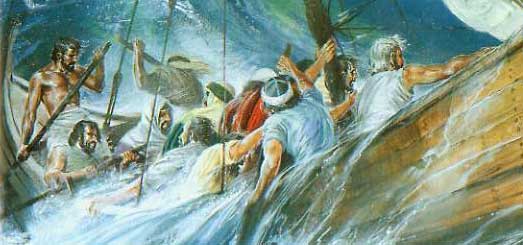






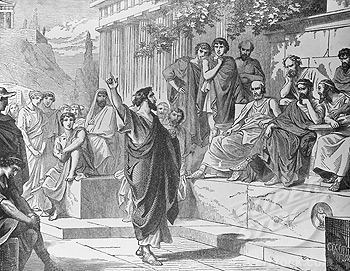


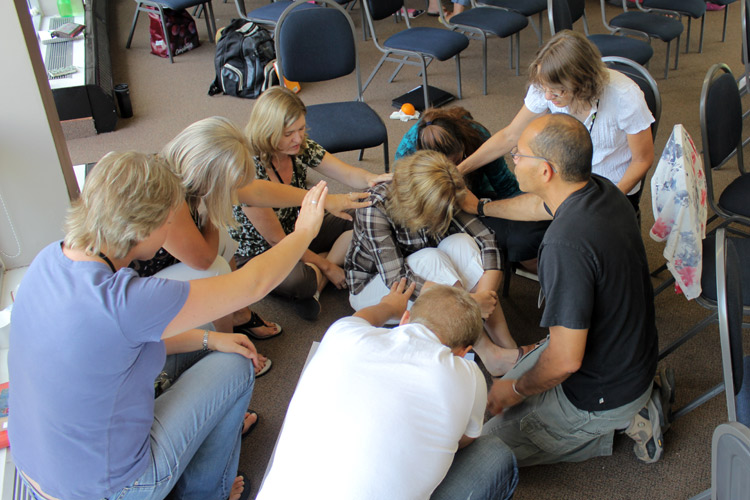


















 walklikejesus