unLimited – embracing the gift of limits

Have you felt stretched too thin lately? Worn out or burnt out? You are not alone. Our culture fights against limits and pushes against the boundaries that frame our lives. We don’t want to miss out. “More is better”, we believe, so we try harder to experience more to get more. Yet, there is always more. This leaves us unsatisfied, angry and exhausted.

Our marketing memes show our belief that “more is better.” Just add the word “unlimited,” and customers will buy whatever you sell. Because we believe the good life is found beyond our boundaries, we always strive for more. We war against the boundaries of our lives but end up fatigued, frustrated, fearful, and flat—in a word, lifeless. How is it that “more” leaves me feeling “empty”?

In a world where limitless is life, we fantasise about superheroes. Yet we are creatures, not gods. We are limited beings, blessed to thrive within our boundaries. Pete Scazzero lists some limits that we all can relate to. My life on this earth is a blessing, but it is brief; I can’t escape death. My mind has its limits, regardless of my learning. My personality or temperament has its strengths and weaknesses in every situation. My gifts are great, but it has their limits. My family or origin gifts me within a particular cultural, financial and social context; this is a blessing, but it holds its limits. Whether I am rich or poor, black or white, male or female – each attribute empowers and impedes me in life. Likewise, my own past (actions and experiences) holds great treasures, but with its limiting consequences. Each season of life has its gifts and limitations; we can’t change that – only embrace the season with its invitation and limitation.

The Apostle Paul also wrestled with his human limitations. In 2 Corinthians 12:7-10, he recounts a life-altering meeting with Jesus that changed his perspective on limits. “…I have received such wonderful revelations from God. So, to keep me from becoming proud, I was given a thorn in my flesh, a messenger from Satan to torment me and keep me from becoming proud. Three different times I begged the Lord to take it away. Each time he said, “My grace is all you need. My power works best in weakness.” So now I am glad to boast about my weaknesses so that the power of Christ can work through me. 10 That’s why I take pleasure in my weaknesses, and in the insults, hardships, persecutions, and troubles that I suffer for Christ. For when I am weak, then I am strong.”

Paul’s reference to “a thorn in the flesh” is often misunderstood as a slight pinch in the foot. But, Pete Scazzero explains that the original language referred to a pike-like military defensive barrier (see image below). Today, Paul might have used “a sharp palisade fences or barb-wire in my flesh.” Pressing against this barrier caused him anguishing pain and left him feeling frustrated (angry and powerless).

Many have speculated about this “thorn in the flesh” in Paul’s letter. Some read Paul’s “thorn in the flesh” as a painful or shameful bodily obstacle that inhibited his life or mission. It might have been a speech impediment, like Peter’s lisp (Matthew 26:72-73) or Moses’ stuttor (Exodus 4:10). Others think Paul lived with a painful and debilitating eye infection (see Galatians 4:13-15, 6:11). Some sceptics believed Paul suffered from episodes of epilepsy (because of his disabling visions, as in Acts 9:3-9 and 2 Corinthians 12:7. Yet, others argue that Paul used the phrase “thorn in flesh” metaphorically to refer to emotional pain caused by his loneliness or the ongoing opposition by the Judaizers who constantly discredited his message and character. A last group believed that Paul’s torment was only spiritual, caused by some demonic “messenger from Satan”.

Whatever it was, we know that this “thorn in the flesh” was painful and limiting. Paul suffered from it and could not fix the problem himself. His prayers were not answered either – the Lord did not relieve him of this burden either.

Our culture does not readily accept the limits of “no.” Our culture believes you can do anything and everything if you put your mind to it. Not accepting limits or “no” leaves us exhausted, angry, and inhibited. What can we learn from Paul’s message?

Flourishing within limits

The Bible includes examples of people who served God with tremendous freedom despite their limitations. These limits did not hamper the ministry or legacy of these faith heroes; instead, these faith heroes flourished within these limits, often because of these limits. Jesus taught that “blessed are the meek, for theirs is the kingdom of heaven.” Meekness means submission to restraints as a horse submits to the saddle and bridle of a rider. We are blessed (better off) when we learn to rest within our constraints and trust that God can and will give us goodness here where we find ourselves.

Moses’ life-long speech impediment did not prevent him from fulfilling his call. It seems ironic that, despite all the miracles performed through Moses, the Almighty did not heal him of his stutter. God chose to appoint a man with a speech impediment as his spokesman. In his weakness, God’s power was made known.

David was small, the youngest and most neglected member of his family. Yet God chose this insignificant shepherd boy to deliver his people from the Philistine giant and unite them in one glorious kingdom.

Daniel and his friends were enslaved, yet his God’s sovereignty was made known through these young Hebrews as they faithfully served their captors in the palace.

John the Apostle was a political prisoner on the Island of Patmos, far removed from the oppressed churches under his care. Yet here, God revealed powerful visions with messages of hope that have served the church for millennia.

Likewise, Paul’s most potent and lasting ministry was from within a Roman prison, as he learned to rely on God’s grace. He discovered that these impediments taught him not to become proud (happy, independent, or self-reliant) but rather to rely on God’s grace. “My grace is all you need. My power works best in weakness.” 

Jesus Christ is God in the flesh, living as a poor Jewish boy raised in an insignificant rural village while the mighty Roman Empire ruled his people. This God suffered hunger, ridicule, shame, betrayal, torture and violent death. Through this, God restored his kingdom and delivered all who trusted in him from death.

My limitations as gifts

Paul discovered that the “thorn in his flesh” did not diminish his life; his life and legacy expanded as he embraced his limitations.

  • Paul’s limitation taught him humility – a life that relies on God’s grace, not his own strength and wisdom.
  • Resting in his limitation gives him a revelation of God’s nearness and grace.
  • His limits were the means to intimacy, the reason to draw near to God and trust him more.
  • Paul’s limiting imprisonment was the door to his most significant legacy — the letters that became the blueprint for every Christian church in history.

Paul’s message to the Corinthians invites me to see my limitations as gifts from God to keep me humble and dependent on Christ. It reminds me that these impediments drive me to draw daily strength from Christ. These limitations are the windows that witness the power of Christ in a world filled with weakness. Paul invites me to see my impediments not as limitations to my life, but as a door to my most significant legacy.

We are limited beings invited to live flourishing lives under the care of our compassionate creator. We will do well to learn the secret of being content in every situation (Phil. 4:11-13). Then, our weakness will become our strength.

Finding God in the dark

On the way home after church one morning, a little girl asked,
“Mommy, why does the preacher always pray before preaching?”
“He asks God to help him, honey,” her mother replied.
The little girl frowned and asked,
“But why does God not answer his prayer?”

Why does God not answer his prayer?

Although “praises” and “psalms” go hand-in-hand, more than a third of the psalms in the Bible are songs of lament. These songs of sorrow teach believers to pray through seasons of hardship as we wait for help from Heaven. While most of these laments have glimmers of hope, Psalm 88  has no resolution and no happy ending – the closing line reads, “My closest friend is darkness is.” Often called The Darkest Psalm, its tone is death, difficulty, desertion and darkness. The Psalm is a maskil, a teaching that has helped believers pray through the darkest seasons when God feels distant or disinterested. For the past 3000 years, believers have found comfort in this poem. In their times of distress and disillusionment, they saw another one who felt what they felt – abandoned in their pain and frustration, with no hope. Yet God honoured his prayer and preserved it in the Bible as an example.

The Darkest Psalm

The 88th Psalm is attributed to Heman the Ezrahite, a prophet like his grandfather Samuel and a worship leader appointed by King David (1 Chronicles 6:33; 25:1-6; 2 Chronicles 5:12).  He directs his prayer to YAHWEH —the God who bound himself by covenant to the descendants of Abraham. Based on this bond, Heman appealed to God for help. His prayer is preserved between Psalms 87 and 89, songs praising YAHWEH for his covenantal faithfulness to Israel, David, and his descendants. This shows us that God is the God of Israel in his glory, of David in his kingship, but also the God of Heman and any other believer who feels abandoned and ignored by him. God remains faithful.

I can pray this way!

Psalm 88 comforts believers who suffer from anxiety, depression and hopelessness. Here, we find a prayer by a spiritual leader in Israel—a well-respected priest, worship leader, and prophet who has felt “terrors and dispair… since my youth.” This godly leader did not pray a pious prayer with pretty words. His prayer is overflowing with anger and frustration, depression and despair, loneliness and abandonment, anxiety and fears. This is a prayer that many of us can relate to, a prayer that echoes our own struggles and fears.

God honoured Heman’s raw, honest prayer by preserving it in the Bible, between two beautiful prayers declaring God’s faithfulness. This invites us to pray authentically, to bring our true feelings and struggles before God.

This psalm gives me hope.

There are four ways in which this raw, unresolved psalm gives me hope.

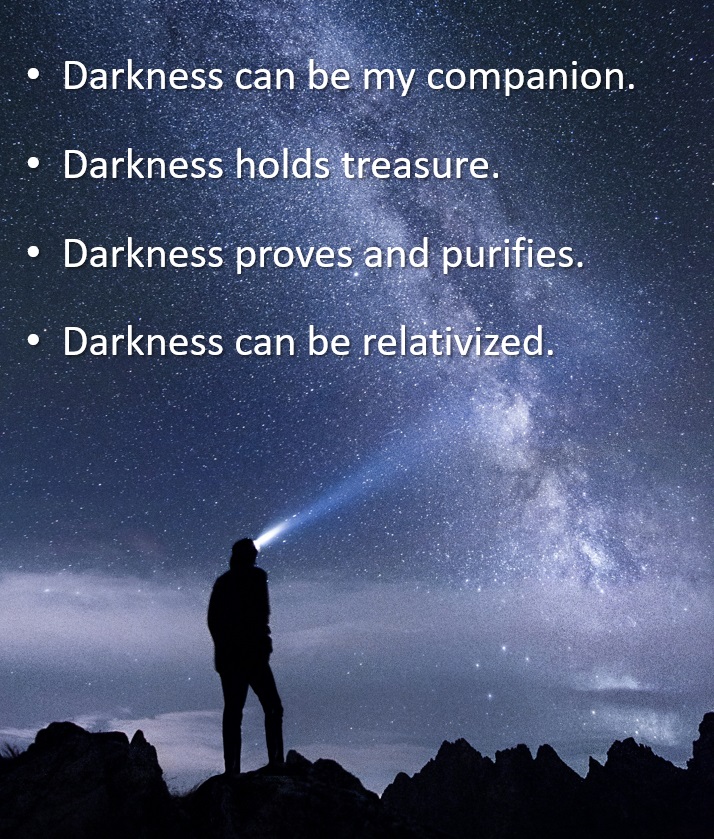
The psalm shows me that darkness can be my companion for a long time. Heman complains about difficulties, depression and despair that had been part of his life “since his youth.” Every morning, he prays to God; this looming darkness stays with him “all day long”. Michael Wilcock writes in his commentary on Psalm 88:

“This darkness can happen to a believer, this Psalm says. It doesn’t mean you’re lost. This darkness can happen to someone who does not deserve it, after all it happened to Jesus. This doesn’t mean you’ve strayed. This darkness can happen at any time as long as this world lasts because only in the next world will such things be done away with. This darkness can happen without you knowing why, but there are answers, there is a purpose, and eventually you will know it.”

Feeling this way does not mean God has abandoned you. Moreover, feeling depressed or deserted by God does not mean having no faith. Christians will not always escape disappointment, disease, disaster, dread and death. “In this world, we will have trouble,” Jesus said. These experiences and emotions lay heavy on the human soul – as they should. (Remember Jesus at the death of his friend Lazarus or before his trial?) It is comforting to know that God is with us in our struggles, that our faith is not in vain. The Darkest Psalm assures us that God hears our prayers in distress and honours our faith (trust) in him.

Scripture (and our experience) show us that darkness holds treasures. During seasons of hardship, we get to know God in a new way, see our motivations, strengths, and weaknesses, and understand how God has ordered the world. We come out of darkness more sober and wiser than we entered it.

Seasons of darkness prove and purify my faith. The book of Job shows that Job’s troubles tested whether his worship of God was sincere: Would he worship and trust in God without the benefits? In Job’s darkness, his faith was verified—he did not turn his back on God but rather wrestled with God.

Job’s faith was also purified in his season of darkness. Job’s hardships revealed his convictions and challenged him to reconsider who God is and how God relates to us and the world. Like precious metals, Job’s faith was purified in the fire as he saw a side of God that was hidden before.

My darkness can also be relativized. In his notes on Psalm 88, Timothy Keller points to the darkness Jesus experienced on the cross. During his darkest hours on the cross, where he felt God had forsaken and forgotten him, Jesus did not forsake or forget us. “For the joy (of our salvation) he endured the cross and despised the shame…” the apostle wrote (Hebrews 12:2). When he felt forsaken from God on the cross, Jesus cried out from Psalm 22:1-2

My God, my God, why have you forsaken me?
Why are you so far from saving me,
so far from my cries of anguish?
My God, I cry out by day,
but you do not answer,
by night, but I find no rest.

In all his anguish and pain, Jesus did not forsake us. We can be confident that Jesus will not forsake us in our moment of darkness. Moreover, in our greatest darkness, we will never suffer the darkness Jesus suffered. The Father turned his face from Jesus as he bore my sins so that the Father may never turn his face from me. I will never be alone in my darkness; I am reconciled to God in Christ. What a comfort!

The invitation in this Psalm.

Heman’s prayer invites me to be honest with God in my suffering and pray without pretence. All the psalms of lament teach us to pray for our fears, pain, disappointments, and shame. If it’s too difficult to say it out loud, learn from Heman and write a poem or journal, then cast your burdens on the Lord, and he will sustain you through. (Psalm 55:22)

Heman’s prayer reminds us that our experiences don’t always reflect reality. Despite being a worship leader, prophet, and priest who had enjoyed God’s glory and friendship for years, he prayed that he had never felt joy and companionship. It’s important to remember God’s goodness and moments of joy, to remind ourselves that life has been good and will be good again. Like the shepherd who “leads us through the valley of the shadows of death,” this difficult time will also pass.

Lastly, in my moments of darkness, I am reminded that I have my Friend on the cross. When I feel forgotten and forsaken by God, I am comforted that Jesus has felt what I am feeling. I know that he has been there, and I can draw grace from him (Hebrews 2:15; 4:16). He promised to never leave me, and he will lead me through (Psalm 23:4).

There will be seasons when I feel “God does not hear, God does not care.” This feeling does not mean I am fickle or faithless – Job, Jesus, David and Heman felt this way. Heman’s poem is a powerful prayer to find God in the dark and draw grace from him for today.

Seeking Stability

What if the key to a flourishing life was as simple as staying put?

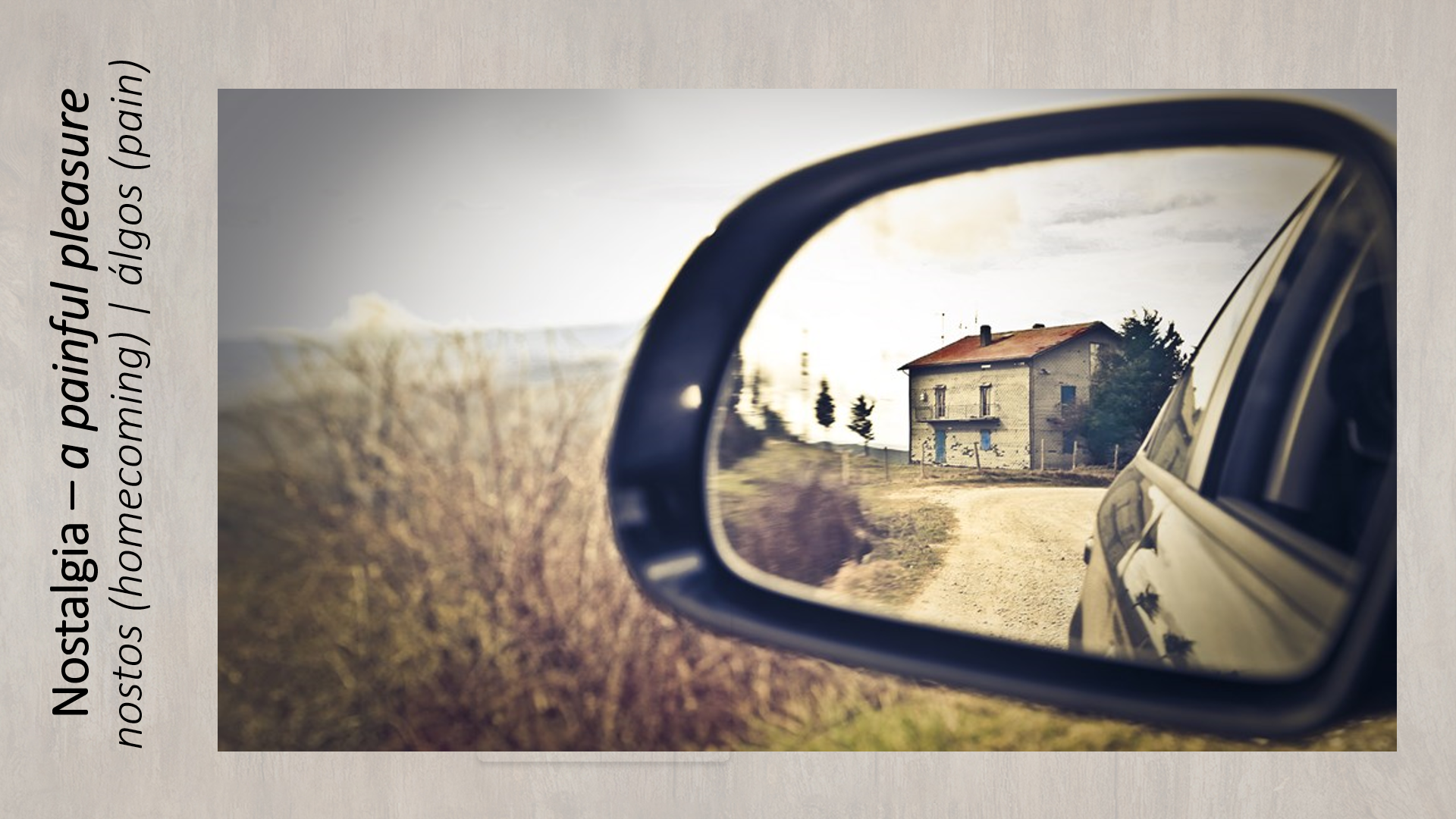
The chances are good that your neighbours are new to town—you might be too. We live in an uprooted world. I have written on the prevalence of nostalgia (homesickness) in our hyper-mobile culture. The effects of such a highly mobile culture include record-high levels of anxiety, depression, and a host of social ills that come from isolation and loneliness.

Nostalgia is like driving with your eyes in the mirror.

An (upwardly) mobile culture

More than 82 million people have been forcibly displaced from their homelands due to political upheavals, economic instability or natural disasters. We see these asylum seekers in every city or town. These minority groups have come here fleeing from disasters, hoping for a better life. Yet, a greater number of the people in your city or town have come here to pursue their desires. They, too, left home in pursuit of the good life.

Our world is driven by the lie that “the good life is out there,” running relentlessly towards the ever-evading pot of gold at the rainbow’s end. Our upwardly mobile culture always wants more, driven by billions of dollars in marketing campaigns.

In Christian circles, we won’t easily acknowledge greed as our motive for moving on. We say, “God has opened a door to bless me elsewhere.” But the underlying motive is the same: God’s blessing is over there, at that job, in that place, with those people. We don’t trust that God can or will bless us where we are now. So, to enjoy a better life, I must move on because the good life is not here.

Our culture is not unique in the history of the world. The 12th-century theologian Anselm of Canterbury wrote of restless people in his day. He compared these wanderers to trees that, when “frequently transplanted or often disturbed,” would not take root anywhere but wither and die.

“If he often moves from place to place at his own whim
(or remains agitated because of hatred for the place)”,
this unhappy person will “never achieve stability with roots of love.”

– Anslem of Canterbury, 12th century AD.

The Wisdom of Stability

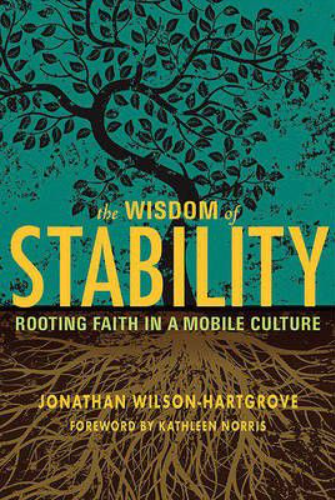
In his book, The Wisdom of Stability, Johnathan Wilson-Hartgrove describes the perils of our mobile culture. Without roots, we become:

  • enslaved by our insatiable desires and ambitions, driven like uprooted bushed over a dry landscape.
  • consumers of people and places, using my neighbours and neighbourhood to my advantage with no intention of genuine long-term relationships.
  • ignorant of God, who is here and willing to bless us.
  • disconnected from Christ, who loved the world and gave himself to these neighbours who live and work with me now.

In the book, Wilson-Hargrove describes how his life and mission was been transformed as he encountered a community in Europe living by the vow of St Benedict of Nursia. This Christian community, living and working in the city, lived by the Benedictine principles of stability, fidelity and obedience. The vow of stability grounds the monk or nun to a life of service within the monastery, receiving each member of this community as a gift from God. In doing this, the monk or nun trusts that God will bless him or her in this place, alongside and through the members of this community.

Stability is the opposite of the relentless seeking that drives our contemporary culture. Stability invites us to stop pursuing a better life elsewhere and rather settle down and seek the good life that God blesses us with here. Stability invites us to accept our limits as gifts, the boundaries that contain the goodness of God. Stability invites us to commit ourselves to a place and watch it change before our eyes. Practising stability means we have to unlearn the habits of culture that state that life is better elsewhere.

St Benedict’s vow of stability is grounded in Jacob’s encounters with the Lord.

A reason to run

In Genesis 28, we find Jacob on the run. His ambition and scheming have soured the already strained family relations. He deceived his father, Isaac, to steal his brother Esau’s inheritance. The fear of his brother and the shame of his betrayal prompted Jacob to leave home to pursue a better life elsewhere. The problem, Jacob would soon discover, is that he was trying to flee from himself – from his greedy and deceitful nature and the shame it caused. Running away from yourself is a futile task, as Thomas à Kempis wrote: “Wherever you go, you bear yourself, and always find yourself.” (“The Imitation of Christ”, Translated by Leo Sherley-Price, 1952).

The temptation to run away from relational troubles is common to all. The 5th century Ama Theodora of Alexandria recorded a conversation between two monks. As the one was putting on his sandals to leave the monastery for good, his roommate wisely remarked:

“Is it on my account that you are going away?
Because I go before you wherever you are going.”

An invitation to stay put

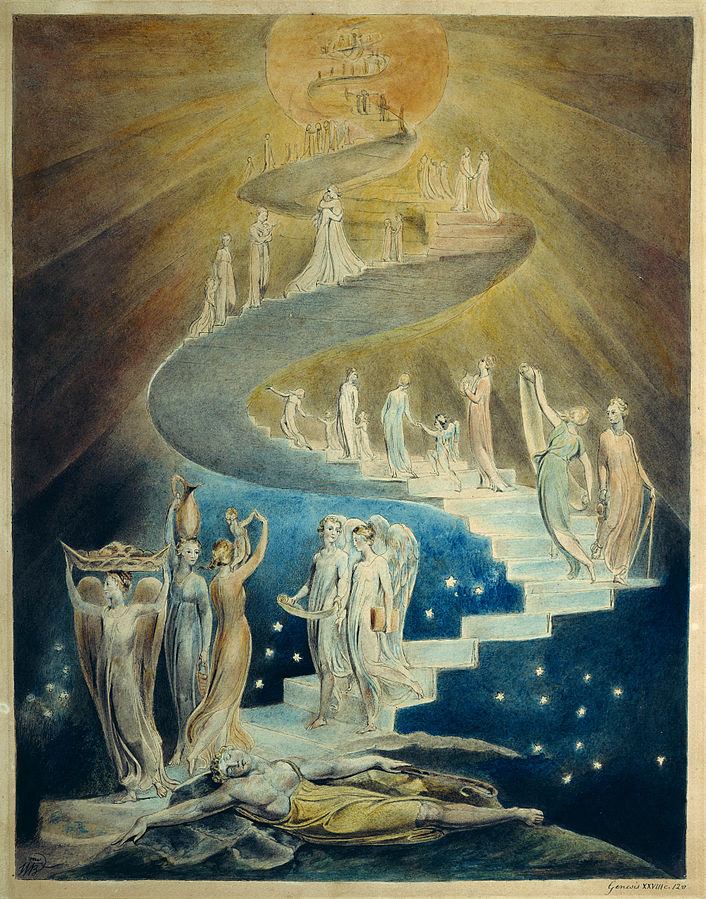
Jacob’s Dream by William Blake  (1757–1827)

Yet, the very evening in which Jacob ran away, the Lord appeared to him in a dream, showing a ladder connecting heaven and earth, filled with angels ascending and descending. The Lord said to him:

“I am the Lord, the God of Abraham your father and the God of Isaac… [I’ll give you this land and legacy]… Behold, I am with you and will keep you wherever you go, and will bring you back to this land. For I will not leave you until I have done what I have promised you.”

Genesis 28:13-15, ESV

In the vision, the Lord assures this troubled young man that he is not responsible for his own prosperity. The Lord shows him that He is here and active in this very place he is fleeing from. Help from heaven is right here! The Lord promises Jacob:

  • My blessing is a gift to you and your children;
  • I will protect you and prosper you;
  • Your prosperity is not dependant on your ability or effort but first on my goodness and character;
  • I am aware you are running away. I am with you and for you – I will bless you still.

Despite his betrayal, deceit, and disbelief, the Lord assured him that He would prosper and protect him. Jacob’s blessing would come not from his efforts but from God’s provision and protection. In other words, Jacob does not need to seek prosperity elsewhere because the Lord of blessing is with him and for him.

Embracing Mission, here

Reading Jacob’s dream in the broader context of Biblical history helps us see that God’s generosity and companionship towards Jacob were for the sake of the world. God is on a mission to redeem and restore creation and chose Abraham and his descendants to partner with him. Jacob, the grandson of Abraham, was invited to embrace the legacy and engage in the Lord’s mission. The Lord would bless Jacob to bless those who surround him and those who would succeed him.

“Your place and community are for you a grace – a gift from God – and a mission
We are responsible for the growth of those with whom we live

and for the salvation of many persons.”

Augustine Roberts

Stability breeds Shalom

Our culture pressures us to chase after opportunities, hoping it will leave us better off. But the wisdom of stability teaches us that God is here where we are, and he will bless us for the sake of his mission. The good life is not out there, somewhere. The good life comes from God, and He is with you.

Shalom depends on your awareness and response to the God of peace who is in this place. So stay put and see how God will bless you – and those around you – where you are.

God can prosper you where you are.

Seeing Him who sees me

This simple practice changed my prayer life. It transformed my quiet time from duty to delight, enlightenment to encounter. So simple, yet so profound.

Noticing the God Who Sees Me

Hagar had this experience when she fled from Sarai for the first time (Genesis 16:1-14). She was a young Egyptian slave, far from the land and her people. As Sarai’s property, she became the incubator for Abram’s descendants when her mistress could not conceive. She was given to Abram until she was pregnant. Her life was not her own, her body was not her own, and now even the baby in her womb was not her own. She was a nobody; Abram and Saria never called her by her name – she was just a nameless “servant” and not regarded as someone with feelings, thoughts, dreams and desires. This injustice made Hagar furious.

Her contempt towards her mistress resulted in harsh treatment. Hopeless, Hagar ran away into the desert – a decision akin to suicide. Exhausted, she found a well and sat down. Hagar was angry and alone, hungry and without hope. Then she encountered the Lord, “the God who sees me” (16:13). For the first time, she noticed Him, who has been watching her all along. She was unaware of the God whose loving gaze was on her all this time. 

Hagar was shocked to discover that the Lord was intimately aware of her. He knew her name, her situation, her pain and anger, and her deepest desires. Beside that well, Hagar met a personal God who was present and attentive to her. This meeting changed everything for her. She was no longer alone and left to fend for herself in a hostile world. She was beloved and known. Hagar named him “El Roi – the God who sees me.”

Spiritual Autism

Robert R. Marsh writes that small children cannot imagine other people having independent minds. Likewise, people with severe autism do not treat other persons as though they see, think or feel differently than themselves. This is often referred to as mind-blindness – to live ignorant of the thoughts, feelings and desires of others. Marsh observes that this is how people habitually approach God – more as an object than a person with unique thoughts, feelings and desires. As such, we speak about God or to God rather than converse with him. We acknowledge his presence but don’t consider his opinions or feelings. Marsh concludes that “Spiritual autism is a pathology of our times.” 

How often does this describe personal or public meetings with God? We may enter a worship service or prayer meeting and go about our discipline, not once stopping to notice the Lord’s demeanour. The result is a dull duty without any dazzle or delight.

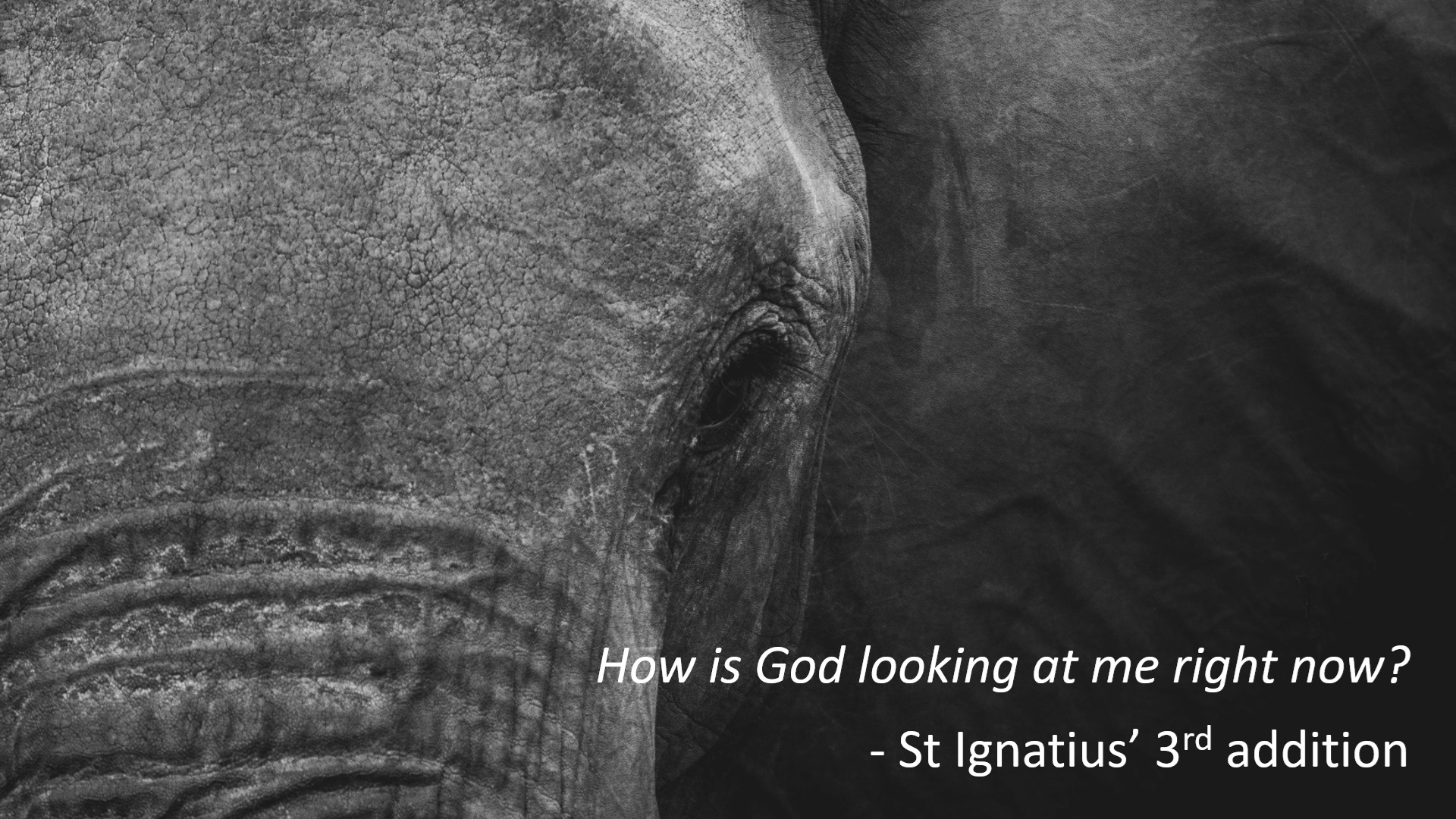
How is God looking at me right now?

The Spanish priest Ignatius of Loyola knew the danger of discipline without intimacy. At the back of his spiritual exercises, he suggested this simple practice that ensures his prayer time remains a personal encounter rather than a principled exercise: “A step or two before the place where I stand or kneel to pray, I pause for the length of an Our Father (45 seconds?)… considering how God our Lord is looking at me”..” (Ignatius, Spiritual Exercises, 3rd Addition)

This practice transformed my prayer life and deepened my relationship with God. Every time I start my prayer time with this simple habit, it becomes a delightful encounter with God himself. As I become aware of the Lord’s presence and posture, my prayer becomes a conversation, not a petition that I raise to some distant domain. This turns my prayer time from cold and transactional to intimate and transformational.

When alone, I set the agenda and steer the activity; there is no place for surprise. Yet every time I start my prayer time with the awareness of how God is looking at me, my prayer time begins with surprise.

Naming our Well

Hagar met “the God who sees me”.   Moreover, Hagar was wise to memorialise this life-changing encounter by (re)naming the well Beer-lahai-roi (which means “well of the Living One who sees me” (16:14). Memorialising this meeting with God served as a reminder that there was a time and place where I encountered God; this is what he is like and what he said to me. The memory encouraged Hagar (and still inspires us four thousand years later) that God is immanent and intimate.

Take God’s presence seriously

I’ve learned from Hagar to take God’s presence seriously and expect encounters with the Living Lord. Moreover, I record these encounters in a journal as reminders that God is near. I start my prayer times by paying attention to God, who is present, and noting how he is towards me. (This is often more of a sense than an open vision). Then, I start by telling God what I notice and how that makes me feel.

One evening, I was deeply upset by a conversation I had during the day. As Ignatius taught me, I retreated into an empty room to meet with God and paused to discern God’s presence and posture. Immediately, I saw a big desert elephant, strong and peaceful, looking into my soul with his big, reassuring eyes. I had a Hagar moment: I perceived that the Lord was here, strong, and in control, and he knew about my frustrations and concerns. In that moment, His peace became my peace. My time of prayer did not require many words that evening.

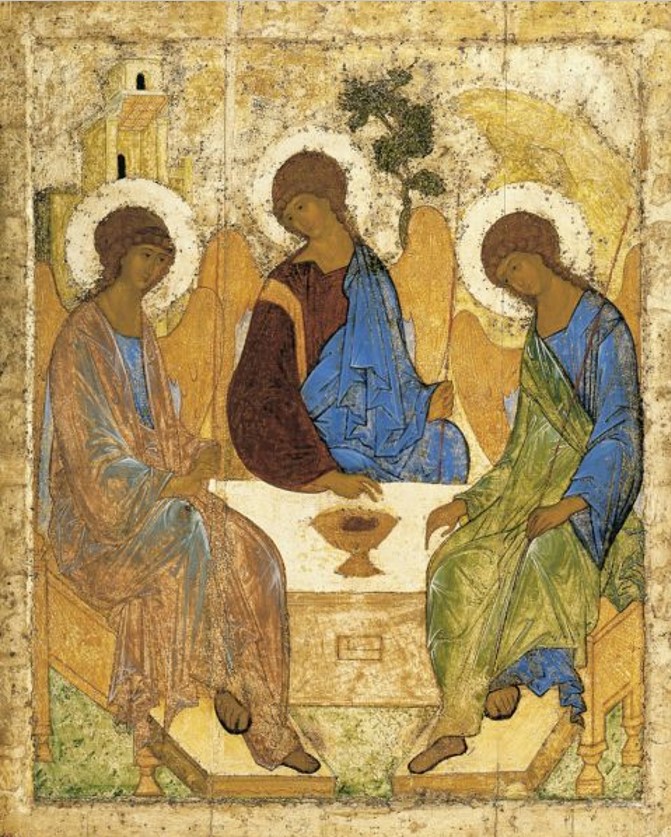
Another profound encounter happened early one morning on a beach. Until then, I often felt a sense of “performance pressure” when I met with God—the feeling that I had to make this encounter happen. (Can you relate?)  Yet, as I paused to notice how God was looking at me, I suddenly found myself at a table with God the Father, the Son and the Holy Spirit. Their fellowship was so vibrant and joyful! I was welcomed into their warm fellowship. At once, the pressure to make something happen or to perform before God was gone. I experienced the joyful fellowship of the Triune God. I saw what Daniel Migliore meant when he wrote, “God is eternally self-giving, other-regarding, community-forming love.”

That day, I experienced what Rublev painted in his famous picture of God’s visit to Abraham (Genesis 18): the Triune God sits at a square table and welcomes us to join his fellowship. There is a joyful fellowship I don’t have to initiate – but I am always welcome to join. I am simply invited to see and join Him, who has been watching me all along.

“I blew it. Again!”

We all know the feelings of guilt and shame.  We all know that voice hurling accusations at us in our moment of weakness.   “You blew it again!”  “Can’t you keep it together?” “When will you get it right?”  “Disappointment!” “Disgrace!”  “Disqualified!”

How can you pray with these feelings? How can you come before God with this voice in your head? What would it take to silence the Accuser?

I find tremendous freedom in a vision shown to the prophet Zechariah.  It was when the first exiles returned from Persia to rebuild Jerusalem (520 BC).  Along with Haggai, Zechariah was exhorting the people to rebuild the temple to allow the Jews to worship God again. 

The vision of the court (Zachariah 3)

In this vision, Zechariah saw Joshua, the high priest standing before the Lord, with Satan accusing him.  The accusation?  Joshua was standing before the Lord with his ceremonial clothes covered in filth.  What’s the big deal? The high priest was the one man in Israel who had the privilege and responsibility of atoning for the sins of Israel once a year, reconciling the people to God. 

Only on the day of Yom Kippur (see Leviticus 16), the high priest could enter the most holy place to offer sacrifices to YHWH.  The custom was that the high priest would fast and pray the 24 hours leading up to Yom Kippur, confessing all his sins and cleansing himself in the presence of God, with groups of priests supporting him in prayer throughout the day. The next morning, he would wash himself, get dressed and enter the most holy place to offer a bull to atone for his personal sins.  He would walk out all bloodied, wash himself and get dressed in his next clothes. Then he would return to offer a ram to atone for the priesthood.  He would wash and get dressed again to atone for the sins of Israel by offering a goat.  Whenever he would enter the most holy place, he would have bells on his clothes and a rope around his ankle so that if he had unconfessed sins and died in the presence of God, the people could drag him out.  God is holy.

Here we have Joshua standing before the Lord covered in filth, guilty and shamed.  Joshua was the high priest that year – the one man who should keep it together so that Israel would have an example of godliness and a mediator before God.  And Satan did well to remind Joshua of that.  The accuser screams, “He is unfit!”  “He is unholy!”  “He is sinful!” “Disappointment!” “Disgrace!”  “Disqualified!” “Throw him in the fire!”

Not disgraced, disappointed or disqualified

SHAMED

To Joshua’s surprise, the Lord did not strike him dead.  The Lord did not seem surprised that Joshua was covered in filth.  He did not rebuke or strike Joshua.  Instead, the Lord rebuked the accuser, reminding him of three things:

  • Joshua was a man that was destined to the fire (condemnation), but the Lord had pity on him and saved him from the fire.
  • The Lord had chosen Joshua and his people Israel for himself – he has favour on Joshua and his people.
  • The Lord has chosen Jerusalem as his dwelling place and has therefore instituted the priestly order with Joshua, to mediate between him and his chosen people.

In short, the Lord has compassion for Joshua, has chosen Joshua, and set him apart as the high priest.  Joshua has not earned this prized position through his holy living – it is all grace.

Therefore, the Lord orders that Joshua’s filthy clothes be removed and that he be clothed in new high priestly clothes.  The Lord Himself has removed the sins from Joshua.

Then the Lord assures Joshua that his failure has not disqualified him from his priestly privileges.  Surprisingly, the Lord assures the man that if he continues to seek and serve God in his role, he will continually have access to his presence.  Moreover, Joshua will see the restoration of Israel and the coming of the Messianic reign. He has the privilege to play a part in this fulfilment!

A friend in need

One of the most beautiful moments in this scene is Zachariah’s response.  When he sees how graciously the Lord responds to his shamed friend, Zachariah gets excited and cries out, “Give him a clean headdress!”  Seeing his friend’s failure, the prophet did not join in the slandering of the accuser.  Nor did he stand by passively to see what happens next.  Rather, Zacheriah joined in the Lord’s effort to restore and encourage the fallen priest. “Give that priest new clothes to work with!”

A Mirror to my reality

I am a husband, a father, and a pastor of a congregation.  I am a leader, an example to others of how to walk in godliness.  Yet I fail. Often. I can deeply identify with Joshua’s sense of shame in the presence of God.  I know what it feels like to stand before God with dirty garments.  I have heard the words of the accuser ringing in my ears “You blew it, again!” “Can’t you keep it together, man?” “Failure!” “Hypocrite!” “Disgrace! “Disappointment!” “Disqualified!”

Accusation and shame are familiar companions to all the children of Adam and Eve who ate of the Tree of the Knowledge of Good and Evil. Their aim in life is to persuade you and me that we are a disgrace and disappointment to God, and that God has disqualified us to come before him. The accuser wants you to stay away from God and to give up on your purpose.

But Satan is a liar.

A Window into God’s Kingdom

Therefore I find so much comfort in how the Lord responds to Satan’s accusation of Joshua, God’s priest.  God tells Satan to keep quiet, to keep out of his business, to leave the priest alone.  Why? Because Joshua is God’s chosen priest, appointed by God to serve God by atoning for God’s people.

The whole chapter is framed in covenant language.  YHWH (the LORD, Israel’s covenant God) has chosen and redeemed Israel for himself to participate in His redemption and renewal of all creation.  God knows that all people are flawed – he remembers that he made them from dust. That is why God has instituted the priesthood, and why he chose Joshua to serve him as high priest: to atone for Israel’s sins and make peace between God and his people. 

Yet God knows that even the high priest is only a man.  He speaks of another High Priest called The Branch or The Stone (the foundation of his true temple), who will atone for Joshua’s sins.  Now Joshua can experience mercy and get cleansed by God.

A Door to God’s Kingdom

How should I respond?  How can I participate in this heavenly court scene?  There are two people here, and I am invited to play the roles of either Joshua or Zachariah in this vision.

When I hear the accuser condemning me, I see myself in the place of Joshua.  The accused priest does nothing except to:

  • hear the Lord’s rebuke of Satan
  • hear the Lord’s forgiveness
  • receive the new clean clothes,
  • and hear that he is not disqualified – he must continue confidently in his ministry!

This scene does not lure me to passivity.  Whenever I hear the accuser, I am invited to see myself in this scene before the Lord and wait until he rid me of the accusations, to declare me clean and acceptable in his sight. I wait on the Lord as David did in Psalms 62 and 130.

Secondly, I am invited to imitate Zachariah in this scene.  When I see a friend bent over under the burden of guilt and shame, I am invited to participate in the gracious Lord’s restoration.  I am urged to mirror the mercy of God: to announce a clean slate and encourage my friend to continue serving God with confidence in this fallen world.

When you stand in the presence of the Lord today, who do you feel like?  

Are you Joshua, burdened by shame and whipped by Satan’s accusations? Are you yearning for the Lord’s deliverance and loving restoration? “Let us then with confidence draw near to the throne room of grace, that we may receive mercy and find grace to help in time of need.”  Hebrews 4:16  
Or will you imitate Zachariah the prophet, seeking out that friend to encourage with the mercy of God?“A bruised reed he will not break, and a faintly burning wick he will not quench.” Isaiah 42:3

How to resolve conflict and restore relationships

How do I resolve conflict?  How can I restore a strained or broken relationship?

Our world is filled with conflict.  The pages of history are littered with stories of conquest, wars, and familial strife.  Military battles, political clashes, workplace competition, and marital strife are familiar stories that make up our news reports. 

Yet we all dislike strife, and most of us would rather avoid conflict.  We don’t know how to settle disagreements, and even our sincere efforts often escalate the situation.  I find it ironic that conflict resolution is not one of all the things we get taught in school.  When it comes to peace-making skills, our generation is anaemic.  No wonder our world is more divided than ever.

It always seems easier to walk away from a conflict than to settle a disagreement.  However, it is always more rewarding to resolve a dispute than to dissolve a relationship.

Jesus said that the good life, the blessed life, is reserved for those who make peace.  [i]We know that unresolved conflict erodes our joy and eradicates a sense of well-wellbeing.  It even hinders our fellowship with God.

The Bible instructs us to pursue peace with all,[ii] even with our enemies[1] and our accusers,[1] and actively serve our communities by reconciling people with one another and with God.[iii]

Making peace has always been difficult.  It is sobering to read the bulk of the New Testament letters as efforts to resolve conflicts within new church communities.  In this light, I find James’s appeal to the church in Jerusalem refreshingly simple: “Peacemakers sow seeds of peace to reap a harvest of goodness/ righteousness.”[iv]    The Message translation reads this way:

If you want a good life, a peace-filled life, you must do the hard work of cultivating your own robust, peaceful community. 

Before we discover how to make peace, we must agree that making peace starts by facing conflict.  Peace-making is the opposite of avoiding conflict.  Likewise, peace-making is the opposite of appeasing others, of keeping people happy.  Conflict is necessary to cultivate a community characterised by mutual safety and freedom.

It is normal to have conflict.  When two or more imperfect people share a space, they are bound to bump into one another and cause friction.  Conflict is an opportunity for self-awareness, other-awareness and growth, leading to mature love. 

So, how do we resolve conflict and mend a broken relationship?


1: I own my part

Peace-making starts with taking ownership for the health of the relationship, by considering my part in the breakdown and the restoration of the relationship. 

If you want to live in peace, you have to prioritise reconciliation – even over worship!  “Leave your gift at the altar, go and be reconciled to that person.  Then come and offer your sacrifice to God,” Jesus said.[v]   Whatever the reason for the breakdown, I must take responsibility in resolving the conflict to restore the relationship.  Sometimes reconciliation requires help from mature friends or professionals.[vi]

Time by itself will heal nothing.  Like a festering wound in my leg won’t heal by itself, a wounded relationship does not mend by itself.  Unattended hurt matures into bitterness and resentment.  Paul urges, “do not let the sun go down on your anger, and give no opportunity to the devil. [vii]

Furthermore, a relationship can be restored as I acknowledge my contribution to the breakdown.  Jesus, in classic exaggerating humour, said that to resolve a conflict, first recognise the “pole in your eye” before you point out the blind spot in the other’s perspective.[viii] Before you point out the wrongs of another, recognise your imperfections.

Rick Warren states that the cause of all conflict is rooted in self-centeredness (“selfish desires”[ix]) and self-exaltation (“Pride leads to arguments.”[x]).  He says that every heated argument can be calmed by this simple phrase “I’m sorry – I was only thinking about myself!”  Acknowledging my part in relational break brings grace for healing.[xi]

Reconciliation begins when I take the initiative to restore the relationship and own up to my part in the breakdown of the relationship.


2: I listen for perspective

People fight not so much about what happened or what was said, but rather about how they were made to feel.  We respond to our emotions.  Hurt people, hurt people.

Cultivating peace requires patient listening.  “Be quick to listen, slow to speak, and slow to get angry.”[xii]   Not the type of listening to prove who is right or rebuttal the argument.  But listening to hear, to understand, to have compassion for the position of the other.  This attitude Paul appeals for – a kenosis – that is not concerned with my interest only, but the interest of the others.[xiii]  Kenotic listening forgets my interests and forgoes my preconceptions, deeply listening to the other and benefiting him or her.

Listening in this way helps us to understand and identify with the views and feelings of the other.  This type of listening gets us on the same page – the reconciliation threshold.  We listen our way into unity.

3: Confront the problem in love

Conflict does not damage relationships – what we fight and how we fight damages relationships.  First, don’t fight the person, fight the problem.  A couple with a budget issue should not fight one another about the budget but stand next to each other and find a resolution about their budget.  The goal is to sort out the budget, not the spouse.  Confront the problem, not the person.  

Second, how we fight can either bring us together or push us apart.  “Some people make cutting remarks, but the wise words bring healing.” [xiv] 

During the Cold War between the U.S.A. and the U.S.S.R., these superpowers were wise to agree that their conflict would never escalate to the use of nuclear or chemical weapons.  Although they were at war, they were sober enough to see that such Weapons of Mass Destruction (W.M.D.’s) would lead to Mutually Agreed Destruction (M.A.D.) for both nations.  The fallout would be too much.

Paul urged the believers to adopt the same wisdom: when you confront one another, do it so that it would lead to restoration of the relationship, not destruction.  Therefore, “put away [all W.M.D.’s]: anger, wrath, malice, slander, and obscene talk from your mouth. Do not lie to one another…”[xv] , and “don’t use foul or abusive language.  Let everything you say be good and helpful so that your words will be an encouragement to those who hear them.[xvi]  

Words cannot be unsaid.  The power of life and death is in the tongue.[xvii]  So, especially in a fragile relationship, “speak the truth in love” [xviii], and “let our speech always be gracious.”[xix]  Fight to restore the friendship, not to end it.  

4: Aim for reconciliation, not resolve

Before we close, another helpful pointer in conflict resolution is not to aim for agreement on everything but on reconciliation.  The goal is to restore the relationship, not resolve every issue.  It is possible to walk hand in hand through everything without seeing eye to eye on everything.

Our generation is highly divided on so many issues.  Talking through some matters is as volatile as walking through a minefield.  But to habitually part paths with people who see differently will lead to isolation and sectarianism.  It is always more rewarding to resolve conflict than to dissolve a relationship.  The blessed life is enjoyed by those who do the hard work of making peace, who build robust communities by sowing seeds of peace.[xx]


[i]  Matthew 5:9 

[ii] Romans 12:18

[iii] 2 Corinthians 5:18-20

[iv] James 3:18

[v] Matthew 5:23-24

[vi] Matthew 18:15-18

[vii] Ephesians 4:26-27

[viii] Matthew 7:5

[ix] James 4:1

[x] Proverbs 13:10

[xi] Proverbs 3:34

[xii] James 1:19

[xiii] Philippians 2:4-5

[xiv] Proverbs 12:18

[xv] Colossians 3:8

[xvi] Ephesians 4:29

[xvii] Proverbs 18:21

[xviii] Ephesians 4:15

[xix] Colossians 4:6

[xx] Matthew 5:9; James 3:18

Who Cares? On Accountability

Who cares about you? Who is looking out for you? Who will notice when your foot slips or your heart faints?

It appears that not many people can answer the questions above. Phycologists are concerned that the social isolation accentuated by the Covid-19 crisis has aggravated the pandemic of loneliness. The Harvard Gazette reported that more than a third of Americans feel lonely “frequently” or “almost all the time or all the time”, while more than 61% more young adults experience chronic loneliness. The destructive impact of loneliness on social welfare in Great Britain prompted them to appoint their first Minister of Loneliness in 2018.

This isolation level leaves a great many in our world feeling lonely, vulnerable, depressed and often confused. One must acknowledge the irony of isolation in our technology-driven age. We are the most connected generation ever, yet we are the generation that suffers most from loneliness. We are the most informed generation ever, yet most the confused. We are the most entertained ever, yet the most depressed. We are the generation most committed to security, yet we are the generation most paralysed by anxiety.

Our most profound need is not satisfied by a Facebook “friend”, an Instagram “follower” or a casual chat with a colleague. Our greatest desire is to feel significant and secure in a relationship with someone who cares about us. We long for a friend who sees us for who we are and loves us enough to tell us the truth. We don’s live well alone.

I can’t do it alone

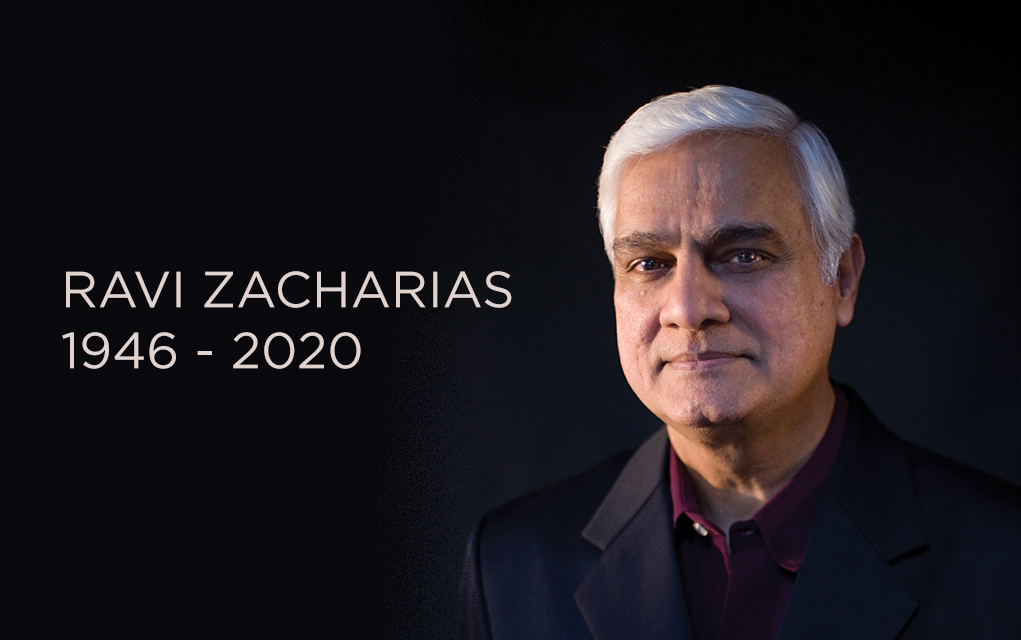
The reputation of the well-respected Christian apologist Ravi Zacharias was decimated by reports of his immoral and unethical secret life.

The reputation of the well-respected Christian apologist Ravi Zacharias was decimated by reports of his immoral and unethical secret life.

Our need for companionship is not only for satisfaction or significance but also for security. We have seen so many admirable leaders derail because their passion either faded or became misdirected. But human vulnerability is not limited to leaders – we all have are keenly aware of our imperfections, which run the risk of derailing our lives. We need help – we need somebody to keep us accountable for what we do and what we pursue.

To stay on track, I must be clear on what is precious to me – those things that I never want to lose. Also, I must be clear on what is perilous to me – those things will destroy my relationships and reputation and derail my career and calling. The stakes are high.

My own experience highlights the lessons in Biblical history: that I am fallible, that I only see in part, and that, indeed, two is better than one. I need help from someone who cares.

A few years after our wedding, my wife shared the necessity of accountability friendships with a group attending a marriage preparation course. Then she said: “The reason why I felt confident to marry Ross was because of his many close-knit friends; if his heart drifts from Christ or me, his friends will call him to account and keep us safe.” I thank God for those friends. However, over the years, we have moved away from Pretoria and now live in different cities worldwide. Although we still love one another, I have discovered that I need to cultivate accountable friendships with men that I see often and share life with so that they can observe and speak into my relationships, purpose and passions.

Help me guard my heart

I’ve discovered that, to keep my life on track and preserve what I hold deer, I need to “guard [my] heart above all else,
    for it determines the course of your life.”
(Proverbs 4:23, NLT). I need to preserve and cultivate my devotion to Christ. I need to intentionally pursue my calling or direction in life. I must actively cultivate and be attentive to the desires of my heart. I must protect and nurture the relationships of those dearest to me. My relationship with Christ, with my family and friends, with my purpose, possessions and passions – these determine the quality and impact of my life.

The friend who cares must help me to guard my heart, for it does determine the course of my life. And these are the questions that I need my friend to ask me.

[A recording of this post can be found here, starting from 50minutes.]

“my friend, ask me if I’m still in Christ?”

The life of the apostle Paul so inspires me.  He was a man with a singular vision who lived his life wholly devoted to Christ. In his letter to the Philippians, he wrote, “to live is Christ, and to die is gain.” (Phil. 1:21).  He poured out his life like a drink offering in service of his Lord, “having suffered the loss of all things to gain Christ and be found in Him… to know Him… to become like Him.” (Phil. 3:8-10)  

When I was a student, I was drawn into such a passionate pursuit of the Lord by zealous leaders. Fellowship with them ignited my prayer life, stirring a hunger to read my Bible and to witness the new life I received from the Lord boldly.  But this was 20 years ago, and my life is much more demanding and complicated today than it was back then. 

I need someone to regularly ask me, “my friend, do you still seek Him?  Are you still in Christ?” And when I answer him, he needs to test whether my intentions are grounded in simple, everyday actions that prove my devotion.

my friend, ask me if I’m still content?”

The longer I live, the more aware I am of my desires for pleasures, possessions, and recognition. John called these “the lust of the flesh, the lust of the eyes, and the pride of life.” (1 John 2:16)  Similarly, the older I become, the more I hate this sensuality I see in myself, because I see how these unbridled passions destroy lives, families and communities. 

Henry Cloud points out that our course and character are set both by what we love and hate.  We are drawn to the things we love, and we are repelled from the things we hate.  Therefore, he urges, “develop the ability to hate the right things well.”[i] 

When I was a young boy, my dad rushed home to kill a venomous snake spotted in our favourite climbing tree. Because he loved us, he hated what could kill us.  Now, because I love my Lord, my wife and children, my vocation and my community, I choose to hate everything that might destroy my loving relationship with them. 

I want my friend to ask me regularly about the condition of my heart.  I need him to urge me to “be free from covetousness, [and] be content with what I have.” (Hebrews 13:5–6) Because loving the wrong things will ruin not only my life, but also those I love. (1 Timothy 6:10-11)


[i] Henry Cloud, Nine Things A Leader Must Do, Thomas Nelson Publishing, 2006, p. 73-75

my friend, ask me if I’m still on course?”

During tough times we are tempted to look for an easier way.  However, the easier way rarely leads us to a life of significance, security and satisfaction. Endurance holds rewards.

Paul’s grit inspires me. He knew that his journey to Jerusalem would result in beatings and imprisonment.  Nevertheless, he charged forward, saying that he had no regard for his personal welfare, “…if only I may finish my course and the ministry that I received from the Lord Jesus…” (Acts 20:24)

I know that I would be tempted to choose the easier way at times, and therefore I need my friend to ask me, “are you still on course?  Are you finishing what the Lord had called you to do?”

my friend, ask me if I’m still connected?

The pace and pressures of life is not kind to our relationships.  Stress tend to numb our senses and close our hearts.  Pete Greig writes that the human soul is wild and shy – like a deer, it only comes out to drink when we become still.[i]  We lose the ability to enjoy meaningful connection unless we intentionally become still with one another.

We can easily assume connection in our hurried life because we share a home, a surname or a church group.  But staying connected and finding joy in fellowship requires intentionality: disconnecting from the outside world and connecting with the one(s) in my presence. 

We can easily pretend to connect with the ones we ought to love.  We choose not to give ourselves or share what we have because of our hardened hearts.  But Paul urges that ” love be without hypocrisy” (Romans 12:9) – “bearing with one another …forgiving each other, as the Lord has forgiven you.” (Colossians 3:12-13).  We have seen how callousness and unforgiveness ruin families, shatter communities and derail a person because of darkened lenses.

I know life’s pressures are hard on my soul.  Therefore, I need my friend to frequently ask me, “are you still connected with your wife, your children and your close community?” 

Find such a friend. Then be such a friend.


[i] Pete greig, How to Pray, Hodder and Stouten, 2021, p35.

Who do you care about?

Who do you really care about? Whose life matters to you? When last have you asked them the questions that determine the course of their life?

Go on! Ask them the heart questions! Ask them about their relationship with God in Christ. Ask them how they relate to the things in this world. Ask them how they relate to their purpose. And ask them about their relationships with those dear to them. Because if you love them, you want to see them flourish in these relationships.

“Then the Lord said to Cain, “Where is Abel your brother?”
He said, “I do not know; am I my brother’s keeper?”
Genesis 4:9 

Ready for (another) Roller-Coaster Year?

Oh, how we wished that the pandemic and all its problems would burn with our 2020 calendars. Alas, it followed us into 2021, promising another roller-coaster year. How do you buckle up and ready your heart?

Most of us enjoy a good roller-coaster.  The ride starts with a slow climb, followed by a sudden drop and quick turns at high speed. As you feel the wind in your hair and hear the passengers’ screams, your veins flood with adrenaline and dopamine, leaving your hands shaking and legs jittery.  One group shouts “Let’s go again!” while another cries “Never again!”

Roller coasters leaves you either ecstatic or terrified.

What causes these two groups of people to have vastly different experiences in the same roller coaster cart? It comes down to a sense of security: the ability to trust in the ride designer and the system’s integrity. The ones who trust in the integrity of the seat belt or harness don’t fear for their safety.  These passengers have peace on the track and enjoy the thrill of the ride.

The second or third round on a roller coaster is often even more enjoyable, precisely because you have come to know that you will not fall from the cart. With arms high in the air and eyes closed, you can smile wide and laugh loudly through the tight turns – once you trust the carriage and the rest in the seat belt.

2021 will be our 2nd ride in the Corona Coaster. We would have preferred a more docile track, but this is our ride for the year. How do you prepare yourself to push out the panic and enjoy the thrill that 2021 brings? Is there a harness we can strap ourselves into, to lend the sense of security we need for the months ahead?

A short phrase penned by a Jewish prophet gives us a plan. Isaiah warned the Jews that the Babylonians would lay siege and destroy Jerusalem, taking its people into exile. He promised a rough time ahead for them.  The Babylonians would rip them from everything gave them a sense of belonging and security. Yet the Lord comforted the Jews with this beautiful promise – a phrase that instils comfort, safety and hope in everyone who believes.

Isaiah 54:10

For the mountains may depart and the hills be removed,
but my steadfast love shall not depart from you, and my covenant of peace shall not be removed,” says the Lord, who has compassion on you.

Isaiah 54:10

“For the mountains may depart, and the hills be removed”

The Lord warned the Judeans of catastrophic changes – both sudden and permanent. They would suffer loss. Mountains speak of safety, security and a sense of permanency. Hills bring a sense of familiarity, normality, and a sense of belonging. These significant changes create anxiety, and the sudden onset thereof brings a panic.

“my steadfast love shall not depart from you, and my covenant of peace shall not be removed”

In contrast, the Lord assures them that His constant, loving nature and reliable character do not change. His steadfast love “never ceases” and is always “abounding.” (Lamentation 3:23; Psalm 145) 

In particular, God’s covenantal commitment towards Judah does not change either. It cannot be removed (Numbers 21:12) and is stronger than the bond that draws a mother to her nursing child (Isaiah 49:15).

While these sudden changes create a sense of vulnerability and insecurity, the Lord assures them that His character and commitment towards them for their welfare (shalom) will never change. He is good and promised to do them good, always. Yes, even these sudden changes will work out for their welfare. (compare Romans 8:28)

“says the Lord”

The One who makes this pledge of partnership is indeed trustworthy. He is the LORD, Yahweh – “I AM THAT I AM” – the eternally existing God who never changes (Exodus 3:14; Malachi 3:6).  He is all-powerful yet very personal (Isaiah 40:28-29; Psalm 113).

While everything around them changes, they the Lord invites them to rest in the truth that He does not change, nor his loving nature and covenant with them.  Indeed, Yahweh has shown his goodness and faithfulness to them for generations since He first bound Himself to Abraham by covenant. Israel’s covenant God is trustworthy because of his character and power.

“who has compassion on you.”

God Almighty knows that the coming catastrophic changes would bring pain and panic. Moreover, God cares about them!  Their situation moves Him with compassion so that He would show them kindness. (Compare with Christ Matthew 9:36; 14:14; Mark 1:41 etc.)  What comfort these words must have brought to the vulnerable and fearful Judeans who were plucked from their familiar homelands!

a MIRROR to our society

Isaiah depicts Judah’s calamitous change as “mountains disappearing and hills being removed.” Our generation can easily identify with his passionate poetry. For years we have experienced the stormy disruptions in our social fibre, and local economies and political harmony caused by the tsunamis of globalization, technological advancement and climate change. Now, on top of that, the Covid-19 pandemic is accelerating social changes, affecting economies and governments at an unparalleled pace.

These rapid changes make us feel unsafe, like foreigners in our own homeland. Like the Judeans hearing Isaiah’s words for the first time, we too need of hope, some assurance that good may come, a reason to march on and direction for the future.  

a WINDOW into God’s Heart

Isaiah’s prophesy reminds us that God knows that big changes leave us vulnerable and insecure. These words reveal God’s compassion for us; his heart is moved because he identifies with us in our suffering.

A reporter asked John and Charles Wesley’s ageing mother, which of her children she loved best.  She replied, “the one who needed it most at that time”. Her compassionate heart was moved with kindness to help the one who was struggling at that time. David says God’s paternal love is the same: “As a father shows compassion to his children… for he knows our frame… he remembers that we are dust.” (Psalm 103:13-14). God does not love us less because we struggle in our turmoil or temptation; instead, God’s fatherly love (compassion) is activated by our weakness, urging him to show us kindness. The Lord “is able to have compassion with our weaknesses… so let us boldly draw near to his throne room to receive grace [help]” (Hebrews 4:15).

Isaiah reminds us that God’s steadfast love (character) and covenant of peace (commitment for our good) is unchanging. Through all these changes, God is working out his redemptive purposes work for our good and his glory. This window into God’s heart and plans brings us much comfort.

a DOOR into God’s Kingdom

Isaiah’s prophesy acknowledged the first readers’ uncertainty and invited themto walk with God into their new world. Likewise, this prophesy shows the door into the stable and peaceful world our overwhelmed generation longs for.  The Lord assures us that He is unchanging and his covenant unshakeable. Drawing close to him brings the security and familiarity that is fading in our rapidly changing context.

How do we strap ourselves in to feel safe in the 2021 roller coaster ride?

To cognitively know that “the God of the Bible is loving and does not change” does not bring the deep, lasting peace we pursue.  Instead, recognising and reflecting on God’s loving-kindness and reliability in my own life (and those around me) brings the security and hope I need in this changing world. This text invites me to remember and reflect on God’s steadfast love that I have experienced and how he has faithfully intervened on my life in the past. In a rapidly changing world, I feel safe to the degree that I am rooted and grounded in God’s love and commitment to me (Ephesians 3:14-17).

My friend, strap yourself in for the thrill-ride of 2021. Throw those hands in the air and let out a shout. God is up to something great, and it will work out for your good!

Closing Chapters – Re-visioning your future (part 4 of 4)

“I pray that you may prosper in all things and be in health, even as your soul prospers.”

3 John 1:2

This is God’s desire for you for 2021. Is this what you expect?

You want to start 2021 on a clean slate, with fresh excitement for the year.  This could be difficult, especially when the new year begins with the same challenges of the old year. In the previous posts, we said that we wrap up 2020 by making a memory and finding its meaning. We look back to review the year’s highs and lows, recognizing the blessings and progress. A fresh start requires a bold look inside to release those who hurt us and also own our share in the pain. After dealing with the past, we need to reconsider our destination and re-vision path.

[A brief video transcript of this post is available below].

Why a need to re-vision my future?

Bluntly stated, you are not the same person you were twelve months ago. Your experience has carved a profound and lasting impact on your life. We like to say experience makes us wiser, but it leaves you more than a data bank of case studies.  Your circumstance changes you.

  • Circumstance impacts your core convictions. My experiences continually test my core convictions to confirm or refine those bedrock assumptions I build my understanding of life upon. These core convictions make up my self-view (who I am, where I belong), my God-view (who He is and how he relates to me), and my world-view (how things work spiritually, socially, and physically). The convictions that hold up are strengthened, while the assumptions that fail are adjusted. These challenge my most profound sense of significance and security, and call for revising my beliefs about who I am, how I relate to God and how the world works.
  • Circumstance impacts your cravings. My desires are shaped by my experience and by the desires of those around us. As I live, I learn that those things I desired do not satisfy, and it loses its appeal.  Moreover, my desires are essentially mimetic, meaning “I desire according to the other” (Rene Girard). We see this in toddlers fighting over toys, in the fashion sense of teenagers and suburban families striving to keep up with the Jones’. The point is that my desires are not static – what I live through impacts not only my head but also my hearts. And as my heart sets the course of my life, it must be examined and recalibrated.
  • Circumstance impacts your calling. What I describe as my life calling, my purpose, or the vision for my future is not static either.  My sense of purpose grows and changes with my understanding of myself, God, and the world. It changes with my desires. And it is informed and inspired by my experiences.  Often my calling is birthed from the pain in my circumstances.
Your experience has a profound impact on your calling.

Therefore, before you embark on writing your new life chapter this year, reconsider where you are now and recalibrate where you want to be headed. Seek for a clear and compelling vision that directs your affections and actions.

God has a vision for your life

You have been created by God, for God (Ephesians 2:10; Colossians 1:15-16). God has purposed and prepared a path set with good works for you (Ephesians 2:10; compare Jeremiah 1:5) and although your understanding of it grows, God’s purpose for you life does not change (Romans 11:29). Moreover, you were redeemed by God at an incredible price; you belong to Him, and your life is for Him (1 Corinthians 6:19-20; 2 Corinthians 5:14-15). Christ’s act of redemption does not only save you from the punishment of your sins – he redeemed you from a destructive life of selfishness to a partnership with Him in the regeneration and renewal of all creation (Colossians 1:18-20; Revelation 21:5).

Your life has meaning, significance. You have been carefully crafted to fulfil a significant part of God’s redemptive purpose of the world, to display and disperse his goodness in this world. In and through you, God is renewing and reconciling all things to Himself, bringing it under His benevolent reign.

Can you picture the good works God prepared for you in this year?

Aristotle said, “a soul never thinks without a picture.” What do you envision for this new year? What is your mental image of “a blessed and prosperous 2021”?  This is the essence of hope: a picture that paints the good things to come. Fear is the opposite of hope: an image that depicts the expectation of bad things.  Our news feeds and conversations overflow with such pictures of doom, filling the world with fear to expect only depression and disaster in 2021.  How do I cultivate hope in such an environment?

The Bible abounds with historical accounts that mirror our own dark days’ sense of dread and despair. Yet time and time again, we see God’s prophets sketch visions of hope that inspire faith-filled acts of courage to bring life to communities in crisis. Renewal always starts with a clear and compelling picture of what could be, fueled by a conviction that it should be. This is the definition of God-breathed vision. Such an image will stir your imagination and engage your will to walk in the good works God has prepared for you.

The power of a clear vision (from Andy Stanley)

Often good ideas and even necessary things go undone due to a lack of a good, clear vision. Andy Stanley states the benefits of a clearly articulated vision (Visioneering, 1999).

  • Vision awakens our passions and unleashes our drive to pursue this promise. A picture of what could be, tugs at my heart and energizes me to make this dream a reality.
  • Vision provides motivation and endurance for the hard work necessary to embody this preferred future. It moves me from dreaming to doing.
  • Vision sets direction, prioritizes values and parameters for decision-making. A clear vision unclutters my life to discern what is important and immanent, and what is not.
  • Vision translates into purpose. A clear and compelling vision gives meaning to everyday life’s mundane tasks.  It gives context to the costly sacrifices required to live the life I want to live.
Purpose arrow

You’ve had dreams and desires which never materialezed. Yet vision is different from such wishes in that it feels like a moral imperativeI ought to pursue this! This type of vision for your begins with a concern – a deep stirring in your spirit that urges you to respond. It fills your mind, overflows in your conversations, and cries out in your prayers. Such a vision is an invitation to partner with God in His work of renewal of all things.

Crafting and pursuing your vision for 2021

In the troubling time leading up to Jerusalem’s fall in 586BC, the prophet Habakkuk set time aside to wait on God for a clear and compelling vision for his people. He resolved:

“I will stand at my watch and station myself on the ramparts; I will look to see what he will say to me, and what answer I am to give to this complaint.”

The Lord answered: “Write down the revelation and make it plain on tablets so that a herald may run with it.”

Habakkuk 2:1-2

A compelling vision begins with a concern, a problem that needs fixing. Vision goes beyond what could happen but describes what should happen – with the conviction that God invites you to act with Him.  These three practical points will help you crystalize such a mental picture of your future.

Vision starts with imagining what could be.
  1. Consider your vision for the year. Take time to dream about the year prayerfully. What does a prosperous 2021 look like for you? If God were to make all things new in your life this year, what would that look like? Briefly describe this transformed future for (a) your work life, (b) your family life, (c) your social life, (d) your spiritual life, (e) finances, and (f) any significant pursuit you have such as studies, sports, or some society. Don’t bother with HOW this will happen – describe WHAT your future should look like. Paint the picture with words.
  2. Clarify your vision. Prayerfully reduce these descriptions to a single, memorable statement of what you dream of embodying in each life facet this year. Can you write it as a solution to a problem?
  3. Chase your vision. Put these vision statements up somewhere you will see daily to pray daily for opportunities to realize this dream. Nehemiah, the cupbearer to Persian king Artaxerxes, prayed this way about his vision to see Jerusalem restored: “O Lord… give me success to your servant today, and grant him mercy in the sight of this man.” (Nehemiah 1:11) When the opportunity came, he saw it and confidently seized it as an answer from the Lord.

Heads up: God’s plans for you are “that you may prosper in all things and be in health, [and that] your soul prospers.” (3 John 1:2) After all, “God delights in the prosperity of His saints!” (Psalm 35:27). You can confidently dream about 2021, knowing that God has prepared good works for you.  Carve these dreams into vision statements that evoke your passion, motivate your actions and direct your efforts. Then hold these daily before God in prayer for boldness and opportunities to renew every area of your life.

Closing Chapters – Living free from the past (part 3 of 4)

To confidently, hopefully walk into a new year we need to wrap up the previous year. In the previous two posts we considers why to Close a life chapter and how to Ground our past experience in the presence and providence of God, breeding security and grace for the years to come.

Most people who get stuck in some past life cycle find their hearts and minds dwell on unresolved disappointing or painful situations. In this post we will focus on finding freedom from negative experiences in the past year.

Release and Own (dealing with disappointments and pain)

After a challenging year, settling your heart requires us to reflect on the disappointing and painful moments.  Ignoring these negative emotions will not make them magically disappear.  These negative emotions are like panel lights on an alarm or dashboard, inviting us to resolve the situation: “What happened?  How did it make you feel?  Why?”

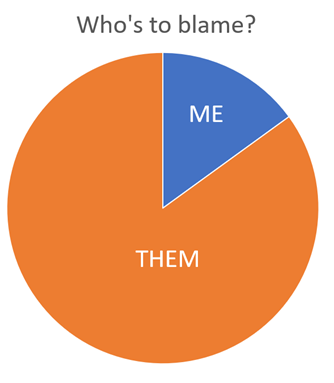
a. Own your share – stop the blame game!

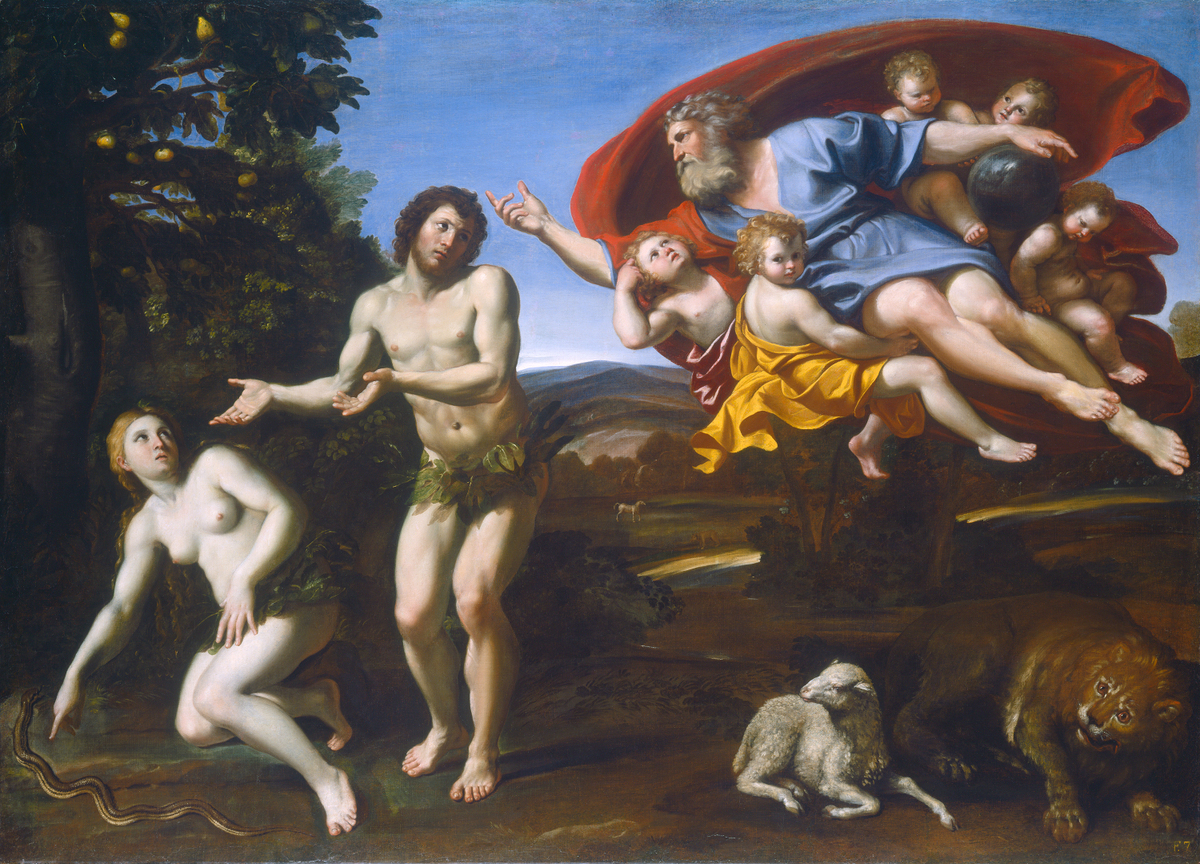
Domenichino, The Rebuke of Adam and Eve, Italian, 1581 – 1641, 1626, oil on canvas, Patrons’ Permanent Fund

Our human nature tends to first look to others to assign guilt for our disappointment and pain.  We see it in Adam and Eve’s replies after the Lord called them out of hiding in fear in shame.

Genesis 3:11-13  “God said: Have you eaten from the tree that I commanded you not to eat from?” The man said, “The woman you put here with me—she gave me some fruit from the tree, and I ate it.” Then the Lord God said to the woman, “What is this you have done?” The woman said, “The serpent deceived me, and I ate.”

In most cases, we are partially responsible for our own disappointments and pain. Own it!

We struggle to admit and own our (small) contribution to our loss and suffering.  But NOT OWNING UP prevents us from growth, because denying mistakes presumes perfection. Denying my contribution to my pain makes me a victim in this situation, rendering me powerless in similar future events.  Such denial prevents growth and might lead to a devastating cycle of relational breakdown, workplace conflict, financial failure or whatever resulted from this crisis.  In contrast, ownership of my (small) contribution in this situation allows me to take responsibility and control for my own life, spurring growth through this pain.

David demonstrated beautiful humility and great confidence in God’s mercy after his grave sins.  He confessed and pleaded: “For I know my transgressions, and my sin is always before me.  Against you, you only, have I sinned… cleanse me… wash me… create in me a clean heart, renew my spirit… my joy!” (Psalm 51:3-4).  By taking responsibility for his own sins, David’s life chapter was closed, preparing a clean slate for his future with room for growth. Indeed, “God opposes the proud and gives grace to the humble.” (James 4:6)

b. Forgive the debt – Release it!

Forgiveness is the most critical action required to let go of the past and close a life chapter properly. The inability (or unwillingness) to forgive an offender is the number one reason why people are stuck in the past, poisoned in anger and bitterness which displaces all their peace and joy from life.  The natural response to being hurt, being wronged.  These strong emotions caused by insults and injustice do not simply fade away.  In the words of Amanda Palmer, you must “deal with your demons, or they will move into the cellar of your soul and lift weights.” 

Paul also articulated this urgency to deal with hurts and offences before they overtake you when addressing the culturally divided Ephesian church. “In your anger do not sin: Do not let the sun go down while you are still angry, and do not give the devil a foothold. Get rid of all bitterness, rage and anger, brawling and slander, along with every form of malice. Be kind and compassionate to one another, forgiving each other, just as in Christ God forgave you.”  Note how Paul does not condemn anger when you are hurt but instead gives a proper response to the justified emotions: urgently deal with the pain and passion in the presence of God, and follow Christ’s example to relinquish all rights to vengeance. 

Andy Stanley helps to clarify the sometimes fuzzy concept of forgiveness in practical terms.  Forgiveness means to clear the debt someone owes you (see Matthew 18:21-33).

Therefore, to properly close a life chapter and forgive someone who hurt you in this season, he prescribes the following:

  • State who wronged you.  For every painful experience, name the person(s) who hurt you or took something from you. This is often someone very close to you, or at times it might even be God or yourself you need to forgive.
  • What debt does he/she owe you?  Articulating what debt is owed is often the most challenging part in the process of forgiveness.  The anger and pain are caused by an (often subconscious) awareness of loss. But to be set someone free, you must be able to say from which debt you set them free.  What have you suffered or lost because of this offence?  Was it money, time (with someone), opportunities, innocence, confidence, or a type of life you could no longer have perhaps?

A question that might help with this is “What/who/where would I have been if he/she/they did not do this to me?”  Imagine this, see the life that was lost, and allow the mourning to flood your heart.  Describe the loss in words or images.

  • Declare him/her/them free of that debt. Forgiveness is a decision and declaration to clear the debt of an offender. In no way does forgiveness justify what was done; forgiveness means you forgo the right to claim back what was stolen (from someone who generally cannot replace what was taken). 

To be set free from anger and bitterness, one often has to verbalise who you forgive and for what you forgive him/her/them. It might help to make this declaration in the presence of a trusted friend as witness.  Rarely do you need to go to the offender(s) and say this to them.  The goal of forgiveness is to make you free from the grudge and hurt you carry, which is the root of your anger and bitterness.

Since forgiveness is an action following a decision to clear a debt owed, you don’t have to feel that you forgive them beforehand – you simply need to decide it and do it.  Emotions will follow your decision.  Even after you have declared the offender(s) free from the wrong he/she/they caused you, the emotions might occasionally flare up.  Then you simply remind yourself that you have cleared that debt in the way Christ has cleared your debt, and ask the Lord to fill your heart with peace and love.  This healing might take time, but the Spirit of Christ will fill our hearts with love and peace (Romans 5:5). 

Over the years I have seen that knowing about forgiveness and actually forgiving someone are two different things. Take the time today to review your year, own your own part in your pain, and forgive the other for how you have been wronged. You will taste the freedom soon!