It took ten plagues…

It took ten plagues for God to deliver the Hebrews out of Egypt.  I remind myself of this truth often.  Imagine with me: Moses meets God at the burning bush, takes off his shoes and falls on his face in fear of this Great I Am.  God sends him to Pharaoh to command the release of his people (he tries to get out of the job, unsuccessfully).  (See Exodus 4, 7)

Moses walks into Pharaoh’s palace (where he grew up and from where he fled some 40 years earlier) and stands face to face with the ruler of Egypt who believes he is a god; Moses’ confidence is in Aaron his spokesperson and the two wondrous signs in his hands, given by God.  “Let God’s people go!” says Moses.  As a sign that he is sent by the One True Living God, he throws his shepherd-staff on the ground and it becomes a snake.  But then the court magicians did exactly the same with their sticks – what an unexpected surprise!  The magicians could do the same sign God gave as proof of His divinity and supremacy!

When Pharaoh did not let God’s people go to worship the Lord, Moses performed the first plague by turning all the water in Egypt to blood (Exodus 7:20-21).  Yet Pharaoh’s heart was hardened and unwilling to let God’s people go.

10plagues_cartoons

We know the history.  It took nine more signs before Pharaoh let the Hebrew slaves go.  The one sign was not enough.  Two plagues could not do the job either.  Did Moses miss God when he turned the water into blood and Pharaoh did not release the slaves?  No.  Did he do something wrong that caused the hardening of Pharaoh’s heart? No.  Moses had to go to Pharaoh ten time and instruct him to release the slaves ten times and call down ten plagues upon the Egyptians.  It simply took ten plagues for Israel to be delivered from Egypt – Moses needed to be persistent in obeying God.  There is a need for endurance.

This Biblical account is not unique in illustrating our need for persistence.  During Israel’s battle with the Amalekites they had the militant advantage for as long as Moses kept his hands in the air (Exodus 17:11).  Noah was persistent in obeying God to build an ark for 120 years and preach repentance to his generation, yet only his household was saved (Genesis 6:22; 2 Peter 2:5).    Abraham’s persistent faith for an heir is commended by God, so that he was called “friend of God” (Genesis 22:18; Romans 4:17).

More contemporary examples of persistence, its needs and rewards are captured in the memories and legacies of William Wilberforce who dedicated his life to the abolition of the British slave trade, and Thomas Edison for his persistence in the design of the light bulb.  Persistence pays off!

The Bible has much to teach us on a need for persistence.  It is fueled in prayer before God and results in faithful acts of obedience.

Persist in prayer

woman_kneeling_prayer

I have heard many people teach and encouraged demotivated individuals to pray once, believe and “leave it with God”?  Yet the Biblical text is full of examples and instructions regarding persistence prayer.  Jesus himself once prayed for a blind man, but afterward he could not see clearly.  So Jesus persisted in prayer and the man’s sight was fully restored (Mark 8:23-25).  He instructed and encouraged his disciples likewise to persist in prayer, saying that they always ought to pray and not lose heart” (Luke 18:1).  He taught them “ask, and it will be given to you; seek, and you will find; knock, and it will be opened to you” (Luke 11:9).  Although less clear in the English, this instruction in petitioning, acting and persevering for a desired outcome is given, implying persistence until the desired outcome is achieved.  His own life was one of persistent, passionate prayerfulness (Hebrews 5:7; ).  The disciples followed Jesus’ example of persistent prayer and modeled it to the early church (Acts 1:14; 2:42), also instructing them to “persevere in prayer” (Ephesians 6:18), “be steadfast in prayer” (Romans 12:12) and to “pray without ceasing” (1 Thessalonians 5:17).

Examples of persistent prayer also abound in the Old Testament.  Abraham persisted in prayer for Sodom and Gomorrah (Genesis 18:23-33).  Jacob’s persistence in wrestling with the Angel of the Lord secured him with the blessing of God and a changed identity (Genesis 32:24-31).  Moses persisted in prayer on behalf of God’s grumbling, unthankful people for forty days so that they were spared (Deuteronomy 9:25).  Hannah was shamelessly persistent in her petitions for a son, and Samuel was born (1 Samuel 1:10-12).  Likewise Zacharias’ and Elizabeth’s persistent prayers were heard, and John the Baptist was born (Luke 1:12).  Simeon persisted in prayer for Israel’s Savior and he was rewarded to lay his eyes on Jesus before his death (Luke 2:25-32).  Elijah persisted in prayer and the draught over Israel was broken (1 Kings 18:42-45).  Daniel had a disciplined prayer life (Daniel 6:10-11) and persisted in prayer for the restoration of his nation until he was heard (Daniel 9:1-3; 10:2-3, 11-12).

But persistent prayer must be accompanied by persistent faith in action.  In the Psalms and elsewhere in Scripture, “waiting on God” and “hoping in God” are typically used as synonyms for persistence in prayer and obedience while waiting for God’s intervention (e.g. Psalms 88 and 130; Isaiah 26:8 and 40:30-31).  There is a need for persisting in doing good as well.

Persist in doing good

Persistence in doing  the will of God
Persistence in doing the will of God

Jesus’ life is the perfect example of persistence in doing good (Acts 10:38), of doing the Father’s will (Matthew 26:36-45; Philippians 2:5-8).  His disciples followed his example and instructed the church to do the same, and “not grow weary of doing good” (Galatians 6:9; 2 Thessalonians 3:13) but remain “steadfast, unmoveable, always abounding in the work of the Lord” (1 Corinthians 15:58)

Joseph’s life is an example of someone who persisted in doing good, even though he was victim to much betrayal an suffering. (Genesis 41:43, 44)  Although he suffered unjustly at the hands of his brother and as slave to Potiphar and as prisoner in jail, he persisted in doing good, and God continued to bless him, until later he was appointed as ruler in Egypt. (Genesis 39:10, 12, 23).  Because of his persistence and faith God entrusted much to him.

Nehemiah’s life is one of persistence and faithful endurance.  Amidst great resistance from without and within (Nehemiah 2:19-20), even in the face of war (Nehemiah 4:7-9), he obeyed the burden of God to rebuild the walls of Jerusalem, to remove the shame of his people and to restore true worship in Israel (Nehemiah 8:1-3).  Likewise, the lives of the David, prophets like Isaiah, Jeremiah, Amos, and Hosea as well as the early church serve as inspiration to us of persistent faithfulness to God, suffering ridicule and rejection, imprisonment, beatings and even fatal martyrdom in faithful obedience to God.

Is there something you are “waiting” or “hoping” for in God?  Have you tried but failed, even though you did what God commanded you?  Then remember: it took ten plagues to deliver the slaves from Egypt.  Don’t give up!

So what are you trusting for?  Do you have unfulfilled dreams or unanswered prayers?  God has not forgotten you – he cannot (Isaiah 49:15).  He hears your prayers and is willing and able to intervene (Isaiah 59:1), but you have need for persistence, so pray and work until your bucket is full (Revelations 8:4-5).

Follow the example of our Biblical heroes.   Remain determined in your dream.  Do not wobble due to residence, do not yield to pressure.  Be not spineless in the face of the impossible nor waver when the wait is long.  Are you weak or battle-worn?  Then “Wait for the LORD; be strong, and let your heart take courage; wait for the Lord!” (Psalm 27:14; see Isaiah 40:31)

But be steadfast in your faith, tenacious in your pursuit, unshakeable on your course.  Be relentless in your prayers and unremitting in doing good.  God honors persistence!

On Spiritual Maturity : The Error of Balaam

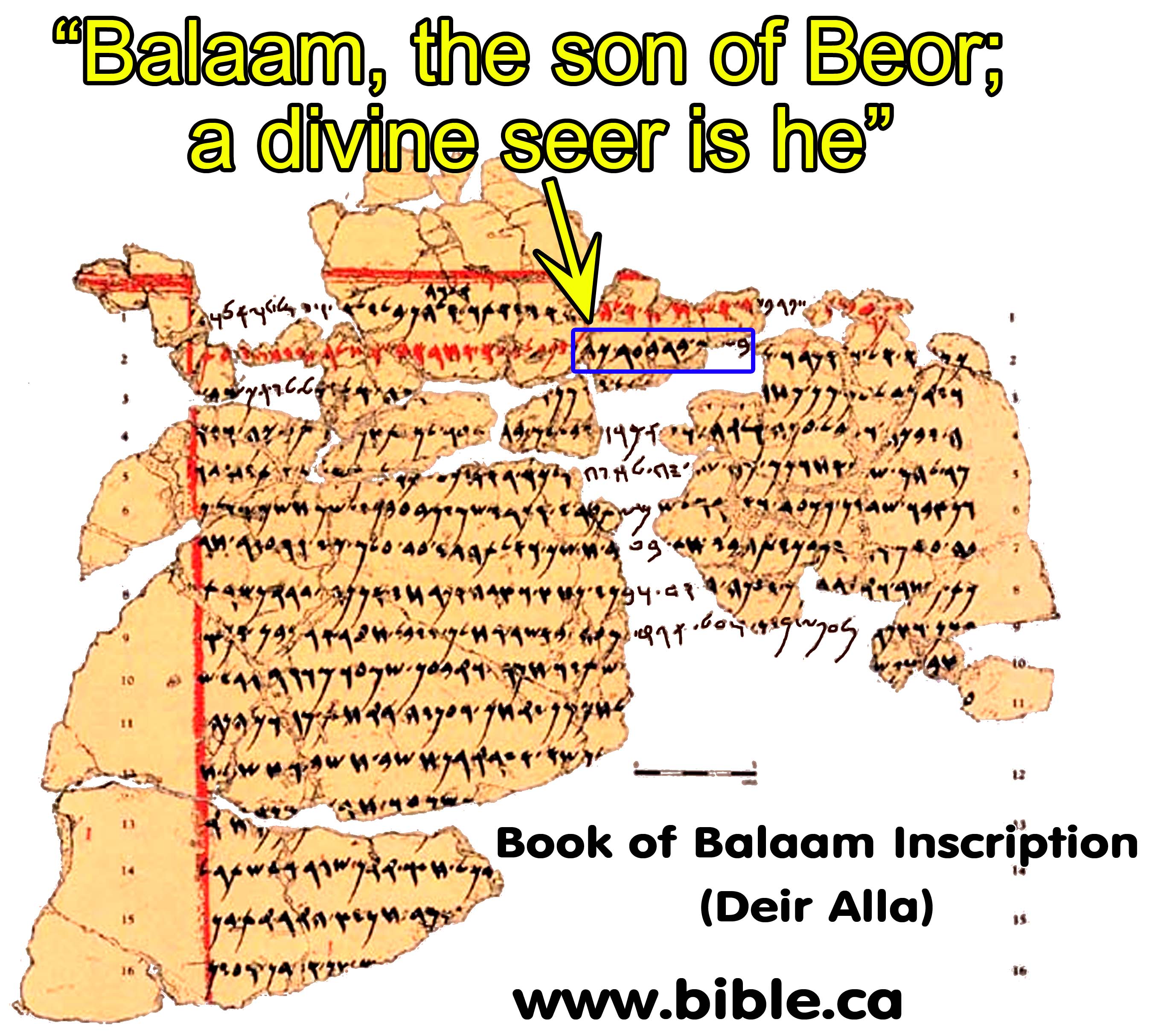
In the book of Numbers, four chapters are devoted to the history of a prophet who had a profound impact on God’s people during their conquest of the Promised Land.  This prophet was not a Jewish man, but a seer who dwelt in Pethor: Balaam son of Beor.  In 1967 archeological evidence was discovered with the inscription of “Baalam son of Beor” prophet of “El Shaddai” – the Almighty God as he was known to the Israelites in the days of Moses.  This archeological evidence adds tremendous historic weight this account in the Bible.

Image of wall tiles inscribed by "Balaam son of Peor, Prophet of El Shaddai" found at  Tell Deir Alla, Succoth (dated to 1406/750 BC). See  www.bible.ca/archeology/
Image of wall tiles inscribed by “Balaam son of Peor, Prophet of El Shaddai” found at Tell Deir Alla, Succoth (dated to 1406/750 BC). See http://www.bible.ca/archeology/

The reason why this account of a foreign prophet speaking to ancient Israel is important to contemporary believers is highlighted by the numerous New Testament references to Balaam.  All of these references of Balaam are warnings: Peter warns the church of false prophets who “have gone astray… in the way of Balaam…” (2 Peter 2:15).  Jude warns of “ungodly people… [who] abandoned themselves for the sake of gain to Balaam’s error” (Jude 1:1, 11).  John wrote of those in the church in Pergamum “who hold to the teachings of Balaam.” (Revelations 2:14).  In each of the three texts the prophet Balaam is used as reference or type of ungodly lifestyles and doctrinal error of believers that is condemnable.  But what is this dangerous “error”, “way” or “doctrine”?

Reading through the historic account of Balaam’s dealings with Israel (Numbers 22:1-25:10, 31:8,16), one has to acknowledge his absolute commitment to relay only what God says: “Though Balak were to give me his house full of silver and gold, I could not go beyond the command of the LORD my God to do less or more” (22:18).  Throughout these three chapters he maintains this stance, repeating his commitment to speak only the words of God another five times (22:38;  23:8, 12, 26; 24:13).  In the end, Balaam’s loyalty to prophesy in truth as God revealed cost him his wages which Balak promised (24:11).  Thus Balaam is an accurate prophet, true to delivering God’s message, not yielding to pressure or bribe to speak falsely.

So why the negative connotations with Balaam?  Numbers 25 records a shameful time in Israel’s travels as they camped on the Eastern side of the Jordan river and started living like the Moabite people.  Swaying under the power of cultural seduction to sexual immorality and idol worship, the Israelites came under the wrath of God through as a plague that killed 24’000 Israelites (Numbers 25:1-9).  This moral decay is attributed to Balaam (Numbers 31:16).  Although he was extremely gifted and graced by God to hear and speak accurately the pure words of God, he himself was an immoral man whose way of life was corrupted with sin (“way of Balaam” 2 Peter 2:15; ““error” Jude 1: 11) and his teachings deceptive (Numbers 31:16).  His lifestyle and teachings were not to be followed, admired or trusted.  In fact, Balaam was executed along with the Midianites under the wrath of God (Numbers 31:8).

The first talking ass - Balaam's donkey!
The first talking ass – Balaam’s donkey!

Although his prophesies is shown to be infallible in the text, the author of Numbers includes the humorous account of his journey on the donkey to Balak (Numbers 22:21-38), which is very deliberately inserted to humble this “great prophet”.  For instance, Balaam the great prophet is hired to subdue Israel with words, but he cannot even subdue his donkey with a stick.  He claims to see visions (24:4,17) but can’s see what the donkey sees on three occasions (22:32).  He claims that his prophetic speech is from God (22:38; 23:5, 12, 16), yet the donkey silences him as its mouth is also opened by God (22:28).  Balaam claims to posess knowledge “from the Most High” (24:16) was beaten in verbal exchange with a stupid donkey (22:30) and then has to admit to the angel “I did not know [what the donkey knows]” (22:34).  Although Balaam is on his way to slay a whole nation with his words he has to draw a sword to kill the donkey (22:29); while lamenting lamenting that he had no sword to slay the animal, the donkey sees the drawn sword in the hands of the angel (22:23) right in front of him.  This irony is meant as a lesson in humility – that the great prophet, like any donkey, can see and speak only what God shows him, and that he simply is graced to serve in the purposes of God.  Secondly, this account shows that although the prophet speaks graceful words by God’s Spirit, he is more beastly than his donkey: where the beast is kind to move his master Balaam out of harm’s way three times, the master is beastly in beating the faithful, kind-hearted, willing animal without considering the motive.

Godliness and our culture

Although Balaam had the ability to speak God’s words accurately, he had lead a whole nation astray.  His life serves as a warning that accurate spiritual discernment without holy living (from a godly character) is dangerous.  What was this ungodliness?  Balaam’s error (2 Peter 2:15) or Balaam’s way (Jude 1:11) simply refers to his lifestyle of cultural acceptance.  Although being a gifted prophet Balaam lived as the Midianites did, and that lead to the corruption of God’s holy people as they followed his “way” and “erred” in his footsteps.  His love for sensual pleasure made him prone towards greed, sexual immorality and cultural festivity surrounding the worship of other gods, plus his independence lead to rebellion.  (See 2 Peter 2:2-14; Jude 1:1, 6-11; Psalm 106:28; Revelation 2:14).

no_rules
The doctrine of Balaam: everything goes! No consequences!

The doctrine of Balaam (Revelation 2:14) teaches that God’s people are chosen, holy and saved in God’s eternal covenant and therefore nothing can change that reality – not even their lifestyle.  So by his example and by his teachings the great prophet Balaam deceived God’s people into a lifestyle of sexual immorality and the worship of Baal of Peor.  As a result, many died under the wrath of God, never reaching the Promised Land (Jude 1:5).  Still today Balaam’s dualism (distinguishing spiritual holiness from moral life) is taught in many places (associated with Gnosticism in the early church and extreme grace teachings).  Apart from formal teaching, the way of Balaam is engrained in our spiritual DNA by the example of our contemporary church culture where Sundays is God’s day, and the rest of the week we live good lives, but find pleasure and security as the rest of society does.

Balaam is not the only example of this fallacy in Scripture.  Samson, the mighty deliverer of Israel was like him: a man empowered by the Spirit of God to lead and deliver Israel, yet always seduced and enticed by his worldly passions and made ineffective. (Judges 14-16)  Giving in to the seduction of sensual sins enslaves God’s people and brings shame to his Name.

In contrast to Balaam and Samson, Daniel and his friends stand out as examples of godliness amidst a crooked world.  Daniel chapter three records how Nebuchadnezzar set up a golden image that everyone in his kingdom had to bow down to whenever the music played. The image was not an image of a particular god, but rather represented the religious culture of the day.  Shadrach, Meshach, and Abednego refused to bow down to the image, and was persevered by God in the fire.  Their refusal to succumb to the cultural pressure in faithfulness to the One True God stands as an example to every believer in our present-day materialistic, promiscuous culture feeling pressures us to conform.

How do we respond?

Considering the the error of Balaam, I find three ways to respond to this in pursuit of spiritual maturity.

  1. Review your definition of “Spiritual Maturity”

The reference to Balaam in Peter’s second epistle pertains to false prophets among the first readers, thus spiritually gifted leaders. This is worth mentioning.  Peter appeals to his readers to note the ungodly fruit of these spiritually gifted ministers, and therefore not following their example of sensuality and rebellion.  Peter looked at the character and behavior of these gifted leaders and was not easily mesmerized by their prophetic ability.  After all, Jesus taught him that a person is “known by [his] fruit” (Matthew 12:33).

Peter needed to write this to the growing young church, since the charismatic gift of prophets is very appealing to especially young believers.  And the display of spiritual gifts is easily taken as signs of spiritual maturity. It is the will of God that we grow up (Ephesians 4:11ff), but how do you define maturity? That is why these warnings by Jesus and his apostles are so strong and clear.  So re-evaluate your view of spiritual maturity: Who do you admire?  Who do you want to follow after?  Consider their character – are they known by their love? What can you learn from their marriage and family relationships, their work ethic and how they manage money?

Take stock of your life spiritually.
  1. Take stock of your own life.

In Jude and Revelations the warning to individuals walking in the error or teachings of Balaam is merely to wrong belief of individuals in their congregations of those in their midst.  Balaam is the image of a spiritually gifted man with the lust of sensual pleasures that are lead by his passions through this life like waves thrown around by their earthly desires (Jude 1:12-14).  Take an honest view of your life your own life, with special reference to you your passions and desires.  Are you leaving it unchecked?  What are you doing about it?  And who are you accountable to about it?

  1. Grow in godliness.

Our aim remains to be conformed to the image of Christ Jesus and to help form others into that image (Romans 8:29; Colossians 2:28-29).  Be purposeful about it.  How have you grown in godliness in the last year, and in which area do you need to grow now?  Are you growing in the will of God?  What does the Lord say, and what will you do to grow in that area of Christ-likeness.  Again, and who knows about that?

While closing with growth in Christ-likeness, remember these words of Paul: “Continue to work out your own salvation with fear and trembling, for it is God who works in you, giving you the desire and ability for his good pleasure.” (Philippians 2:12-13)  Continue, don’t stagnate in your pursuit of Christ-likeness.  Work it out yourself, don’t expect it to automatic or someone else’s job.  As you grow in Christ-likeness you also will grow to emulate the Christ – the Anointed One (Acts 10:38).  Earnestly desire spiritual gifts but let the motive be love (1 Corinthians 12:31).

And work with God – it is he that works in you, leading your through your desires and gracing your with the power needed to grow in Christ-likeness.  Don’t stop!  Work joyfully with the grace God gives.

What is the will of God (for me)?

“What is God’s will for my life?” This is a question we hear asked more frequently than others.  It is coupled to one of the great existential questions of life: “Why am I here?” and more specific “What is the purpose of my life?”  Not surprisingly, it is one of the main themes of the Bible and also one of the things Jesus frequently spoke about – regarding his own life and the lives of his followers.

Jesus said he came down from heaven only to do his Father’s will (John 6:38).  Even as a young child Jesus made it clear that he was “about his Father’s business” (Luke 2:49).  Therefore he did nothing on his own, but he sought only to do his Father’s will (John 5:30), which strengthened him – even physically (John 4:34).  He told his followers that not everyone will enter the kingdom of heaven, but only those who do the will of the Father (Matthew 7:21; compare 21:31), and these ones who do God’s will he regards his brothers and sisters (Matthew 12:30; compare John 1:13).  In the end, Jesus’ ultimate sacrifice on the cross was in obedience to the will of his Father (Matthew 26:39; Galatians 1:4; see also Hebrews 10:5-10) destroying the works of the devil (1John 3:8).  Jesus literally lived and died to do the will of his Father – an example for us to follow after.

The Apostles followed his example of selfless obedience to the will of God for their lives, and also encouraged the churches to do the same (Philippians 2:5-8).  In fact most of the New Testament Text in itself answers the question “What is the will of God (for me)?” in a particular situation.  Some of the instructions are explicit regarding God’s will, for example “do not be foolish, but understand what the will of the Lord is” (Ephesians 5:17), in order to “do the will of God from the heart” (Ephesians 6:6).  This will of God is not automatically known, therefore our minds need to be renewed “to know the will of God” (Romans 12:2) and the Spirit of God helps us to pray the will of God (Romans 8:27).  We are called to “stand mature and fully assured in all the will of God” (Colossians 4:12), with “endurance, so that when you have done the will of God you may receive what is promised.”  (Hebrews 12:36)

It is clear that obedience to “the will of God” is extremely important, and even desirable, so what is the will of God?  What do the Biblical authors mean when they use this and similar phrases?

God’s will of decree (sovereign, predetermined, immutable)

Will of Decree

In many instances in the Bible, when the phrase “the will of God” (or similar) is used, it refers to God’s pre-determined plan for his creation.  This encompasses all the times and events in history which will take place, because God wills it and orchestrates it in his sovereignty.  As such, this “will of God” is immutable (or unchangeable, Isaiah 14:26-27), universal (or everywhere, Isaiah 14:26-27), efficacious (or certain, Isaiah 55:10-11, Hebrews 6:17-19), all-encompassing (considers all variables, human decisions and even evil plans, see Genesis 50:20, Colossians 1:16) and eternal (or for all time, Psalm 33:11).  This plan or “will of God” is unfolding (or progressively being revealed, 1 Peter 1:10-12).  The following well-knows passage in Isaiah captures God’s will of decree well:

Isaiah 46:9-11 “Remember the former things of old; for I am God, and there is no other; I am God, and there is none like me, declaring the end from the beginning and from ancient times things not yet done, saying, ‘My counsel shall stand, and I will accomplish all my purpose, calling a bird of prey from the east, the man of my counsel from a far country. I have spoken, and I will bring it to pass; I have purposed, and I will do it.

God’s will of decree is clearly seen in fulfilled prophesies as recorded in the Bible, in particular the birth, life death of Jesus Christ.  God’s redemption plan in the substitutionary death of Jesus Christ is foretold in the Old Testament (Psalm 22, Isaiah 53) and revealed in the New testament (Acts 2:22-24, Hebrews 10:5-10, Ephesians 3:1-12), and in particular the many events surrounding his conception, birth and early years (Luke 1:26-38, 67-79: 2:8-14, 25-35, 2:46-50).

The knowledge of God’s will of decree comforts us with the truth that he is in control, always, everywhere.  Biblically, God’s will of decree has two sure outcomes: firstly, God’s reign will be universal (Philippians 2:10-11) and his glory known everywhere (Habakkuk 2:14), and secondly a good outcome for the Christian (Romans 8:28).

 God’s will of desire (moral, ethical, voluntary)

will_of_desire

The second use of the phrase “the will of God” (and similar phrases) implies that which is pleasing to God, that which he longs for in his creatures.  This is also known as the moral or ethical will of God and is already made known to us in the exemplary life and Christ Jesus (Colossians 1:9), or found in the commands of the Old Testament laws and the New Testament instructions.  Examples of God’s revealed will of desire include “this is the will of God, your sanctification: that you abstain from sexual immorality” (1 Thessalonians 4:3), “give thanks in all circumstances; for this is the will of God in Christ Jesus for you” (1 Thessalonians 5:18) and “the Father is seeking” “true worshippers [who] will worship him in Spirit and truth” (John 4:23).  His heart for salvation of all people is expressed in this will of desire: “God is not willing that any should perish, but that al should come to repentance” (2 Peter 3:9) for he “desires all men to be saved” (1 Timothy 2:4; Matthew 18:14) as they “look on the Son and believe in Him” (John 6:40).  The apostles wrote the letters to help the early churches understand what God’s will of desire is in their specific circumstances, as in this instance regarding suffering unjustly, “For this is the will of God, that by doing good you should put to silence the ignorance of foolish people.” (1 Peter 2:15)

These expressions of desire and instructions are labelled God’s will, but unlike the will of decree described above, humans have a choice in the matter.  It is clear that obedience to these instructions has salvivic consequences as implied in several New Testament texts.  Apart from the above verse mentioned in the previous paragraph, 1 John 2:15-17 serves as an example Do not love the world or the things in the world… And the world is passing away along with its desires, but whoever does the will of God abides forever.”

Obedience to God’s will of desire results in eternal life and eternal rewards when Jesus returns to judge the world (Revelation 22:12).

God’s will of direction (destiny, purpose, wisdom for situation)

God's will of destiny is the purpose or goal that he has for us in life, or in a particular situation
God’s will of destiny is the purpose or goal that he has for us in life, or in a particular situation

The third way in which the phrase “the will of God” (and similar) is used implies one’s destiny, purpose or the intended direction of one’s life or a particular situation.  In Psalm 139 the psalmist sings about God’s intricate involvement in every aspect and acute awareness of every moment of one’s life – even before creation.  God’s call of the patriarchs, judges, prophets, kings in the Old Testament, as well as his call of the apostles in the New Testament shows that God does call one by name for a specific purpose.   In Jeremiah’s call we read clearly that God has this plan in mind before his birth (Jeremiah 1:5); so also in the call of Paul the apostle (Galatians 1:15).  Jesus lived with this reality of God’s will of direction for his life, referring to “the will of my Father” repeatedly in the gospels, especially in John’s gospel.  The image is what the psalmist sketches in Psalm 127 of a father directing and propelling his children towards their goal (target) in life.

God’s will of direction is also used in Scripture to indicate the wisdom of God for a specific situation, i.e. “What is the will of God for this difficult situation? What does God want us to do?”  as David did in 1 Samuel 30:8.  Much of New Old Testament prophesy is an answer to God to confused people in troubled times regarding this answer from God, where God’s expressed will comes through the inspiration of the Holy Spirit  (2 Peter 1:21).

This is the will of God we tend to pray about more as we prayerfully search for God’s guidance while making decisions regarding marriage partners, business partners, career choices, financial decisions or holidays.  And rightly so!  God’s will of direction confirms that God has an intended plan for each of his creatures, and that in his wisdom he knows best for each situation.  He invites us to ask him in relationship about these plans he has.

So what is the will of God for me?

God the Creator governs the world and nations, allotting their seasons and territories (Acts 17:26), steering the events towards the culmination of his redemptive plan for creation upon Christ’s return.  This is God’s will of Decrees; our lives form part of this great plan of God which will certainly take place regardless of our participation or opposition.

But we have a role to play in God’s will for our lives.  The first is often neglected in the pursuit for God’s will, with devastating effects.  (New Testament authors write about this as the error of Balaam).

Firstly, God’s will of desire for my life is that I will respond to his gracious invitation for salvation in Christ Jesus and that I will participate with his transforming work in shaping me into the image of his Son Jesus Christ, to embrace his character and mission.  Thus God’s will for my life is firstly to become a certain person, before I do a particular job.  God wants me to walk worthy of Christ in the everyday elementary things in life; I must represent and emulate Christ in his loving, humble, kind, obedient, joyful nature (Romans 8:28). The Bible says that this emulation of Christ is essential in fulfilling God’s will since  faith without character transformation will lead to a fruitless Christian life – the corrupted nature will thwart sincere efforts of good works and obedience to God (see 2 Peter 1:3-10).

Secondly, God’s will of direction for my life is unique; it is my calling.  And my calling is usually not towards full time Christian ministry; God calls people to teach, to build, to steward projects or finances, to govern.  God’s calls people to do essential everyday things, also “non-essential” everyday things such as arts and music.  The lives of Amos the sheep-farming prophet, Deborah the mother-judge-deliverer of Israel and Paul the tent-making-apostle-preacher teach us that you can do many things in one lifetime and be perfectly in God’s eternal will for your life.

How do I know what is God’s will of direction for my life? This question will be unpacked in a later blog, but let me leave you with this: start by sincerely asking your creator to lead you into his intended path for your life.  And while you wait, listen and respond to his promptings, comfort yourself in this mindset:

“I TRUST MORE IN GOD’s ABILITY TO LEAD ME THAN IN MY ABILITY TO FOLLOW HIM.”  Let the Good Shepherd lead you on in his path for your life!

sheherd-leading-sheep

A Perfect Match! – Relational Mythbusters

The Perfect Man: Dark, sweet, rich.  And if he angers you - you can bit his head off!
The Perfect Man: Dark, sweet, rich. And if he angers you – you can bit his head off!

We have all seen greeting cards like this one: The perfect man: sweet, rich, dark and handsome; and if he says anything wrong you can simply bite of his head and unwrap another!  Wish relationships were really that simple!

The search for the perfect mate is a very personal and emotionally draining one, so I aim to write this blog carefully, lightly and humorous. Even  as I am writing about “finding your life partner” I think of my friends whom I love dearly, that are suffering in what is described as the epidemic of with loneliness.  I have previously written on marriage and our culture and do not wish to repeat everything I have written about, so I recommend you to read on the intent and definition of marriage I unpacked there.

I now invite you to laugh with me at popular crazy ideas and sentiments we hold onto in our pursuit of “finding the perfect life partner”.

“Soul mates”

"You complete me!"
In search for your soul late… “You complete me!”

In Plato’s The Symposium he writes that humans originally had four legs and four arms, and that they angered the gods. The gods did not want to destroy them fully, fearing the loss of their tributes and Zeus therefore split them in two as punishment (while doubling the amount of tribute given).  Humans would forever wander miserably in search for their other half – their soul mate – and once they had found that soul mate there would be perfect understanding between and happiness between the two.  Thus “love is the desire of the whole.”

In a study by Rugters University 94% of unmarried people agreed that the primary search for a marriage partner is one’s “soul mate”.  This ancient myth has been popularized in contemporary movies, novels and even preaching, that there is a person “destined” for you to find and marry.  While non-believers bank on “fate” to find their soul mate, authors and preachers have “christianed” this fable to sound Biblical, stating that God has created you for one mate.  Although this statement sounds good, the core of the assumption is you’re your happiness rests in finding that one which God created you for, thus putting the thrust of your energy into “finding the right one.”

This popular theory has two major contemporary relational consequences.  Firstly, loneliness and late marriages singles persistently search for their “soul mate”, or the one to complete them.  This search for a mystical satisfying union provided in a specific individual person “out there somewhere” is in my opinion one of the greatest contributors to the loneliness epidemic of young adults.  Secondly, the belief that there is “one perfect soul mate for me” out there somewhere causes even people in steady relationships to doubt the legitimacy of the that relationship, wondering whether everyday conflict and the normality of the relationship are indications that they are not with the “wrong one.”  Counseling professionals warn that this myth is very destructive relationally, some going as far as saying nothing has produced more unhappiness than the concept of the soul mate.”

What does the Bible say about this?  The whole counsel of the Bible teaches very little about who to marry, except that that person should be a Christian (2 Corinthians 6:14; 1 Corinthians 7:39).  The one clear instance in the Bible where God instructs someone to marry a specific person is the prophet Hosea – and it is because God commanded him to marry a prostitute, something immoral and foolish!  (This marriage was meant to display prophetic significance of the character of unfaithful Israel, to their own shame).

I personally know of one or two individuals to whom God spoke directly about their marriage partners, but this is by no means normative, as we can see from Scripture.  The Biblical text says a lot about marriage, but very little about who to marry.  The focus of the Scripture is on who you become and how you ought to conduct yourself in marriage – because love and fulfillment in found in how your marry, not who you marry.

“The Consumerist Gambling” – there must be a better one out there

Gambling_2
Leaving Mr Good in the hope to find Mr Better or Mr Perfect is a gamble, because at some point the table stops turning…

The second popular trend is what I like to call “consumer-based relational roulette”, where potential life-mates are compared with each other as we do with clothes or cattle or cars, weighing up their apparent strengths and weaknesses, dismissing those who fail to meet our standards.  This comparison happens either virtually by viewing an online dating catalogue, Facebook pages or in real life interactions.  Consumer-based relational roulette results is either serial dating as the “consumer” tries out the “products” or in passivity where “buyers” wait for the perfect specimen to “procure”.

Where does the gamble come in?  The gamble comes in when one disengage from a promising relationship  or dismiss a potentially good life-mate in the hope for a better one, just like gambler would bet all his winnings in hope of gaining more.   The relational result is the same as in the previous section: late marriages with agonizing loneliness, and break-up of good relationships (even marriages) in the hope of better ones.

What does the Bible say to this myth?  The answer is simple: marry a Christian, and be faithful and be content with whom you have.

“The Cupid deception” – all you need is love!

Cupid shoots his arrows and the victim is love-struck!

We are well aware of the Roman Cupid myth as he is the popular icon of Valentines Day.  The myth of this demi-god tells that he has the power in his bow and arrow to strike his unsuspecting victim with uncontrollable passion for the one he/she lays eyes on: instant infatuation as the victim helplessly “falls in love” and blindly does whatever it takes to be with the object of obsession.  This myth is also popularized in contemporary films and drama, novels and poetry, and music.  It is this love which quite literally makes people’s worlds go around.

Emotions of love are not bad at all – emotions are created by God and God himself expresses very passionate love and anger through the prophets in the Bible.  The danger in this myth is when life-long relational decisions are based upon feelings alone.  Infatuation causes people to say and do stupid things, like “I have to follow my heart” and marry an abusive man who was divorced three times, because “I cannot deny this feeling”.  Love-struck people who follow this loving feeling alone can cause themselves tremendous harm; after all, “love is blind.”

We live in a society primarily lead by emotions; the anthem of our younger generation is “if it feels right, it is right!”  But we know that emotions are fickle, evidenced by the many heart-aches and bitterness from people who woke up one morning released from the “spell of cupid” having “fallen out of love.”  The Biblical teaching on this emotional desire is clear: be aware of luring emotions, since “the heart is deceitful above all things, and desperately wicked.”(Jeremiah 17:9) and can tempt us to do foolish and sinful things (James 1:14).  Secondly, love is not enough for a fulfilled relationship, as Paul teaches us that we need faith (shared conviction and trustworthy character), hope (a common or complementary vision or direction) and love (the bond of perfection manifesting in grace for each other) (1Corintians 13:7, 13).[i]

I must just point out that the our cultural understanding of love is far removed from the love we read about in the Bible.  Contemporary definitions of love reads something like “tender feelings, passionate affection,  deep affection or sexual desire for another person.”  Biblical love on the other hand (as defined by Voddie Baucham) is action-oriented: “The biblical definition of love is that love is an act of the will (it’s a choice) accompanied (not led) by emotion that leads to action (it’s proved by our efforts) on behalf of its object. ”  Or simply put by Dr Dallas Willard “Love is a decision to do good.”

Loving emotions are not wrong, but left unchecked it has the potential to lead us into great trouble, as many of us have experienced in the past. Biblical love leads to loving actions for others, and that always leads to goodness and life.  So if Cupid hits you with his arrow and the “poison tip” fills you with this second type of (Biblical) love, there is no harm in that!

“God will send her my way”

Passively waiting for Mr Right might be the wrong approach to marital satisfaction...
Passively waiting for Mr Right might be the wrong approach to marital satisfaction…

The last myth to be busted in this post is that of passive waiting: “if we are destined to be together, God / fate will make it happen!”  But we know this passivity does not work in any area of life.  We don’t say “if God wants me to be a doctor, He will make it happen” and then do nothing.  We agree with the plan and then pursue it with hard work an excitement, recognising His grace along the way.

The writer of proverbs recorded a proverbs that instruct the young men to “find” a virtuous wife (Proverbs 18:22; 31:10), implying intentional, intelligent effort.  I know many young men who spend hours behind computer screens or some odd hobby who desire a life mate, but make no visible effort.  The same holds true for young ladies – make yourself known.  If you seek you will find, Jesus said.

What to do

We have busted some destructive relational myths, but how do we respond?  I counsel single people with these four things:

  • Evaluate your expectations.  Are what you want from a life partner, or the meeting of this life partner, fair and Biblical?  How much of what you expect or desire is culturally informed and how much is what God intents? Re-evaluate your image of marriage and lovein prayer, study and discussions.
  • Become marriable. Marriage is great when both you and your spouse are loving people, meaning you are patient, kind, gentle, humble, faithful, honest, etc.  So grow to “have love”  ( 1 Corinthians 13:1) – spend time with friends and family where you deliberately grow in the loving character of Jesus our example.
  • Marry a Christian. Rather than building catalogues of potential mates to build through, marry a good Christian.  Any good Christian whom you respect and can have pleasant conversation with.  Re-evaluate your “check lists” – cut it down to “godly man” / “virtuous woman” who has friends and family that prove he/she can maintain healthy relationships.  Don’t look for the perfect partner – find a suitable partner who share your convictions, because once you marry you find out that imperfections are part of relational life, which mainly get dealt with inside the marriage. [I don’t propose marry without discretion and counsel, I simply mean to
  • Grow in contentment. In the pursuit of your life mate, learn contentment as Paul did with being single now.  Use your flexibility and time well now to noble causes that you cannot do once you have family responsibility.  Don’t allow the desire for marital intimacy consume you; learn contentment and find joy in your situation now.  But never loose hope – God hears and God cares!

[i] From a teaching of Ps Fred May “Love is Not Enough” 2002 in Shofar Christian Church, Stellenbosch.

God at (your) work

David Pawson tells of a man in the Hebrideans who was treated for a double rapture due to physical labour.  When the physician asked how it happened, the man explained that he injured himself when he loaded a heavy load of wood on his wife’s back.  Some people are more industrious than others!

Work impacts deeply on our identity[i]: when meeting someone we are prone to ask what they do. This is understandable since nothing (apart from sleep) takes up more hours in one’s life than work – accumulating to about 60% of one’s waking life.   Work literally consumes our lives: typically, the average person would work close to 100’000 hours in their lifetime – that is nearly eleven and a half years of one’s life!  It is therefore both strange and sad that only 80% of people are dissatisfied with their jobs.  Work is seen as merely a means of living, or as a necessary evil to endure on the way to a fun-filled weekend or peaceful retirement.

This aversion to work has big socio-economic implications so that the rich and powerful oppress the poor through slavery or low wages to ensure more leisure time for them.  This is not a new phenomenon: most ancient civilizations employed the use of slaves so that the rich could continue in pointless pursuits and parties.  Today also, as in the past, workers withhold labour demanding higher wages for less working hours, and workers see no calling in work itself so that everyone change jobs at the flip of a hat for higher pay or more comfort and flexibility.  Quick riches, ease and pleasure are the highest virtues in our labour-avoiding work force.

In light of these contemporary views of work, how should Christians respond?  What does the Bible say about work?

Biblical theology of work – in brief

We are created to work.  Even before sin entered the world, Adam was created to rule and work (Genesis 2:15).  God is introduced as a ruler and worker, and man was made in his image as ruler and worker (Genesis 1:1,26-29).  Work is not the result of sin, but rather the ideal design of God.  Therefore work is good.  Work was and remains God’s “Plan A” for man – both in the Garden of Eden (Genesis 2:15) and in the New Creation (Revelations 5:10) we see God’s intention for man as ruler and worker.

Throughout the Scriptures, blessings are the reward for those who work, including social stature (Proverbs 22:29), wealth (Proverbs 12:27), success (Proverbs 16:3; Genesis 39:2), and increased authority (Proverbs 12:24; Luke 19:17).  In contrast, curses are reserved for those who are slothful and refuse to work, including hunger (Proverbs 19:15; 2 Thessalonians 3:10), forced labour (Proverbs 12:24), ruin (Ecclesiastes 10:18) and destruction (Proverbs 18:9).

Biblically, the purpose of work is to make a living (2 Thessalonians 3:12), to provide for your household (1Timothy 5:8; Proverbs 31:27), to bless others (Ephesians 4:28) and to increase in wealth (Proverbs 13:11).   The attitude of the believer towards work should be willingness (Titus 3:1) and to work as unto the Lord (Colossians 3:23).  That’s why Paul instructs the believers to work well (1Timothy 5:8), including the women under sixty should work to earn their own keep (1 Timothy 5:9-13), and believers who refuse to work should be admonished (1 Thessalonians 5:14), warned and kept away from so that they receive no material support from the church (2 Thessalonians 3:6-14). [ii]

There is no distinction in God’s view between “spiritual” and “secular” work; he created everything (John 1:3; Colossians 1:15-16) and nothing is “secular” to him apart from sin itself.  Not only “religious” offices are spiritual in nature; all work is spiritual since it emanates from our created purpose and impact on our identity.  It is noteworthy to remember that the first instance mentioned in the Bible where God “called”, “appointed” and “filled [someone] with the Spirit of God” to perform a function was not for spiritual ministry, but for “all manner of workmanship” – an artistic craftsman! (see Exodus 31:1-11)  God calls, appoints and empowers all workers in his created world.  That’s why Paul had no problem to work with his own hands, or to receive material support while being in ministry (2 Thessalonians 3:7-9).  He honoured God in making tents for the Roman army as well as preaching.

The fall did however impact the working environment, as we read in Adam’s curse about “thorns and thistles… sweat of your face…” (Genesis 3:17-19).  It should surprise no-one that the work-place is filled with conflict, disappointments, stress, failure, retrenchments and injustice.  Our work is of God, but it has become corrupted after the fall.  Therefore our work needs to be redeemed.

We redeem our work to glorify God in it (1 Corinthians 10:31) and do our daily jobs for him (Romans 11:36; Colossians 3:23).  Everything in life is to display the glory and supremacy of Christ; our work is for that purpose.  It is not enough to use our work environments to make money for God’s mission, or to see it as a “harvest field” where people can get saved, or to show people how Christians live and work.  All these things are important and worthy, but it has the same problem: it uses work as an unpleasant means for something good, but not seeing it as something good in itself.  The work itself should be redeemed to glorify God.  Bill Thune mentions a few ways in which our work can be redeemed to glorify God: [iii]

  • God is glorified when we give our best to him in our work (Colossians 3:23-24);
  • God is glorified when we are honest even to our hurt (Psalm 15, Genesis 39);
  • God is glorified when we honour superiors and submit even in hardships (1 Timothy 6:1; Romans 13:7);
  • God is glorified when we treat associates with kindness and respect (Luke 6:31; Romans 12:18);
  • God is glorified when we expose fraud and dishonesty (Ephesians 5:11-13);
  • God is glorified when we avoid complaining and grumbling (Philippians 2:14-15);
  • God is glorified when we rest from work and trust him (Deuteronomy 5:13-15).

These are some examples in which we can redeem our work so that it glorifies God.

How do we respond to this?

How do I work in such a way to glorify God within a corrupted environment?  I suggest four practical, memorable pointers for your daily work.

  1. Work as though Jesus is your boss. Paul instructs us to work hard as if we work for the Lord (Colossians 3:23), to obey employers even as we obey Christ and honour them (Ephesians 6:5; 1 Timothy 6:1).  That means we passionately and cheerfully work even when no-one else is around, since God sees all things and will judge all things, even our secret thoughts and motives (Ecclesiastes 12:14).
  2. Work as if your actions today have eternal consequences – because it has! And we work confidently for a reward, since our actions at work is noted and rewarded with greater responsibility (Matthew 25:21).  Since we know that our lives and future are in God’s hands (not our employer’s – see John 19:10-11), we work and hope in God for rewards here on earth (such as promotion, see Psalm 75:6-7), as well as rewards in the New Creation (Colossians 3:23-24; Luke 19:17; Revelations 5:10; 22:12).
  3. Worship at work. Let work be your worship to God: “whatever you do, do all to the glory of God” (1 Corinthians 10:31; compare with Colossians 3:17). Find pleasure in God in “whatever your hand finds to do, [and] do it with all your might” (Ecclesiastes 9:10). View and give your daily work to God as a gift to him, and let it be your best. In the words of Paul “present your body as a living sacrifice to God…” (Romans 12:1). Glorify God with your daily work tasks, not just in singing time.
  4. Witness at work. Paul repeatedly says believers should “walk worthy of the Lord, fully pleasing him”, and Peter cautions about “good conduct in Christ” (1 Peter 3:16) amidst trying conditions.  The obedient, submissive, humble, self-controlled, patient, kind-loving nature of Christ should testify of God’s saving work in the believer (Galatians 5:22-23; Colossians 3:12-14), revealing the presence of Christ in us.  We must witness of Christ with words, but without the testimony of a transformed life our words are weightless and bring shame to the name of Christ our Saviour.

In summary, how do I approach my work in a God-honouring way?  Let these four simple pointers redeem your work tasks today to glorify God.  Ask yourself:

  • For whom do I work? I work for the Lord Jesus.
  • Why do I work? I work to receive a reward from my Lord.
  • What is the essence of my work? My work is worship to God.
  • And what should my work do? The way I work and behave should represent Jesus and testify of his saving work in me.

Now focus your attention on your job again – after all, you were created for it.  Find meaning and delight in your work – it is holy to God.

[i] Stanley A., When work and family collide (Multnomah Books, 2011), p20

[ii] SomervilleT., The Christian View of Work, available at http://www.totalchange.org/work.htm

[iii] Thune B., A Theology of Work, for Campus Crusade for Christ 2006, available at http://www.cdomaha.com/files/Theology%20of%20Work%20-%20Cru%20Press.pdf